Home Unexplained Mysteries Ancient Mysteries Volcanoes hastened fall of the Roman Empire

Volcanoes hastened fall of the Roman Empire

0
66

The Year the Sun Vanished: How a Forgotten Volcano Triggered a Global Apocalypse

Forget what you know about bad years. Forget stock market crashes, political scandals, or even global pandemics. We’re talking about a year so catastrophic, so profoundly world-altering, that a Harvard historian flatly called it “the worst year to be alive.”

The year was 536 AD.

It wasn’t the start of a war. It wasn’t the rise of a terrifying dictator. It was something far more elemental. Far more frightening.

It was the year the sun went out.

A mysterious, suffocating fog rolled across the globe, blanketing Europe, the Middle East, and parts of Asia in a perpetual twilight. For 18 agonizing months, the daylight was gone. The sun, when it could be seen at all, was a dim, blueish smear in the sky, offering no more brightness than the moon. The warmth vanished. The world grew cold. And then, the screaming began.

This isn’t fiction. This is history. A forgotten chapter of human existence when our planet turned against us, plunging civilization into a dark age that would last for a century. For centuries, the cause was a complete mystery. An act of God? A cosmic collision? Now, thanks to scientific detectives drilling miles deep into ancient ice, we know the truth. The trigger wasn’t in the heavens.

It was deep within the Earth.

A Sky Without a Sun: The Eyewitness Accounts

Imagine waking up one morning and the world is just… wrong. The air is thick. The light is grey and weak. The birds aren’t singing. This was the reality for millions in 536 AD. We don’t have to imagine it, because people who lived through it wrote it down, their words echoing across 1,500 years with a chilling clarity.

In the heart of the still-powerful Eastern Roman (Byzantine) Empire, the historian Procopius of Caesarea wrote of the nightmare unfolding around him. “For the sun gave forth its light without brightness, like the moon, during this whole year,” he recorded. He wasn’t being poetic. He was being literal. He continued, “and it seemed exceedingly like the sun in eclipse, for the beams it shed were not clear.”

Think about that. Not for a day. Not for a week. For an entire year and a half. The very source of life on Earth was failing.

In Italy, a high-ranking Roman official named Cassiodorus wrote frantic letters, struggling to make sense of the chaos. “We marvel to see no shadows of our bodies at noon,” he wrote. He described a sun with a “bluish color” and a sky where seasons seemed to merge into one long, dismal winter. “The moon, too, has lost her splendor,” he lamented, as if the entire cosmos was sick.

It got worse.

The chill was unnatural. The lack of sunlight sent global temperatures plummeting. The summer of 536 AD never arrived. Instead, there was frost. In August. Snow fell in China during the summer months, a catastrophic event for an agrarian society. In Ireland, the chronicles recorded a “failure of bread from the years 536–539.” The crops simply gave up. Without sun, there is no life. The great, invisible engine of the world had sputtered to a halt.

The Dominoes of Disaster: From Famine to Plague

The dimming of the sun was just the beginning. The first domino to fall. What followed was a cascade of horrors that systematically dismantled civilization piece by piece.

Deep Dive: The Great Famine

The first and most immediate consequence was starvation. On a global scale. Without sunlight and warmth, wheat, rice, and barley withered in the fields. The delicate dance of agriculture, which sustained every town, city, and empire, was over. Food reserves, where they existed, dwindled with terrifying speed.

People ate roots. They ate bark. They ate whatever they could find. And when that ran out, they ate each other. The social contract dissolved under the immense pressure of hunger. Law and order became a distant memory in many regions. Why obey a ruler who couldn’t even make the sun shine or provide a single loaf of bread?

Entire villages were wiped out. People simply lay down in their homes and died. It was a silent, creeping apocalypse, fueled not by fire and brimstone, but by a relentless, grinding cold and an empty stomach.

The Stage is Set for a Killer

A population weakened by years of near-starvation is a perfect target. Their immune systems are shattered. They are huddled together for warmth in unsanitary conditions. They are a powder keg of disease, waiting for a spark.

That spark arrived in 541 AD.

It’s known today as the Plague of Justinian. The first-ever recorded pandemic of the bubonic plague, the very same killer that would later return as the Black Death. It arrived in the Egyptian port of Pelusium, likely on the back of fleas hiding in the fur of rats on grain ships. From there, it exploded across the weakened world.

The timing could not have been worse. The climate catastrophe of 536 had already shattered trade routes and armies. Now, this biological terror moved through the broken world like a phantom. It reached Constantinople, the glittering capital of the Byzantine Empire, and killed with an efficiency that shocked even the most jaded observers. Procopius, who survived it, wrote that at its peak, 10,000 people were dying in the capital *every single day*. Bodies were stacked in the streets. The city ran out of places to bury them.

The plague didn’t care if you were rich or poor. It swept through Europe, the Middle East, and North Africa. By the time the first wave was over, it’s estimated to have killed between 25 and 50 million people—perhaps as much as a third of Europe’s entire population. It was a demographic collapse from which the world would not recover for centuries. A collapse made possible by the cold, dark years that began in 536.

Cracking the 1,500-Year-Old Cold Case

So what could possibly do this? For centuries, the question haunted historians. The survivors at the time blamed God’s wrath. Later theories were more scientific, but still speculative. Was it a massive asteroid or comet impact? The “impact winter” theory was popular for a time. A giant space rock striking the Earth or exploding in the atmosphere could absolutely throw enough dust into the air to block the sun. But there was a problem.

No crater. Nowhere on Earth could scientists find an impact crater dating to the 6th century. Without a crater, the impact theory was just that—a theory.

The real answer was hiding in the most remote places on Earth: the ice sheets of Greenland and Antarctica. A place where the past is frozen in time.

Deep Dive: The Secrets in the Ice

Glacial ice forms in layers, one year at a time. Each layer of snowfall traps whatever is in the atmosphere: dust, pollen, sea salt, and, crucially, volcanic ash and sulfate aerosols. By drilling down miles deep and pulling up a cylinder of ice—an ice core—scientists can read the history of the atmosphere like the pages of a book. They can count the layers backward, year by year, for hundreds of thousands of years.

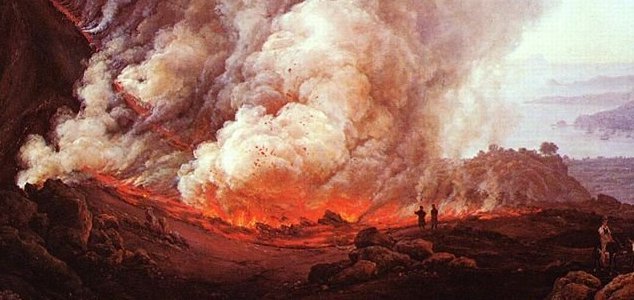
In the 1990s, researchers studying these cores noticed something extraordinary. Around the layer for 536 AD, there was a massive spike in sulfate particles. This is the chemical fingerprint of a colossal volcanic eruption. A volcano doesn’t just spew lava and ash; it blasts millions of tons of sulfur dioxide into the stratosphere. Up there, the gas converts into sulfate aerosols that form a fine, reflective veil, bouncing sunlight back into space before it can reach and warm the Earth’s surface.

This was the smoking gun. It wasn’t a comet. It was a volcano. A volcano of almost unimaginable power.

The Hunt for the Smoking Gun: Which Volcano Did It?

Knowing it was a volcano was one thing. Finding the specific culprit was another. The ice cores gave us the “what,” but not the “where.”

For a long time, suspicion fell on giants like Krakatoa in Indonesia or Rabaul in Papua New Guinea. But the chemical analysis of the ash found in the ice, known as tephra, didn’t quite match.

A Nordic Suspect?

More recent research, published in 2018 by a team led by archaeologist Michael McCormick and glaciologist Paul Mayewski, analyzed an ice core from a Swiss glacier with unprecedented precision. They confirmed the 536 AD event and then found something else. A second massive eruption in 540 AD. And a third in 547 AD. It wasn’t one event. It was a rapid-fire, one-two-three punch that kicked off a century-long cold spell now known as the Late Antique Little Ice Age.

The analysis of the tephra from the 536 event pointed towards a volcano in the Northern Hemisphere. For a time, a volcano in Iceland became the prime suspect. The event seemed to fit.

The Answer from the Tropics

But the story keeps evolving, as all good mysteries do. The latest and most compelling evidence now points to Central America. Specifically, to the Ilopango volcano in modern-day El Salvador. Geologists studying the region have found evidence of a truly titanic eruption that blanketed the region in ash and pumice, devastating the local Mayan civilizations.

Dating this eruption has been tricky, but multiple lines of evidence, including radiocarbon dating of trees buried by the ash, now point directly to the 6th century, very close to 536 AD. A tropical eruption like Ilopango is also a better fit for explaining the global nature of the dimming, as aerosols injected into the stratosphere at the equator spread more easily across both hemispheres.

The investigation is ongoing, a testament to how science can reach back across the ages to solve a planet-sized mystery. While Iceland or even a North American volcano might have contributed, especially to the second blast in 540, the prime suspect for starting the worst year in human history is now Ilopango.

Could It Happen Again? A Warning From the Past

It’s easy to read this as ancient history. A scary story from a distant, primitive time. That is a dangerous mistake.

The planet is the same. The volcanoes are still there. In 1815, the eruption of Mount Tambora in Indonesia caused the “Year Without a Summer” in 1816, leading to widespread famine and chaos, even in the relatively advanced world of the 19th century. And Tambora was just one eruption.

What if the 536-547 AD “volcanic barrage” happened today? What would a decade-long volcanic winter do to our fragile, interconnected world?

Flights would be grounded indefinitely. The global supply chain, which relies on just-in-time delivery, would shatter in days. Supermarket shelves would go bare. The internet and our power grids are highly vulnerable to the fine, abrasive ash and atmospheric effects. Widespread crop failures would mean global famine on a scale we cannot comprehend. Billions would be at risk.

The 536 event is not just a historical curiosity. It is a warning. It’s a reminder that we live on the thin, fragile crust of a geologically violent planet. We have built a magnificent, complex civilization, but it is all dependent on a stable climate and a predictable sun in the sky.

The story of 536 AD shows us how quickly that can be taken away. It’s a humbling lesson, written in frost, famine, and plague—a message from the “worst year to be alive,” reminding us that the apocalypse may not come from the stars, but from the fire burning right beneath our feet.

Originally posted 2015-09-22 15:41:16. Republished by Blog Post Promoter