
Home Weird World Space Mars rover scoops some alien gold!?

Mars rover scoops some alien gold!?

1
99

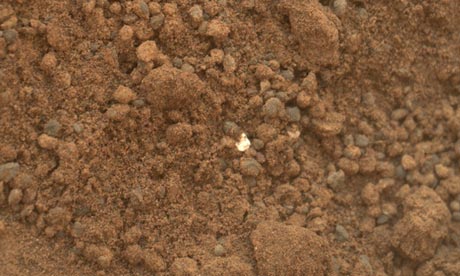
Whatever NASA claim, it is clear that this new picture of Martian soil scooped up by the rover shows something very very odd!

Stop scrolling for a second. Look at that image above. Really look at it.

You are looking at the surface of another world. A world that, according to the textbooks, is supposed to be a dead, rusty wasteland. A desolate rock floating in the freezing vacuum of space. But zoom in. Right there, amidst the dull red dust and the jagged rocks. Do you see it? That shimmer. That undeniable, metallic glint.

They told us Mars was red. They told us it was dead. But in 2012, the Curiosity rover scooped up a handful of dirt and accidentally revealed something that sent a panic through the control rooms at the Jet Propulsion Laboratory (JPL). Something that doesn’t belong.

Gold? Maybe. Artificial debris? Possibly. A glitch in the matrix? Let’s dig in.

“We think it must be alien gold”

The story NASA fed the public was simple. It was boring. It was safe. But the timeline of events tells a completely different story—one of confusion, hesitation, and a frantic scramble to control the narrative.

Here is what we know for a fact. The sampling of about a baby aspirin’s worth of Martian sand was supposed to be routine. Curiosity, the plutonium-powered beast of a rover, extended its robotic arm. It dug its mechanical scoop into the soil at a location named “Rocknest.” The gears whirred. The dirt was lifted. And then, everything stopped.

The mission was delayed. Not for a mechanical failure. Not for a software update.

It was delayed because the scientists back on Earth were staring at their monitors, puzzling over unusual, brightly colored flecks sitting right there in the hole carved out by Curiosity’s scoop. These weren’t rocks. These weren’t dust clumps. These were shiny, reflective objects that caught the weak Martian sunlight and threw it right back at the camera.

The Initial Panic: “It’s Just Plastic… Right?”

Imagine the scene. You are a NASA scientist. You’ve spent billions of dollars to get this robot to Mars. You are looking for signs of microbial life, maybe some water ice. And suddenly, you find something that looks like jewelry. Or a machine part.

The first explanation was almost laughable in its desperation. Initially, the team believed the bright flecks were shed by the rover itself. “It’s plastic,” they said. “Bits of debris discovered last week.” They tried to convince us—and themselves—that their billion-dollar masterpiece was falling apart, shedding bits of plastic wrap like a cheap toy.

They did not rule out that possibility immediately. It was the safe bet. If it’s plastic, it’s terrestrial. If it’s terrestrial, it’s boring. Crisis averted.

But the data didn’t line up. The visual evidence didn’t fit. Most of the team had to shift gears. They realized they couldn’t just wave this away. They now believe they are naturally occurring.

But here is where the language gets tricky. They started calling it a “mineral that was fractured by the rover scoop.” Fractured? Look at the image again. Does that look like a fractured rock? Or does it look like a processed, refined flake of metal?

The Psychology of Dismissal: The “Schmutz” Defense

Pay close attention to how authorities talk when they want you to stop asking questions. They use humor. They use ridicule. They use dismissive, silly words to make the anomaly seem small.

“The science team started to classify these sort of differently, calling them ‘schmutz,’” said Curiosity’s lead scientist, John Grotzinger, of the California Institute of Technology. Schmutz. It’s a Yiddish word for dirt. Filth. Nothing to see here, folks, it’s just schmutz.

“We had a lot of fun with that, labelling them and comparing,” Grotzinger added, painting a picture of a jovial, laughing control room. “But in the end, it turns out we really feel this is a different sort of particle.”

Wait. Pause. Rewind.

First, it was plastic. Then it was “schmutz.” Then they admitted it was a “different sort of particle.” The goalposts kept moving. Why the need for the jokes? Why the need to belittle the discovery before analyzing it? In the world of intelligence and cover-ups, this is a classic strategy. If you laugh at it, the public won’t fear it. And they certainly won’t respect it.

Why Dump the Evidence?

This is the part that keeps me up at night. If you found a piece of gold, or a diamond, or a piece of an ancient alien microchip on another planet, what would you do? You would bag it. You would analyze it until the sensors burned out. You would guard it with your life.

What did NASA do?

To be on the “safe side,” scientists commanded Curiosity to dump that sample. That’s right. They threw it away. They commanded the rover to tip its hand and scatter the mysterious glittering material back onto the ground.

The official excuse? They wanted to collect sand from another site for processing in the onboard laboratory. They claimed they were worried the “plastic” (which they just admitted might not be plastic) would clog the machine. The aim is to get an ingredient list of minerals in the Martian soil, they said. So, to get a list of minerals, they threw away the most interesting mineral they had ever found.

Does that make sense to you? Because it doesn’t make sense to me.

Deep Dive: What Was It? 3 Theories That Make More Sense Than “Schmutz”

If we strip away the official press releases and look at the raw possibilities, the “Alien Gold” theory isn’t just a catchy headline. It’s a legitimate geological (or archeological) possibility. Let’s break down the three most compelling alternative theories that the mainstream media refused to touch.

Theory 1: The Annunaki Gold Mines

For decades, alternative historians have discussed the theory that Mars was not always a dead rock. Ancient Sumerian texts speak of the Annunaki, a race of beings who came to our solar system in search of one thing: Gold. Why gold? It’s not just for jewelry. Gold is a unique metal. It is a perfect conductor. It reflects radiation. If you were trying to repair a damaging atmosphere—on Earth or on Mars—gold particles suspended in the sky would be the way to do it.

Could Curiosity have stumbled upon the tailings of an ancient mine? A processing site abandoned hundreds of thousands of years ago? If the Annunaki stripped Mars of its resources and then moved to Earth, they would have left traces. Tiny, processed flakes of gold, buried under eons of red dust, just waiting for a scoop to uncover them.

Theory 2: Trinitite and the Nuclear Mars Hypothesis

Dr. John Brandenburg, a plasma physicist, has famously proposed that Mars didn’t die of natural causes. He believes it was murdered. His data suggests that massive thermonuclear explosions wiped out the Martian civilization in the distant past. He points to the high concentration of Xenon-129 in the Martian atmosphere—a signature of nuclear weapon detonation.

When a nuclear bomb goes off in a desert, the heat turns the sand into glass. This glass is often green or shiny. It’s called Trinitite. Look at the “schmutz” again. Is it gold? or is it glass? Is it the vitrified remains of a city that was vaporized in the blink of an eye? If NASA knows this, they would never admit it. Admitting there was a nuclear war on Mars changes everything about our own history.

Theory 3: The “Crashed Probe” Debris

Let’s get a little closer to home. We aren’t the first ones to try and land on Mars. The Soviets tried. We tried. Many probes crashed, burned, and vanished without a trace. The Mars Polar Lander. The Beagle 2.

But what about secret missions? We know the military industrial complex runs black budget programs that are decades ahead of public science. Is it possible that Curiosity stumbled upon the wreckage of a classified craft that wasn’t supposed to be there? A Solar Warden vessel? A secret reconnaissance drone from the 1980s? Highly reflective, heat-shielding material would look exactly like those bright flecks. NASA calls it “plastic from the rover.” Maybe it is plastic. Just not from this rover.

The “Lens” of Truth

There is a quote from the mission manager that sends chills down my spine. It’s a moment of rare, unguarded honesty.

“We got to believing there were things around us and began to look at everything through that lens,” said the mission manager, Richard Cook, of Nasa’s Jet Propulsion Laboratory in Pasadena, California. “We definitely are more aware of what’s out there now and are more careful about everything we look at.”


Read between the lines.

“We got to believing there were things around us.”

What things, Richard? What exactly did you think was surrounding the rover? Ghosts? Aliens? Watchers?

This statement implies a psychological shift in the team. Paranoia. Hyper-awareness. You don’t get that way from looking at rocks. You get that way when you feel like you are trespassing. When you feel like you are walking through a graveyard, or a crime scene, and you are terrified of disturbing the evidence.

The Rush for the Red Planet: Why Now?

Fast forward from 2012 to today. The narrative has shifted. Mars is no longer just a scientific curiosity. It is a destination. Elon Musk wants to build a city there. Jeff Bezos is looking at the stars. China is ramping up its space program aggressively.

Why the sudden rush? Why the desperate need to get human boots on the ground?

If Curiosity really did find gold—or something even more valuable, like Element 115 or ancient technology—it would explain everything. The billionaire space race isn’t about “saving humanity.” It’s a gold rush. Literally. The first person to get there, claim the site, and secure the resources wins the game.

The pictures of the “schmutz” were a signal. A beacon to the elites. “It’s here. Come and get it.”

Meanwhile, we are told to look at the pretty pictures and believe it’s just plastic. We are told to ignore the geometric shapes on the surface, the tubes that look like tunnels, and the bright, flashing lights that appear in the distance.

Conclusion: The Truth is Buried in the Sand

We may never know exactly what Curiosity scooped up on that fateful day in 2012. The sample was dumped. The rover drove away. The tracks have likely been covered by the Martian wind.

But the image remains. It stands as a stubborn, glittering piece of evidence that contradicts the “dead planet” narrative. It forces us to ask the uncomfortable questions.

  • Why was the immediate reaction to blame the rover itself?
  • Why was the material discarded so quickly?
  • Why did the mission manager admit they felt “surrounded” by “things”?

The universe is not boring. It is full of mysteries, ancient ruins, and treasures waiting to be found. Mars is hiding something. And every time a rover accidentally scrapes off the red dust and reveals the truth underneath, the clock ticks a little faster toward disclosure.

Next time you look up at the red dot in the night sky, remember this: It sparkles for a reason.

Originally posted 2016-04-14 04:27:59. Republished by Blog Post Promoter








