Home Weird World Strange Places Cu Chi Vietnam War Tunnels

Cu Chi Vietnam War Tunnels

0
182
Cu Chi Vietnam War Tunnels

Stop. Don’t move.

Imagine the heat first. Not a summer beach heat. We are talking about a wet, suffocating blanket of humidity that wraps around your lungs and squeezes. You are standing in a dense jungle in 1967. The air is buzzing. Mosquitoes. Cicadas. The distant thump of a helicopter rotor chopping the sky.

You look down at your boots.

Leaves. Red dirt. A few broken twigs. Maybe an anthill.

It looks like nothing. Just the forest floor.

You are dead wrong.

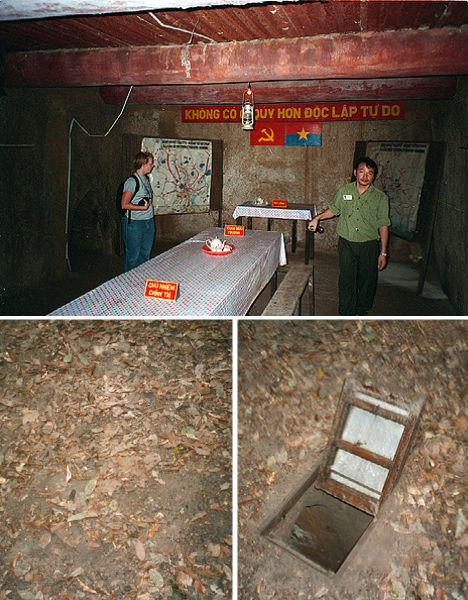
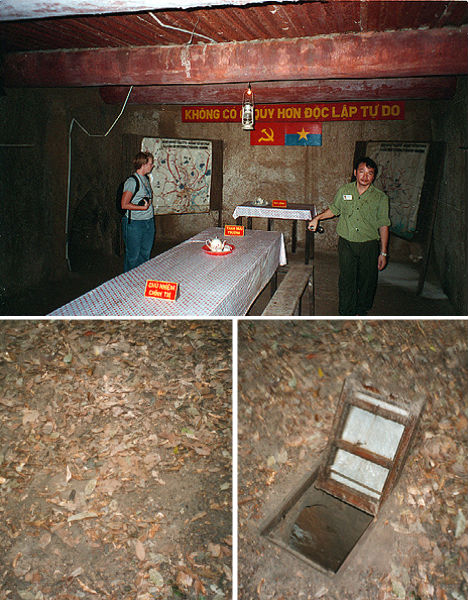
Right beneath your soles, separated by maybe two feet of earth, is a man holding an AK-47. And he isn’t alone. Beneath him is an entire hospital. A kitchen. A sleeping barrack. A weapons factory.

You are standing on top of the Tunnels of Củ Chi. This isn’t just a bunker. It is a phantom metropolis. A subterranean kingdom carved by hand, totally invisible to the naked eye, stretching for distances that make modern engineers dizzy. While the most powerful military on Earth was dropping millions of tons of high-tech explosives from the clouds, an entire army was living, planning, and vanishing right under the mud.

How? How do you move that much dirt without a satellite seeing you? How do you live without sunlight for weeks? And what kind of psychological nightmare awaited the young American soldiers ordered to crawl into the dark?

Grab a flashlight. Check the batteries. We are going down.

The Invisible Empire: A 155-Mile Labyrinth

Let’s talk scale. Because your brain probably imagines a few foxholes connected by a drainpipe. Erase that image.

The Củ Chi network is a monster. We are talking about a jagged, twisting labyrinth that stretches over 250 kilometers (about 155 miles). To put that in perspective, that is roughly the distance from New York City to Philadelphia. Or London to Birmingham.

Now, here is the kicker.

No excavators. No hydraulics. No laser mapping. No GPS.

Just simple garden hoes. Bamboo baskets. And hands. Thousands of hands, working in the dead of night, clawing at the earth in total silence. This network underlies the Củ Chi district of Ho Chi Minh City (formerly Saigon) and snakes its way all the way to the Cambodian border.

The strategic value was off the charts. This wasn’t just a hideout; it was the Viet Cong’s brain, heart, and nervous system. It served as the launchpad for the massive Tết Offensive in 1968. Imagine the shock. American generals thought they had the cities secured. Suddenly, thousands of enemy fighters pop out of the ground in the middle of the capital, attack the US Embassy, and then—poof—vanish back into the dirt like smoke.

The “Deep Dive”: Architecture of the Underworld

When you hear “tunnel,” you think of a tube. Stop thinking that. This was a multi-level underground society. A civilization of ghosts.

Recent historical analysis shows the network was split into distinct levels, separated by watertight trapdoors to stop flooding and gas attacks. It was a masterclass in survival engineering.

Level 1: The Trap Zone

The first level, closest to the surface, was mostly for firing posts and booby traps. This was the buffer zone. If an enemy broke in, they died here.

Level 2: The Living City

Go deeper. This is where life happened. They had:

  • Sleeping Quarters: Hammocks strung up in damp clay rooms for thousands of fighters.
  • Kitchens: Functioning dining halls feeding battalions.
  • Ordnance Factories: Workshops where they dismantled unexploded American bombs (duds) and turned them into landmines. They used the enemy’s own fire against them.
  • Hospitals: Full operating theaters. Amputations, bullet extractions, and births happened here. By candlelight. With simple tools.

Level 3: The Sanctuary

The deepest level. This was the escape route to the Saigon River or the bunkers for high-ranking leaders. When the B-52 bombers started their “Arc Light” runs, shaking the earth like a ragdoll, everyone scrambled down here to wait it out.

Engineering the Impossible: The Physics of Invisibility

Here is the mystery that keeps historians up at night: Where did the dirt go?

Dig a hole in your backyard. You get a pile of dirt. Dig a 150-mile subway system? You get a mountain of dirt. A mountain that US reconnaissance planes should have spotted in five minutes.

The Viet Cong developed a disposal system that was tedious, exhausting, and absolutely brilliant.

They dug at night. They loaded the red clay into straw baskets. Then, they carried it to nearby rivers and dumped it. The current washed the evidence away downstream. No pile. No visual footprint.

When the river wasn’t an option, they got even craftier. They would scatter the dirt into fresh bomb craters created by American B-52 strikes. They used the destruction caused by their enemy to hide their own construction. It’s genius. They even planted grass and scattered dried leaves over the trap doors immediately. Within hours, the jungle floor looked untouched.

The “Hoang Cam” Stove: Hiding the Smoke

One of the biggest giveaways for any army is chow time. You have to cook rice. You have to boil water. Fire creates smoke. Smoke rises. Smoke is a giant finger pointing at your position saying, “Bomb here!”

So, a resistance fighter named Hoang Cam invented a stove that defied physics.

The Hoang Cam Stove wasn’t high-tech. It was a masterpiece of fluid dynamics. The stove was dug deep into the ground. But instead of a chimney going straight up, it featured a long, horizontal venting system with multiple chambers.

The smoke would travel through these underground tunnels. As it moved, it cooled down. It hit baffles that diffused it. By the time the exhaust finally seeped out of the ground hundreds of yards away, it was just a faint, cold wisp. It looked like morning mist or jungle vapor. A helicopter could fly right over a kitchen cooking dinner for 50 men and see absolutely nothing.

The Nightmare of the “Tunnel Rats”

Now, switch gears. Put yourself in the boots of a 19-year-old kid from Kansas or a volunteer from Australia. You get drafted, sent to the green hell of the jungle, and your Sergeant points at a hole in the ground scarcely big enough for your shoulders.

“Go in there,” he says. “Clear it out.”

This was the job of the Tunnel Rats.

These were the men tasked with the most terrifying job in modern warfare history. They couldn’t bring M16 rifles; the barrels were too long for the tight turns. They couldn’t bring heavy gear. They went in stripped to the waist.

Their kit?

  • A flashlight (often with dying batteries).
  • A knife.
  • A pistol (usually a .45 or a revolver).
  • Sheer nerves.

The psychological toll was shattering. The silence underground was heavy. Thick. You didn’t know if the next dark corner held a dead end, a nest of vipers, or an enemy soldier waiting silently with a bamboo spear.

The tunnels were built small on purpose. The Vietnamese fighters were generally smaller in stature than the average corn-fed American soldier. This was a tactical design choice. The tunnels were claustrophobic, suffocatingly tight tubes where broad-shouldered Westerners would get stuck like a cork in a bottle. Unable to turn around. Unable to back out.

Panic wasn’t just a reaction. It was the weapon.

The House of Horrors: Traps That haunt Your Dreams

If the darkness didn’t get you, the traps would. And these weren’t cartoon traps. They were medieval.

The Viet Cong knew they couldn’t win a head-to-head firefight against US firepower. So they turned the jungle into a meat grinder.

The Punji Stakes: You’ve heard of these, but the details are gruesome. Sharp bamboo spikes, hardened by fire. But simply poking a hole in a boot wasn’t enough. They smeared the tips with buffalo feces, urine, or toxic plants. The goal wasn’t to kill the soldier instantly; it was to inject a raging infection that would require a medical evacuation. One screaming, wounded soldier takes three other men out of the fight to carry him. It creates chaos.

The “Falling Armpit” Trap: A false floor. You step on it, you drop. But you don’t hit the bottom. Your armpits catch on the sides, leaving your legs dangling in a pit of spikes below. You are stuck, bleeding, and helpless.

The Snake Traps: This sounds like an internet myth, but veterans confirm it was real. They would tie a bamboo viper—a highly venomous snake—inside a hollow piece of bamboo with a piece of string. They placed this near a tunnel entrance. If a Tunnel Rat knocked the bamboo, the snake was released. In the dark. In a confined space size of a coffin. There is no running away from that.

The Scorpion Boxes: Boxes filled with scorpions or wasps, rigged with a tripwire. You trip the wire, the lid pops, and suddenly you are trapped in a phone-booth-sized hole with a swarm of stinging insects.

Life in the Dark: The Grim Reality

We tend to romanticize the strategy. We look at the engineering and say, “Wow.” But let’s look at the human cost.

Life inside these tunnels was hell on earth for the Viet Cong, too. Sickness was rampant. Malaria. Dysentery. Skin rot.

According to captured documents and post-war interviews, 100% of the people living in the tunnels had intestinal worms. Every single one. They lived in darkness, often sharing their space with huge rats, ants, and poisonous centipedes.

Air was a luxury. During heavy American bombing campaigns (Operation Cedar Falls), the fighters would stay underground for days at a time. The oxygen levels would drop dangerously low, causing fainting, hallucinations, and pounding headaches. It was a test of endurance that few modern humans could survive for 24 hours, let alone years.

The Geological Mystery of the “Iron Triangle”

Why Củ Chi? Why here?

It comes back to the dirt. Geology determined destiny.

The soil in this specific district of the “Iron Triangle” is a peculiar type of clay. In the rainy season, it is soft, pliable, and easy to carve. But when it dries? It turns into nature’s concrete. It becomes rock-hard.

This unique geological quirk meant the tunnels were incredibly resilient. They could withstand the shockwaves from 500-pound bombs exploding nearby without collapsing. While American commanders were scratching their heads, wondering why massive carpet bombing campaigns weren’t crushing the tunnel network, the answer was in the molecular structure of the dirt itself.

A Conspiracy of History? There are local legends—often whispered but rarely found in textbooks—that the Viet Cong didn’t start from scratch. Some theories suggest they tapped into older, ancient tunnel systems utilized by resistance fighters against the French decades prior, or even older smuggling routes. They were expanding a legacy of underground warfare that had been in the blood of the land for generations.

The Modern Tourist Experience vs. Reality

Fast forward to today. The war is over. The jungle has grown back over the bomb craters. And now, air-conditioned buses roll up to the site every single morning.

The Củ Chi Tunnels have become one of Vietnam’s most popular tourist destinations. It is a surreal, almost jarring experience. You can buy ice cream. You can buy rubber sandals made from tires. You can even pay to fire a real M16 or AK-47 at a shooting range nearby (about a dollar a bullet). The sound of gunfire still echoes through the trees, but now it’s for entertainment.

They let you go inside, too.

But there is a catch. The tunnels you crawl through today? They are the “Disney” version. The government actually widened a section of the tunnels to accommodate oversized Western tourists. They added lights. They cleaned out the bugs. They reinforced the walls.

Even with the widening, it is a tight squeeze. Tourists often panic and have to scramble out the emergency exits after just 20 meters, gasping for air. It gives you a tiny, sanitized glimpse of the terror.

Now, close your eyes and imagine it is 1968. No lights. No emergency exit. You haven’t eaten in two days. The ground is shaking from artillery fire above. And you are holding a grenade, waiting for the enemy to walk over your head.

Why This Story Matters Now

Why do we obsess over these tunnels decades later? Why are you reading this?

Because it defies logic. It breaks the rules.

In our modern age of drones, thermal imaging satellites, and AI warfare, we think we see everything. We think technology always wins. The Củ Chi Tunnels are a brutal reminder that human ingenuity and the sheer will to survive can overcome almost any technological advantage. It is the ultimate underdog story, twisted into a grim shape by the horrors of war.

It forces us to ask: What else is hidden right beneath our feet?

We walk over concrete and grass every day, assuming the world is solid. But history is layered. There are secrets buried in the dirt, waiting for someone to stumble upon a trap door and fall into the past.

If you ever find yourself in Ho Chi Minh City, take the bus. Go to the tunnels. Crawl into the dark.

And when you are down there, shut off your phone light. Just for ten seconds.

Feel that darkness? Smell that damp clay?

That is the feeling of history holding its breath.