Home Unexplained Mysteries Crime Mysteries Unsolved Crime Mystery – The strange murder of Cpl. Maoma Ridings

Unsolved Crime Mystery – The strange murder of Cpl. Maoma Ridings

0
141

The 1943 murder of Cpl. Maoma Ridings

Room 729: The Nightmare Behind the Door

The heat in Indianapolis that summer was a physical weight. It sat on your chest. It was August 28, 1943. World War II was grinding up the globe, chewing through men and machinery. But while the newspapers screamed about allied advances in the Pacific and bombing runs over Europe, a much quieter, darker war was happening right in the heart of the Midwest.

This wasn’t a battlefield. It was the Claypool Hotel. And the casualty wasn’t a soldier on the front lines. It was Corporal Maoma L. Ridings.

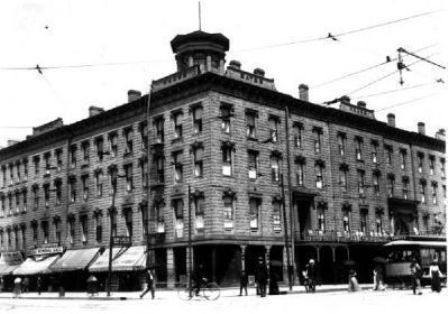
You need to visualize the Claypool. In 1943, this place was the nervous system of Indianapolis. It was grand. It was loud. The lobby was a haze of cigarette smoke, cheap perfume, and desperation. Officers in pressed uniforms drank whiskey with politicians. Spies rubbed elbows with factory workers. It was a place where anything could be bought, and anyone could disappear.

But the seventh floor was quiet.

At 8:15 p.m., the hallway outside Room 729 was empty. A housekeeper, tired and just wanting to finish her shift, rolled her heavy cart to the door. She knocked. No answer. Just the low hum of the city outside the window. She fished for her passkey. The lock clicked. The door swung inward.

She didn’t scream immediately. The brain takes a second to process horror. It tries to make sense of the senseless.

Maoma Ridings, a 32-year-old WAC (Women’s Army Corps) physical therapist, was on the floor. The scene was absolute chaos. Blood wasn’t just pooled; it was painted across the room. She had been slashed. Beaten. Obliterated. And the weapon lying next to her wasn’t a service pistol or a combat knife.

It was a whiskey bottle.

Shattered into jagged, diamond-sharp teeth. Someone had smashed it over her, then used the broken neck to carve her up. This wasn’t a robbery. This was rage. Pure, unadulterated hatred. The killer wanted to erase her.

The Victim: More Than Just a Headline

To really get this, you have to know who Maoma was. The papers back then played it fast and loose. They called her a “brunette divorcee,” a phrase that in 1943 was code for “trouble.” They hinted. They winked.

But Maoma Ridings wasn’t some random party girl. She was American royalty.

She hailed from Warm Springs, Georgia. Does that name ring a bell? It should. It was the “Little White House,” the favorite retreat of President Franklin D. Roosevelt. The Ridings family wasn’t just present there; they were woven into the fabric of the town. They had money. They had land. They had connections that went all the way to the Oval Office.

Why was a woman with that kind of pedigree working as a physical therapist in an Army camp in Indiana? Patriotism? Maybe. Running away from something? Possibly.

She was stationed at Camp Atterbury, a sprawling military city south of Indianapolis. Her job was grueling. She worked with soldiers who had been broken by training or combat. She fixed bodies. She was strong. She was capable. That Saturday, she clocked out, put on her crisp uniform, and caught a bus to the city. She checked into the Claypool for a “weekend of rest.”

She ordered a bottle of whiskey from room service. She had plans. She was waiting for someone.

The Timeline of Terror

Here is where the story turns into a noir thriller. The timeline is fractured, but if you piece it together, a terrifying picture emerges.

4:00 PM: Maoma checks in. She seems fine. She’s alive. She tips the bellboy.

6:30 PM: The phone in Room 729 rings. And rings. And rings.

Down in the lobby, Corporal Emanuel Fisher is leaning against the desk, sweating in his uniform. He’s Maoma’s date for the evening. They were supposed to grab dinner. Maybe dance. He asks the operator to try the room again. Nothing. Just the hollow echo of an empty line.

Fisher hangs up. He’s annoyed. He assumes she got a better offer. Maybe she went out for a pack of smokes. Maybe she stood him up. He waits in the lobby for a while, watching the elevators, checking his watch. Then, he gives up. He walks out into the night.

This is the moment that chills you to the bone.

Forensics in the 40s were primitive—basically guesswork and gut feelings—but the condition of the body suggested she hadn’t been dead long when the maid found her at 8:15 PM. This means when Fisher was calling the room at 6:30 PM, Maoma was likely in the room.

Was she already dead? Was she staring at the phone while her blood soaked into the carpet? Or worse… was she still alive? Was the killer standing over her, holding the receiver down, watching her bleed out while her date rang from the lobby just a few floors below?

The Weapon: Why a Bottle?

Let’s talk about the murder weapon. It tells a story all by itself.

If you plan a murder, you bring a gun. You bring a rope. You bring a garrote. You don’t count on finding a whiskey bottle on the nightstand. Using a bottle of Four Roses whiskey—which Maoma had ordered herself—implies spontaneity. It screams “crime of passion.”

It means the killer didn’t walk into Room 729 intending to kill her. Or at least, they didn’t bring a weapon to do it.

Something happened in that room. A conversation went wrong. A secret was spilled. A rejection was made. The violence exploded out of nowhere. The killer grabbed the nearest heavy object. Swing. Crash. Then, the frenzy took over. The slashing wasn’t necessary to kill her; the initial blows probably did the job. The slashing was personal. It was about defacing her.

The Phantom: The Woman in Black

Forget the boyfriend. Forget the ex-husband. This is the detail that keeps internet sleuths awake at 3 a.m. staring at glowing screens.

Witnesses saw someone else.

Throughout the afternoon, hotel staff spotted a mysterious figure visiting Room 729. It wasn’t a man. It was a woman. She was described as having dark hair, dressed entirely in black. Not a maid. Not a guest anyone recognized.

Around 5:00 PM—falling squarely into the danger window—this “Woman in Black” was seen either entering or leaving the room. The housekeeping staff saw her. The elevator operator saw her. She was real.

Who was she?

When the news broke, the Indianapolis police launched one of the biggest manhunts in the city’s history. “Find the Woman in Black!” screamed the headlines. But she was a ghost. She vanished into the smoke of the city. No one ever came forward. No one identified her.

Theory 1: The Forbidden Affair

We have to look at this through the lens of 1943. Same-sex relationships weren’t just frowned upon; they were illegal. They were career-ending. They were social suicide. If Maoma Ridings was having an affair with a woman, she would have guarded that secret with her life.

Was the “Woman in Black” a lover? Did a romantic tryst turn violent? The intensity of the crime—the smashing, the slashing—fits the profile of intimate partner violence perfectly. If Maoma tried to break it off, or if the lover felt threatened, love could have turned to hate in a split second.

Theory 2: The Jealous Wife

Maoma was beautiful, successful, and surrounded by lonely soldiers. Did she unknowingly get involved with a married man? Was the “Woman in Black” a scorned wife who tracked her down to the Claypool to confront her? It explains the rage. It explains the attack on Maoma’s face (destroying her beauty).

Theory 3: The Spy in Drag

This sounds crazy, but hear me out. Spies operate in hotels. Indianapolis was a hub of wartime industry. Camp Atterbury housed thousands of troops and enemy POWs. If this was an assassination or a silencing, a male killer disguising himself as a woman to slip past hotel security is an old intelligence trick. A black dress, a veil, a wig—it’s the perfect camouflage in a busy hotel.

The Suspects: A Parade of Dead Ends

The cops were under pressure. The Army was breathing down their necks. They needed a body in a cell, fast.

The Bellboy: They dragged in a hotel employee. Classic move. Blame the help. They interrogated him for hours. But he had no scratches, no blood, and no motive. They had to cut him loose.

Corporal Fisher (The Date): He was the prime suspect for days. Why didn’t he go up to the room? Why did he wait? But his alibi was ironclad. Too many people saw him in the lobby. He wasn’t covered in blood. Unless he killed her, changed clothes, cleaned up, and then stood in the lobby acting bored, he didn’t do it.

The Ex-Husband: The usual suspect. But he had the ultimate alibi: he was overseas fighting the Axis powers. Unless he could teleport, he was innocent.

Deep Dive: The WAC Slander Campaign

To understand why this case might have been buried, you have to understand the “Slander Campaign” of 1943. There was a massive, whispered conspiracy in America that the women joining the Army were… immoral. There were rumors that the government issued them contraceptives. That they were there to “service” the troops.

It was garbage. It was misogynistic propaganda designed to keep women in the kitchen. But people believed it.

Maoma Ridings was a WAC. She wore the uniform. Did she run into a man who bought into the hate? A psychopath who saw her not as a soldier, but as a target for his moral outrage? The brutality of the murder suggests a hatred for what she was as much as who she was.

And here lies the cover-up potential. If it turned out that a WAC was murdered by another woman (a lesbian lover), the scandal would have been nuclear. It would have validated the worst rumors about the Women’s Army Corps. The Army would have done anything to keep that out of the papers. Did the investigation hit a wall because someone wanted it to hit a wall?

The Evidence That Vanished

The crime scene at Room 729 was a disaster by modern standards. The housekeeper walked through it. The manager walked through it. The cops walked through it. They touched the bottle. They touched the phone.

Fingerprints? Smudged.
Footprints? Trampled.
DNA? A concept from the future.

There was a critical piece of evidence that is often overlooked. A second glass. There were two glasses in the room. One used, one arguably waiting. Maoma was expecting company. She wasn’t drinking alone. She poured a drink for her killer.

This implies trust. You don’t pour a drink for a stranger who breaks into your room. You pour a drink for a friend. A lover. Someone you know.

The Ghost of the Claypool

The Claypool Hotel is gone now. It was demolished in 1969. But before it fell, it gained a reputation. Guests reported cold spots. Strange noises on the seventh floor. The feeling of being watched.

Was Maoma still pacing the halls, waiting for justice?

The case went cold fast. The war moved on. Soldiers shipped out. The transient nature of 1943 Indianapolis meant the killer could have been in Berlin or Tokyo three months later. Or dead in a trench.

A Modern Analysis: What Really Happened?

Looking at this case with 21st-century eyes, the “Woman in Black” theory holds the most weight, but with a twist. The FBI and Army Intelligence were incredibly active in Indy. Maoma worked at a base that processed sensitive information. She was from a powerful political family.

Is it possible the murder wasn’t a crime of passion, but a sloppy hit? A “cleanup” operation made to look like a domestic dispute? The broken bottle is messy, sure. But it worked.

Or perhaps the simplest answer is the darkest. A secret romance. A “Woman in Black” who loved Maoma, who couldn’t have her, and who decided that if she couldn’t have her, no one would. A woman who walked out of the Claypool, washed the blood off her hands, and disappeared into the anonymity of a world at war, taking the secret to her grave.

Maoma Ridings deserves to be remembered. Not just as a victim in a “half-nude” scandal sheet story, but as a woman who served her country and died in a room full of secrets. The door to Room 729 is gone, but the mystery is wide open.

Next time you’re in a historic hotel, listen to the silence in the hallway. You never know what it’s trying to tell you.

Originally posted 2015-08-20 15:11:55. Republished by Blog Post Promoter

Originally posted 2015-08-20 15:11:55. Republished by Blog Post Promoter