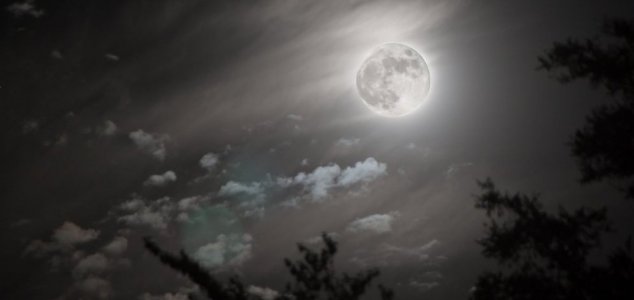
Stop. Look at that image. You’ve heard the phrase a thousand times. “Once in a blue moon.” It’s the go-to idiom for something rare. Something special. Maybe even something impossible. But what if I told you that the modern definition of a Blue Moon is actually a mistake? A typo? A journalistic blunder that morphed into scientific fact?
We are looking at an astronomical phenomenon that is due to appear tonight. It hasn’t happened in three years. But the rabbit hole goes so much deeper than just looking up at the sky.
This event occurs when a full moon appears for a second time within the same calendar month. Simple, right? That’s what the textbooks tell you. That’s what the news anchors recite. But despite its name, this calendar quirk usually has absolutely nothing to do with the color of the moon at all. Or does it?
History suggests we might be missing the bigger picture. We need to crack this wide open.
The Great Definition Scandal: How We Got It Wrong
Let’s rewind. The last time a blue moon occurred was back in 2012. The next one—depending on when you’re reading this archive—was slated for 2018. Tonight represents a rare opportunity to see one. But why do we call it that?
Here is the twist. The definition everyone uses today is technically “wrong.” It’s a modern invention. A fabrication.
“A blue moon occurs when two full moons can be seen in the same month of a given year,” said Peter Drew of the Astronomy Centre at Todmorden, Lancashire. He’s right, according to the modern rulebook. But where did that rule come from?
It wasn’t always this way.
Go back to the Maine Farmers’ Almanac from the 19th century or early 1900s. They tracked the lunar cycle with an obsession that we have lost in our digital age. They didn’t care about calendar months. They cared about seasons. A season—winter, spring, summer, fall—typically has three full moons. But the moon cycle is 29.5 days. It doesn’t sync up perfectly with the solar year. So, every couple of years, a season ends up with four full moons instead of three.
The Almanac called the third full moon in a season of four the “Blue Moon.”
Why the third? To keep the names of the other moons—like the Harvest Moon or the Paschal Moon—in their correct place relative to the equinoxes and solstices. It was a correction mechanism. A leap moon. It was ancient knowledge applied to farming.
So how did we end up with the “two in a month” rule? In 1946, a writer for Sky & Telescope magazine misinterpreted the Almanac. He made an assumption. He published it. And because the internet didn’t exist to fact-check him, the error spread. It became the truth. We literally rewrote the sky based on a misunderstanding.
When the Sky Actually Bleeds Blue
The phrase usually has nothing to do with the actual color of the moon. Usually.
But nature is violent. It is unpredictable. And sometimes, the moon actually does turn blue. This isn’t a metaphor. It’s physics. It’s terror.
A literal “blue moon” (the moon appearing with a tinge of blue) may occur in certain atmospheric conditions. We are talking about massive upheavals on the surface of the Earth. Eruptions. Infernos. Cataclysms.
The most famous example? 1883. The eruption of Krakatoa in Indonesia. This wasn’t just a volcano popping off. It was an explosion equal to 200 megatons of TNT. It ruptured the eardrums of sailors 40 miles away. The shockwave circled the globe seven times.
But look at what happened to the sky.
Krakatoa blasted millions of tons of ash and sulfur dioxide into the very top of the stratosphere. The particles were specific. They were about 1 micron wide. This is the magic number. It’s slightly wider than the wavelength of red light.
When the moonbeams hit those particles, the red light was scattered away. It was blocked. Only the blue light got through. For years after the eruption, people around the world reported seeing a moon that looked blue. Sometimes green. The sun looked purple. The sunsets were blood-red and zombie-green.
It happens when there are volcanic eruptions or when exceptionally large fires leave particles in the atmosphere. In 1950, huge forest fires in Muskeg, Canada, created a similar effect. The smoke drifted south. People in the United States looked up and saw a blue moon. They thought the Russians were attacking. They thought it was the end of days. It was just physics playing tricks on the eye.
The Mathematics of the Mystery
“As the moon’s period is 28 days it is possible for this to happen in any month other than February which is too short a duration,” Drew explained. But let’s get precise. The lunar cycle is actually 29.53 days. This is the synodic month.
Our calendar is a solar construct. It’s messy. It’s a grid imposed on a circle. We have months of 30 days and 31 days. Because the lunar cycle is shorter than these calendar months, the moon slowly “drifts” backward through the dates.
Due to the moon’s orbit, this phenomenon doesn’t happen every qualifying month so the occurrence is infrequent. The last one was on August 31, 2012. But notice the gap?
This brings us to the Metonic Cycle. This is where it gets weird.
Every 19 years, the phases of the moon return to the exact same dates of the year. It’s a cosmic reset button. If you have a Blue Moon on Halloween this year (which is rare and spooky), you can bet your bottom dollar that in 19 years, you’ll likely see the same setup. The universe runs on a clockwork mechanism that is far more precise than our wristwatches.
Astronomers believe that there may only be 12 blue moons between now and 2043. Think about that scarcity. In a world of instant gratification, where we can stream anything in seconds, the sky refuses to rush. You have to wait. You have to be there.
The Lunacy Connection: Fact or Folklore?
We can’t talk about this without addressing the elephant in the room. The “Lunacy” effect. The word lunatic comes from luna (moon). Police officers will tell you stories. Emergency room nurses will swear on a stack of Bibles that the ER gets wilder during a full moon.
So, what happens during a Blue Moon? Does the energy double?
Skeptics—the scientists with their clipboards—will point to statistics. They say there is no correlation between moon phases and crime rates or hospital admissions. They say it’s “confirmation bias.” You only notice the crazy guy screaming at the lamp post because you know it’s a full moon. If it was a new moon, you’d ignore him.
But ask any tarot reader. Ask an astrologer. Ask a farmer who plants by the tide. They will tell you the gravitational pull is real. The tides rise. Humans are 60% water. Is it so crazy to think that a “double dose” of lunar energy in one month might pull on our own internal tides?
Maybe the Blue Moon isn’t just a calendar date. Maybe it’s a doorway.
The Future of the Sky
We are living in a golden age of sky-watching. We recently had the “Super Blue Blood Moon.” A trifecta. A supermoon (close to Earth), a Blue Moon (second in the month), and a Blood Moon (lunar eclipse). That is the kind of event that ancient civilizations would have built temples for. They would have sacrificed cattle.
Today? We snap a photo with our smartphones and scroll past it on Instagram.
Don’t be that person. Tonight, or whenever the next cycle hits, go outside. Turn off the lights. Look up. Remember that you are standing on a rock spinning through a void, circled by a smaller rock that dictates the rhythm of our oceans.
The Blue Moon is a glitch in our man-made matrix of time. It’s a reminder that the universe doesn’t care about our calendars. It moves to its own beat. And for one night, you can see the evidence.
Originally posted 2015-09-01 15:04:57. Revised and Expanded for the Modern Era. Republished by Blog Post Promoter