Home Weird World Space Russian cosmonauts are preparing to land on the Moon

Russian cosmonauts are preparing to land on the Moon

0
59

Russia’s Secret Plan to Conquer the Moon: The New Cold War Heats Up Above Our Heads

Forget what you learned in school. The Space Race never ended. It just went quiet. A cold war fought not with spies and nukes, but with orbital mechanics and rocket fuel. For decades, the silence from the East was deafening. But now, the Russian Bear is waking up. And it’s looking at the Moon.

Not with the eyes of an explorer. But with the eyes of a conqueror.

While the world was distracted, Roscosmos, the heir to the mighty Soviet space program, has been quietly dusting off old Cold War blueprints. They’ve fired up forgotten machines. They’ve started drawing up battle plans for a permanent occupation of our nearest celestial neighbor. This isn’t just about planting a flag. It’s about building a fortress. It’s about controlling the ultimate high ground.

And it’s all supposed to happen by 2030.

Sound like science fiction? They’re already running the simulations. They’re already training the soldiers… or as they call them, the cosmonauts. The plan is in motion. The race is on. And this time, the stakes are the entire solar system.

the-moon

Ghosts of a Lost Race: Why This Time is Different

To understand what’s happening now, you have to look back. You have to feel the sting of Russia’s first great lunar defeat. In the 1960s, America and the USSR were locked in a frantic sprint to the Moon. While NASA’s Saturn V rocket became a symbol of triumph, the Soviets had their own monster: the N1 rocket. It was a beast, a titan meant to carry cosmonauts to the lunar surface and beat the Americans.

It never worked.

All four test launches ended in catastrophic failure. The biggest rocket in the world became the world’s most spectacular firework, exploding on the launchpad or shortly after liftoff in colossal fireballs that shook the Kazakh steppe. The death of their genius chief designer, Sergei Korolev, and vicious infighting within the program crippled their efforts. When Neil Armstrong took that “one small step,” it was a giant leap for mankind, but it was a knockout blow to Soviet pride. They quietly cancelled the program, buried the evidence, and pretended they were never really trying to get to the Moon in the first place.

A lie. A massive, face-saving lie.

That defeat has haunted the Russian psyche for over fifty years. It’s a national wound. And now, they’re dead set on healing it. This new push for a lunar base isn’t just a scientific endeavor; it’s an act of cosmic redemption. It’s a chance to finish what they started and prove to the world, and to themselves, that they are still a superpower.

Waking a Sleeping Giant: Inside the 1970s Simulator

So how do you prepare for a mission this audacious? You reach back into the past. In a facility just outside Moscow, engineers at RSC Energia have pulled a dusty tarp off a truly unique piece of Cold War history: a complex mechanical platform, a simulator built in the early 1970s for the very lunar program they were forced to abandon.

This isn’t a VR headset and a treadmill. This is a work of analog genius. The rig uses a system of supports and counterweights to suspend a cosmonaut, perfectly simulating the Moon’s one-sixth gravity. It allows them to feel what it’s like to walk, to jump, to work, and, crucially, to stumble and fall on the lunar surface. It’s a ghost from a timeline that never was, now being used to train the pioneers of Russia’s future.

The first tests have already begun. Cosmonauts clad in bulky Orlan spacesuits are learning the strange, bouncy ballet of low-gravity movement. They’re practicing how to climb out of a rover. How to handle tools. How to get up after a fall without help. Alexander Kaleri of RSC Energia put it plainly: their goal is to “get acquainted with the work of human conditions on the moon, and to evaluate the human potential.”

Translation: they are figuring out exactly what their lunar colonists can and can’t do. They are writing the rulebook for their new off-world territory.

The Blueprint for a Lunar Fortress

The plan Roscosmos has laid out is nothing short of breathtaking in its ambition. This is not a temporary camp. This is a permanent foothold. A settlement.

Step One: The Beachhead

The initial phase calls for a small crew, no more than two to four cosmonauts. They will be the vanguard, setting up the core systems of the base. Think of them as the first settlers in a new, hostile world. Their home will be a compact, heavily-shielded habitat delivered to the Moon’s south pole—a region thought to be rich in water ice, the most valuable resource in space.

Step Two: The Expansion

Once the core is established, the real construction begins. The entire base will be built piece by piece, just like the International Space Station. Russia plans to use its new heavy-lift Angara rocket for the job. At least six separate launches are planned, each one carrying a new module—living quarters, science labs, power systems, vehicle bays. Over a decade, these pieces will be assembled into a sprawling complex capable of supporting a permanent crew of 10 to 12 people.

Step Three: The Power and the Shield

Here’s where it gets interesting. And a little scary. The base will be powered by a dedicated sub-surface energy station. Many analysts believe this is code for a small nuclear reactor, buried beneath the lunar regolith to provide constant, reliable power during the two-week-long lunar night. And deep underground, another critical component will be installed: a fallout shelter.

A fallout shelter. On the Moon.

The official line is that it’s to protect the crew from the harsh radiation of deep space and solar flares. A logical precaution. But it also offers protection from another kind of threat. The kind that comes with warheads. You have to ask yourself: who are they expecting to attack them on the Moon?

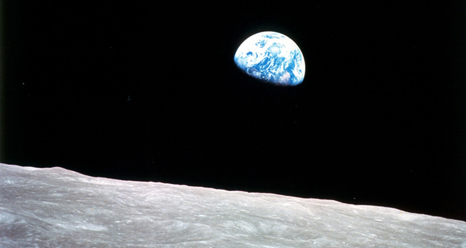
earth-fromm-moon

The Quiet Part Out Loud: A Military Base in the Sky?

Let’s stop pretending this is just about science. The original brief from Roscosmos itself hinted that the base would be used for “research and mining”—but then a quiet mention was added: it “may also have a military purpose.”

That single phrase changes everything.

The Moon is the ultimate high ground. A military base there would be a strategic game-changer of historic proportions. From the Moon, you can see the entire Earth. A network of sensors or telescopes on the lunar surface could monitor every satellite, every missile launch, every troop movement on the planet, with no way for anyone to hide.

But it gets darker. Cislunar space—the area between Earth and the Moon—is becoming the next great military frontier. The nation that controls it can disable or destroy the satellites of its enemies, effectively blinding them. GPS, communications, banking, military command and control—all of it depends on those fragile satellites. A lunar base could act as a command center, a repair depot, and a garrison for space assets that could dominate this vital region.

And what about weapons? The 1967 Outer Space Treaty forbids placing weapons of mass destruction in orbit or on celestial bodies. But the treaty is old. It’s full of loopholes. What about conventional weapons? What about directed energy weapons? A launch platform on the Moon would be almost impossible to stop. Anything launched from there would have a massive energy advantage, re-entering Earth’s atmosphere at incredible speeds. It’s the plot of a dozen dystopian movies, but the plans are being drawn up in government offices right now.

The Trillion-Dollar Prize: Mining the Moon

Beyond the military angle, there’s another, equally powerful motive: money. The Moon is a treasure chest, and Russia wants the key. It isn’t about gold or diamonds. The real prize is far more valuable.

Helium-3: The Fuel of the Future

For decades, the solar wind has bombarded the Moon’s surface, depositing a rare isotope called Helium-3 into the soil. Here on Earth, it’s incredibly scarce. On the Moon, there are millions of tons of it. Why does that matter? Helium-3 is the perfect fuel for nuclear fusion—the clean, limitless energy source scientists have been chasing for a century. The nation that can mine Helium-3 from the Moon could solve the world’s energy crisis and become unimaginably wealthy and powerful in the process.

Water Ice: The Gas Station of the Solar System

Even more immediately valuable is the water ice confirmed to exist in permanently shadowed craters at the lunar poles. Water is the oil of the solar system. You can drink it, of course. But you can also split it into hydrogen and oxygen using electrolysis. That’s rocket fuel. Pure, potent rocket fuel.

A base that can mine this water and turn it into propellant transforms the Moon from a destination into a departure point. It becomes a cosmic gas station, a refueling depot for missions to Mars and beyond. Any nation wanting to explore the solar system would have to go through the owners of that gas station. They would control the highways of space.

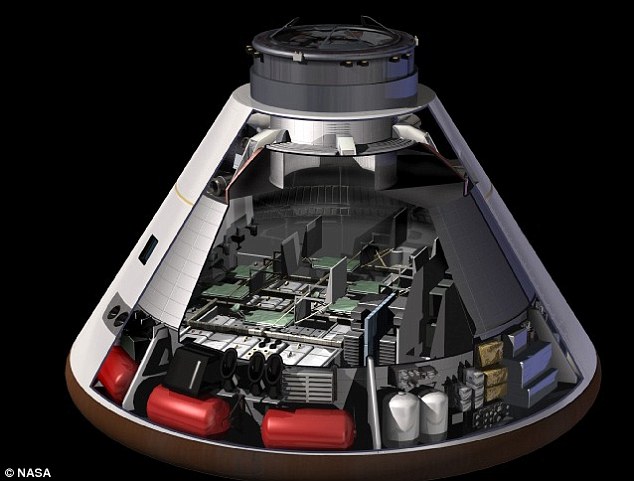
moon-lander

A Reality Check: Cracks in the Grand Design

A grand plan is one thing. Pulling it off is another. Since these ambitious goals were first announced, the path has been anything but smooth. The 2030 timeline is looking less like a deadline and more like a dream.

The Fiery Crash of Luna-25

In August 2023, the world watched as Russia’s grand return to the Moon ended in disaster. The Luna-25 probe, their first lunar mission in 47 years, was meant to be a scout, landing at the south pole to pave the way for the future colony. Instead, after a critical engine burn went wrong, the probe spun out of control and smashed into the lunar surface, carving a new crater into the ancient dust.

The failure was a humiliating public blow. It exposed deep problems within the Russian space industry—a loss of expertise, quality control issues, and a budget stretched thin. It was a painful echo of the N1 failures decades ago, and it cast serious doubt on whether Roscosmos has the technical ability to achieve its lofty goals.

A New Axis: The Russia-China Alliance

But Russia is not alone. Faced with its own struggles and an increasingly dominant NASA—whose Artemis program is also targeting the lunar south pole—Moscow has pivoted. They have forged a powerful new alliance with another rising space power: China.

Together, they have announced plans for a joint venture, the International Lunar Research Station (ILRS). It is a direct competitor to the US-led Artemis Accords. This isn’t just a collaboration; it’s the formation of a new geopolitical bloc in space. A dueling set of powers, each with its own allies, racing to claim the same valuable lunar real estate.

The new Cold War now has very clear teams. The lines are drawn not on a map of Europe, but on the barren, cratered surface of the Moon.

The Clock is Ticking

So, where does this leave us? The dream of a Russian-dominated Moon is alive, but it’s wounded. The 2030 date seems wildly optimistic, especially after the Luna-25 crash. But to write them off would be a monumental mistake. The alliance with China brings immense resources and technical skill to the table. The motivation—a potent cocktail of national pride, strategic advantage, and economic opportunity—is stronger than ever.

The quiet cold war in space is about to get very, very loud. The next decade will see a flurry of robotic and human missions to the Moon from multiple nations. Tensions will rise as they compete for the best landing spots, the best resources, and the best strategic positions.

The silent, peaceful Moon that has hung in our sky for all of human history is about to change. It is becoming a target, a prize, a battlefield. The question is no longer *if* humanity will return to the Moon to stay, but who will get there first, and what will they do when they arrive?

What secrets are they really trying to unearth in that gray dust, and what secrets are they planning to bury there?

Originally posted 2016-09-22 15:47:59. Republished by Blog Post Promoter