Monday, June 8, 2026
HomeUnexplained MysteriesModern MysteriesVoices of the past revealed inside old dolls

Voices of the past revealed inside old dolls

Edison’s Creepy Talking Dolls: The 130-Year-Old Voices We Were Never Meant to Hear

Picture this. A dusty attic. A forgotten chest. Inside, a porcelain doll with glassy, unblinking eyes stares up at you. It’s over a century old, a relic from a time of gas lamps and horse-drawn carriages. But this is no ordinary toy. A small crank juts out from its metal chest. You hesitate, then turn it. A sound emerges. A tiny, scratchy voice from the 1880s, whispering a nursery rhyme across the chasm of time.

Sounds like the beginning of a horror movie, right?

It’s real. And for decades, the voices trapped inside these dolls were a ghost story, a legend among collectors. To play them was to destroy them. The sound was locked away, silenced by the fragility of its own creation. Until now. Using technology that borders on science fiction, scientists have finally listened to these long-dead whispers. And what they heard is more fascinating, and frankly more unsettling, than anyone could have imagined.

The Wizard’s Weirdest Dream

To understand the creepy talking doll, you have to understand the man behind it. Thomas Alva Edison. The Wizard of Menlo Park.

We know him for the lightbulb. The power grid. Motion pictures. Edison was a titan, a man who didn’t just invent things; he invented the future. But he was also a showman, a relentless industrialist with more than 1,000 patents to his name and an obsession with turning his miraculous inventions into cold, hard cash.

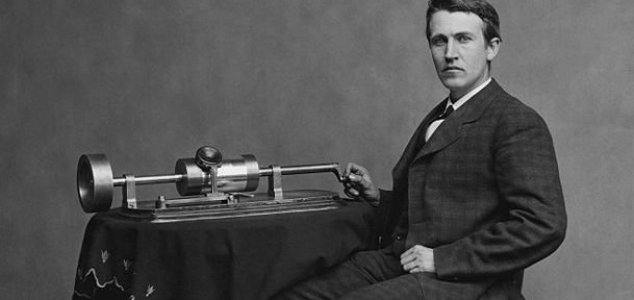
In 1877, he stumbled upon his most magical creation. The phonograph. The story goes that he was working on a device to record telegraph messages, and by pure chance, he figured out how to record and play back sound. The first words ever captured and replayed? Edison, shouting into a brass horn: “Mary had a little lamb.” When the machine spoke it back to him, his assistants were stunned. It was witchcraft. A miracle. For the first time in human history, a sound could be preserved. A voice could outlive the body that produced it.

Edison immediately knew this was huge. He imagined phonographs for business dictation, talking books for the blind, and a way to preserve the final words of dying family members. But he also saw a more immediate market. Toys.

What if he could put this ghost-in-a-machine inside the most popular toy of the era? What if he could make a doll that could actually talk? It was an idea so far ahead of its time it was borderline insane. It would be the most advanced, most desirable toy in the world. And it would make him a fortune.

Anatomy of a Clockwork Nightmare

The Edison Talking Doll was a monumental undertaking. It was not some simple pull-string toy. This was a marvel of Victorian engineering, and a commercial disaster waiting to happen.

Inside the Machine

Imagine a small, solid doll, about 22 inches tall. Porcelain head, wooden limbs. But its torso was made of cold, heavy tin. Why? Because it had to house the entire phonograph mechanism.

Inside that metal chest was a tiny wax cylinder, about the size of a toilet paper roll. This was the record. Etched into its surface was a single, continuous groove containing the audio. A small steel needle, or stylus, rested in that groove. This was connected to a diaphragm at the base of a horn that pointed out through holes in the doll’s chest. When a child turned a crank on the doll’s back, the cylinder would rotate, the needle would track the groove, and the vibrations would produce sound.

It was a miniature, hand-cranked record player stuffed inside a doll’s body. A brilliant concept. A terrifying reality.

The Voices from the Factory Floor

So, who recorded the nursery rhymes? Who were the voices trapped on these tiny wax cylinders?

They weren’t famous actresses or singers. This was mass production, 1880s style. Edison’s company hired dozens of young women, likely factory workers, to do the recording. They would sit in booths, one after another, and shout nursery rhymes into a large horn connected to a master recording device. One by one, they would yell “Mary Had a Little Lamb,” “Twinkle, Twinkle, Little Star,” or “Now I Lay Me Down to Sleep.” For hours. Days. Weeks.

Think about that. The voices we are hearing today are not the voices of the rich and famous. They are the echoes of anonymous working women from the Gilded Age, their momentary performance captured forever by a bizarre machine, intended for a toy that would ultimately fail.

Why It Was a Total Flop

Edison rushed the dolls to market for Christmas of 1890. They were a catastrophe.

First, the price. They cost between $10 and $25, depending on the outfit. In today’s money, that’s somewhere between $300 and $750. For a single toy. Only the wealthiest families could even consider it.

Second, the construction. They were heavy, fragile, and complicated. The crank was hard for a child to turn at the right speed. The delicate mechanism inside could break with a single drop.

But the biggest problem? The sound.

The playback quality was abysmal. The recordings were faint, scratchy, and distorted. Instead of a sweet child’s voice reciting a lullaby, what emerged from the doll’s chest was a horrifying, disembodied whisper. A ghostly, metallic rasp. Contemporary accounts describe children bursting into tears. Parents were horrified. One historian noted the sound was “unpleasant” and “eerie.”

It wasn’t a talking doll. It was a nightmare machine. Sales were catastrophic. After just a few weeks on the market, Edison pulled the plug. He ordered the remaining stock to be destroyed, their phonograph guts ripped out and sold for scrap. The great inventor’s first foray into the toy market was one of his biggest and most embarrassing failures.

A Century of Silence

Most of the dolls vanished. Lost to time, junk heaps, and terrified children. But a few survived, becoming the holy grail for antique collectors. For over 100 years, these survivors held their secret. They were silent witnesses to a bygone era.

Collectors like Robin and Joan Rolfs, who owned two of these incredibly rare dolls, faced a terrible dilemma. They knew a voice was trapped inside. A 120-year-old voice. But the very act of listening would be an act of destruction.

The Curse of the Wax Cylinder

Here’s the problem with wax. It’s soft. Every time the steel needle dragged through the groove, it would shave off a microscopic layer of wax, ever so slightly degrading the sound. The original mechanisms were designed to be played maybe a few dozen times before the recording became an unlistenable hiss. After more than a century, the wax was unbelievably brittle and fragile. One wrong move, one clumsy turn of the crank, and the needle could gouge the cylinder, shattering the groove and silencing the voice forever.

So the dolls sat. In museums. On shelves in private collections. Their voices locked away, a mystery that seemed destined to remain unsolved. It was a perfect Catch-22. The only way to hear the past was to erase it.

Waking the Digital Ghosts

For decades, that was the end of the story. Then, a team of scientists at the Lawrence Berkeley National Laboratory, a government research facility, changed everything. They had developed a system for a completely different purpose: analyzing subatomic particle tracks. They called it IRENE (Image, Reconstruct, Erase Noise, Etc.). It was a way to create high-resolution 3D maps of surfaces without ever touching them.

Someone had a brilliant idea. What if they could use this particle-physics technology to read old, fragile audio recordings?

The Virtual Needle

The process is pure genius. Instead of a needle, they use light. A microscopic camera takes thousands of high-resolution digital pictures of the cylinder’s grooves. It moves across the surface, scanning every tiny hill and valley where the sound is physically encoded.

This data is fed into a powerful computer. The software then stitches all these individual pictures together into a perfect, interactive 3D map of the entire recording. It’s a digital clone of the wax cylinder.

Then, the magic happens. The computer creates a “virtual needle.” It simulates the physics of a phonograph stylus moving through the digital grooves it just mapped. This simulation recreates the original vibrations and converts them back into a sound file. The result? They can perfectly play back the recording without the original object ever being touched, moved, or damaged in any way.

They had found a way to read the message in the dust without blowing it away.

The Moment of Truth

The team at the Thomas Edison National Historical Park, including curator Jerry Fabris, knew this was their chance. They worked with the scientists to scan the cylinders from the surviving dolls, including the ones owned by the Rolfs.

The suspense must have been incredible. They ran the scans. They processed the data. And then, for the first time in over 120 years, they pressed play.

Out of the speakers came the sound. Faint. Crackly. Full of static and hiss. But underneath it all, clear as day, was a voice. A woman’s voice, reciting “Twinkle, Twinkle, Little Star.” Another recording revealed “Mary Had a Little Lamb.” The lost voices were singing again.

“We are now hearing sounds from history that I did not expect to hear in my lifetime,” Fabris said. It was a technological seance, a digital resurrection. The ghosts from the factory floor were finally speaking.

Whispers from the Past: What Does It All Mean?

So, we heard a nursery rhyme. What’s the big deal?

This is about so much more than a failed toy. Hearing these voices is like opening a sonic time capsule. It’s a raw, unfiltered connection to the ordinary people of the past. This isn’t the voice of a president giving a speech or a famous opera singer. It’s the voice of an anonymous woman earning a wage in 1888, her accent and intonation a genuine acoustic photograph of that exact moment in time.

But let’s push it further. Let’s put on our conspiracy hats.

The Immortality Machine?

Was Edison just trying to build a toy? Or was this an early, clumsy attempt at something much bigger? Edison was fascinated with the idea of preservation. He preserved light with the lightbulb, and motion with the kinetoscope. The phonograph preserved sound. Did he see it as a way to achieve a kind of immortality? A way to keep the voices of loved ones alive long after they were gone?

The talking doll was a commercial product, yes. But it was also a proof of concept. If you can put a voice in a doll, you can put it anywhere. You can create a library of souls, a collection of vocal ghosts that can speak forever. Did Edison’s failed toy accidentally stumble upon one of humanity’s deepest desires: to conquer death?

The Pandora’s Box of Lost Sounds

This technology changes everything for historians. Think of all the other recordings on fragile or unplayable media. Early political speeches. Recordings of indigenous languages that are now extinct. Secret messages recorded on strange materials. We now have a key to listen to a silent past.

What else is out there, waiting in an archive, too fragile to play? What if one of these cylinders doesn’t contain a nursery rhyme? What if it’s a deathbed confession? An engineer revealing a corporate secret? A message not meant for the future to hear? This technology is, in a very real sense, a form of audio archaeology. And we’ve only just begun to dig.

The story of Edison’s creepy talking dolls is a perfect storm of genius, failure, and technological redemption. It’s a reminder that history isn’t silent. We just haven’t always had the right tools to listen. And as we tune in to these faint, scratchy voices from a world long gone, we have to wonder: what other ghosts are waiting in the machine?

Arindam Mukherjee
Arindam Mukherjee
Arindam loves aliens, mysteries and pursing his interest in the area of hacking as a technical writer at 'Planet wank'. You can catch him at his social profiles anytime.
RELATED ARTICLES
- Advertisment -

Most Popular

Recent Comments

Warren Pan Abbott on The legend of the Devil Monkey !
chris davies on The McPherson Tape Mystery
Reed Reedly on ET has Internet!
Bea Houseoffashion on Proof Of Time Travellers – Gallery
Marcus2012 on ET has Internet!
Reed Reedly on ET has Internet!
LaughsAtConspiracyNuts on The 9/11 Conspiracy – Myths and Facts
Alex Sliverman on Did the ancients fly?
Doctor Wholigan on Time Traveler in 1938 film
chris davies on The McPherson Tape Mystery
Archie1954 on 10 secret UFO hideouts
chris davies on Ghosts of flight 401
Marcus2012 on ET has Internet!
jason Macdonald on Proof of Time Travel? – China
chris davies on Long-Lost Pyramids Found?
Reed Reedly on ET has Internet!
Milkman on Connected Universe
Tenmiles on Baigong Pipes Mystery
Simon Foster on Sirius – The Documentary
From the 1st April on 2013 – Alien Contact date ?
SkyWatcher on Is ET ignoring us?
I Come From The Future on Obama to make UFO Alien disclouser soon ?
Just another person on 2013 – Alien Contact date ?
Malcolm Windowcleaner on The strange case of Rudolph Fentz
Mason Servio on Strange Things on Mars
Marke Wisdom Seeker on What will we find as arctic melts?
Andrea A Elisabeth Levyne on Aliens Captured in Varginha, Brazil
Mitch Grouyeki on Amazing Space Shuttle pictures