10. Private Medical Colleges Buy Patients
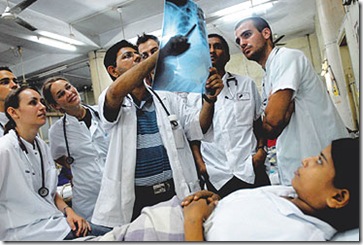 Healthcare system in India has been in the limelight many a times for their malpractices and carelessness. In November of 2012, an interesting news story came about where private medical colleges in Karnataka were buying fake patients to be admitted. These colleges usually paid Rs. 500 per person to act as a patient before the committee from Medical Council of India for their annual inspection. Sometimes two to three hospitals exchanged the same patients just to satisfy the MCI norms.
9. Driverless Car in Delhi
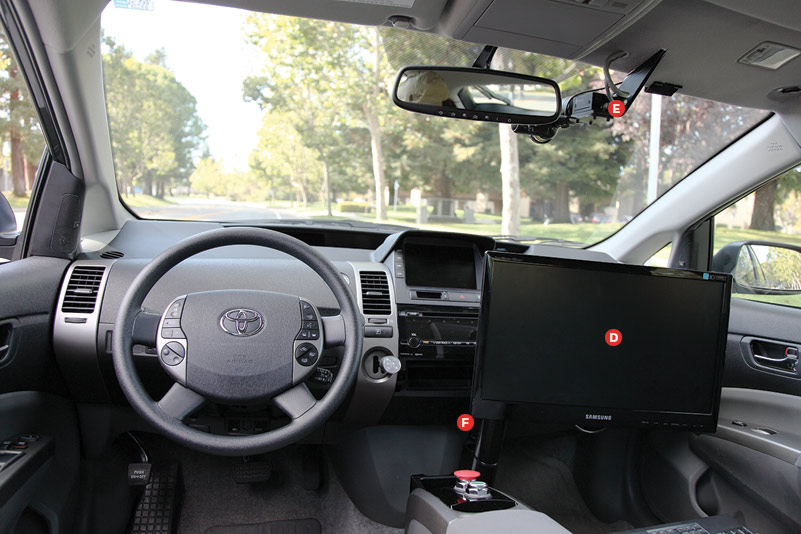
 In 2006, Aaj Tak ran a news story about a driverless car running on Delhi roads. Apparently, someone had a video footage of a car without a driver. The footage showed the car had just one person sitting on the passenger side of the car reading newspaper. The original owner of the car never knew that his car was running amok with no one on the steering wheel. The person who provided the video footage also had pictures of driver’s compartment that clear ruled any special contraptions. Even the owner of the car denied any special equipment in the car. The news story went viral and calls were pouring in with people claiming to have spotted that car in many other cities too. When finally the driver of the car (dude on the passenger seat) was got hold of with the car, he obliged that it was him that was steering the car from passenger seat. He even demonstrated it in front of the camera.
8. Fireman Takes Over Flight Control
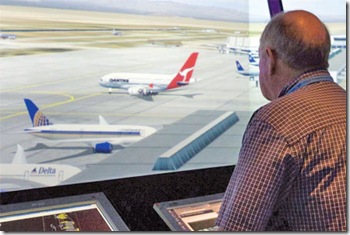 Tirupati airport handles about seven flights a day and is the main landing point for visitors to the Tirupati Temple. Tirupati has no approach radar and pilots therefore totally rely on air traffic controllers to give them weather information and landing clearance. On one of the not so fortunate days in February of 2012, air traffic controller failed to show up. Airport Manager therefore directed airport fireman, Mr. Basha to take over the radio at the control tower. Mr. Basha was of course untrained in the new role assigned to him nor was he fluent in English. He however gave adequate support information for the airplane to touchdown safely.
7. Booze Guzzling Deity of Ujjain
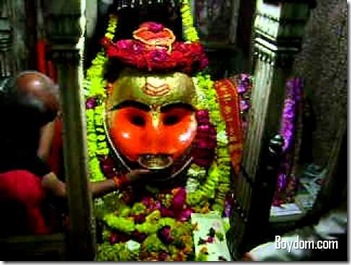 Kal Bhairav Nath is the guardian deity of the city of Ujjain. The temple is well known for its deity who guzzles wine by the gallons. The main offering to the deity is wine. It is also the only Prasad given to the devotees. Liquor is poured into the mouth of deity. Devotees throng to this temple bearing bottles of wine as an offering. Liquor is available 365 days a year outside the temple. The temple is said to have been built by the Marathas.
6. Bizarre Baby Tossing Ritual
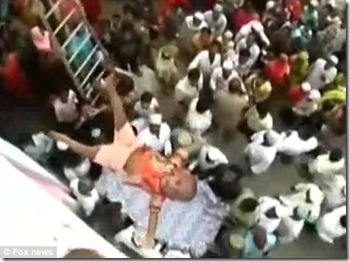 Strange traditions to bring luck and prosperity are too common in India, but tossing a baby from about three storeys is by far the strangest. As part of a religious ritual in Karnataka locals throw their children off a temple roof approximately 30 feet off the ground. Locals in the village of Nagrala believe the ritual brings health and good luck to the children. Most of the children are less than 2 years of age. Children are tossed by a man from the temple roof into the blankets below.
5. Jadav Molai Payeng
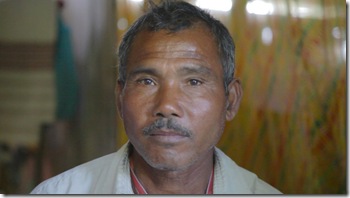 Jadav Molai Payeng of Assam started planting seeds about 30 years ago. Out of pity for the dying snakes in need of shelter, he started planting seeds along a sandbar as a teenager. Fast forward to the present day, it’s no more a barren sandbar, but a sprawling 1360 acre forest. “Molai woods,” named after him now houses a number of endangered animals. The sandbar in the middle of Brahmaputra is about 350 km from Guwahati. With no prior knowledge about trees, he started with bamboos and then later planted “proper trees.” Soon a variety of flora and fauna began dotting the sandbar and in 2008 forest officials were surprised to find such a dense forest in the middle of a sandbar.
4. Man Inhales Live Fish into Lungs
 In what can be only described as a stupid youngster prank, Anil Barela aged 12 from Khargone District of Madhya Pradesh swallowed a 3.5 inch live fish. Probably on being encouraged by his friends, he went ahead with this dangerous feat. Things took a turn for the worst when the fish instead of smoothly sailing into his stomach took a diversion into his windpipe and stuck there. He later reported difficulty breathing and was admitted to a local hospital. With his oxygen levels plummeting, he had to undergo a 45-minute procedure to remove the fish. Amazingly though on bronchoscopy the fish was still alive and taking its last breath. The boy survived the surgery.
3. Mayapuri Radiological Accident
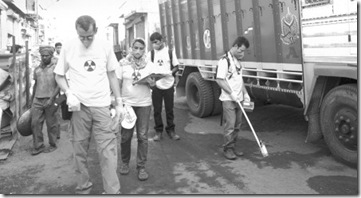 Mayapuri in Delhi is arguably the India’s largest market for metal recycling. As the case always is in India, there are no safety rules or procedures in place to protect workers here from hazardous chemicals or substances while recycling. In one such incident, in February of 2010, while dismantling a research irradiator owned by Delhi University, workers were exposed to heavy doses of radiation. This device had 11 pieces of cobalt-60 (a highly radioactive substance). One of the workers unaware of the hazardous nature of this substance carried the smallest of the fragment in wallet. He and six others later developed severe radiation burns and one of them died due to radiation poisoning. Delhi University was clearly to be blamed here. Instead of handling over the aging equipment to concerned authorities, it was just auctioned to a scrap metal dealer.
2. Shanti Devi
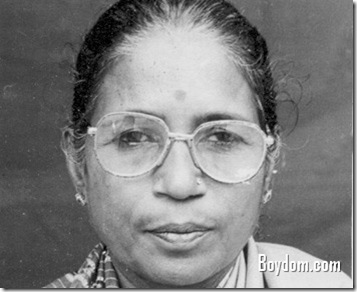 In 1930s, at 4 years of age, Shanti Devi of Delhi told her parents that she once lived in a place called Mathura and that she had been a mother of three. She claimed she died during childbirth, and recalled her previous name to be Ludgi. Because of the girl’s persistence with her story, her parents started investigating. It turned out in Mathura a woman named Ludgi had recently died. They took Shanti to that village where she began to speak the local dialect and recognized her previous-life husband and children. The case was brought to the attention of Mahatma Gandhi who set up a commission to investigate and a report was published in 1936. She gave 24 accurate statements matching confirmed facts about Ludgi’s life.
1. Boy Finds Mother with Google Earth (Saroo Brierley)
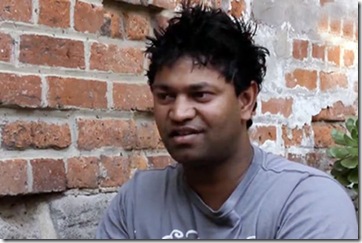 When Saroo Brierley took a train ride at the age of 5, little did he know that he would be separated from his family. His story sounds a lot like a 70s Bollywood movie. When he woke up in a train, his brother was nowhere to be found. Scared and lonely, he boarded the next train he could find and ended up in Calcutta. He lived in slums there for a little while before being rescued by an orphanage where he was adopted by a Tasmanian couple. As he grew up abroad, he always had insatiate curiosity to meet his birth parents. With no name of his town to search for, he painstakingly started searching Google Earth to find his hometown. After hours of probing with nothing but the mental images of his neighborhood, he zeroed in on a placed called Ganesh Talai in Khandwa (Madhya Pardesh). After reaching there and a couple of enquiries later, he stood before his mother after 25 years, both speechless.