The Impossible City at the Top of the World: Tiahuanaco’s 17,000-Year-Old Secret
Forget what they taught you in history class. Seriously. Erase it. Because we’re going to a place that breaks all the rules. A place that shouldn’t exist.
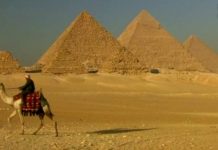
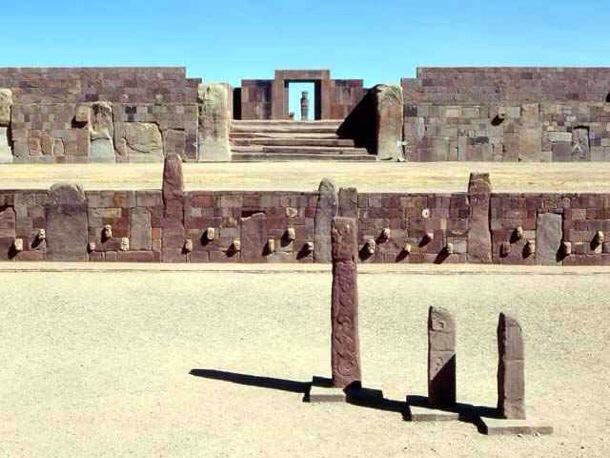
Picture this: You’re standing on a vast, windswept plain in the Andes Mountains. The air is thin, punishingly so. You’re 13,000 feet above sea level. Almost two and a half miles straight up. Nothing grows here but tough grass and stunted shrubs. Yet, scattered around you are the ruins of a city so old, so massive, and so impossibly precise, it makes the pyramids of Giza look like a recent project.
This is Tiahuanaco. Or Tiwanaku, if you prefer.
And it’s a riddle carved into 100-ton stones.

The official story tells you it was the capital of a powerful empire that peaked around 800 AD. A fascinating, but ultimately understandable, pre-Incan culture. They tell you it was built with simple tools and manpower. They tell you it was a ceremonial center.
It’s a nice story. Tidy. But it falls apart the second you actually look at the evidence. The stones themselves scream a different, far stranger tale. A story of unbelievable age, of lost technology, and of a cataclysm that literally reshaped a continent.
Stones That Mock Our Understanding
Let’s talk about the rocks. Because in Tiahuanaco, the rocks are everything.
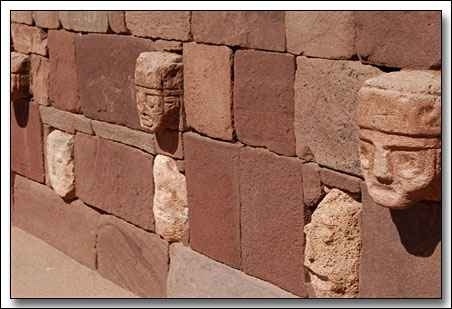
We’re not talking about simple mud bricks or stacked fieldstones. We’re talking about monolithic blocks of andesite and sandstone. Andesite is a volcanic rock. Hard. Incredibly hard. Harder than granite. You can’t just chip away at it with a bronze chisel. It laughs at bronze chisels.
Many of these blocks weigh over 100 tons. One sandstone slab at the nearby site of Puma Punku, considered part of the same complex, weighs an estimated 440 tons. That’s the equivalent of nearly 300 cars. Stacked.
Now, the official explanation is that a large labor force dragged these stones. But from where? The main andesite quarry is over 55 miles away, across mountainous terrain and a large stretch of Lake Titicaca. There were no wheels in the ancient Andes. There were no large draft animals capable of pulling such weight. And at 13,000 feet, there are no large trees to cut down and use as rollers. So how did they do it?
Magic?
Or a technology we have completely forgotten?
Deep Dive: The Precision of a Lost Science
It gets weirder. It’s not just the size and weight of the stones. It’s the precision. The cuts are perfectly flat, the angles razor-sharp. You can’t slip a piece of paper between some of these joints. They fit together like a giant, cosmic Lego set. We’re talking about tolerances that modern engineers would need advanced machinery to replicate.
Then there are the famous H-blocks of Puma Punku. These are andesite blocks carved into an impossible ‘H’ shape, all identical, as if stamped out of a mold. They are covered in perfectly straight grooves, some only millimeters wide, and drilled holes that are geometrically perfect. How do you drill a perfectly round hole through one of the hardest stones on Earth with a stick and some sand? You don’t.
Some internet forums buzz with theories of sonic drills and acoustic levitation. Did this ancient culture master the science of frequency and vibration to cut and move stone? It sounds like science fiction. But when you stand there, staring at a 400-ton block moved 50 miles and cut with laser-like precision, you have to ask… which idea is crazier? That they did it with sound, or that they did it with sticks and stones?
The Akapana Pyramid: A Machine Dressed as a Temple?
At the heart of Tiahuanaco stands a massive structure, a stone pyramid called the Akapana. Today it looks more like a small, sad hill. Its once-perfectly-terraced walls have been looted for centuries, its stones carted off to build Spanish churches and railroad beds. A tragic end.
But it wasn’t always a hill.

When archaeologists first began to excavate, they uncovered the skeleton of a massive, seven-level step pyramid. It was perfectly aligned with the cardinal directions. But the most shocking discovery was inside. The Akapana is not a solid structure. It’s a machine. It’s built around an incredibly complex system of interlocking surface and subterranean channels. The official explanation is “ceremonial drainage.”
Let’s be real. You don’t build a hydraulic system this advanced just to drain rainwater.
The channels are lined with perfectly fitted stone blocks, sealed so tightly they are still waterproof after thousands of years. Water would have been fed into the top of the pyramid, cascading down through the different levels, creating pressure, movement, and sound. What was it for? Was it a mineral processing plant, using water to separate precious metals? Was it a sound generator, creating specific frequencies for ceremonies or other, more mysterious, purposes? Or was it something else entirely? A power source? The questions are dizzying.
The Seaport at the Top of the World
Now for the part of the story that shatters the mainstream timeline. The part that points to a truly mind-bending history for Tiahuanaco.
Tiahuanaco is 13,000 feet up. A dry, high-altitude desert. But all around it, you find evidence that it was once a port. A seaport.
Yes, you read that right.
There are ruins of massive docks and piers, large enough to handle hundreds of ocean-going ships. There’s a strange, chalky line of calcium carbonate deposits ringing the entire plateau, a clear indication of an ancient sea-level shoreline. And then there’s the lake itself, Lake Titicaca.
Lake Titicaca is mostly fresh water. But it’s teeming with life you would only expect to find in the ocean. Seahorses, for one. How did saltwater seahorses get into a freshwater lake nearly three miles above the Pacific Ocean? The hillsides around the lake are littered, and I mean *littered*, with billions of fossilized sea shells.
The evidence is overwhelming. At some point in the distant past, this entire area was at sea level. Tiahuanaco was a bustling port on the shore of an ancient sea or a massive inland extension of the Pacific.
So what happened?
What If? The Day the Earth Moved
This is where the story takes a turn into cataclysm. This is the theory that explains everything. The seaport. The confused marine life. The shattered ruins.
What if the Andes Mountains weren’t always this high?
One of the earliest and most dedicated researchers of Tiahuanaco, a man named Arthur Posnansky, spent 50 years of his life studying the ruins. He used archaeoastronomy, studying the alignment of the temples to the stars. He concluded that the city was not built in 500 AD, but far, far earlier. His calculations pointed to an astonishing date: 15,000 BC. That’s 17,000 years ago.
And he proposed a mechanism for the city’s destruction and relocation. A single, continent-shattering event. An unimaginable geological upheaval. Perhaps a pole shift, or a close pass by a cosmic body, that caused the crust of the Earth to buckle. In this scenario, the entire Andean plateau, city and all, was violently thrust upwards two and a half miles into the sky in a geological instant.
It would have been an apocalypse. The ocean waters would have rushed off the newly elevated landmass, stranding sea life in the rising Lake Titicaca. The city would have been torn apart, its multi-ton stones thrown around like toys, just as the legends say. “Tossed about just like popcorn in a skillet.”
It sounds insane. But it neatly explains all the anomalies that the mainstream story has to ignore.
Viracocha’s Message in Stone
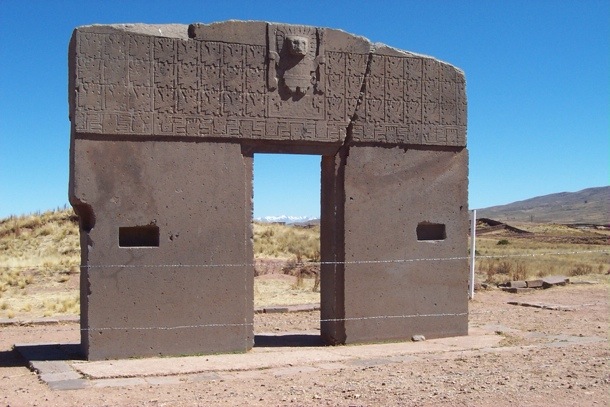
Among the broken megaliths is perhaps the most famous icon of Tiahuanaco: The Gate of the Sun. It’s carved from a single, 10-ton block of andesite. A doorway to nowhere, cracked at some point in the distant past by a force that could snap solid stone.
At its center is a mysterious figure. He is called the Staff God, but the local legends know him as Viracocha. The Creator. The bringer of civilization.
The stories of Viracocha are everywhere in the Andes. They say he was a white, bearded man who appeared after a great flood. He taught humanity the arts of agriculture, astronomy, and engineering. He was a teacher, a scientist, a survivor. Then, he walked out onto the waters of the Pacific Ocean and vanished, promising to return one day.
Is this just a myth?
Or is it a distorted memory of a real event? A memory of a survivor from a lost, highly advanced civilization that was wiped out by a global cataclysm? A civilization like Atlantis? The figure on the Sun Gate is holding what appear to be lightning bolts, and tears stream from his eyes. Are they tears for his lost world?
The Unanswered Question
Tiahuanaco asks more questions than it answers. It stands in silent defiance of our neat little historical timelines. Mainstream archaeology does its best to fit it into a box, to sand down its sharp, uncomfortable edges. But the stones won’t allow it.
Why build a city of such scale and precision in one of the most inhospitable places on Earth? Why carve blocks with technology we still struggle to understand? Who were the builders? And where did they go?
They left no written language that we can decipher. Or maybe they did. Maybe the geometry of the H-blocks, the calendar carved around the Sun Gate, maybe *that* is the language. A cosmic blueprint we are not yet smart enough to read.
Tiahuanaco is not just a ruin. It’s a message. It’s a warning. It’s proof that we know so much less about our own past than we think we do. It tells us that highly advanced societies may have existed in a time we call prehistory, societies that rose to incredible heights before being wiped from the face of the Earth by forces of nature we can barely imagine.
So the next time you see a picture of the Andes, don’t just see mountains. See a potential crime scene. See a mystery that’s 13,000 feet high and 17,000 years old. See the impossible city of Tiahuanaco, waiting for us to finally be ready to hear its story.