Friday, April 10, 2026
HomeUnexplained MysteriesAncient MysteriesSecret history of Stonehenge revealed

Secret history of Stonehenge revealed

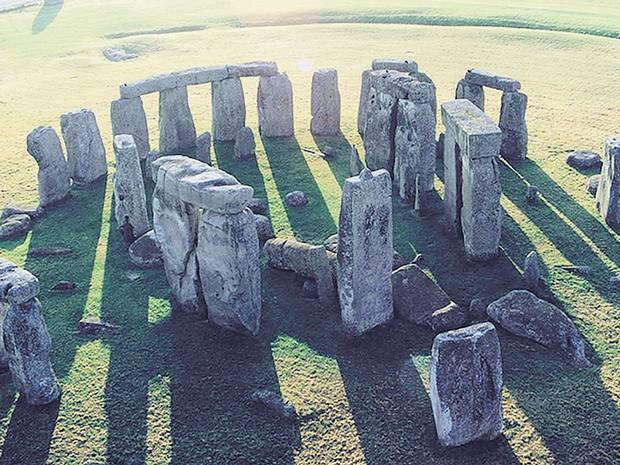
Everything You Know About Stonehenge Is Wrong: The 5,000-Year-Old Secret Beneath the Soil

Stop. Look at the stones. Really look at them.

For centuries, we’ve stared at those massive grey slabs on the Salisbury Plain and asked the same tired question: “How did they build it?” We obsessed over the mechanics. The ropes. The rollers. The sheer, back-breaking sweat involved in dragging 25-ton sarsen stones across the countryside. But while we were busy arguing about how they moved the rocks, we missed the much bigger, much scarier question.

Why there?

Why that specific patch of grass in the middle of nowhere? Why not a mile to the left? Why not on top of a hill instead of in a depression? We finally have an answer. And it changes the entire history of ancient Britain.

New, explosive research has just ripped the lid off the accepted timeline. It turns out, the “standard story” historians have fed us for decades is incomplete. Maybe even totally wrong. Current findings suggest that Stonehenge wasn’t just a construction site that became holy. It was holy ground long before the first stone ever arrived.

Stonehenge

The 500-Year Gap: A Sacred Ghost Town

Here is the bombshell. Archaeologists from the universities of Birmingham, Bradford, and Vienna have been scanning the earth. They aren’t just digging with trowels anymore; they are using high-tech magnetometers and ground-penetrating radar. They are x-raying the dirt.

What they found is staggering.

The site we know as Stonehenge was already a major sacred hub at least 500 years before the iconic stone circle was erected. Think about that timeframe. Five centuries. That is the same distance between us and the time of Shakespeare. For five hundred years, people were drawn to this spot, worshipping something invisible, something powerful, long before the monument we know today existed.

The sanctity of the location determined the layout. The stones were not the start of the magic. They were the final seal on a power that had been bubbling there for generations.

What Were They Worshipping Before the Stones?

This is where it gets dark. And fascinating. If the giant rocks weren’t there, what was? The new investigation points to massive pits. Posts. Timber structures that have long since rotted away, leaving only “ghost” signals in the soil.

It suggests a landscape of the dead.

We used to think the Neolithic people just found a nice flat field and started building. False. The research indicates the site was “originally and primarily associated with sun worship” centuries before the heavy lifting began. The location wasn’t chosen by accident. It was chosen because of the land itself.

The Solar Obsession: It’s Not Just About Summer

Every year, thousands of tourists flock to Stonehenge for the Summer Solstice. They wear flower crowns. They dance. They cheer when the sun rises. It’s a party.

But the ancients? They weren’t partying. They were terrified.

The new evidence massively increases the link to prehistoric solar religious beliefs, but likely not in the “hippie love-in” way we imagine. In the deep Neolithic era, winter was a killer. Cold. Starvation. Darkness. When the sun began to sink lower and lower in the sky, these people didn’t know if it would ever come back up.

The layout of the pre-stone landscape aligns with these celestial events. The Winter Solstice—the shortest day of the year—was the critical moment. The “sunset” alignment. This wasn’t just a calendar. It was a survival engine. A machine built to force the sun to return. The recent findings suggest that the specific geography of the site might have naturally aligned with the solstices, making the ground itself seem magical to early humans.

The Procession of the Dead

One of the most chilling aspects of the new findings is the reconstruction of a “route.”

The archaeologists have managed to putatively reconstruct the detailed path of a religious procession. This wasn’t a casual stroll. This was ritual. This was theater.

Imagine the scene. It’s 3000 BC. You are walking a specific path to the north of the monument. You are likely carrying something. Offerings? bones? The ashes of your ancestors? The investigation suggests this route was used annually.

The “Avenue” Connection

This links into what we know as “The Avenue,” a long, curving set of parallel banks and ditches that connects the stone circle to the River Avon. For years, people thought the Avenue was just a road to haul the stones.

Wrong again.

The natural chalk ridges under the Avenue happen to point directly at the midsummer sunrise and midwinter sunset. It’s a geological coincidence. A one-in-a-million freak of nature.

Imagine you are a Neolithic hunter. You walk across the plain. You find a natural ridge that points exactly to where the sun dies on the shortest day of the year. Do you think that’s a coincidence? No. You think the gods drew a line in the earth. You think that spot is the center of the universe.

That is why they built there. The landscape spoke to them first.

The Tech That Exposed the Truth

How do we know all this? We didn’t dig it up. We saw it with machines.

The “Stonehenge Hidden Landscapes Project” is the real hero here. By using remote sensing, they stripped away the grass and soil digitally. They found that Stonehenge isn’t a lonely monument. It sits in the middle of a crowded, busy, noisy ancient city of shrines.

They found:

  • The Cursus Pits: Two massive pits, one at each end of the “Great Cursus” (a huge racetrack-like enclosure nearby). These pits are aligned with the rising and setting sun on the solstice.
  • The “Superhenge”: Evidence of a massive line of stone or timber posts at nearby Durrington Walls, dwarfing Stonehenge itself.
  • Unknown Chapels: Dozens of burial mounds and smaller shrines that we walked over for centuries without noticing.

The researchers from Birmingham and Vienna have handed us a puzzle piece that changes the picture. The “putative pre-historic religious procession” implies that the movement of people through the landscape was just as important as the destination. It was about the journey. The approach. The psychological buildup before you ever saw the stones.

Deep Dive: Who Were the Builders?

So, if the site was holy 500 years before the big stones, who was worshipping there?

We are talking about a transition period. Britain was moving from the hunter-gatherer lifestyle to farming. But these weren’t simple farmers. They were sophisticated engineers. They were astronomers.

There is a theory—a controversial one—that the people who built the initial stages of Stonehenge weren’t even the same genetic stock as the ones who finished it. We see the arrival of the “Beaker People” later in the timeline. But the original earthworks? The original sacred pits? That was the work of the indigenous Neolithic population.

They didn’t have the wheel. They didn’t have metal tools. They used antlers from red deer as pickaxes. They used the shoulder blades of oxen as shovels.

Can you imagine the dedication? Digging through solid chalk with a deer antler? It would take thousands of hours. You don’t do that for fun. You don’t do that for a king. You do that because you believe the world will end if you don’t.

The Acoustic Mystery: Was It a Sound Weapon?

While the new research focuses on the solar connection and the processional route, we have to touch on the “sound” theory. It adds another layer to the procession idea.

Modern acoustic engineers have analyzed the shape of the stones. The way they are curved. The way they are spaced. Some researchers believe the circle was designed to cancel out noise from the outside, creating a “quiet zone” in the center, or conversely, to amplify rhythmic drumming to a trance-inducing level.

If there was a procession, as the new study suggests, imagine the sound. Drums beating. Chanting. As you walk the sacred route, the sound changes. The landscape funnels the noise. By the time you reach the center, your brain is vibrating. You are in an altered state of consciousness.

It wasn’t just a temple. It was a psychedelic experience made of rock.

The “Bluestone” Impossibility

We can’t talk about Stonehenge without mentioning the smaller stones—the “Bluestones.” These come from the Preseli Hills in Wales. That is 150 miles away.

Why?

Why drag 4-ton rocks 150 miles over mountains, through swamps, and across rivers when there were perfectly good rocks nearby?

The “sacred landscape” theory explains this. If the location of Stonehenge was determined by the solar alignment of the ground (the 500-year gap discovery), then the materials had to be worthy of the site. You couldn’t just use local trash rock. You needed the “magic” rocks from the west.

Some legends say the Bluestones have healing properties. Maybe Stonehenge was a hospital. A place you went to be cured by the solar power channeled through the Welsh stones.

Conclusion: The Mystery Deepens

The archaeologists from the universities of Birmingham, Bradford, and Vienna have done something incredible. They haven’t just found old dirt. They have found intent.

They have proven that the significance of the site Stonehenge now occupies emerged earlier than has previously been appreciated. The stones are just the tombstone. The body is the earth beneath them.

We are looking at a culture that obsessed over the sun, the seasons, and the landscape for half a millennium before they laid a single Sarsen stone. They walked the processional routes. They dug the pits. They watched the sky.

Stonehenge is not a static monument. It is the final layer of a 5,000-year-old story of fear, hope, and the desperate need to connect with the cosmos. And as technology gets better, as we scan deeper, who knows what else is waiting down there in the dark?

The ground is still keeping secrets.

Source: The Independent.

Originally posted 2016-02-20 12:29:26. Updated with modern findings and deep-dive analysis. Republished by Blog Post Promoter

Amit Ghosh
Amit Ghoshhttps://coolinterestingnews.com
Aloha, I'm Amit Ghosh, a web entrepreneur and avid blogger. Bitten by entrepreneurial bug, I got kicked out from college and ended up being millionaire and running a digital media company named Aeron7 headquartered at Lithuania.
RELATED ARTICLES
- Advertisment -

Most Popular

Recent Comments

Warren Pan Abbott on The legend of the Devil Monkey !
chris davies on The McPherson Tape Mystery
Reed Reedly on ET has Internet!
Bea Houseoffashion on Proof Of Time Travellers – Gallery
Marcus2012 on ET has Internet!
Reed Reedly on ET has Internet!
LaughsAtConspiracyNuts on The 9/11 Conspiracy – Myths and Facts
Alex Sliverman on Did the ancients fly?
Doctor Wholigan on Time Traveler in 1938 film
chris davies on The McPherson Tape Mystery
Archie1954 on 10 secret UFO hideouts
chris davies on Ghosts of flight 401
Marcus2012 on ET has Internet!
jason Macdonald on Proof of Time Travel? – China
chris davies on Long-Lost Pyramids Found?
Reed Reedly on ET has Internet!
Milkman on Connected Universe
Tenmiles on Baigong Pipes Mystery
Simon Foster on Sirius – The Documentary
From the 1st April on 2013 – Alien Contact date ?
SkyWatcher on Is ET ignoring us?
I Come From The Future on Obama to make UFO Alien disclouser soon ?
Just another person on 2013 – Alien Contact date ?
Malcolm Windowcleaner on The strange case of Rudolph Fentz
Mason Servio on Strange Things on Mars
Marke Wisdom Seeker on What will we find as arctic melts?
Andrea A Elisabeth Levyne on Aliens Captured in Varginha, Brazil
Mitch Grouyeki on Amazing Space Shuttle pictures