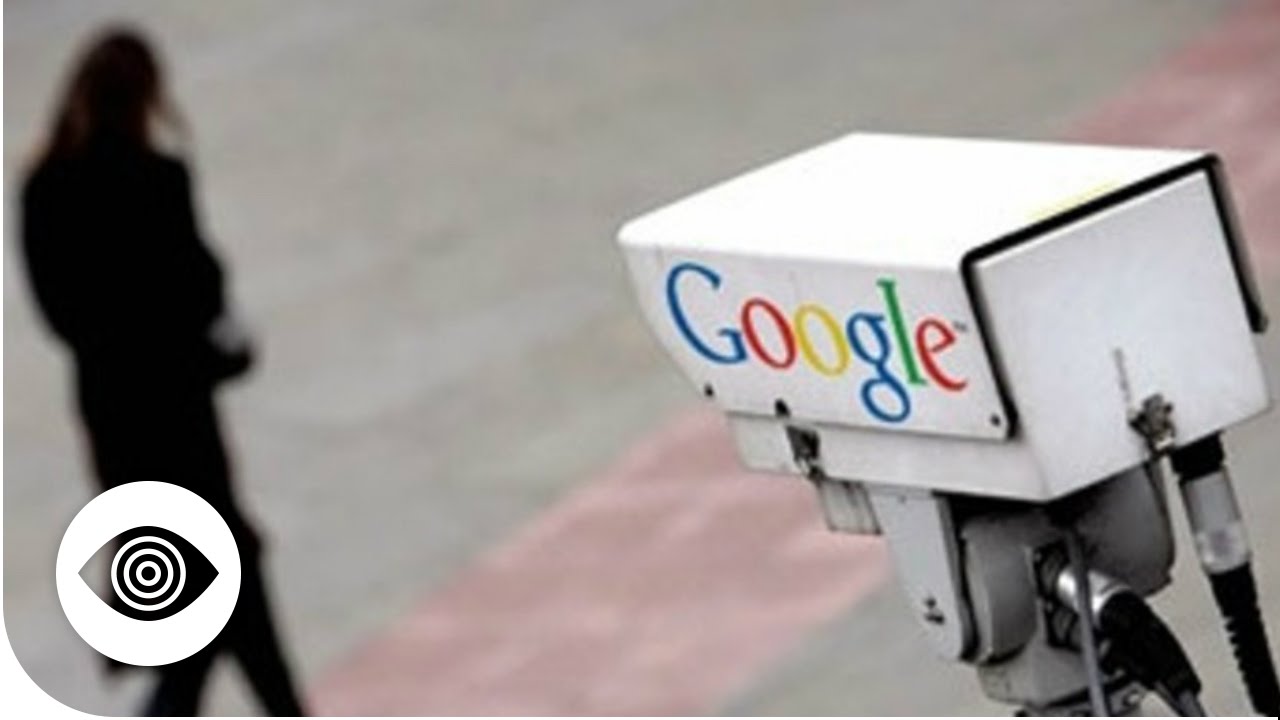
The Digital Ghost: What Google *Really* Knows About You (And Why You Should Be Terrified)
You think your thoughts are private? That the quiet fears you only type into a search bar at 3 AM just vanish into the ether? Think again. Every single click, every search, every paused video, every step you take with your phone in your pocket… it’s all being recorded. Watched. Analyzed.
You are feeding a machine. A machine that knows you better than your spouse, better than your parents, maybe even better than you know yourself. We call it Google. But what is it, *really*? A helpful tool? Or the most sophisticated surveillance system ever created in human history?
The truth is far stranger, and far more unsettling, than you can imagine. Buckle up. We’re about to pull back the curtain on the friendly, colorful logo and stare into the all-seeing eye behind it.
The Grand Bargain: Your Life for a “Free” Service
It all starts with a simple, seductive lie. The lie of “free.”
Gmail is free. YouTube is free. Google Maps is free. Android is free. We are showered with these amazing, life-altering tools, and we pay nothing. Or so we think. The old saying has never been more true: if you’re not paying for the product, you *are* the product.
But it’s deeper than that. You’re not just the product. You are the raw material. The resource. You are the oil field, the gold mine, and the diamond pit all rolled into one. Your attention, your data, your habits, your desires—these are the most valuable commodities of the 21st century. And you give them away every single day without a second thought.
Google’s business isn’t search. It’s not advertising. Its business is *you*. They build a profile, a digital ghost of you, and then they sell access to that ghost to the highest bidder. It’s a multi-billion dollar empire built on the bedrock of your personal information.
Level One Surveillance: The Things You Know They Know
Let’s start with the basics. The data points you might already suspect they’re collecting. But have you ever stopped to consider the sheer scale of it? The terrifying depth?
Your Digital Diary: The Search Bar
Every single thing you’ve ever typed into that little white box. Every medical symptom. Every political question. Every name you’ve looked up. Every insecure thought. Every vacation plan. Every product you’ve considered buying. It’s all there, logged and stored with a timestamp. They don’t just see the words; they see the patterns. They know when you’re feeling sick, when you’re looking for a new job, or when your relationship is on the rocks. It’s the most honest, unfiltered diary you’ve ever kept, and you’ve handed it directly to a corporation.
The All-Seeing Map: Your Location History
If you use an Android phone or have Google Maps on your iPhone, there’s a good chance Google has a feature called “Timeline” enabled. Go look at it. Right now. You will see a map of your life. Every place you’ve been. The route you took. How long you stayed. That trip to the doctor you didn’t tell anyone about? It’s there. The late-night drive to clear your head? Logged. Your daily commute, your favorite coffee shop, the friend’s house you visit every Friday. It’s a stalker’s dream, and you opted in by clicking “agree” on a 50-page document you never read.
Your Brain on Video: YouTube
You think you’re just killing time watching cat videos or learning how to fix a leaky faucet. But to Google, you’re revealing the inner workings of your mind. What makes you laugh? What makes you angry? What political ideas are you drawn to? What conspiracy theories pull you in? They know what topics you binge-watch at 2 AM and what videos you click away from in disgust. They are building a psychological profile so precise it’s almost supernatural.
Level Two: The Invisible Data Web
This is where it gets really chilling. The data collection doesn’t stop with the services you actively use. It’s woven into the very fabric of the internet and the devices you hold in your hand. It’s a dragnet, and you’ve been caught in it for years.
Android: The Spy in Your Pocket
Android isn’t just an operating system. It’s the most effective mass-surveillance device ever conceived. Because Google owns it, they have access to a layer of data that is simply staggering. They know which apps you use and for how long. They have access to your contacts. With the right permissions (which most people grant without thinking), they can see your call logs and text messages. Your phone is a 24/7 sensor, collecting information about your life, and sending it straight back to Google’s servers.
Chrome: The One-Way Mirror
Using Google Chrome is like living in a house made of one-way mirrors. You think you’re looking out at the web, but Google is always looking in. Every website you visit is logged. Every password you save, every address you autofill, it’s all stored and synced across your devices. They are not just tracking your searches; they are tracking your entire journey across the digital world.
The “Helpful” Ecosystem
Every “helpful” tool is another tentacle of the data kraken.
- Google Photos: You upload your precious memories for “free storage.” In return, Google’s AI scans every single photo. It uses world-class facial recognition to identify you, your friends, and your family. It knows who you hang out with. It uses object recognition to know you have a dog, you drive a red car, and you went to the beach last summer.
- Gmail: For years, they openly scanned the content of your emails to target you with ads. They claim to have stopped this practice for ad purposes in 2017, but do you really believe the data isn’t still being analyzed? Your emails contain your most intimate conversations, receipts for your purchases, and travel confirmations. It’s a treasure trove.
- Google Assistant & Home: You literally invited a corporate listening device into your home. These devices are always listening for their “wake word.” Google keeps recordings of your voice commands, and there have been numerous reports of contractors listening to snippets of conversations to “improve the AI.” What else are they hearing?
Connecting the Dots: The Creation of Your Digital Twin
Here’s the part that should send a shiver down your spine. The real power isn’t in collecting any single piece of data. It’s in *combining* all of it.
They take your search history, your location data, your YouTube habits, your emails, your photos, and your voice commands. They feed it all into a monstrously powerful artificial intelligence. And it builds a model of you. A digital twin. A “voodoo doll” that can be used to predict your behavior with terrifying accuracy.
This digital twin knows things you’ve never explicitly told Google. It can infer your income level, your political affiliation, your relationship status, your religious beliefs, and your secret health worries. It knows if you’re pregnant before your family does. It knows you’re about to quit your job before your boss does.
How?
Simple patterns. You start searching for “morning sickness remedies” and “best strollers.” You start driving by a hospital with a maternity ward. You start watching videos on parenting. The AI connects these dots and flags you as “expecting parent.” Advertisers then pay a premium to get their baby-related ads in front of you. This is happening for every single aspect of your life. Every day.
The Deep State Connection: Was Google Born a Spy?
This is where we leave the beaten path. This is where the official story breaks down. We’re told Google was started by two brilliant students in a Stanford garage. A classic Silicon Valley fairy tale.
But what if that’s a cover story? A carefully crafted piece of public relations to hide a much darker origin?
The research that led to Google’s PageRank algorithm was partially funded by the National Science Foundation, a U.S. government agency. That’s public knowledge. But dig deeper. The broader Stanford project that housed Sergey Brin and Larry Page’s work received significant funding from the Massive Digital Data Systems (MDDS) program. Who ran the MDDS program? A research body sponsored by a consortium of intelligence agencies, including the NSA and the CIA.
Think about that. The very seed that grew into Google was nurtured by the U.S. intelligence community. At the exact time the government was desperate to find a way to make sense of the exploding world wide web, two “geniuses” just happened to invent the perfect tool for the job. A tool that could index the entire internet and, by extension, the thoughts and interests of everyone on it.
Was it a coincidence? Or was Google a project from the start? A way to get the entire world to voluntarily submit to a level of surveillance that the Stasi or the KGB could only have dreamed of. They didn’t need to bug our homes or tap our phones. We did it for them. We bought the listening devices and placed them on our kitchen counters. We carried the tracking devices in our pockets. All under the guise of convenience.
And their famous early motto? “Don’t Be Evil.” Perhaps the greatest piece of misdirection in corporate history.
What If? The Algorithmic Future They’re Building
So they have this perfect digital model of you. What’s the endgame? Selling you a better pair of sneakers? That’s child’s play. The real potential is far more profound and far more dangerous.
Thought Police and Pre-Crime
Imagine a world where your search history is used to create a “threat score.” You’ve been searching for controversial political topics. You’ve been watching angry videos on YouTube. Your location data shows you attended a protest. Suddenly, your score goes up. You might find yourself on a no-fly list. You might get a visit from the authorities. Not because you’ve done anything wrong. But because the algorithm has predicted that you *might*. This is the world of pre-crime, and Google is building the data foundation for it.
The Reality Bubble
You and your neighbor can search for the exact same term on Google and get completely different results. Why? Because Google is tailoring the results to what it *thinks* you want to see. The algorithm is showing you a world it knows you’ll agree with. Over time, this creates a “filter bubble” where you are never exposed to opposing viewpoints. It reinforces your biases. It makes you more extreme. And it makes you easier to manipulate. An entire population, divided and conquered by algorithms. Is this how they’ll control us? By controlling what we see as reality itself?
Your Social Credit Score
In China, the government is implementing a social credit system where your behavior is monitored and scored. A low score can prevent you from buying a plane ticket or getting a loan. What if corporations in the West decide to do the same? What if your Google data is sold to insurance companies, and your premiums go up because you’ve been searching for information about high-risk hobbies? What if you’re denied a mortgage because your location data shows you spend time in “bad” neighborhoods? This isn’t a distant dystopia. The technology to do it exists right now.
Is Escape Even Possible?
So, the big question. Can you escape? Can you pull the plug and reclaim your digital soul?
The answer is yes. But it isn’t easy.
Escaping Google isn’t like canceling a gym membership. It’s like trying to perform surgery on yourself. The system is designed to be inescapable. It’s convenient. It’s everywhere. Removing it from your life requires a conscious, and often difficult, effort.
You can start small. Switch your search engine to a privacy-focused alternative like DuckDuckGo. Use ProtonMail instead of Gmail. Use Signal for your messaging instead of the default Android app. But the biggest step is your phone. You’d need to move away from Android to a “de-Googled” phone or a different ecosystem entirely. It’s a massive undertaking.
And even then, the ghost of your data remains. Everything you’ve given them for the past decade? It’s still there, sitting on their servers. A permanent record of your life.
The truth is, we are the guinea pigs in the largest social experiment in history. We traded privacy for convenience, and we may never be able to get it back. The next time you pick up your phone to ask a simple question, stop for a second. And remember who is really listening to the answer.