Home Unexplained Mysteries Modern Mysteries The Strange Story of Arthur Furguson

The Strange Story of Arthur Furguson

0
73
The Strange Story of Arthur Furguson

The Strange Story of Arthur Furguson

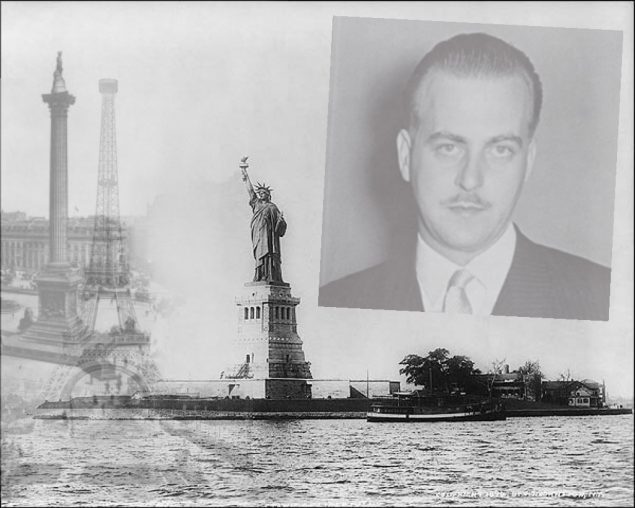
Look at that face. Does it look like the face of a criminal mastermind? A super-villain? A threat to national security? Probably not. He looks like your uncle. He looks like a retired actor who enjoys a nice cup of tea and a stroll through the park. And that was exactly his weapon.

Meet Arthur Furguson. The man who sold the world.

In the annals of history, there are liars, there are thieves, and then there are legends. Furguson sits on a throne entirely his own. While modern scammers are trying to steal your grandma’s password via email, Arthur Furguson was out on the streets of London, looking people in the eye, and selling them national monuments. Literally.

This isn’t just a story about theft. It is a masterclass in human psychology. It is a deep look at how easily we believe what we want to hear. And it all started on a sunny morning in 1923, with a little bit of acting and a whole lot of nerve.

The Actor Who Found His Stage

Arthur Furguson was a Glasgow-born actor. Not a famous one. Just a guy who knew how to carry a voice and hold a posture. He understood presence. He knew that if you stand tall enough and speak with enough authority, people tend to stop asking questions. They just listen.

For years, Furguson played characters on stage. He memorized lines. He wore costumes. But the pay was garbage, and the applause was fleeting. Like so many creative minds, he was unaware of his true calling until the universe threw a golden opportunity right at his feet.

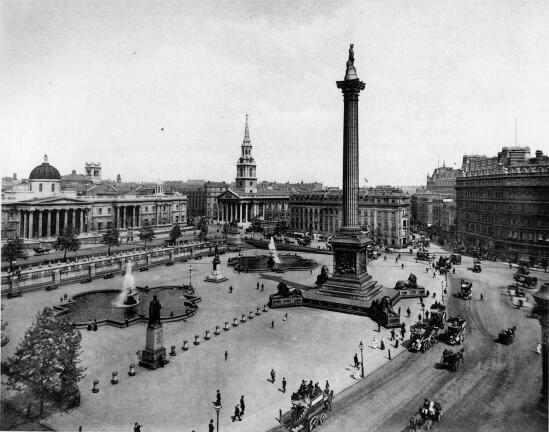
It was 1923. Trafalgar Square. London.

The mood in Britain was strange. World War I had ended only five years prior. The country was victorious, yes, but it was also broke. Tired. The economy was staggering. Meanwhile, across the ocean, the United States was entering the “Roaring Twenties.” Americans were flush with cash, optimism, and a deep, almost naive reverence for “Old Europe.”

Enter the Mark.

Furguson was killing time in the square when he spotted him. An American tourist. A rich one. You could spot them a mile away back then—the cut of the suit, the wide-eyed wonder, the wallet that looked like it was bursting at the seams. This particular gentleman from Iowa was staring up at Nelson’s Column with a look of pure worship.

A lightbulb went off in Furguson’s head. A dangerous, brilliant lightbulb.

The Strange Story of Arthur Furguson

The Sale of the Century: Nelson’s Column

Most people would see a tourist and think, “Maybe I can ask him for a cigarette.” Furguson thought, “I bet I can sell him that statue.”

He approached the American. He didn’t slouch. He didn’t act suspicious. He appointed himself the “Official Guide to the Square.” He had the voice for it. The confidence. He began to explain the history. The statue was Admiral Lord Nelson. A naval hero. Died at the Battle of Trafalgar. A true British legend.

The American ate it up. He loved the history. He loved the grandeur.

Then, Furguson dropped the hook. He let out a heavy, tragic sigh. The kind of sigh that invites a question. The American asked what was wrong.

“It is a terrible shame,” Furguson whispered, leaning in closer. “The square just won’t feel the same without it.”

The trap was set.

He explained that Britain’s war debts were sky-high. The government was desperate. They had made the heartbreaking decision to sell off the landmarks to the highest bidder. Everything had to go. The lions. The fountains. Even Lord Nelson himself.

Stop and think about this for a second. It sounds insane to us today. But in 1923? It was plausible. Governments were collapsing. Currencies were fluctuating. Why wouldn’t the British sell a statue to pay off a war debt?

The American didn’t call the police. He didn’t laugh. He asked the price.

The £6,000 Swindle

Furguson thought fast. He couldn’t say a million pounds; that was too much. It had to be a number the American could access, but high enough to be prestigious. He mused, rubbed his chin, and whispered that the secret price was £6,000.

In today’s money? That is roughly £300,000 to £400,000. A bargain for a national monument.

But there was a catch. Of course there was a catch. Furguson explained that the monument couldn’t just go to anyone. It had to go to the “right” buyer. Someone of taste. Someone who would protect it. Someone… from Iowa.

The American begged. He pleaded. He wanted to jump the queue. He didn’t want the French or the Germans to get their hands on Nelson. He wanted to take it home to the cornfields.

Furguson played his role perfectly. He pretended to be hesitant. He said he needed to “call his employers.” He walked away, stood around a corner for a few minutes, smoked a cigarette, and came back with good news. The British Empire was willing to accept a check immediately to expedite the deal.

The check was written. Furguson took it. He told the American to go contact a demolition crew to help dismantle the column. Then, amazed at his own cunning, Furguson ran straight to the bank.

The American actually went to a contractor. He tried to hire workers to tear down Nelson’s Column. The foreman looked at him like he was crazy. It wasn’t until Scotland Yard got involved that the poor man from Iowa accepted the truth: He had bought a lie.

The Spree: Big Ben and The Palace

Most criminals, after scoring a massive payday, would go into hiding. They would move to a remote island. They would lay low.

Not Arthur. The adrenaline was too good. The summer of 1923 became his playground. He realized something profound: People want to believe in fairy tales. They want to own a piece of history so badly that they will ignore every red flag in existence.

He stayed in London. He kept working.

Another American tourist crossed his path. This time, the target was Big Ben. The most famous clock in the world. Furguson spun the same story. The debt. The secret sale. The need for a “preserver” of history. He sold Big Ben for £1,000. It was a steal. Literally.

But why stop at clocks? Why not go for the crown jewel?

He found another victim and accepted a £2,000 down payment on Buckingham Palace. Yes. The King’s house. He took a deposit on the residence of the British Monarch. The sheer audacity is hard to comprehend. How do you explain the King still living there? “Oh, he’s moving out next Tuesday, just give us the deposit now.”

And it worked. Again.

The Paris Interlude: Did He or Didn’t He?

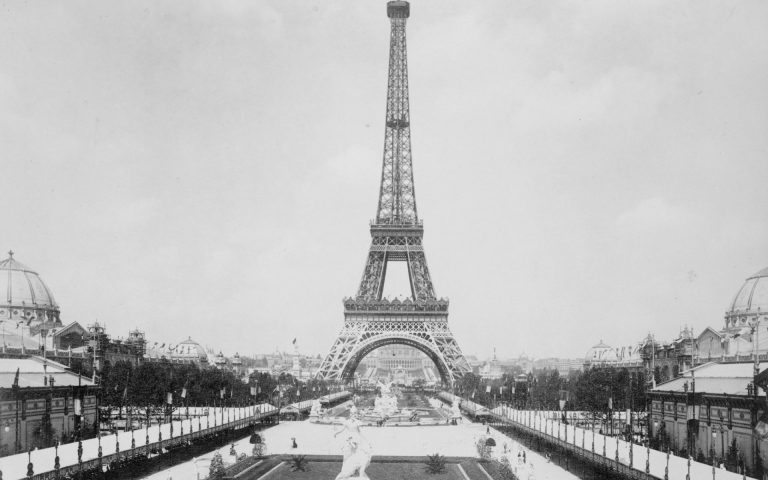
There are rumors—murky, foggy rumors—that Furguson took his talents across the channel to Paris. Some stories say he sold the Eiffel Tower for scrap metal. Now, historians often attribute the “Selling of the Eiffel Tower” to another legendary con artist, Count Victor Lustig. Did they both do it? Did Furguson copy Lustig? Or has history blurred these two titans of trickery together?

Regardless of who sold the tower, one thing was clear: Europe was becoming too hot. The police were embarrassed. The American Embassy was furious. Scotland Yard was hunting a ghost. Furguson knew he had to move. He needed a new stage.

He needed America.

The Strange Story of Arthur Furguson

The White House for Rent

In 1925, Furguson arrived in the Land of the Free. He had money, he had confidence, and he had a whole new population of victims. Since Americans had been his best customers in London, he figured he might as well go to the source.

He didn’t start small. He didn’t sell bridges or statues initially. He went straight for the top.

He found a wealthy cattle rancher from Texas. A man with more money than political savvy. Furguson introduced himself as an agent of the US government. He spoke in hushed tones about the budget deficit. The President, he claimed, was looking to downsize. The White House was becoming a financial burden.

The pitch? A lease. A 99-year lease on 1600 Pennsylvania Avenue.

The price? $100,000 a year. Payable in advance.

The rancher bit. He wanted to live in the President’s house. He wanted to hang his hat in the Oval Office. He handed over the first year’s rent. Furguson pocketed $100,000. In the mid-1920s, that was a fortune. That was “retire forever” money.

Furguson’s bank account was exploding. He could have walked away. He could have vanished into the sunset, sipping martinis in Mexico or retiring to the countryside.

But vanity is a killer. And greed? Greed is a trap.

The Grand Finale: The Statue of Liberty

Arthur Furguson wanted one last score. A “Grand Finale” to end his career. He was in New York, the city that never sleeps, and he set his sights on the ultimate symbol of America: The Statue of Liberty.

This time, his mark was an Australian from Sydney. A man visiting the Big Apple, awestruck by the harbor.

Furguson spun a new tale. He told the Australian that the entrance to New York Harbor was being widened. The ships were getting too big. The traffic was too heavy. Unfortunately, Lady Liberty was in the way. She had to move.

Sentimental attachment, Furguson argued, could not stop the path of progress. The State Department was prepared to sell the statue to anyone willing to take it away. Imagine that. Taking the Statue of Liberty back to Sydney. Putting it in your garden. It was the ultimate souvenir.

The Australian was hooked. The price for the deposit was set at £100,000. It was a massive sum. The Australian began attempting to raise the funds over the next few days.

This was where Furguson messed up.

Usually, Furguson moved fast. Strike, take the cash, run. But this deal took time. Furguson had to stick to the Australian like glue. He couldn’t let the man talk to anyone else. He steered him away from hotel clerks, away from bartenders, away from anyone who might say, “Hey, you can’t buy the Statue of Liberty, you idiot.”

In a moment of pure arrogance, Furguson allowed himself to be photographed with the buyer. Arm in arm. Smiling in front of the statue. He thought he was untouchable.

The House of Cards Collapses

There was a delay in the bank transfer. Furguson got impatient. He started to sweat. The cracks in his performance began to show.

The Australian was naive, but he wasn’t blind. He sensed the anxiety. Why was this government official so desperate for the cash right now? Why couldn’t he speak to anyone else?

Suspicion took hold. The Australian took the photograph—the one Furguson had posed for so proudly—and went to the police. Just to check. Just to be sure.

The police couldn’t believe their eyes. They knew about the “Salesman of Monuments.” Reports had trickled in from London. They had descriptions, but they never had a face. Now, they had a photograph.

It was the breakthrough they needed. The Australian led the detectives straight to Furguson. The actor, the salesman, the legend, was promptly arrested.

The Mystery of the Sentence

Here is where the story gets even stranger. Furguson had swindled people out of hundreds of thousands of dollars. He had humiliated governments. He had sold the White House.

His sentence? Five years.

That’s it. Five years in jail. It seems like a laughably small price to pay for the fortune he had amassed. Did he have the money hidden away? Did he bribe the judge? Or was the legal system just baffled by the sheer absurdity of the crime?

He was released in 1930. He didn’t return to a life of poverty. He didn’t go back to acting on stage for scraps. He moved to Los Angeles. The land of make-believe. It was the perfect home for him.

Reports say he lived in the lap of luxury until his death in 1938. Some say he pulled a few more “convenient tricks” to fund his retirement. Others say he lived off the stash from his London and New York glory days.

Is It Even Real? (The Deep Dive Theory)

Now, hold on. Before you go telling this story at a dinner party, we need to look at the “meta” conspiracy here. There is a growing theory among modern historians and internet sleuths that Arthur Furguson… never existed.

Some researchers suggest that the story of Arthur Furguson was actually a sketch written by an English comedian in the 1920s. They argue that newspapers, hungry for sensational headlines, picked up the fiction and reported it as fact. Over decades, the line between the joke and the reality blurred until “Arthur Furguson” became a historical figure.

Think about it. Selling the White House? Selling Big Ben? It sounds too good to be true. It sounds like a movie script.

But then again, look at the world around you. Look at the emails in your spam folder. Look at the crypto scams and the Ponzi schemes. Is it really so hard to believe that a charismatic actor could convince a wealthy, naive tourist to buy a statue?

Maybe Furguson was a ghost. Or maybe, just maybe, he was the greatest actor who ever lived, playing a role so convincing that even history isn’t sure if he was real.

Real or fake, Arthur Furguson teaches us one undeniable lesson: If a deal looks too good to be true, it’s probably because you’re trying to buy the Statue of Liberty from a guy you met on the street.

Originally posted 2016-11-05 17:06:24. Republished by Blog Post Promoter

Originally posted 2016-11-05 17:06:24. Republished by Blog Post Promoter