History is written by the winners. We know this. It’s a cliché, but it’s true. And in the history books you read in school, the winners of the race to the sky were Orville and Wilbur Wright. 1903. Kitty Hawk. A few seconds of airtime. A blurry photograph. A legend cemented in stone.
But what if that story is wrong?
What if the timeline is off by nearly a decade? What if the first machine to defy gravity didn’t launch from a sandy dune in North Carolina, but from a crowded beach in Bombay, India? And here is the kicker: what if it didn’t run on a combustion engine, but on something far, far stranger?
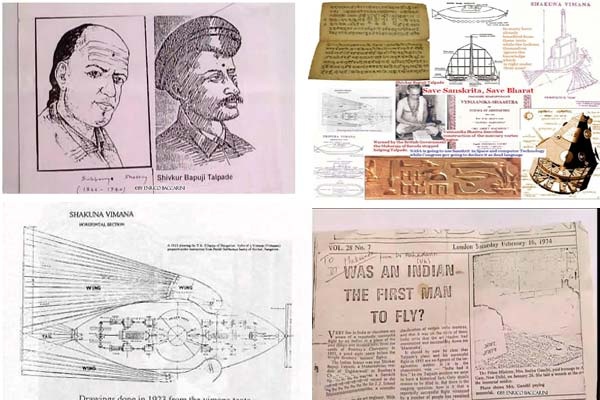
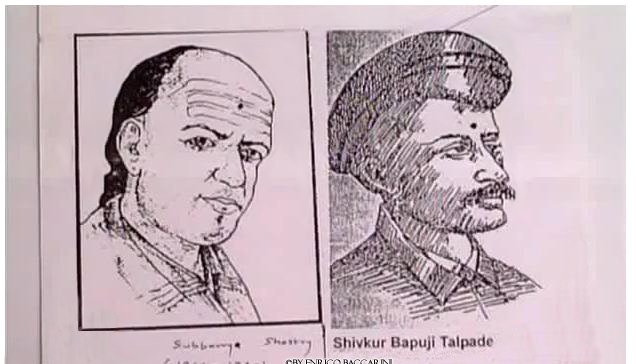
We need to talk about Shivkar Bapuji Talpade.

The Man Who Looked Back to Go Forward
Let’s set the scene. It’s the late 19th century. The Industrial Revolution is pumping smoke into the skies of the West. But in India, under the thumb of the British Raj, a Sanskrit scholar named Shivkar Bapuji Talpade was looking in a different direction. He wasn’t looking at the future of steam and pistons. He was looking at the deep, dusty past.
Talpade wasn’t your typical engineer. He didn’t have a factory. He didn’t have government grants. He had books. Specifically, he had the Vedas. Ancient Indian scriptures that most people treated as religious metaphors or spiritual guides.
Talpade saw something else.
He believed these texts contained blueprints. Literal, technical manuals for technology that humanity had forgotten. He became obsessed with the work of Maharishi Bhardwaj, an ancient sage who supposedly penned the Vaimanika Shastra—the Science of Aeronautics.
While the Wright Brothers were tinkering with bicycles, Talpade was trying to decode a dead language to build a spaceship.
1895: The Ghost Flight of Chowpatty Beach
Fast forward to 1895. This is eight full years before the Wright Brothers made their famous hop. The location is Chowpatty Beach, Mumbai (then Bombay). It’s crowded. It’s hot.
According to accounts that have survived mostly through oral tradition and fragmented records, Talpade rolled out his creation. He called it Marutsakha. In Sanskrit, it translates to “Friend of the Wind.”
It didn’t look like a modern airplane. No long wingspan. No propeller buzzing in the front. Descriptions vary, but many suggest it was more cylindrical, or perhaps saucer-shaped, mimicking the descriptions of the Vimanas found in the ancient texts.
He fired it up.
This is where the story gets wild. The Wright Brothers flew 120 feet. That’s less than the length of a Boeing 747’s economy cabin. It was a glorified jump. Talpade’s machine? Witnesses claimed it shot into the sky.
Unmanned, controlled by wire or mechanism, it allegedly climbed to an altitude of 1,500 feet. That is not a hop. That is a flight. It hovered. It moved. And then, as with all prototypes, gravity came calling. The Marutsakha crashed down.
But it had flown. If the accounts are true, an Indian scholar beat the Western world to the skies by nearly a decade, and he did it with an aircraft that flew ten times higher than the “first” airplane.
The Impossible Engine: Mercury Vortex Technology?
Here is where we leave the realm of standard history and enter the “Deep End.” How did it fly? The Wright Flyer used a petrol engine. Crude, loud, but understandable.
Talpade’s Marutsakha supposedly used a “Mercury Vortex Engine.”
You read that right. Liquid mercury.
The theory, rooted in the Vaimanika Shastra, suggests that if you heat mercury and spin it in a specific way, it produces a different kind of lift. Anti-gravity? Ionic propulsion? It sounds like science fiction. Actually, it sounds like Star Trek.
But here is the creepy part. Modern science is actually looking into this. NASA and other space agencies have experimented with Ion Drives. These engines use charged particles to create thrust. They are super efficient in the vacuum of space. In the 1970s, the idea of rotating mercury to create an electromagnetic field was explored in theoretical physics.
Could an ancient text from thousands of years ago actually hold the secret to ion propulsion?
The historian Evan Koshtka described Talpade as the “first creator of an aircraft.” But the scientific community ignored him. Why? Because the fuel wasn’t gasoline. The method wasn’t aerodynamics as we know it. It was… something else.
The Great Silence: Why Don’t We Know Him?
If Talpade flew a mercury-powered drone in 1895, why isn’t his face on the Rupee? Why don’t we learn about him in physics class?
Two words: British Raj.
India was a colony. The British were not exactly thrilled about the idea of their subjects possessing advanced technology, especially technology that could fly. Imagine the panic. If the Indians could build flying machines, the Empire was in trouble.
There are dark rumors surrounding the aftermath of the Chowpatty flight. Some historians and conspiracy theorists believe that the British authorities, along with the Rallis Brothers (a powerful trading company), intervened.
The Disappearance of the Evidence
The story goes that Talpade was pressured. Maybe threatened. The wreckage of the Marutsakha wasn’t put in a museum. It was allegedly sold to the Rallis Brothers, who shipped it off to England. Why? To study it? To destroy it? To hide it?
Talpade died in 1916, a broken man. His family, supposedly sitting on a treasure trove of papers and blueprints, was said to have been approached by British agents. The files vanished. The machine vanished. All that was left was the legend.
Evidence of early flight!

The Controversy: Science vs. Myth
Let’s play devil’s advocate for a second. Is this all just a tall tale? A patriotic fantasy?
The skeptics scream “Yes!” And they have some points. The biggest issue is the source material. The Vaimanika Shastra—the book Talpade used—is controversial.
Captain Anand Bodas shocked the world at the 102nd Indian Science Congress when he presented a paper on this. He claimed ancient Indians had jumbo jets. He talked about aircraft that could fly sideways, backwards, and even travel between planets. He mentioned vimanas that were 60×60 feet.
The mainstream scientific community lost their minds. They called it pseudoscience. They pointed out that the Vaimanika Shastra wasn’t “discovered” in a hole in the ground; it was “channeled” psychically by a mystic between 1918 and 1923. Wait. If the text was channeled in 1918, how did Talpade use it in 1895?
This is the timeline glitch.
Supporters argue that Talpade had access to older, physical manuscripts that have since been lost or destroyed (possibly by the British, or simply by time), and the “channeled” version was just a later attempt to recover that lost knowledge. They point to the fact that Talpade was a known scholar of the time. The flight at Chowpatty had witnesses. A influential judge and a ruler of a nearby state were reportedly there.
The Blueprint: Alloys, Mirrors, and Solar Power
It wasn’t just mercury. The texts Talpade studied were incredibly specific about materials. They didn’t just say “build it out of wood.” They listed specific alloys.
Maharishi Bharadwaj’s Vimana Samhita mentions materials that sound suspiciously like modern composites. Heat-resistant metals. Light-absorbing crystals.
Captain Bodas, in his controversial presentation, urged the young generation to “study the alloys and make them here.” He wasn’t talking about magic. He was talking about metallurgy. The texts describe mirrors that could capture solar energy to boost the engine. Solar power? In 1895? We barely had lightbulbs.
The “Bell” Connection?
If you love a good conspiracy, your brain is probably itching right now. “Mercury vortex engine.” Where have we heard that before?
World War II. Germany. Die Glocke. The Bell.
Nazi scientists were rumored to be working on a bell-shaped craft that used a spinning, violet-colored liquid metal called “Xerum 525” (suspected to be red mercury). The descriptions of the Nazi Bell and the ancient Indian Vimanas are terrifyingly similar. Did the Germans get their hands on the same texts Talpade used? Heinrich Himmler was obsessed with Indian history and the occult. He sent expeditions to Tibet and India. Did they find the blueprints the British tried to bury?
Why It Matters Today
So, did Shivkar Talpade fly? Or is this just a nationalistic myth?
Here is the reality: We don’t have the wreckage. We don’t have a 4K video of the flight. We have scattered accounts, a few articles from the era, and a massive, gaping hole in the history books.
But the concept of the Marutsakha challenges the arrogance of the modern world. We like to think we invented everything. We think we are the peak of civilization. But what if we are just re-discovering things that were known thousands of years ago?
If Talpade’s machine flew 1,500 feet using a mercury engine in 1895, it means our entire understanding of the history of technology is wrong.
Maybe the Wright Brothers were just the first ones to get the patent office to listen. Maybe the first person to touch the clouds wasn’t an American bicycle mechanic, but a man on a beach in Bombay, chanting Sanskrit and watching liquid metal spin into the heavens.
The mystery remains. The files are gone. The machine is dust. But the question hangs in the air, just like the Marutsakha did for those brief, impossible moments: What else have we forgotten?