Wednesday, May 6, 2026
HomeWeird WorldSpaceExoplanet discovery 'most important so far' new world

Exoplanet discovery ‘most important so far’ new world

Space is vast. Terrifyingly vast. When we look up at the night sky, we are staring into an abyss that usually stares back with nothing but cold, dead silence. But sometimes, something blinks back.

For years, astronomers have been scanning the dark, hunting for a twin. A mirror image of Earth. A place where the winds blow, the water flows, and perhaps—just perhaps—someone else is looking up and wondering if they are alone.

They found something.

The newly discovered world is located 39 light years away. In cosmic terms? That isn’t just close. It is right on our front porch. It’s practically knocking on the door.

The Neighbor We Never Knew We Had

Stop for a second. Try to wrap your head around the distance. Thirty-nine light-years. To a human in a rocket ship, that is an eternity. But to the universe? It is a rounding error. It is intimate. And that proximity is exactly what makes GJ 1132b so incredibly suspicious and tantalizing.

This isn’t some blurry pixel caught by a telescope staring at the edge of the galaxy. This is a rocky world, a “Super-Earth,” sitting right here in our stellar neighborhood. And the data coming back? It’s strange. It’s exciting. And it changes the entire game.

A newly identified extrasolar planet is so close by that it should be possible to observe its atmosphere. And that is the Holy Grail of astronomy.

Why This Rock Matters

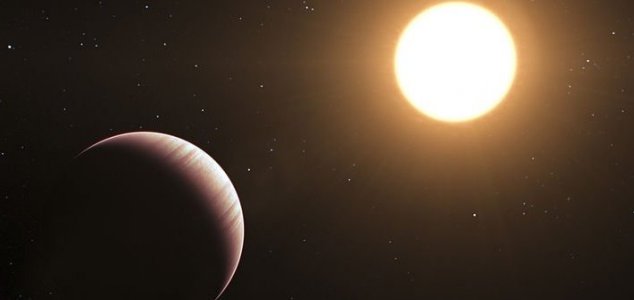
Located three times nearer to us than any Earth-sized extrasolar planet ever discovered, the rocky world of GJ 1132b is a beast. It is roughly 16% larger than our own planet. Think of it as Earth’s big, angry brother.

It orbits a nearby red dwarf star. Red dwarfs are the moody teenagers of the stellar family—smaller, cooler, but prone to violent outbursts of radiation. This planet, this GJ 1132b, orbits its star so tightly that a year there lasts only 1.6 days. Imagine that. You wake up, have breakfast, and by the time you finish dinner, the year is over.

This tight orbit could provide astronomers with a unique opportunity to determine the chemistry of its atmosphere. Because it passes in front of its star so frequently, we get a front-row seat to the show.

The “Venus Twin” or Something Else?

Let’s get real about the conditions. Scientists initially claimed the surface is too hot to support life as we know it. We are talking about an oven. Temperatures hitting upwards of 500 degrees Fahrenheit. It’s roasting. It’s baking. It’s likely more akin to Venus than Earth.

But here is where the mystery deepens. In the hunt for extraterrestrial intelligence or biological markers, we have to stop thinking so small. We assume life needs 72 degrees and a light breeze. Does it?

While its surface is believed to be too hot to support life, it should be possible to learn a great deal about what conditions are like there while also perfecting the techniques needed to conduct similar studies on other, more habitable Earth-like worlds.

Think about extremophiles here on Earth. Organisms that live inside volcanic vents. Bacteria that eat radiation. If GJ 1132b has an atmosphere—and recent studies suggest something weird is going on there—it protects the surface. It changes the pressure. It changes the chemistry.

The Atmospheric Anomaly: A Phoenix World?

Here is a piece of the puzzle the mainstream news blurbs often miss. There is a theory floating around the scientific community that is absolute madness, but it might just be true. It’s the theory of the “Secondary Atmosphere.”

Most planets that orbit this close to a red dwarf get stripped. The star’s radiation blasts away the hydrogen and helium, leaving a dead, airless rock. GJ 1132b should be dead. It should be a barren stone.

But recent observations suggest it isn’t. It seems to have an atmosphere. Where did it come from? Did the planet make it?

The leading theory? Volcanism. Massive, planetary-scale volcanoes spewing gases from the molten interior, rebuilding an atmosphere that was stripped away billions of years ago. It’s a zombie planet. It died, and then it brought itself back to life.

“If this planet still has an atmosphere, then we might find other, cooler planets that also have atmospheres and orbit small stars,” said MIT’s Zachory Berta-Thompson.

That quote is understated. It’s polite scientific speak for: “If this rock can hold onto its air, then the universe is teeming with habitable worlds we previously thought were dead.”

The “Biosignature” Hunt

“We can then imagine interrogating the atmospheres for molecules that come from life.”

Berta-Thompson is talking about sniffing the air. When the planet passes in front of its red star, the starlight filters through the atmosphere. By breaking that light down into a spectrum (colors), we can see what gases are floating there.

Oxygen? Methane? Water vapor? If we find those in the right combination, we aren’t just looking at a rock. We are looking at a biology lab.

Even if GJ 1132b is too hot for humans, discovering complex molecules there proves that rocky planets are chemical factories. And if you have a factory, eventually, you might build something alive.

The Most Important Planet in the Galaxy?

The hype around this world is not manufactured. It is genuine scientific adrenaline.

Astronomer Drake Deming of the University of Maryland maintains that GJ 1132b, given its relative proximity to us and its potential for study, is “arguably the most important planet ever found outside the solar system.”

Read that again. “Most important.”

Why? Because of the logic:

  • It’s nearby: We can point our biggest guns at it (like the James Webb Space Telescope).
  • It’s Earth-like: Gravity, size, density. It’s family.
  • The star won’t interfere: The red dwarf is small enough that it doesn’t drown out the signal of the planet.

Deming isn’t mincing words. He argues this on the basis that “it’s nearby, it’s Earth-like, and its star won’t interfere.”

This is our Rosetta Stone. Before we can translate the signals from a true Earth 2.0—a planet with oceans and trees and maybe cities—we have to learn how to read the language of these Super-Earths.

The Darker Side: Tidal Locking

Let’s get into the weird stuff. Because GJ 1132b is so close to its star, it is almost certainly “tidally locked.”

This means one side of the planet faces the star forever. Eternal day. A scorching, blinding, unending noon. The other side? Eternal night. Frozen darkness. A black void that never sees a sunrise.

So, you have a planet with a burning face and a frozen back. But right down the middle? The “Terminator Line.” The twilight zone. A strip of land circling the entire planet where the sun is always setting.

If there is an atmosphere moving heat around, that twilight strip could be… mild. It could be temperate. Could life exist in the eternal sunset of a lava world? It sounds like science fiction, but the physics allow for it. The winds on a tidally locked world would be ferocious, blasting from the hot side to the cold side. A global storm system that never ends.

Are We Being Watched?

When we gaze at GJ 1132b, we have to ask the reverse question. If there is anything, or anyone, in that system, can they see us?

They are 39 light-years away. That means they are seeing Earth as it was 39 years ago. If they have telescopes powerful enough, they aren’t seeing us today. They are watching the 1980s. They are seeing the Cold War. They are picking up our stray radio signals from sitcoms and news broadcasts.

It’s a chilling thought. We are loud neighbors. We have been blasting our existence into the cosmos for a century. GJ 1132b is close enough to hear us.

“GJ 1132b is too warm to be habitable, but scientists have yet to fully explore our cosmic neighborhood for worlds that potentially harbor life,” Deming wrote.

The Future of the Hunt

Since the initial discovery, technology has leaped forward. The James Webb Space Telescope (JWST) has changed everything. It has the power to look at GJ 1132b and tell us, definitively, what is in that air.

Is it a water world? A ball of magma? Or something we haven’t even imagined yet?

Some theories suggest that “Hycean” worlds—planets covered in deep, hot oceans with hydrogen-rich atmospheres—could support microbial life at temperatures that would boil a human alive. Could GJ 1132b be a version of this?

The universe is stranger than we can suppose. We keep looking for “Earth.” We keep looking for green grass and blue skies. But life is stubborn. Life is messy. It clings to the rim of volcanic vents. It hides under the ice. It might just be thriving in the thick, smoggy atmosphere of a Super-Earth 39 light-years away.

The Bottom Line

GJ 1132b is a warning shot. It’s a wake-up call. It tells us that rocky planets are common. It tells us that atmospheres can survive the fury of a red dwarf star.

Every time we find a planet like this, the odds shift. The statistical probability of us being alone drops lower and lower. The galaxy is full of rocks. It is full of heat. And if the chemistry is right, it is full of eyes looking back.

Keep watching the skies.

Arindam Mukherjee
Arindam Mukherjee
Arindam loves aliens, mysteries and pursing his interest in the area of hacking as a technical writer at 'Planet wank'. You can catch him at his social profiles anytime.
RELATED ARTICLES
- Advertisment -

Most Popular

Recent Comments

Warren Pan Abbott on The legend of the Devil Monkey !
chris davies on The McPherson Tape Mystery
Reed Reedly on ET has Internet!
Bea Houseoffashion on Proof Of Time Travellers – Gallery
Marcus2012 on ET has Internet!
Reed Reedly on ET has Internet!
LaughsAtConspiracyNuts on The 9/11 Conspiracy – Myths and Facts
Alex Sliverman on Did the ancients fly?
Doctor Wholigan on Time Traveler in 1938 film
chris davies on The McPherson Tape Mystery
Archie1954 on 10 secret UFO hideouts
chris davies on Ghosts of flight 401
Marcus2012 on ET has Internet!
jason Macdonald on Proof of Time Travel? – China
chris davies on Long-Lost Pyramids Found?
Reed Reedly on ET has Internet!
Milkman on Connected Universe
Tenmiles on Baigong Pipes Mystery
Simon Foster on Sirius – The Documentary
From the 1st April on 2013 – Alien Contact date ?
SkyWatcher on Is ET ignoring us?
I Come From The Future on Obama to make UFO Alien disclouser soon ?
Just another person on 2013 – Alien Contact date ?
Malcolm Windowcleaner on The strange case of Rudolph Fentz
Mason Servio on Strange Things on Mars
Marke Wisdom Seeker on What will we find as arctic melts?
Andrea A Elisabeth Levyne on Aliens Captured in Varginha, Brazil
Mitch Grouyeki on Amazing Space Shuttle pictures