I Killed Them All, Of Course: The Twisted, Unbelievable Saga of Robert Durst
Some stories are just stories. Others are nightmares that crawl out of the darkness and into our reality. This is one of those.
Robert Durst. The name itself hangs in the air like a foul odor. He was the scion of a New York real estate empire, a man born with a silver spoon so large it could have been a shovel. But underneath the veneer of unimaginable wealth was a chilling void. A black hole of narcissism and violence that swallowed three people whole, leaving a trail of questions that spanned four decades. His story isn’t a simple whodunnit. It’s a labyrinth of lies, bizarre disguises, and a jaw-dropping confession whispered when he thought no one was listening.
Was he the unluckiest man on the planet, constantly finding himself in the wrong place at the wrong time? Or was he one of the most cunning and cold-blooded serial killers in American history, hiding in plain sight? Buckle up. This gets weird.
The Vanishing: What Happened to Kathie Durst?
It always starts somewhere. For Durst, the darkness first broke the surface on a cold winter night in 1982.
January 31st. A Sunday.
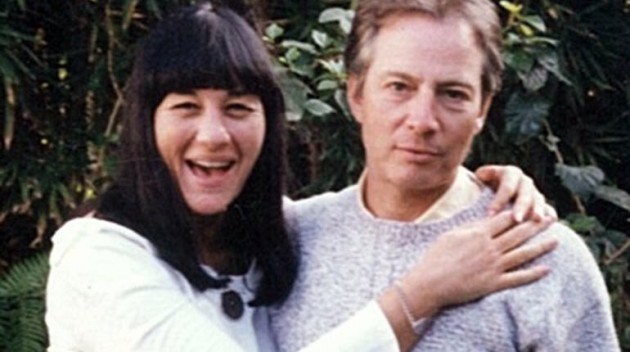
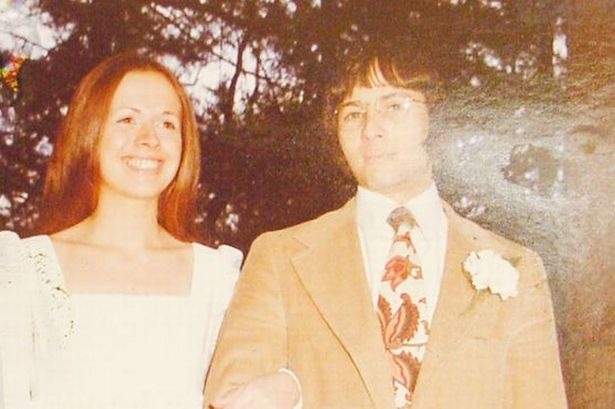
His wife, Kathleen “Kathie” McCormack Durst, was a vibrant, intelligent fourth-year medical student just weeks away from graduating. She was a small-town girl who had fallen for the quirky, enigmatic heir. But the fairy tale had long since curdled into a horror story. Friends knew of the arguments, the control, the violence. Kathie was scared. She’d even told people, “If anything happens to me, don’t let Bob get away with it.”
That night, she was at a friend’s party in Newtown, Connecticut. She gets a call. It’s Bob. He’s demanding she come home to their cottage in South Salem, New York. She didn’t want to go. The friends at the party saw the dread on her face. But she went.
And then… she was gone.
A Story That Wouldn’t Stay Straight
According to Robert Durst, the story was simple. Sure, they argued when she got home. But then, he says, he calmed down and drove her to the Katonah train station. Put her on a 9:15 PM train to Manhattan, bound for their penthouse apartment. He claimed he went for a drink with a neighbor and then called her at the apartment later that night. All good.
Except the story was a mirage. It shifted. It twisted. Every time he told it, the details contorted themselves into a new shape.
- First, he said he called her from a payphone near the neighbor’s house.
- Then, he claimed he called her from their cottage in South Salem.
- Later, his story changed again. The call was from a payphone in a different town entirely.
The doorman at their Manhattan apartment building initially told police he saw Kathie arrive on the night of the 31st. A perfect alibi for Bob. But years later, he admitted he hadn’t seen her at all. He was just repeating what Durst had told him to say.
And the most damning detail of all? Durst didn’t report his wife missing. Not for a day. Not for two days. He waited five agonizingly long days, until February 5th, to finally walk into a police station. His excuse? Her medical school schedule was demanding. It wasn’t unusual for them to be apart for a few days.
The police, perhaps blinded by the Durst family’s power and influence, seemed to buy it. The investigation was lukewarm at best. The trail went cold almost immediately. Kathie Durst, a bright young woman on the cusp of her future, had simply evaporated. No body. No charges. Just a husband with a story that smelled of lies and a family with enough money to make problems disappear.
The Confidante: An Execution in Beverly Hills
For nearly two decades, the ghost of Kathie Durst was just a whisper. A cold case. A tragedy filed away in a dusty cabinet. But in late 1999, things began to stir. Westchester County police, acting on a new tip, reopened the investigation. This time, they were looking at it for what everyone suspected it was: a homicide.
And they knew exactly who they needed to talk to. Susan Berman.

Berman wasn’t just a friend. She was Robert Durst’s anchor, his fiercest defender, his unofficial spokesperson. The daughter of a Las Vegas mobster, she understood a certain code of loyalty. When Kathie vanished in 1982, it was Berman who fielded calls from the press. It was Berman who, many believe, made a phone call to Kathie’s medical school, posing as Kathie, to call in sick the day after her disappearance—a crucial act that threw police off the scent for days.
Susan Berman knew where the bodies were buried. Maybe literally.
As the new investigation heated up, the police made it known they were heading to California to interview her. Durst was in contact with her, even sending her $50,000 in two separate payments. A gift between friends? Or hush money?
Before the police could get there, someone else did.
The Cadaver Letter
On Christmas Eve, 2000, Susan Berman was found dead in her Benedict Canyon home. She was lying face down on the floor. A single gunshot to the back of the head. Execution style. There was no sign of a break-in. Nothing was stolen. Her purse, full of cash and credit cards, sat untouched. This wasn’t a robbery. It was a hit. An assassination. It was someone she knew, someone she trusted enough to turn her back on.
The police were baffled. But they had one bizarre clue. A single, anonymous letter sent to the Beverly Hills Police Department.
It contained only two words on a sheet of paper: the address to Berman’s house and the word “CADAVER.”
The envelope was even stranger. It was addressed to “BEVERLEY HILLS POLICE,” with “Beverly” famously misspelled. A tiny detail. An insignificant mistake. But it would be the thread that, over a decade later, would unravel everything.
The timing was impossible to ignore. The one person who could connect Robert Durst to Kathie’s disappearance was silenced forever, just as investigators were closing in.
Durst, for his part, had an alibi. He was in California around the time of the murder. A flight record proved it. But he was hundreds of miles away in the northern part of the state. Or so he said.

The Mute Woman and the Dismembered Man
With police now looking at him for two potential murders, what does a real estate billionaire do? You’d think he’d lawyer up, stay in his penthouse, and ride out the storm. But Robert Durst isn’t like other people.
He ran.
He fled to a place no one would ever look for a New York socialite: a cheap, rundown boarding house in Galveston, Texas. And he did it in the most surreal way imaginable. He disguised himself as a mute woman named Dorothy Ciner. He wore a wig, put on dresses, and pretended he couldn’t speak to avoid having his New York accent give him away.
Think about that for a second. This wasn’t just hiding. This was a performance. A bizarre, twisted game. In this boarding house, he befriended his cranky, elderly neighbor, a man named Morris Black.
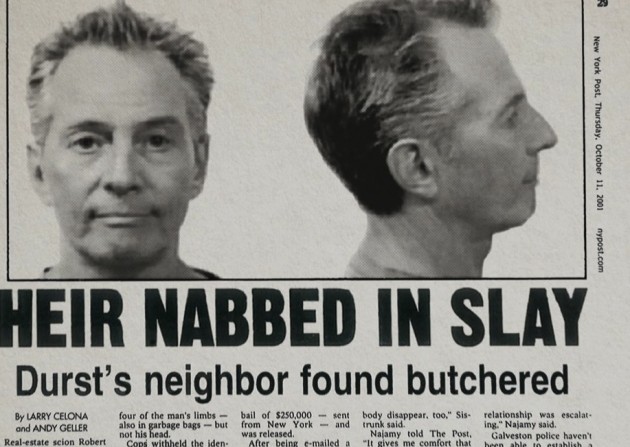
On September 30, 2001, a boy fishing in Galveston Bay made a gruesome discovery. A human torso, floating in the water. Police descended on the area and soon found more. Garbage bags filled with severed limbs. All except for one part. The head. It was never found, making a definitive cause of death impossible to determine.
Police found a newspaper in one of the bags with an address on it, leading them straight to the boarding house. They found a trail of blood leading from Morris Black’s room to the apartment of the strange mute woman, Dorothy Ciner. Inside “her” apartment, they found a bloody knife, bloody boots, and a drop saw.
They soon realized Dorothy Ciner was Robert Durst. A nationwide manhunt was on.
The Trial You Have to See to Believe
They caught him in Pennsylvania after he was caught shoplifting a chicken salad sandwich, despite having over $500 in his pocket. In his rental car, they found $37,000 in cash, two guns, and Morris Black’s driver’s license.
The trial for the murder of Morris Black should have been a slam dunk. The man was on the run, living under an assumed identity, and was found with the victim’s dismembered body parts and the tools used to do it. Case closed, right?
Wrong. Durst hired a team of high-powered, multi-million-dollar defense attorneys. Their argument was audacious. They admitted he dismembered the body. They put Durst on the stand, where he claimed it was self-defense.
He told the jury a wild story: Morris Black, a frail old man, came into his apartment with a gun. They struggled. The gun went off accidentally, killing Black. In a state of panic, Durst decided the only logical thing to do was to buy a saw, chop up his neighbor’s body, and dump the pieces into the bay. Because who wouldn’t do that?
The prosecution fumbled. The defense was slick. And somehow, in a stunning miscarriage of justice, the jury bought it.
In November 2003, Robert Durst was found not guilty of murder. He was convicted of “bail jumping” and “tampering with evidence,” serving a short stint in prison. He walked out a free man, having literally gotten away with murder.

The Jinx: A Killer’s Fatal Mistake
For years, the story went cold again. Durst settled with his family for a reported $65 million and lived a quiet, strange life. It seemed the story was over. He had won.
Then came Hollywood.
Filmmakers Andrew Jarecki and Marc Smerling made a movie based on Durst’s life called *All Good Things*. Durst, ever the narcissist, loved it. He loved it so much that he called Jarecki and offered to sit down for an interview. He wanted to tell his side of the story. It was an act of supreme arrogance that would prove to be his final undoing.
Those interviews became the basis for the groundbreaking 2015 HBO documentary series, *The Jinx: The Life and Deaths of Robert Durst*.
During the making of the series, the filmmakers uncovered a bombshell. A letter Durst had sent to Susan Berman years earlier. The handwriting was a near-perfect match for the anonymous “cadaver” letter. But the real smoking gun was on the envelope.
It was addressed to “BEVERLEY HILLS,” with the exact same, peculiar misspelling.
The filmmakers scheduled a final, follow-up interview with Durst. They confronted him with the two envelopes. He couldn’t tell them apart. He nervously fidgeted, burped uncontrollably, and denied, denied, denied. The interview ended, and a visibly shaken Durst asked to use the restroom.
He was still wearing his microphone. It was still recording.
The Confession Heard ‘Round the World
In the bathroom, alone, believing he was safe, Robert Durst began to talk to himself. A rambling, whispered monologue. And then, he delivered the words that would seal his fate.
“There it is. You’re caught.”
He paused.
“What the hell did I do?”
And then, the chilling, definitive answer to the question everyone had been asking for thirty years.
“Killed them all, of course.”
The audio was a seismic shockwave. The filmmakers, who had been sitting on the audio for two years, turned it over to law enforcement. The night before the final episode of *The Jinx* aired, on March 14, 2015, the FBI arrested Robert Durst in a New Orleans hotel. He was finally charged with the first-degree murder of Susan Berman.
The Final Curtain
The trial for Susan Berman’s murder finally began in 2020. This time, there was no escape. Prosecutors laid out the entire timeline of terror, connecting the dots from Kathie’s disappearance to Berman’s execution. The “cadaver” letter and the hot mic confession were the centerpieces of a mountain of evidence. In September 2021, a Los Angeles jury found Robert Durst guilty of murder. He was sentenced to life in prison without the possibility of parole.
Just weeks after his conviction, New York authorities charged him with the second-degree murder of his wife, Kathie. It seemed that, at long last, justice was coming for her too.
But Durst would never face that trial. On January 10, 2022, at the age of 78, he died in a prison hospital. A final, cowardly escape.
He took his secrets to the grave. We still don’t know where Kathie’s body is. We don’t know the exact mechanics of his deceptions. But we know the truth. The whispers from the bathroom stall confirmed what the world already suspected. He was a monster hiding behind a curtain of wealth. A ghost who haunted three families for decades. A killer who thought he was smart enough to outrun his own shadow, but was ultimately undone by his own voice.