The Hello Kitty Murder: Inside Hong Kong’s Most Twisted True Crime Case
Some stories are so dark, so utterly depraved, they sound like something ripped from the most extreme horror movie. But they’re real. This is one of those stories. It’s a tale that begins in the neon-drenched, bustling streets of 1999 Hong Kong and ends in an unimaginable nightmare, forever linking a beloved children’s toy with one of the most brutal crimes in the city’s history. This is the full, horrifying story of the Hello Kitty Murder.
Forget what you think you know. The headlines barely scratched the surface. We’re going deep into the darkness at 31 Granville Road, a place that became a real-life house of horrors. A place where human cruelty found no limits.
A City of Contrasts, A Life Cut Short
Hong Kong in 1999 was a city on the edge of a new millennium. A dizzying mix of finance, tradition, skyscrapers, and alleyway noodle shops. It was a place of immense wealth and desperate poverty, often living side-by-side. In this chaotic, vibrant world, 23-year-old Fan Man-yee was just trying to survive.
She wasn’t just a headline. She was a person. Orphaned as a child, Fan was raised in a girl’s home, thrust into the world with little support. By her early twenties, she found herself working as a nightclub hostess in the city’s sprawling entertainment districts. It was a life lived at night, a world of cash, clients, and constant pressure. Like so many others, she also fell into drug use, a temporary escape that would soon become a leash.
The Debt that Sealed Her Fate
The whole nightmare started over money. But not in the way you might think. It wasn’t a massive, movie-style drug debt. It was smaller, more personal, and far more pathetic. Fan Man-yee allegedly stole a wallet from one of her regular clients, a pimp and low-level triad enforcer named Chan Man-lok. The wallet contained about HK$4,000 (a few hundred US dollars).
For that, Chan demanded repayment. But with the vicious interest rates of the underworld, that small debt spiraled. It ballooned to HK$20,000 or more. It was a sum Fan, struggling with addiction and a difficult life, simply couldn’t pay. And in the world Chan Man-lok inhabited, debts are not forgiven. They are collected. One way or another.
The Monsters of Granville Road
Who were the men who perpetrated this horror? They weren’t criminal masterminds. They were petty, violent thugs, their cruelty fueled by drugs and a sense of absolute power over their victim. Three men were the core of this evil.
- Chan Man-lok (34): The ringleader. A seasoned triad member with a history of violence. He was the one Fan owed the debt to, and his rage was the engine of the entire ordeal.
- Leung Shing-cho (27): Chan’s loyal, brutish follower. He was an active and enthusiastic participant in the torture.
- Leung Wai-lun (21): The youngest of the trio, eager to prove his worth and loyalty within their twisted hierarchy.
But there was a fourth person. A crucial, unwilling witness. Chan’s 14-year-old girlfriend, known to the court as “Ah Fong.” She was present for much of the horror, sometimes a reluctant participant, sometimes just a terrified spectator. Her eventual testimony would be the key that blew the case wide open.
The Apartment of Nightmares: 31 Granville Road
In March 1999, the trio decided it was time to collect. They abducted Fan Man-yee and dragged her to a third-floor apartment at 31 Granville Road in Tsim Sha Tsui, a busy commercial and tourist district. From the outside, it was just another aging, walk-up building, indistinguishable from thousands of others in the city. Inside, it became a private torture chamber.
What happened over the next month is a descent into hell.
This wasn’t a quick, violent act. It was a slow, systematic, and sadistic destruction of a human being. The men imprisoned Fan, binding her with electrical wire. The torture was constant and varied, a sick game for their amusement. They beat her with metal bars and table legs. They dripped melting plastic from straws onto her skin, searing her feet. They would urinate in her mouth and force her to consume feces. They made her “smile” for them as they inflicted more pain.
Days bled into weeks. The apartment became a pressure cooker of cruelty, filled with the sounds of Fan’s suffering and the drug-fueled laughter of her captors. Did the neighbors hear? Perhaps. But in a dense, anonymous city like Hong Kong, people learn to mind their own business. To not get involved. The screams were likely dismissed as a domestic dispute or the sounds of a late-night party.
No one came to help. She was completely alone.
Sometime in mid-April, after more than a month of relentless agony, Fan Man-yee died. The exact moment, the final cause, remains a mystery. Did she finally succumb to her horrific injuries? Did they give her a fatal overdose of methamphetamine? The men themselves couldn’t give a clear answer. By that point, she was so broken, her body so ravaged, that her life simply… stopped.
A Grotesque Discovery
Death did not end the horror. It only changed its form. Now, her killers had a body. Panic set in. Their sick game was over, and the reality of their crime came crashing down. They had to get rid of the evidence.
What they did next is almost beyond belief. They carried Fan’s body into the small bathroom of the apartment. There, they dismembered her. They boiled her body parts in a large pot on the stove, a macabre attempt to prevent identification and make disposal easier. Most of her remains were bagged up and discarded like garbage across the city, lost forever to landfills and the harbor.
But they kept a souvenir.
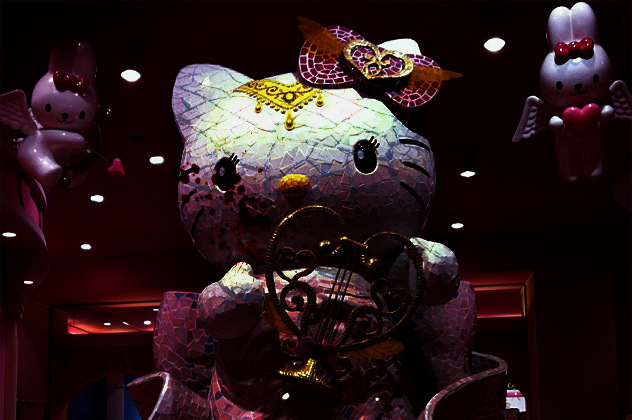
A trophy from their month of terror. They cooked her skull. They cleaned it of all flesh. And then, in an act of profound and symbolic depravity, they forced it inside a large Hello Kitty mermaid doll. They stitched the doll shut, placing it back on a shelf in the living room. Hiding a human head in plain sight, concealed within the smiling, innocent face of a cartoon cat.
The Witness Breaks
The secret might have stayed hidden forever if not for the 14-year-old girlfriend, Ah Fong. The things she had seen, the things she had been forced to be a part of, began to destroy her from the inside. She was tormented by nightmares. She told police she was being haunted by Fan Man-yee’s ghost.
On May 24, 1999, consumed by guilt and terror, she walked into a police station and confessed everything. At first, the officers were skeptical. The story was too wild, too much like a B-grade horror film. A girl tortured for a month? A skull in a doll? It seemed impossible.
But Ah Fong was persistent. She led them back to the apartment on Granville Road.
When the police breached the door, they were hit by an overwhelming stench of decay and disinfectant. The place was a wreck. But as they searched, they found it. Sitting on a shelf. A large Hello Kitty mermaid doll. It was strangely heavy. When an officer cut open the seams, they found the boiled, decomposing skull of Fan Man-yee. The girl’s impossible story was true.
The only other parts of her ever found were a single tooth and some internal organs, discovered in a plastic bag on a canopy outside the building.
Justice, But Not Quite Murder
The trial was a media circus. The details that emerged in court shocked the public to its core. It was a story of such unbridled cruelty that it was hard to comprehend. The prosecution laid out the case, detailing the weeks of torture and the gruesome cover-up.
But they faced a huge problem. Because the men had so thoroughly destroyed Fan’s body, a forensic pathologist could not determine the exact cause of death. Was it the beatings? A drug overdose? An infection from her festering wounds? Without a clear cause of death, proving a deliberate *intent to kill*—the requirement for a murder conviction—was nearly impossible.
The jury struggled with this. In the end, they could not convict the three men of murder. Instead, they were found guilty of the lesser, though still serious, charges of manslaughter and false imprisonment. It was a legal distinction that enraged many, but it was the only verdict the evidence could support.
The sentencing judge, Justice Peter Nguyen, did not hold back. He said, “Never in Hong Kong in recent years has a court heard of such cruelty, depravity, callousness, brutality, violence and viciousness.”
He sentenced all three men to life in prison. But because it was a manslaughter conviction, they would be eligible for parole after 20 years. Ah Fong, the teenage witness, was given immunity for her testimony.
The Haunting of Granville Road
The case left a permanent scar on the psyche of Hong Kong. The building at 31 Granville Road instantly became infamous. It was a ghoulish tourist attraction, a place people would point to and whisper about. Soon, the urban legends began.
Residents in the building and nearby shops reported strange occurrences. Unexplained noises. A feeling of dread. The most persistent legend, one that still circulates on internet forums today, involves the building’s security cameras. Supposedly, grainy CCTV footage emerged showing a shadowy female figure flitting through the hallways at night, a ghostly echo of the building’s most famous, tragic resident.
Whether you believe in ghosts or not, the building was undeniably haunted by its history. So much so that in 2012, the entire block was demolished. A new hotel stands in its place now, but for those who know the story, the ground itself feels tainted. Cursed.
The crime also seeped into popular culture, inspiring several grisly Hong Kong films, most notably “Human Pork Chop” (2001) and “There is a Secret in my Soup” (2001). The case became a byword for ultimate evil, a cautionary tale of the darkness that can fester behind a closed apartment door.
The Hello Kitty Murder is more than just a shocking true crime story. It’s a chilling reminder of the capacity for human cruelty and the terrifying reality that sometimes, the most horrific monsters are not in movies, but living right next door. The smiling, innocent face of a toy will forever be linked to an act of unspeakable evil, a grotesque secret hidden in a sea of neon.