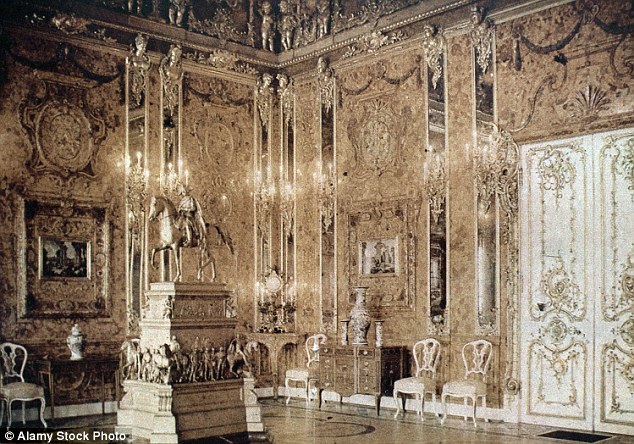
The Eighth Wonder of the World: Gone in a Blink
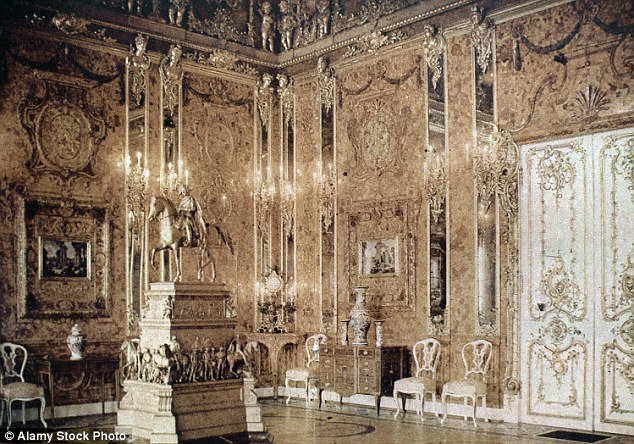
Imagine a room built entirely of gold and fossilized sunlight. That is what the Amber Room was. It wasn’t just a piece of art. It was a masterpiece. A symbol of absolute power. People called it the “Eighth Wonder of the World,” and for good reason. It glowed. It breathed history. Its value today? Adjusted for inflation, we are talking upwards of $500 million. Maybe more.
And then, in the chaos of World War II, it vanished. Poof. Gone.
For over 70 years, treasure hunters, historians, and conspiracy theorists have been tearing Europe apart looking for it. Lives have been lost. Fortunes spent. But the mystery remains ice cold. Or does it? New technology and forgotten diaries are starting to crack the case wide open.
The Heist of the Century
Let’s rewind to 1941. Operation Barbarossa. The Nazis are tearing through the Soviet Union. They aren’t just looking for land. They are looking for loot. Hitler had a special unit dedicated to stealing art. They wanted the soul of Russia. The Amber Room, located in the Catherine Palace near St. Petersburg (then Leningrad), was the ultimate prize.
The Soviet curators knew the Germans were coming. They were terrified. They tried to move the room. But there was a massive problem.
Amber is temperamental.
Over the years, the precious amber panels had dried out. They were brittle. Fragile. When the curators tried to dismantle the panels, the amber started to crumble into dust. It was a nightmare scenario. You can’t move it without destroying it. So, they came up with a desperate, last-ditch plan.
They decided to hide it in plain sight. They covered the shimmering gold and amber with mundane wallpaper. Gauze. Cotton. Anything to make it look like a normal, boring room.
It didn’t work.
The Nazis weren’t stupid. They knew exactly what they were looking for. When the German soldiers stormed the palace, they tore down the wallpaper. Within 36 hours, they did what the Russians were afraid to do. They dismantled the room. Packed it into 27 crates. And shipped it to Koenigsberg Castle in East Prussia.
The Koenigsberg Mystery: The Last Known Sight
For a while, the room was safe. It was reassembled in the castle museum on the Baltic coast. It was the pride of the Third Reich’s stolen collection. But by late 1943, the tide of the war was turning. The Royal Air Force was raining fire on German cities. The Red Army was marching west.
In January 1945, the order came to evacuate. This is where the timeline fractures.
The official story? The castle was bombed to rubble by the British in August 1944 and then finished off by Soviet artillery in April 1945. The narrative says the Amber Room burned up. Destroyed. Lost to the flames.
But that story has holes in it big enough to drive a truck through.
Why would the Nazis, who were obsessed with saving art, let their most prized possession burn? They were moving everything else. Why not this?
The Science of Burning Amber
Here is the smoking gun that suggests the “fire theory” is a total lie. The properties of amber don’t lie. Amber is fossilized tree resin. It is organic. When it burns, it acts like gasoline or coal. It burns hot, fast, and dark.
If the Amber Room had burned in the castle, there would be evidence. Soot. Distinctive ash. But more importantly, the room wasn’t just amber. It was held together by gold leaf, mirrors, and massive iron hinges.
Iron does not burn.
When Soviet investigators sifted through the ashes of Koenigsberg Castle after the war, do you know what they found? Nothing. No melted gold. No charred amber residue. And absolutely zero iron fittings. If the room burned there, the metal brackets would be in the rubble. They weren’t.
This means one thing: The crates were moved before the bombs fell.
Found? The Mamerki Bunker Breakthrough
Fast forward to the modern era. The hunt is back on, and it is hotter than ever. All eyes have turned to a tiny, dense forest in Poland. Welcome to Mamerki.
This wasn’t just a random outpost. During the war, this was the headquarters for the Army High Command (OKH). It was a fortress of concrete and steel, hidden deep in the woods, just 100 kilometers from the Russian border. It was one of the most secret places on earth in 1944.
Museum staff at Mamerki dropped a bombshell announcement recently. They believe they have found the final resting place of the treasure.
Is the 60-year hunt for the missing $400 million masterpiece finally over? The evidence is compelling.

The Man Who Saw Too Much
Why Mamerki? It starts with a witness. A former Nazi guard, old and near death, finally broke his silence. He claimed that in the freezing winter of 1944, he saw a heavily guarded convoy arrive at the bunker complex.
It wasn’t soldiers. It was cargo.
Trucks pulled up to Bunker Number 31. Soldiers unloaded heavy wooden crates. They worked fast. They were nervous. Once the crates were inside a specific chamber, the order was given to seal it up. Not just lock the door. They bricked it over. They plastered it. They made the room disappear.
The guard didn’t know what was in the boxes. But he knew it was important enough to bury alive.
Technology Reveals the Truth
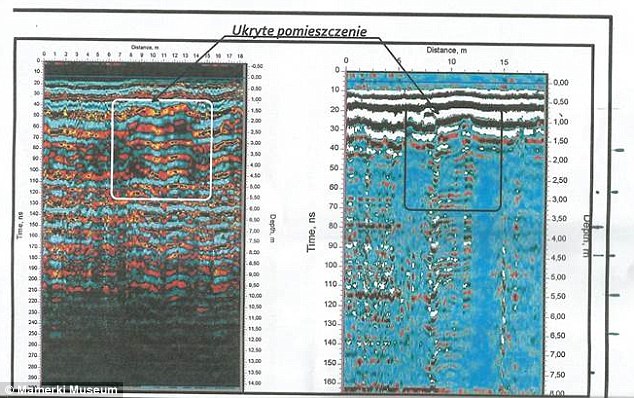
Witness testimony is one thing. Hard data is another. The Mamerki museum bosses didn’t just grab shovels; they grabbed Geo-radar (GPR). This technology shoots radar pulses into the ground to create an image of what is beneath the concrete.
They scanned the area the guard talked about.
The result? A massive anomaly.
The radar picked up a hollow space where there shouldn’t be one. Behind a false wall, there is a hidden room. It measures roughly 6.5 feet wide and 10 feet long. It is the perfect size to store stacks of crates.
Bartlomiej Plebanczyk, the museum rep, was ecstatic. He told reporters, “We can say there is a very high probability that there is no mundane equipment there.”
Why hide mundane equipment behind a fake wall? You don’t. You only do that for gold, documents, or the Amber Room.
The Villain: Erich Koch’s Silence
To understand the disappearance, you have to understand the man responsible for it. Erich Koch. The Gauleiter (Nazi governor) of East Prussia. He was a brutal man. He was also an art hoarder.
Koch is the key. He was the one who oversaw the transport of the room from Koenigsberg. After the war, he was captured. Most high-ranking Nazis were executed. Koch wasn’t.
Why?
The Soviets kept him alive in a Polish prison until he died in 1986. That is decades. The prevailing theory is that Stalin and the Polish government kept him alive because he knew where the Amber Room was. They thought if they broke him, he would give up the location.
Koch played a game of cat and mouse for forty years. He never talked. But in the 1960s, he was taken from his prison cell to the Mamerki site. He walked around. He looked at the bunkers. He stayed silent. Was he saying goodbye to his hoard?
The Evidence Against Destruction
Skeptics love to say, “It burned. Get over it.” But the historical record fights back. There are five specific pieces of evidence that suggest the room survived the bombing of Koenigsberg.
1. The Inspector’s Diary
Mr. Henkensiefken was the inspector of the castle. He kept a meticulous diary. He wrote that the Amber Room was packed up after a fire in February 1944. It was moved to the deep cellars. In August 1944, after the British bombing raid that supposedly destroyed it, he inspected the cellars. He reported the room was undamaged.
2. The Art Historian’s Account
Dr. Gerhard Strauss, an art historian, visited the castle days after the August bombing. He met with Dr. Alfred Rohde, the curator. Strauss wrote in the magazine Freie Welt: “Dr. Rohde told me that the Amber Room in the cellars survived the attack. It was standing in boxes.” Rohde was planning to move it to the northern wing or evacuate it entirely.
3. The Letter to Mrs. Amm
There is a letter exchange between Dr. Rohde and a woman named Mrs. Amm. She asked about the room. If the room had been destroyed, she would have asked about his health or the war. But she asked about the art. She knew it was still in play.
4. Dr. Rohde’s Official Report
This is the most damning paper trail. In a letter to his superior, Director Gall, dated September 2, 1944, Rohde wrote explicitly: “The Amber Room has not been damaged, except for six socket parts.”
It survived the fire. It was boxed up. It was ready to move.
5. The Physics of the Fire (Revisited)
We have to go back to the “honey-like substance” claim. Some soldiers claimed they saw melted amber on the floor. Impossible. Amber doesn’t melt into a puddle that stays there. It burns into ash and coal. If someone saw a gooey substance, it was likely melted varnish or wax, not the room itself. Dr. Rohde lied to the public to protect the secret, but his private letters tell the true story.
The Ghost Train and Other Theories
While Mamerki is the hottest lead right now, it isn’t the only one. The mystery of the Amber Room has spawned some of the wildest theories on the internet.
The Gold Train: In the Owl Mountains of Poland, there are legends of a Nazi train laden with gold that entered a tunnel and never came out. The tunnels were collapsed to hide it. Some believe the Amber Room is on that train.
The Shipwreck: The Wilhelm Gustloff was a massive German ship sunk by a Soviet submarine in 1945. It was the deadliest maritime disaster in history. Survivors claimed crates were loaded onto the ship before it departed. Is the Amber Room at the bottom of the Baltic Sea?
The Wuppertal Connection: Some believe Erich Koch managed to get the room all the way to Wuppertal in Western Germany, deep in the industrial heartland, where his family had connections.
The Curse of the Amber Room
No great treasure story is complete without a curse. And this one has a body count. People who get too close to finding the Amber Room have a habit of dying under strange circumstances.
Take Alfred Rohde. He and his wife died of “typhus” shortly after the NKVD (Soviet secret police) started interrogating them in 1945. Their bodies disappeared. Convenient.
General Gusev, a Russian intelligence officer who was hot on the trail in the 1990s, died in a mysterious car crash. Georg Stein, a relentless Amber Room hunter, was found murdered in a Bavarian forest, naked, with his stomach cut open with a scalpel. The official ruling was suicide. Does that sound like suicide to you?
It seems someone—or some group—wants this treasure to stay lost.
Conclusion: The Mystery Endures
So, where is it? Is it rotting in a damp bunker in Poland? Is it at the bottom of the sea? Or is it sitting in a private collector’s basement in South America?
The Mamerki discovery is promising. The geo-radar doesn’t lie about the hidden room. But until they drill through that wall and stick a camera inside, we won’t know for sure. The Russian government gave up waiting; they spent decades and millions of dollars building a perfect replica of the Amber Room, which you can visit today. It is stunning.
But it’s not the original.
The original Amber Room is out there. It was last seen in the spring of 1944. It survived the bombs. It was packed into crates. And then, it drove off into the snowy night, leaving nothing behind but questions.
Until the crates are opened, the Amber Room remains the greatest unsolved mystery of World War II.
Originally posted 2016-08-12 01:36:50. Republished by Blog Post Promoter