
Some amazing heists

0
77

You think you know how the world works. You wake up, grab coffee, go to work, pay taxes, and sleep. But while you’re stuck in traffic, there is a shadow world operating right beneath your nose. A world where millions of dollars vanish in seconds. We aren’t talking about digital hackers behind a keyboard in a basement. We are talking about sledgehammers, speedboats, cross-dressing gunmen, and tunnels that defy engineering logic.

Why are we obsessed with heists? Is it the money? Maybe. But I think it’s the audacity. It’s the idea that with enough planning, enough guts, and just enough crazy, you can beat the system. You can walk into a fortress and walk out a king. Or, at least, that’s the dream. The reality? It usually ends in handcuffs. Or a body bag. But sometimes… just sometimes… the bad guys win.

Let’s crack open the files on the most insane, high-stakes robberies in modern history. Forget Hollywood. This is real life, and the script is way messier.

diamond heist

The Millennium Dome Raid: Bulldozers and Speedboats

Picture it. London. The year 2000. The world had just survived the Y2K scare. The Millennium Dome (now the O2 Arena) was the centerpiece of the celebration. Sitting right there, practically begging to be taken, was a collection of De Beers diamonds. We aren’t talking about engagement rings. We are talking about the Millennium Star. 203 carats of flawless rock. The total haul? A staggering £350 million. That is half a billion dollars.

The plan was something out of a comic book. It was blunt force trauma mixed with James Bond delusions.

The Smash and Grab

On November 7th, a gang decided that picking the lock was for amateurs. They drove a JCB earthmover—a literal bulldozer—and rammed it through the perimeter fences. Imagine the sound. Steel twisting, alarms screaming. They stormed the display armed with sledgehammers and nail guns. The plan was simple: smash the glass, grab the stones, and run to the river.

They had a high-powered speedboat waiting on the Thames. They were going to blast across the water to a getaway van and vanish into the London fog. It sounds perfect on paper. High speed. High impact.

Operation Magician: The Trap Was Already Set

Here is the twist. They never stood a chance. The Metropolitan Police weren’t just watching; they were directing the play. This was “Operation Magician.” The Flying Squad (yes, that’s their real name) had been tracking this crew for months. They knew the target. They knew the date.

Those cleaners sweeping the floor near the diamond display? Armed police. The boat captain waiting on the river? Police. The diamonds in the case? Fake. Replicas. The real gems had been swapped out hours before.

When the robbers crashed through the wall, they weren’t breaking into a bank; they were walking into a cage. Police sprang from everywhere. Officers in camouflage gear popped out from behind fake walls. It was chaos. The would-be thieves were tackled before they could even get their hands on the fake glass. The “biggest robbery in the world” ended with four guys face-down on the concrete, surrounded by the very people they thought they had outsmarted.

Schiphol Airport: The Tarmac Phantom

Fast forward to 2005. Amsterdam. Airports are supposed to be secure zones, right? You have to take your shoes off just to get on a plane. Cameras are everywhere. Security guards are watching the monitors. So how do you steal $118 million in uncut diamonds from one of the busiest airports in Europe without firing a single shot?

You hide in plain sight.

The Perfect Disguise

This heist is terrifying because of how easy it looked. The thieves didn’t tunnel in. They didn’t parachute onto the roof. They just dressed up. Two weeks before the heist, they stole a KLM cargo truck and uniforms. That is the key. In the world of high-security zones, a uniform is an invisibility cloak. If you look like you belong, nobody looks at you twice.

On February 25, an armored truck pulled up to a KLM plane bound for Antwerp. It was loaded with diamonds. The thieves, driving their stolen KLM van, intercepted the truck right there on the tarmac. In full view of passengers looking out the windows. In full view of the control tower.

The Vanishing Act

They forced the drivers out at gunpoint. They hopped in the armored truck and drove it away. That’s it. They just drove off. Because they had the uniforms and the vehicle, airport security assumed it was a routine movement until it was too late. They abandoned the truck later, but the diamonds? Gone.

$118 million. Vanished. Uncut diamonds are almost impossible to trace. Once they are cut and polished, they can be sold anywhere in the world. To this day, the bulk of that loot is out there somewhere. Maybe on a ring on your finger right now. You’d never know.

Harry Winston, Paris: The “Ladies” of Avenue Montaigne

Paris, 2008. The Harry Winston store. This is the ultra-high-end stuff. Kings and Queens shop here. It sits near the Champs-Elysees, surrounded by luxury. Security is tight. But security guards are human, and humans have weaknesses. They can be surprised.

This robbery is legendary for its bizarre theatricality. It wasn’t just a robbery; it was a performance.

The Cross-Dressing Gang

Four people approached the door. They looked like wealthy women. Wigs. Scarves. Sunglasses. High heels. They rang the bell. The security guard buzzed them in, expecting a big sale. As soon as they were inside, the “women” pulled out .357 Magnums and a hand grenade. The wigs didn’t come off, but the gloves did.

Here is the creepy part: They knew everyone’s name. They weren’t shouting generic commands like “Get on the ground!” They were saying, “Hello, Sophie. Open the case, Pierre.” They knew exactly where the most expensive pieces were hidden. They ignored the cheaper stuff and went straight for the multi-million dollar rocks. They cleaned the place out in minutes.

The Pink Panthers Theory

They walked out with $108 million in jewels. They didn’t run. They didn’t peel out in a car. They just walked away. Police later arrested 25 people connected to the heist. They found some of the loot—about $25 million worth—stuffed in a plastic container hidden in a storm sewer in a Paris suburb. A sewer! Diamonds fit for royalty, sitting in the muck.

Rumors swirled that this was the work of the “Pink Panthers,” a notorious gang of Balkan thieves known for creative, high-speed raids. Whether it was them or a copycat crew, the brazen confidence of walking into a store in drag and holding the staff hostage by name is the stuff of nightmares.

The Antwerp Diamond Centre: The Impossible Job

If you study heists, this is the Holy Grail. The Antwerp Diamond Centre in Belgium is the fortress of the diamond world. 80% of the world’s rough diamonds pass through this district. The vault was supposed to be impenetrable. We are talking about security measures that sound like science fiction.

Doppler radar. Magnetic fields. Seismic sensors. Heat detectors. A lock with 100 million possible combinations. And foot-thick steel reinforced doors. You can’t break in. It cannot be done.

But in February 2003, a group called the “School of Turin” did it.

Genius or Magic?

The leader, Leonardo Notarbartolo, rented an office in the building for two years prior. He was a charm merchant. He posed as a diamond dealer, drank coffee with the guards, and learned the rhythm of the place. He was playing the long game. While everyone else was sleeping, his team was building a replica of the vault to practice on.

On the weekend of the heist, they bypassed everything. How?

  • The Heat Sensors: They used hairspray. Simple, cheap hairspray. It froze the sensors so they wouldn’t detect body heat.
  • The Magnetic Field: They taped over the magnets on the door so the alarm circuit wouldn’t break when they opened it.
  • The Seismic Sensors: They moved with the grace of ballerinas.
  • The Cameras: They covered them with black garbage bags before the system could register an image.

They opened 123 safety deposit boxes. They sat on the floor of the most secure vault in the world and ate sandwiches while they packed $100 million in loose diamonds, gold, and jewelry into duffel bags.

The Fatal Mistake

They got away clean. But they got lazy. On the drive back to Italy, they dumped their trash in a forest alongside the highway. A half-eaten salami sandwich. A receipt for video surveillance equipment. And a bag with the Antwerp Diamond Centre address on it.

A local farmer found the trash. He thought it was just kids littering, so he called the police. The police found the receipt. They found DNA on the sandwich. It led straight to Notarbartolo. He was arrested, but here is the kicker: The diamonds were never found. Not a single stone. Leonardo served his time and is now free. Did he stash the loot? Is he sitting on a mountain of cash right now? Nobody knows.

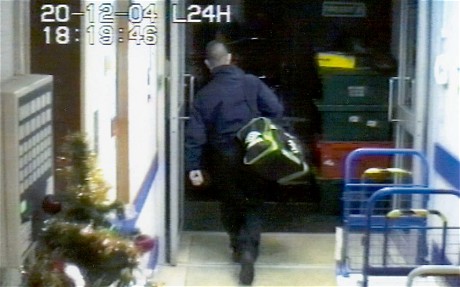
The bag must be heavy!

Northern Bank, Belfast: The Political Heist

Money is heavy. People forget that. If you steal a million dollars in cash, you need a bag. If you steal £26.5 million? You need a truck.

In 2004, Belfast witnessed the biggest cash robbery in British history. But this wasn’t just about greed. This had political fingerprints all over it. The police and government pointed the finger directly at the Provisional IRA. This wasn’t a gang of thugs; this was a military operation.

Hostages and Fear

This wasn’t a smash-and-grab. It was a home invasion. On a Sunday night, two groups of armed men went to the homes of two bank managers. They took the families hostage. They held them at gunpoint. Imagine the terror. Sitting in your own living room, knowing your life depends on what happens at work the next day.

The next morning, the managers were told to go to work as if nothing was wrong. If they raised the alarm, their families would die. At the end of the business day, the managers let the robbers in. The gang loaded crate after crate of fresh banknotes into a van. They did it twice. They came back for a second load.

They vanished into the night. Because the serial numbers on the notes were sequential and traceable, the bank had to recall millions of pounds of currency and reissue new notes just to make the stolen money worthless. But did it work? Underground networks can wash money in ways we can’t imagine. While some arrests were made years later, the bulk of that cash fueled hidden agendas and shadow operations for years.

Some hole!
Some hole!

Brazilian Central Bank: The Moles of Fortaleza

If the Antwerp heist was about finesse, the Fortaleza heist was about sweat. Pure, back-breaking labor. In 2005, a group of men rented a property two blocks away from the Central Bank in Fortaleza, Brazil. They put up a sign: “Artificial Turf Company.” They even printed business cards. They sold grass to unsuspecting locals to keep up the cover.

But they weren’t planting grass. They were digging.

The Engineering Marvel

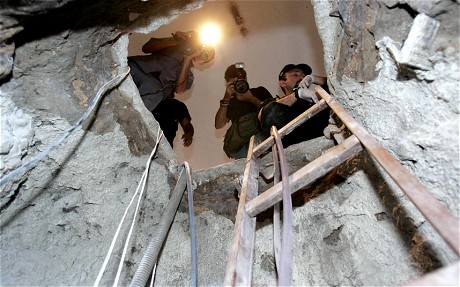
They dug a tunnel. But not just a hole in the dirt. This was an engineering masterpiece. It was 80 meters (260 feet) long. It went down 4 meters beneath the sewers to avoid detection. It was lined with wood and plastic to prevent collapse. It had electric lighting. It had an air conditioning system. It was better built than some city subways.

For three months, they dug. They carried tons of dirt out in the “landscaping” trucks. Nobody suspected a thing. On the weekend of August 6th, they broke through the reinforced concrete floor of the bank vault. 1.1 meters of steel and concrete. They cut through it like butter.

The Weight of Greed

They didn’t steal jewels. They stole used banknotes. 164 million reais. That is about £54 million or $70 million. The notes were used, meaning they weren’t sequentially numbered. Untraceable. The weight of the cash was estimated at 3.5 tons. Think about that. 3.5 tons of paper.

They crawled back through their tunnel, loaded the money into their fake landscaping vans, and drove away. The bank didn’t even know they had been robbed until Monday morning. By then, the “Artificial Turf Company” was closed for business.

In the years following, a dark cloud hung over this case. Kidnappings, murders, and corrupt police officers trying to extort the thieves turned the story into a bloodbath. It’s a grim reminder: stealing the money is the easy part. Keeping it is the hard part.

The Unsolved Mystery

What happens to the money? What happens to the diamonds? Police recover a fraction of the loot in these cases. The rest? It flows into the underground river of the black market. It buys weapons, it buys drugs, or it buys a quiet life on a non-extradition island.

These heists remind us that the systems we trust—banks, vaults, alarms—are only as strong as the people watching them. And there is always someone, somewhere, looking for a crack in the wall. Watching. Waiting. Planning the next big score.

Who is digging a tunnel right now? We will probably find out on the morning news.

Originally posted 2016-04-27 00:28:26. Republished by Blog Post Promoter

Originally posted 2016-04-27 00:28:26. Republished by Blog Post Promoter