Kolkata’s Haunted Heart: The City of Joy’s Darkest Secrets Unearthed
Forget what you think you know about Kolkata. They call it the “City of Joy,” a vibrant explosion of culture, art, and intellectual fire. But beneath the surface, under the weight of centuries of colonial rule, famine, and revolution, lies another city. A shadow city. A place of whispers, lingering sorrows, and things that refuse to stay buried.
Peel back the layers and you’ll find a history soaked in blood and tragedy. You’ll find stories that aren’t in the official guidebooks. Stories that locals only tell in hushed tones after the sun goes down. These aren’t just spooky tales for tourists. These are the echoes of a violent, passionate past, etched into the very bricks and mortar of the city.
Are you ready to walk these haunted streets with us? Good. But be warned. Once you see Kolkata’s other side, you can never unsee it.

Whispers from a Watery Grave: The Hands Under Howrah Bridge
Let’s start where so many stories in Kolkata end. The river.
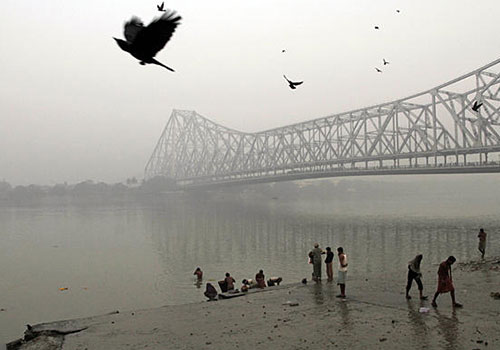
The mighty Hooghly River, a distributary of the Ganges, is the city’s lifeblood. But it’s also its largest, most ancient graveyard. For centuries, its murky waters have claimed countless lives. Suicides. Accidents. Victims of crime and calamity. Their stories, their final moments of terror, are absorbed by the silt and the currents.
And some say, they don’t always stay down.
The wrestlers who gather at the Mullick Ghat and the Zanana Bathing Ghat at the crack of dawn, when the mist hangs heavy and the city is still asleep, they know. They’ve seen it. As the first rays of sun pierce the gloom, they report seeing hands. Pale, desperate hands, flailing in the water, reaching for a surface they will never find again. Are they real? Is it a trick of the light? Or is it something else?
Think about it. The sheer weight of human despair that has been poured into this river. Every person who chose its cold embrace as their final escape. Every soul lost in a boating accident. Their final, panicked thoughts, their last gasp for air… could that energy leave an imprint? A psychic recording, playing on a loop for those sensitive enough to see?
The most chilling part is the confusion. The wrestlers say it’s sometimes impossible to tell if it’s a “real” person drowning or one of the river’s ghostly residents. How many have hesitated, second-guessing their own eyes, while a living person slipped away forever? The river keeps its secrets, and it continues to collect them.

Where Life Ends and Something Else Begins: The Nimtala Burning Ghat
There are places where the veil between our world and the next is thin. Torn. Frayed. The Nimtala Burning Ghat is one of those places.
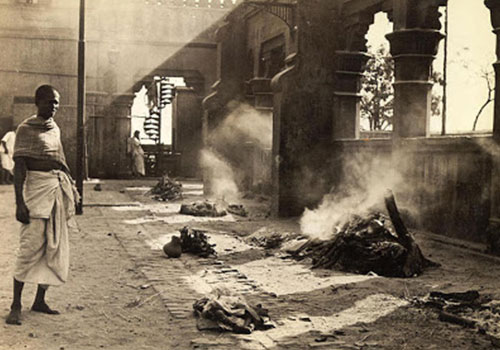
As one of Kolkata’s oldest cremation grounds, the air here is thick with more than just smoke. It’s heavy with grief, with ritual, with the finality of death. For hundreds of years, this patch of ground on the banks of the Hooghly has been the last earthly stop for millions. The smell of burning wood and flesh is a constant, inescapable reminder of mortality. It clings to your clothes. It gets in your head.
But the real terror of Nimtala awakens on one specific night: Kali Puja.
As darkness falls, a different energy takes over. This is when the Shamshaan Kali, the fierce goddess of the cremation grounds, is invoked. And this is when, locals whisper, the Aghoris come.
Who are the Aghoris? They are not your average holy men. They are ascetics who embrace what society shuns. They meditate on corpses, they live in cremation grounds, and they seek spiritual enlightenment by confronting the deepest taboos of life and death. And according to the terrified whispers at Nimtala, on the night of Kali Puja, they perform their most disturbing rituals. They are said to feed on the leftover flesh from the funeral pyres, believing it grants them immense occult powers.
One paranormal investigation team that visited on a different night recounted a chilling encounter. As they entered, a snarling black dog blocked their path, fangs bared. A local guide pulled them aside. “Come back on the night of the dark goddess,” he warned, his voice low. “The Aghoris will be here.” When a tourist asked who he meant, the man refused to say the name aloud, spelling it out slowly: “A-G-H-O-R-I-S. They consume the flesh of the dead. They use it for their magic.”
Is it just a story to scare away outsiders? Or does something truly ancient and terrifying stalk the shadows of Nimtala when the fires burn lowest?

The Nimtala burning ghat in 1945.
The House of Dolls and Broken Dreams: Putulbari
Some houses are just buildings. Others are tombs.
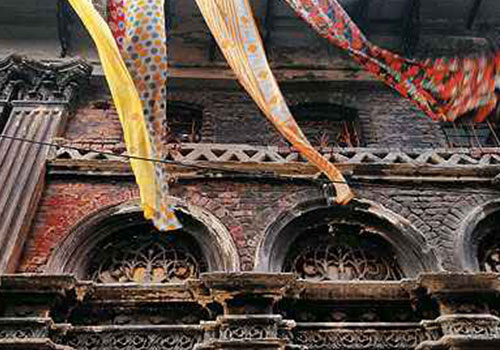
Standing opposite the river in the Ahiritola area is a crumbling, neoclassical mansion that seems to scream “haunted.” This is Putulbari, the House of Dolls. Even its name sends a shiver down the spine. Adorning the upper terrace are strange, archaic statues of women, like silent, watching sentinels. Their stone eyes have seen things. Terrible things.
The story goes that this opulent mansion once belonged to wealthy Bengali zamindars, powerful landowners who lived lives of unchecked decadence. The beautiful halls of Putulbari were not just for parties and poetry. They were a playground for the depraved. The zamindars would bring young women here, often from the surrounding villages, and exploit them in the most horrific ways. Their cries for help were swallowed by the thick walls, their pain ignored.
Many of these women died within the mansion. Murdered. Or they took their own lives, unable to bear the shame and suffering. Their souls, it is said, never left.
Deep Dive: The Psychology of a Haunting
The building isn’t entirely abandoned. A few tenants still live on the ground floor, too poor or too stubborn to leave. But they will tell you one thing with absolute certainty: no one goes upstairs after dark. No one. They report hearing heart-wrenching sobs, agonized screams, and the sudden, chilling sound of anklets dancing in the empty, dust-choked halls above.
The upper floors are a place of profound sorrow and rage. Visitors who have dared to venture up during the day speak of a crushing sense of dread. A feeling of being watched by unseen eyes filled with malice. The air grows cold. Whispers seem to come from nowhere. It’s the psychic residue of unimaginable trauma, a stain that can never be washed away.
And what about the dolls? Those creepy, Romanesque statues. Why are they there? Some say they were just a rich man’s folly. Others believe they were created to mock the women who were imprisoned within. Now, they serve as a chilling monument to the horrors that unfolded beneath them.

A Grave Disturbed: The Vengeful Spirit of Lower Circular Road Cemetery
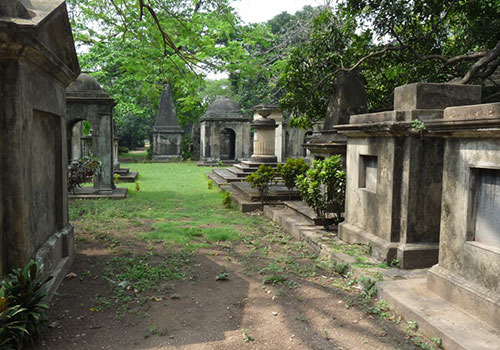
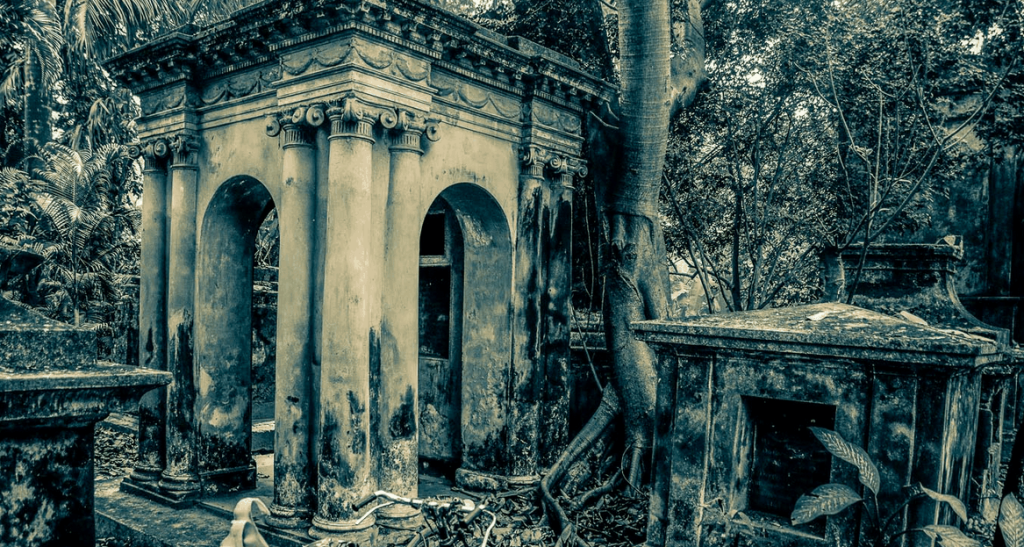
Old cemeteries are inherently creepy. But the Lower Circular Road Cemetery holds a story of such gruesome detail, it stands apart.
Forget the more famous South Park Street Cemetery. This is where the real darkness lies. It’s home to the grave of Sir W.H. Mac Naghten, a high-ranking British diplomat during the First Anglo-Afghan War. His story doesn’t end with a peaceful death.
In 1841, during the disastrous British retreat from Kabul, Mac Naghten was betrayed. He was captured, assassinated, and his body was subjected to the ultimate humiliation. It was brutally dismembered and the pieces were put on public display in the bazaars of Kabul. A horrific end for a powerful man.
An Unspeakable Act of Devotion
His devastated wife, Lady Mac Naghten, refused to let this be his final legacy. In an act of incredible, if morbid, determination, she undertook a mission to recover his remains. Piece by piece, she gathered what was left of her husband’s body. She then transported the gruesome collection all the way back to Calcutta and had him buried here, in this cemetery.
He was finally at rest. Or was he?
A legend persists, one that has been tested by brave and foolish people for generations. It is said that if you stand by Mac Naghten’s grave and recount the story of his violent death and dismemberment, the spirit in the grave becomes agitated. It cannot bear to hear the tale of its own desecration. And as a sign of its anger, the giant tree that looms over the tomb begins to tremble violently, its leaves and branches shaking as if in a storm, even on a perfectly still night.
Is it the wind? Or is it the rage of a man whose body was torn apart, a trauma so deep that it reaches out from beyond the grave?

The Suicide Station: Phantoms on the Metro Tracks
Not all ghosts are from the distant past. Some are tragically modern.
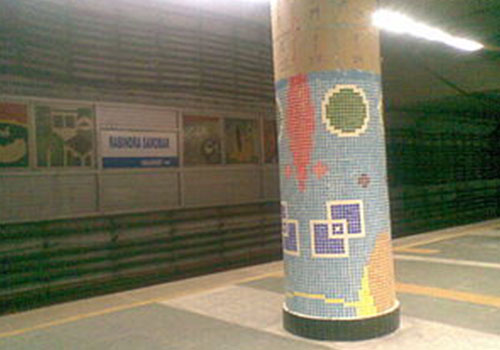
The Kolkata Metro was a marvel of engineering, a symbol of a modernizing city. But it quickly developed a grim reputation. The electrified third rail became a disturbingly popular method for people wanting to end their lives. And one station, for reasons unknown, became the epicenter of this tragedy: Rabindra Sarobar.
Officials estimate that a staggering 70% of all suicides on the metro network have happened right here. That is a concentration of despair that is hard to comprehend. And when that much negative energy is focused on one spot, it leaves a mark.
Train drivers and station staff have stories. So do the last few passengers who take the final train around 10:30 PM. They speak of seeing things. Eerie, shadowy figures standing at the edge of the platform, only to vanish in the blink of an eye. Some describe seeing apparitions walking directly onto the tracks and disappearing just before a train arrives. A fleeting glimpse of a person out of the corner of your eye, a momentary flicker in the tunnel’s darkness.
These aren’t vengeful spirits. They are echoes. The final, desperate moments of people who saw no other way out, replaying over and over again in the place where their lives came to a violent end. The station is a monument to modern sorrow, haunted by the ghosts of the city’s lost and lonely.

The Phantom Derby: William’s White Horse
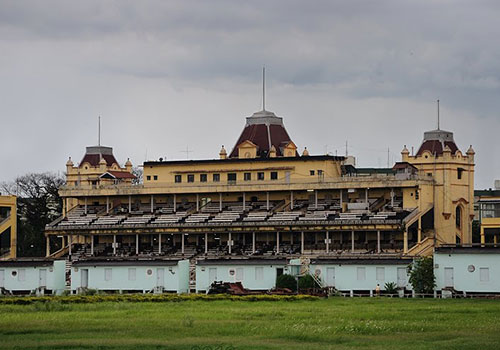
The Royal Calcutta Turf Club is a place of high society, thundering hooves, and fortunes won and lost in a flash. But its most enduring legend is not about a jockey or a gambler, but about a horse. And a love that transcended death.
The story centers on a man named George Williams, a racing enthusiast from the 1930s. Williams owned a magnificent pearl-white mare named Pride. She wasn’t just a horse; she was a champion, a legend in her own time. She was known as the “Queen of the Tracks,” winning race after race, earning her master fame and a small fortune.
But time is cruel to all athletes. As Pride grew older, her incredible speed began to fade. One year, she lost the prestigious Annual Calcutta Derby, a race she had once dominated. The defeat was crushing for both horse and owner. The very next morning, Pride was found dead on the tracks she had once ruled. Some say her heart gave out. Others say it was broken.
But that wasn’t the end of her story.
To this day, security guards, late-night workers, and people passing by the race course report seeing an incredible sight on moonlit Saturday nights. A ghostly white horse, galloping silently and gracefully across the tracks. It moves with a speed and power no living horse could match, a phantom running a race for eternity.
The locals know exactly who she is. They call her *William Saheb ka sada ghora*—”Mr. William’s white horse.” It’s not a frightening ghost, but a beautiful, tragic one. A spectral champion forever reliving her glory days on the field she loved.

The Ghostly Librarian and the Secret Chamber: National Library of India
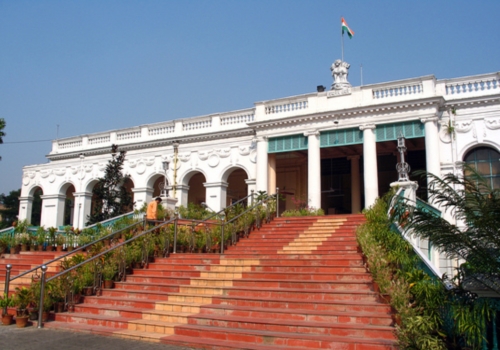
Our final stop is perhaps Kolkata’s most famous and complex haunting. The National Library of India, housed in the former residence of the Governor-General, is a place of knowledge. But it holds dark secrets within its walls.
The most commonly told story is that of Lady Metcalfe, the wife of a former Governor-General. She was, by all accounts, obsessed with cleanliness and order. She couldn’t stand to see a book out of place or dust on a shelf. Her spirit, they say, still patrols the grand old reading rooms.
Librarians and students, working late among the towering shelves, have reported feeling an unseen presence. The distinct feeling of someone breathing down their neck as they read. A faint whisper of rustling silk when no one is there. Books left on a table are sometimes found mysteriously put back on their proper shelves overnight. It’s the ghost of a perfectionist, still trying to keep her house in order.
Deep Dive: The Hidden Room Conspiracy
But the story of the tidy ghost librarian hides a much deeper, more disturbing mystery. In 2010, during a restoration project, the Archaeological Survey of India made a stunning discovery. They found a secret, hidden room on the ground floor. A room with no windows, no doors, no openings of any kind. A room that didn’t appear on any of the building’s official blueprints.
What was it? The media went wild with speculation. Was it a secret treasure vault? A punishment room? A torture chamber used by the British? The mystery deepened when engineers, unable to find an entrance, had to drill a hole through a wall to see inside.
The official report was anticlimactic. The room, they claimed, was completely empty. They speculated it was a structural feature, perhaps filled with mud to strengthen the building’s foundation. But does that make any sense? Why go to the trouble of building a massive, sealed chamber just to fill it with mud?
Conspiracy theories exploded across the internet. Many believe the authorities are covering something up. That the room was not empty. That it was a place where terrible things happened, a place so horrific they had to seal it away from the world forever. Perhaps the true haunting of the National Library isn’t a neat-freak ghost, but whatever dark energy was once locked away in that secret, silent room.
The truth, like so many of Kolkata’s secrets, remains buried. For now.