Home Weird World Strange Stories The Strange coincidence of the Mermaid Ship

The Strange coincidence of the Mermaid Ship

0
62

The Cursed Crew of the Mermaid: A Shipwreck Cascade That Defies All Logic

One shipwreck is a tragedy. A terrible, life-altering event swallowed by the sea.

Two shipwrecks? That’s unbelievably bad luck. A cruel twist of fate.

But what do you call six? Six consecutive shipwrecks, all befalling the same group of sailors. What name do you give to a chain of maritime disasters so statistically impossible, so utterly bizarre, that it sounds less like history and more like a ghost story whispered in a dockside tavern?

This isn’t a work of fiction. This is the story of the crew of the ship Mermaid.

A story that begins with a storm and spirals into a vortex of watery graves, a relentless cascade of calamity that makes you question the very nature of luck, fate, and whether some crews are just born under a bad, bad star.

Forget what you think you know about being unlucky. You’re about to meet the men who could make a lottery winner go bankrupt just by standing next to him.

Life

The First Domino Falls: The Mermaid’s Demise

Our story starts simply enough. The Mermaid, a sturdy merchant vessel, had been at sea for four days. The voyage was unremarkable. The sun was out. The seas were calm. The crew, a collection of seasoned sailors and young hopefuls, went about their duties with the quiet competence of men who know the ocean’s rhythms.

Then the sky changed.

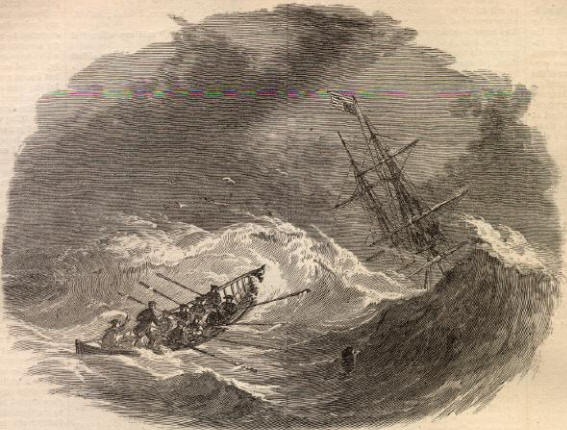
It didn’t just darken; it bruised, turning a shade of violent purple that sailors knew meant one thing: run. But at sea, there is nowhere to run. The wind began to howl, a low moan that quickly escalated into a screeching, physical force. Waves, once gentle companions, swelled into monstrous, moving mountains of water, lifting the Mermaid to terrifying heights before dropping it into troughs so deep the crew could see nothing but a wall of black water on all sides.

The ship groaned. It protested. The timbers, which had seemed so strong just hours before, began to shriek under the strain. A sickening crack echoed across the deck, louder than the thunder. The mainmast splintered. The sea, no longer content to just batter the ship, poured over the sides, a relentless invasion of freezing, chaotic water. The Mermaid was breaking apart beneath their feet. It was over.

There was no choice. It was swim or die. The crew, battered and terrified, abandoned their dying ship and threw themselves into the churning abyss. Their only hope was a sliver of land they’d spotted on the horizon before the storm hit its peak. They swam, fighting the current, the waves, and the sheer exhaustion, their minds screaming that this was the end. But it wasn’t.

In a miraculous turn, they were spotted. The ship Swiftsure, having weathered the same storm, found the half-drowned survivors clinging to debris and hauled them aboard. They were saved. Cold, beaten, but alive. Their ship was gone, but their lives were not. Surely, the worst was over.

They were wrong.

Rescue and Ruin: The Treachery of the Swiftsure

On the decks of the Swiftsure, the crew of the Mermaid must have felt a profound sense of relief. They were given dry clothes, hot food, and the promise of safe passage. They shared their story of survival, a harrowing tale that earned them the respect and sympathy of their rescuers. They had stared death in the face and won.

But the ocean wasn’t finished with them.

The storm had passed, but its aftermath was just as dangerous. The sea was a confused mess of powerful, unpredictable currents. The Swiftsure, a capable vessel under normal circumstances, was caught in a grip it could not escape. It wasn’t a dramatic battle like the one that claimed the Mermaid. This was a silent, insidious killer. A relentless, unseen force was dragging the ship toward a rocky coastline.

The captain of the Swiftsure fought it. The crew fought it. But the current was stronger. With a horrifying, grinding shudder, the Swiftsure ran aground, its hull breached by jagged, unforgiving rocks. The ship that had been their salvation just hours before was now another sinking prison. For the second time in as many days, the unlucky crew of the Mermaid found themselves abandoning ship, scrambling for their lives as the ocean claimed another vessel from under them.

They were unsafe once again. Twice shipwrecked. Twice survivors. The absurdity was already settling in. But this time, their wait for rescue was shorter.

Deep Dive: The Brutal Reality of 19th Century Sailing

It’s easy for us in the modern age to forget just how dangerous sea travel was. We have GPS, satellite weather forecasting, steel hulls, and emergency beacons. They had a compass, a sextant, and a prayer.

  • Unpredictable Weather: Storms could appear with almost no warning. A sudden drop in barometric pressure might be the only clue, and by then, it was often too late. A storm that a modern ship would barely notice could tear a wooden vessel to splinters.
  • Navigational Peril: Charts were often inaccurate or incomplete. A single miscalculation in “dead reckoning”—estimating your position based on speed, time, and direction—could put you miles off course, straight into a reef or a treacherous current system you never knew existed.
  • The Ships Themselves: Wooden ships required constant maintenance. A small leak could become a big one. A dry rot you didn’t see could weaken a critical mast. And in a fire? A wooden ship filled with tarred ropes and canvas sails was a floating powder keg.

So, one or even two shipwrecks, while tragic, weren’t entirely outside the realm of possibility. It was a dangerous job. But what came next for the crew of the Mermaid was something else entirely. It was a statistical anomaly so profound it borders on the supernatural.

Third Time’s the Charm? The Fiery Fate of the Governor Ready

Eight hours. That’s how long the combined crews of the Mermaid and Swiftsure were stranded before another ship, the Governor Ready, appeared. The captain of this new vessel must have been shocked to find two full crews of shipwrecked sailors. Despite having 32 people already on board and a full cargo of timber, he did the honorable thing and took everyone in.

The decks of the Governor Ready were now dangerously crowded. Men were everywhere. The ship was heavy in the water, burdened by the weight of its timber, its original crew, and now the twice-unlucky survivors from two other wrecks.

For a while, things were fine. The ship was sailing smoothly. The destination was Sydney. The nightmare, it seemed, was finally, truly over.

Then, someone smelled smoke.

Fire on a wooden ship is the ultimate terror. It spreads with unbelievable speed. The crew’s worst fears were realized when the smoke was traced to the cargo hold. The timber. The very foundation of the ship’s voyage was now its fuel. The fire, feeding on the dry wood, erupted into an uncontrollable inferno.

Panic ensued. There was no fighting this. The heat was intense, the smoke blinding. The ship that had been their third chance at life was now a floating tinderbox, a funeral pyre in the middle of the ocean. For the third time, the order was given: abandon ship. The crew of the Mermaid, now professional shipwreck survivors, once again found themselves in the water, watching their rescue vessel burn to the waterline.

A Cascade of Calamity: The Comet and Jupiter

This is where the story tips from tragic to utterly unbelievable. Hours later, a fourth ship, the Comet, arrived on the scene. Its crew pulled the waterlogged survivors from the sea, a mix of men from three different ships. Can you imagine the conversation on that deck? The captain of the Comet listening as the sailors from the Mermaid explained that this was, in fact, the third time this had happened to them. He probably thought they were mad from exposure.

He should have thrown them back in the sea.

The Comet, with its strange new cargo of jinxed sailors, successfully got them back on course. For five days, everything was normal. Five days of smooth sailing. The men from the Mermaid must have started to breathe again. Maybe the curse, or whatever it was, had finally been broken.

Then, five days after the rescue, the Comet sank.

There’s no dramatic record of how it happened. It just… went down. Another ship, another watery grave. And another rescue. The ship Jupiter arrived to save them. The crew of the Mermaid, now four-time losers in the game of maritime survival, were hauled aboard yet another vessel.

By now, they must have been treated like a disease. Would you want these men on your ship? Men who seemed to pull vessels to the ocean floor just by setting foot on them? The crew of the Jupiter probably kept their distance, making signs to ward off evil as the cursed ones huddled together on deck.

Their fear was justified. Twelve hours. That’s how long the Jupiter lasted. Just twelve hours after saving the unluckiest men on Earth, it wrecked.

Five ships. Five disasters. One crew at the center of it all.

What if? Exploring the Bizarre Theories

How is this even possible? When a story defies logic, we are forced to look for answers in the strange and the speculative. Modern internet forums and mystery blogs have chewed on this story for years, and the theories are wild.

Theory 1: The Cursed Object. This is a favorite among conspiracy buffs. The theory suggests the Mermaid was carrying something it shouldn’t have been. A stolen artifact? A desecrated relic? An Egyptian mummy’s sarcophagus? The idea is that the object’s curse wasn’t tied to the ship, but to the people who possessed it. As long as the crew stayed together, the curse would follow them, destroying any vessel that gave them shelter.

Theory 2: The Human Jinx. Less supernatural, but just as strange. Was one of the sailors on the Mermaid a “jonah”? Maritime lore is filled with the concept of a “jonah,” a single person who brings bad luck to a ship. Could one man, through some unknown negative energy or cosmic misfortune, have been a walking, talking shipwreck generator? And did his luckless aura infect the entire crew he traveled with?

Theory 3: An Elaborate Tall Tale. This is the skeptic’s view. Is it possible this entire story is an exaggeration? A “sea story” that grew more elaborate with each telling in every port city bar? Perhaps there were two wrecks, and sailors, known for their storytelling, embellished the rest for free drinks and wide-eyed audiences. It’s the most logical explanation, but it’s also the least fun.

The Final Chapter: The City of Leeds

For the fifth time, the crew found themselves adrift. Stranded. Waiting. They had survived a storm, a current, a fire, and two other unexplained sinkings. They were legends of misfortune. And as they floated in the wreckage of the Jupiter, a sixth ship appeared on the horizon.

The City of Leeds.

Imagine being the captain of that ship. You see desperate men in the water. You pull them aboard. And then they tell you their story. That every ship they’ve been on for the past week has ended up on the ocean floor. Do you laugh? Do you cry? Do you turn your ship around and leave them to their fate?

Whatever his thoughts, the captain of The City of Leeds took them aboard. And this time, something was different. The curse, the jinx, the impossible string of bad luck… it was broken.

The City of Leeds did not sink. It did not catch fire. It did not run aground. It sailed safely and without incident, finally delivering the battered, bewildered, and monumentally unlucky crew of the original Mermaid to Sydney.

Their ordeal was over.

The historical record largely falls silent on what happened to them after that. Did they ever go to sea again? It seems doubtful. Would any captain hire them? Their story surely became a whispered legend in the ports of Australia, a cautionary tale about the unpredictable fury of the sea and the mysterious nature of luck.

So what do we make of it all? Is it just a freakishly improbable, but ultimately explainable, series of unfortunate events in an era when ships sank all the time? Or is it proof of something more? A story that shows the universe sometimes plays by rules we can’t possibly understand.

A statistical anomaly. A maritime curse. Or the greatest tall tale ever told on the high seas. The ocean, as always, keeps its secrets.

Originally posted 2016-03-24 20:28:00. Republished by Blog Post Promoter