The Ghost Plane of Sakhalin: What Really Happened to KAL 007?
It was a ghost in the machine. A blip on a radar screen where it shouldn’t have been. And then, it was gone.
On September 1, 1983, Korean Air Lines Flight 007, a massive Boeing 747 carrying 269 people, vanished from the sky. The official story is chilling enough: the civilian airliner strayed into forbidden Soviet airspace and was shot down by a fighter jet. A tragic accident. A horrifying mistake. A casualty of the Cold War’s icy paranoia.
But that’s just the story they want you to believe. The neat and tidy explanation for a mystery that is anything but.
Because when you start pulling at the threads of the official narrative, the entire thing unravels. It reveals a story far stranger, far more sinister than a simple navigational error. It points to a cover-up at the highest levels of two global superpowers. And it asks one, simple, bone-chilling question that has never been answered.
If 269 people crashed into the sea… where are the bodies?
The Official Story: A Tragic Mistake in Hostile Skies
Let’s start with the facts. The ones everyone agrees on, anyway.
KAL 007 was on a routine flight from New York City to Seoul, South Korea, with a refueling stop in Anchorage, Alaska. On the final leg of its journey, it was supposed to fly over the northern Pacific Ocean, safely east of Soviet territory. It was a well-worn path. A sky-highway.
But something went wrong. Terribly wrong.
Instead of flying its planned route, the jumbo jet began a slow, deliberate, and fatal drift to the west. It wasn’t a sudden turn. It was a gradual deviation, a few miles at a time, pulling it directly toward one of the most heavily fortified and sensitive military zones on the planet: the Kamchatka Peninsula and Sakhalin Island. This was the Soviet Union’s far eastern fortress, bristling with submarine bases, early-warning radar stations, and top-secret airfields.
For over two hours, the 747 flew deeper and deeper into this hornet’s nest. Soviet air defense went on high alert. Fighter jets scrambled into the black, pre-dawn sky, hunting for the intruder.
They found it.
According to the official timeline, a Soviet Sukhoi Su-15 interceptor, piloted by a Major Gennadi Osipovich, closed in on the unidentified aircraft. He claimed he fired warning shots. He said he couldn’t identify the plane as a civilian airliner. Following orders from the ground, he armed his weapons.
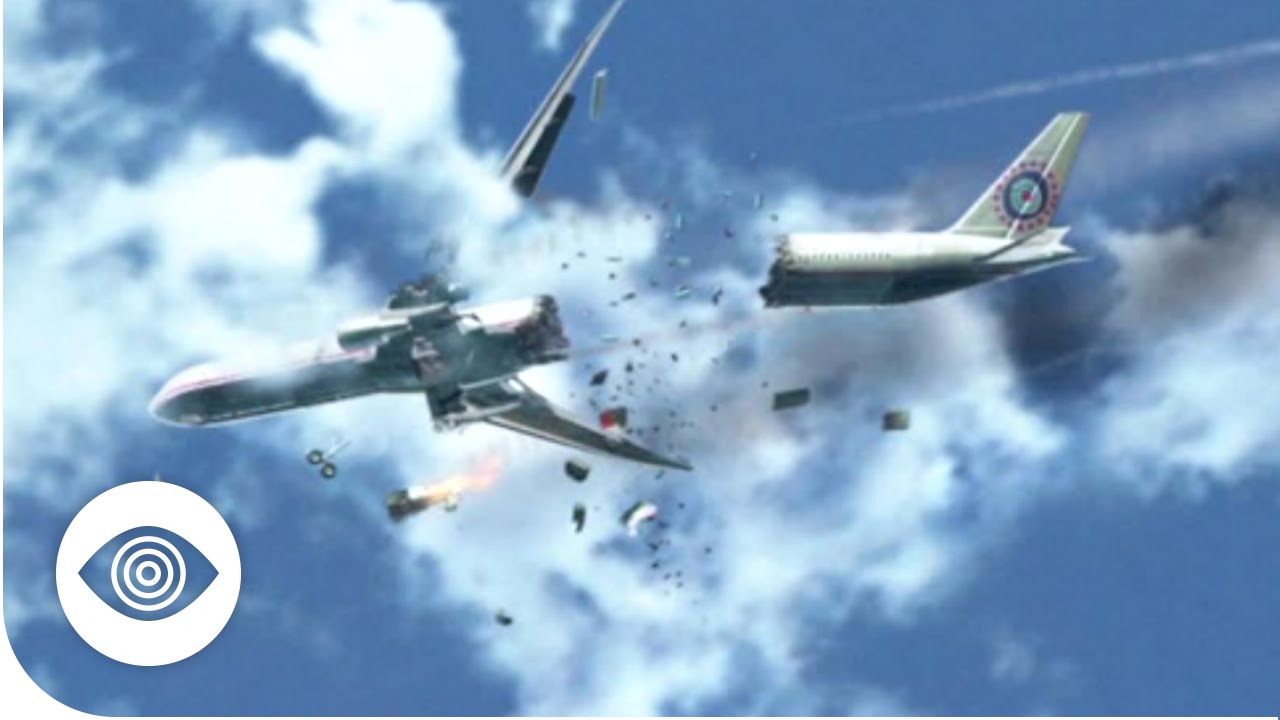
At 3:26 AM local time, Osipovich fired two air-to-air missiles. One slammed into the tail of the massive 747, shredding its hydraulic systems and causing rapid decompression. The airliner spiraled out of control, falling from 35,000 feet for twelve agonizing minutes before crashing into the icy waters of the Sea of Japan, just west of Sakhalin Island.
There were no survivors. The world erupted in outrage. President Ronald Reagan called it a “massacre” and an “act of barbarism.” The Soviet Union initially denied everything, then claimed the plane was on a sophisticated spy mission for the United States. The Cold War, already frigid, nearly flash-froze into World War III.
Case closed? Not even close. This is where the real mystery begins.
The Ultimate Question: Where Are The 269 Bodies?
Think about this. A Boeing 747 is enormous. When it hits the water, the scene is one of utter devastation. Wreckage. Luggage. Fuel slicks. And bodies. Always bodies.
A massive search and rescue—later recovery—operation was launched by the United States, Japan, and South Korea. For weeks, their ships combed a huge expanse of the sea. They found pieces of the plane. A section of the tail. A few galley items. Some shoes. They found pages from a passenger’s address book, eerily preserved in the cold water.
But what didn’t they find?
People.
In all those weeks of searching, not a single, intact body of a passenger or crew member from KAL 007 was ever recovered by the international search teams. Not one. Out of 269 souls. Let that sink in. Fragments of human remains, yes, a few. But so few that it only deepened the mystery. Where did everyone go?
The Soviets, who controlled the actual crash site, claimed to have found some bodies, but their stories were inconsistent and they never provided any proof. They sealed off the area, chasing away American and Japanese ships. What were they hiding?
The ocean is vast, true. Currents can do strange things. But a total, complete absence of victims from a jumbo jet crash is more than strange. It’s statistically impossible. It’s a glaring anomaly. A hole in the story so big you could fly a 747 through it.
Explosive Theory #1: The Secret Landing on Sakhalin Island
This is where things take a sharp turn into the shadows. What if the plane didn’t disintegrate in a fireball over the ocean? What if the Soviet missile didn’t destroy KAL 007, but merely crippled it?
When the black box recordings were finally released by Russia in 1993, a decade after the incident, they contained a bombshell. The cockpit voice recorder revealed that the pilots were alive and in control of the aircraft for a significant time *after* the missile strike. They weren’t screaming in panic. They were working the problem, fighting to keep the massive jet in the air.
The plane took twelve minutes to descend. Twelve minutes. That’s an eternity for a pilot. It’s more than enough time to attempt a controlled water landing, or even to search for a place to put the plane down on land.
And where was the plane when it was shot? Directly over Sakhalin Island—a massive piece of land filled with, you guessed it, Soviet military bases and airfields.
The theory is as simple as it is terrifying: The Soviet fighter jet didn’t shoot to kill. It shot to disable. It forced the crippled airliner to land at a secret military installation on Sakhalin. The 269 passengers and crew, including U.S. Congressman Larry McDonald, didn’t die in a crash. They were captured.
Why Would They Do It?
Why would the Soviets take such a massive risk? Simple. They believed the plane was a spy flight. By capturing the aircraft and its “crew,” they would have the ultimate prize: a US intelligence operation caught red-handed, complete with agents and advanced surveillance equipment they believed was hidden aboard. It would be a propaganda victory of epic proportions.
Over the years, whispers have emerged from the shadows to support this idea. Defectors and former Soviet military personnel have come forward with fragmented stories. Stories of a large civilian plane landing on the island that night. Stories of passengers being transported away in trucks. Stories of a massive cleanup operation to remove all traces of the aircraft.
Are these stories true? It’s impossible to verify. But they perfectly explain the one thing the official story cannot: the complete and total disappearance of 269 living, breathing human beings.
Explosive Theory #2: Was Flight 007 a Trojan Horse Spy Plane?
Maybe the Soviets weren’t just being paranoid. Maybe they were right.
The other major theory that refuses to die is that KAL 007 was, in fact, involved in a US intelligence operation. This wasn’t some poor, lost passenger plane. This was a deliberate probe of Soviet air defenses, using civilians as human shields.
Sound crazy? Let’s look at the “coincidences.”
At the exact same time KAL 007 was blundering through Soviet airspace, a US Air Force RC-135 reconnaissance plane was flying a mission nearby. The RC-135 is a modified Boeing 707, similar in radar profile to a 747. The official line is that the Soviets confused the two. But what if there was no confusion? What if the two planes were working together?
The theory goes like this: The RC-135 would fly close to Soviet territory, “tickling” their radar and forcing them to turn on their most advanced defense systems. As the Soviets lit up their networks to track the spy plane, KAL 007, flying “dark” deep inside their territory, would soak up all those electronic signals, gathering priceless intelligence on Soviet capabilities.
The plan was brilliant. And deadly. The Americans gambled that the Soviets would never dare shoot down a civilian airliner. They gambled wrong.
The Congressman and the “Coincidence”
And then there’s the matter of one very specific passenger: Congressman Larry McDonald of Georgia.
McDonald wasn’t just any politician. He was a hardline anti-communist, a fierce critic of the Soviet Union, and the head of the ultra-conservative John Birch Society. He was a major thorn in the side of the Kremlin. Was his presence on that specific flight, a flight that would conveniently stray over the USSR’s most sensitive military sites, just bad luck?
Or was he the target? Or perhaps, as some have suggested, he wasn’t a victim at all, but a willing participant, using his diplomatic status as part of the mission’s cover. If the plane landed safely, his presence would complicate things for the Soviets. If it was shot down, he would be a martyr for the anti-communist cause.
Either way, his presence adds a layer of political intrigue that makes a simple accident seem far too convenient.
The Great Cold War Cover-Up
Whether it was an accident, a forced landing, or a spy mission gone wrong, one thing is certain: both sides lied.
The Soviets lied from the very beginning. They denied the shootdown for a week. Then they admitted it but claimed it was an unidentified spy plane. They denied finding the black boxes for ten years, all while they were secretly analyzing them. They stonewalled, they obfuscated, they controlled the narrative with an iron fist.
But the United States wasn’t exactly forthcoming, either. Records from US radar stations in the area remain classified to this day. Why? If it was just a simple tragedy, what is there to hide? Did they know KAL 007 was off course? Did they watch on their screens as a civilian jet flew into the jaws of the Soviet military and do nothing?
The horrifying possibility is that they *couldn’t* warn the plane. To do so would be to reveal to the Soviets just how good their radar was, and exactly what they could see inside Soviet territory. It’s a brutal Cold War calculation: sacrifice 269 civilians to protect a vital intelligence source.
Both superpowers had reasons to bury the truth. The Soviets wanted to hide their brutal act. The Americans wanted to hide their potential complicity or a failed intelligence operation. The truth—and the 269 passengers of KAL 007—was caught in the middle, crushed between two geopolitical giants.
40 Years Later: The Digital Ghosts and Lingering Questions
Decades have passed. The Soviet Union is gone. But the mystery of KAL 007 is more alive than ever, kept burning by internet sleuths, independent researchers, and the families of the lost who have never given up hope.
Online forums buzz with analysis of recently declassified documents. Amateur investigators pour over flight path data and satellite photos, searching for clues missed by the original teams. New interpretations of the black box recordings suggest the plane may have even been intact and climbing after the missile hit, before a second event occurred.
The questions remain as haunting today as they were in 1983.
Why did a veteran pilot make such a basic, sustained navigational error? Why was there a complete and impossible absence of bodies at the crash site? Why did the Soviets lie for a decade about the black boxes? Why does the US still keep radar records from that night under lock and key?
The official story is a house of cards, collapsing under the weight of its own contradictions. The truth is still out there, buried under layers of Cold War lies, or perhaps in a mass grave on a remote island. The 269 souls aboard KAL 007 didn’t just die. They were disappeared. Erased. They became ghosts in a global chess game, their final fate a secret the world was never meant to know.