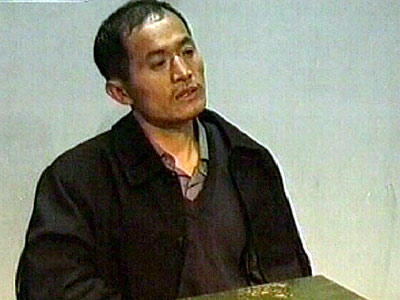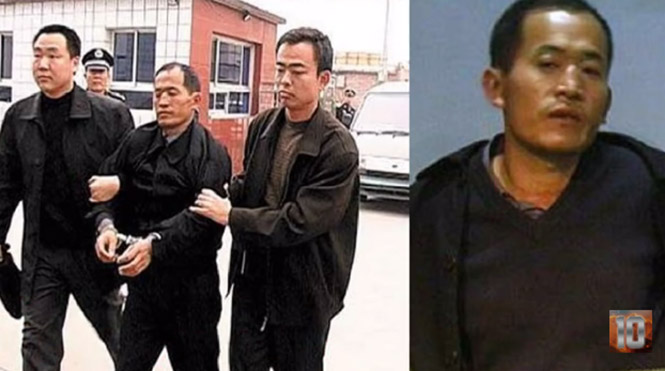

The Monster of Henan: Unmasking Yang Xinhai, China’s Most Prolific Serial Killer
The night is still. Utterly, completely still. Imagine a small farmhouse in rural Henan province, miles from the nearest town. The only sounds are the chirping of crickets and the gentle breathing of a sleeping family. They are farmers. People of the earth. Their lives are hard, but simple. They believe their thick wooden door will keep the world out.
They are wrong.
Because something is moving through the darkness. A shadow detaching itself from other shadows. It carries no gun, no sophisticated weapon. It carries the tools of their trade. A hammer. A shovel. An axe.
This is the story of the man who turned those tools into instruments of absolute horror. A man who, for four terrifying years, drifted across the heart of China like a plague, leaving a trail of unimaginable carnage. They called him the “Monster Killer.” His real name was Yang Xinhai.
Between 1999 and 2003, this single man was responsible for 67 confirmed murders and 23 rapes. Sixty-seven lives. Men, women, children. Wiped from existence in the most brutal ways imaginable. How does a person become this? What twisted path leads a human being to become a real-life monster? Buckle up. The story is darker than you can possibly imagine.
The Making of a Monster
Evil doesn’t just appear out of thin air. It grows. It festers in the forgotten corners of the world, nourished by poverty, neglect, and rage. Yang Xinhai’s story begins in one of those corners.
A Childhood Lost in Poverty
Born in 1968 into one of the poorest families in a small village in Henan, Yang’s early life was a constant struggle. This was rural China, a world away from the gleaming skyscrapers of Beijing and Shanghai. For families like Yang’s, life was about survival. Day by day, meal by meal.
Neighbors and old classmates remembered him as a quiet, withdrawn boy. He was smart, oddly so, but deeply introverted. He kept to himself, a ghost in his own life even then. He was an observer. Watching. Waiting. But for what?
At 17, he did something that sealed his fate. He dropped out of school. In a society where education was the only conceivable ladder out of the dirt-floored poverty he knew, he kicked it away. He turned his back on the system and walked away from his home, choosing the life of a drifter, a nomadic laborer. He would wander from province to province, taking odd jobs, never putting down roots. He was untethered. Accountable to no one. A perfect breeding ground for the darkness that was already taking root in his soul.
The Criminal Apprenticeship
A man with no prospects and a growing resentment for the world is a dangerous thing. Yang Xinhai quickly turned to crime. But these weren’t the actions of a master criminal. They were clumsy, desperate, and they show a disturbing pattern of escalation.
In 1988, he was first caught for theft and sentenced to a “labor camp.” Think about that. Not a rehabilitative prison, but a place of hard, grueling work designed to break a person’s spirit. Did it break his? Or did it just make him harder? Angrier?
He wasn’t out long before he was arrested again in 1991. This time, it was for attempted rape. The darkness was evolving. The violence was turning towards people, specifically women. He was sent back to another labor camp.
When he got out, the pattern repeated. In 1996, he was arrested for the *exact same crime*: attempted rape. This time, the authorities saw a pattern. They sentenced him to five years in a proper prison. It was in that prison, surrounded by China’s most violent and hopeless men, that the final pieces of the monster likely clicked into place. He was released in 1999, a 31-year-old man with nothing to his name but a long criminal record and a heart full of poison. The fuse had been lit.
The Four-Year Reign of Terror (1999-2003)
The official story, the one Yang himself told police, is that his killing spree was triggered by a breakup. After his release from prison, a girlfriend allegedly left him because of his past as a thief and a rapist. It’s a simple, almost mundane reason for the slaughter that followed. But is it the truth?
A Broken Heart or a Broken Mind?
Let’s be real. Normal people don’t go on a four-year murder rampage over a breakup. For serial killers, these “triggers” are often just excuses. The desire to kill, to dominate, was already there. The breakup was merely the excuse he needed to finally unleash it. It was the moment he decided to stop pretending he was part of a society that he felt had rejected him at every turn.
What if she had stayed? Would he have remained a petty criminal? It’s doubtful. The pressure was building inside him for years. The rage at his poverty, the humiliation of his prison sentences, the violent urges he could no longer contain. The breakup wasn’t the cause. It was just the flick of a switch.
The Monster’s Method: A Blueprint for Horror
Once he started, Yang Xinhai became a ruthlessly efficient killing machine. His methods were horrifyingly intimate and brutally practical. He was a phantom, and he had a system.

First, the target. He exclusively preyed on farmers in isolated homes. He knew this life. He knew their routines. He knew there were no nearby neighbors to hear the screams, no police patrols to stumble upon his work. He was hunting on his home turf.
Second, the tools. He used whatever was at hand at the farmhouses he attacked. Shovels, axes, meat cleavers, and heavy iron hammers. He turned the very implements of his victims’ livelihoods against them. There is a special kind of terror in that.
Third, the preparation. This was not a mindless killer. Yang was cunning. He would bike for miles to a target village, then sneak in on foot. He often wore brand-new clothes and oversized shoes to avoid leaving clear tracks and to confuse police. He was a predator who understood how to cover his trail.
Finally, the attack itself. His cruelty was methodical. He would slip into the house in the dead of night while the family slept. He would then, in a storm of shocking violence, kill everyone in the house, often starting with the husband or parents. He eliminated any threat. But he would leave the wife for last. After she had witnessed the slaughter of her entire family, in the depths of her grief and terror, he would rape her. Then, he would kill her too. Sometimes he didn’t. Sometimes he left a survivor, a single witness to the absolute horror, a choice that would ultimately be his undoing.
The Manhunt and The Ghost
For years, Yang was a ghost. A whisper. A terrifying rumor that spread through the countryside as the body count rose. He drifted, and he killed.
A Trail of Blood Across Four Provinces
The killing spree cut a bloody swath across four of China’s most populous provinces: Henan, Anhui, Shandong, and Hebei. Hundreds of millions of people lived in this region, yet he moved among them like a phantom.
You have to understand what policing was like in rural China in the early 2000s. Communication and data sharing between different provincial police forces were clunky and inefficient. One province might be investigating a horrific family murder, while another province 100 miles away investigated a nearly identical crime. For a long time, nobody connected the dots. They were seen as separate, isolated tragedies. This bureaucratic failure allowed Yang to continue his slaughter unimpeded.
Fear gripped the farming communities. People began barricading their doors at night. Farmers took turns standing watch. The “Monster” was real, and he could be anywhere.
The Breakthrough: One Woman’s Courage
The ghost’s reign was not to last forever. In October 2002, Yang made a mistake. He attacked a father and his six-year-old daughter, killing them both. He then brutally assaulted the man’s pregnant wife, beating her and leaving her for dead.
But she didn’t die.
She survived. She fought through her injuries and her unimaginable grief and was able to give police a description of her attacker. But more importantly, police were able to recover something from the scene that would change everything: the killer’s DNA.
Suddenly, police had a genetic fingerprint. They could now link the crime scenes. The dozens of unsolved massacres across four provinces weren’t random acts of violence. They were the work of one man. The ghost had a signature. The hunt was on.
The Takedown and The Confession
Even with his DNA on file, finding Yang was like searching for a single grain of sand on a vast beach. He had no fixed address, no job, no real connections. He simply drifted. The end, when it came, was almost absurdly simple.
The End of the Road: A Routine Stop
On November 3, 2003, in the city of Cangzhou, Hebei, police were conducting a routine spot check, a common practice. They saw a man on a bicycle acting strangely. He seemed nervous, shifty. What did “suspicious” look like? Maybe it was the flicker in his eyes. Maybe it was the way he tried to avoid their gaze. Whatever it was, the officers stopped him for questioning.
They took him to the local station. He was just another drifter, another nobody. They ran his fingerprints. They took his DNA. And then, the alarms went off. The system lit up with red flags. This quiet, unassuming man sitting in their interrogation room wasn’t just some random vagrant. His DNA was a perfect match for the sample recovered from dozens of murder scenes. They had, completely by accident, captured the Monster of Henan.
“Society Is Not My Concern”: Inside the Mind of Evil
Once caught, Yang Xinhai did not resist. He did not deny. He confessed. Calmly and without emotion, he detailed a spree of killing that left even the most hardened detectives speechless. He admitted to 67 murders, 23 rapes, and numerous other assaults. The police had their man.
When they asked him the one question everyone wanted to know—*Why?*—his answer became one of the most chilling confessions in the annals of crime.
“When I killed people I had a desire,” he said flatly. “This inspired me to kill more. I don’t care whether they deserve to live or not. It is none of my concern.”
He finished with a statement of pure, nihilistic detachment: “I have no desire to be part of society. Society is not my concern.”

There was no grand motive. No complex psychological trauma he was acting out. He killed because he liked it. It gave him a feeling, a “desire,” and he chased that feeling. His victims weren’t people to him; they were objects. His poverty, his prison time, the breakup—those weren’t reasons. They were just the things that scraped away the last thin veneer of his humanity, revealing the predator beneath.
Modern internet sleuths and true crime forums still debate this. Was it really that simple? Some theories suggest his crimes were a twisted form of class warfare—a peasant lashing out at the system that had left him with nothing. A horrifying, bloody revenge against the world itself. But Yang’s own words suggest something far simpler, and far more terrifying: a man with a black hole where his soul should have been.
The Aftermath & The Lingering Questions
The capture of Yang Xinhai brought a collective sigh of relief across central China, but the story wasn’t quite over. Justice for the Monster Killer would be as swift as his crimes were brutal.
Justice, Swift and Final
His trial was a formality. The evidence was overwhelming, his confession was detailed, and he showed absolutely no remorse. On February 1, 2004, he was found guilty of 67 counts of murder and sentenced to death.
There was no long wait on death row. There were no years of appeals. Just thirteen days later, on February 14, 2004—Valentine’s Day, in a final stroke of dark irony—Yang Xinhai was taken to a field and executed with a single bullet to the back of the head. The monster was dead.
The Monster’s Legacy: A Scar on the Nation
Yang Xinhai’s rampage was a brutal wake-up call for Chinese law enforcement. It exposed the massive gaps in communication between provincial police forces and highlighted the desperate need for a centralized, national DNA database. His crimes, in a way, forced the modernization of a system that had allowed him to operate for so long.
Yet, for being one of the most prolific serial killers in modern history, his name is barely known in the West. He’s no Ted Bundy or Jeffrey Dahmer. Why? Perhaps it’s the language barrier. Or perhaps it’s the fact that state-controlled media in China did not sensationalize the case, preferring to report his capture, trial, and execution quickly and cleanly, closing the book on a national nightmare.
But closing the book doesn’t make the story go away. The questions he left behind still haunt us. Can we ever truly understand the forces that create such a man? How many other quiet, resentful people are drifting through the forgotten parts of our world, just one rejection away from letting their own monsters out? Yang Xinhai is gone, but the darkness he represents is not. The silence he left in those farmhouses is a chilling reminder that sometimes, the most terrifying monsters are the ones that are all too human.