The Bible Code: Is Our Entire History and Future Written in a Secret Ancient Cipher?
Forget everything you think you know about the Holy Bible. Set aside the sermons, the Sunday school lessons, the parables. What if the book that has shaped civilizations for millennia isn’t just a collection of religious texts? What if it’s something else entirely?
A data file. A prophecy machine. A complex, multi-layered cipher containing the details of every major world event, from the rise of Hitler to the chaos of 9/11. What if our past, our present, and our terrifying future were all encoded within its pages, waiting for someone with the right key to find them?
This isn’t the plot of a Hollywood thriller. This is the explosive claim behind the phenomenon known as the Bible Code.
It’s a theory so powerful it has captivated mathematicians, stumped intelligence agencies, and ignited a firestorm of debate that rages to this day. The idea suggests that a hidden message, woven into the original Hebrew text of the Old Testament, can be revealed using a specific mathematical method. It’s not about interpreting verses. It’s about cracking a code.
So, are we looking at the greatest discovery in human history? Or the most elaborate case of wishful thinking ever conceived? Grab a seat. Things are about to get strange.
The Genesis of a Modern Mystery
The whispers of secret codes in holy texts are as old as the texts themselves. For centuries, mystics and scholars have searched for hidden meanings, numerological patterns, and divine acrostics. But the modern Bible Code theory isn’t about ancient mysticism. It’s a child of the digital age.
It was born from the cold, hard logic of a computer.
The story truly explodes into the public consciousness in 1994. Three Israeli mathematicians—Eliyahu Rips, Doron Witztum, and Yoav Rosenberg—published a paper in a respected, peer-reviewed journal called Statistical Science. This wasn’t some fringe conspiracy magazine; this was a serious academic publication. Their paper, “Equidistant Letter Sequences in the Book of Genesis,” presented what they believed was irrefutable statistical evidence of a hidden phenomenon.
They claimed that by using a specific computer algorithm, they had found the names of dozens of famous medieval rabbis encoded in the Book of Genesis, near the dates of their birth or death. The odds of this happening by chance, they calculated, were astronomically low. One in sixty-two thousand, five hundred, to be exact.
The academic world was stunned. But it was an American journalist, Michael Drosnin, who took this discovery and turned it into a global sensation with his 1997 blockbuster book, The Bible Code. Drosnin claimed the code wasn’t just about long-dead rabbis. He said it predicted the future.
How Does This Cosmic Word Search Supposedly Work?
So, how do you find these hidden messages? It’s a process called the Equidistant Letter Sequence (ELS). Imagine it’s a high-tech treasure hunt designed by a higher intelligence.
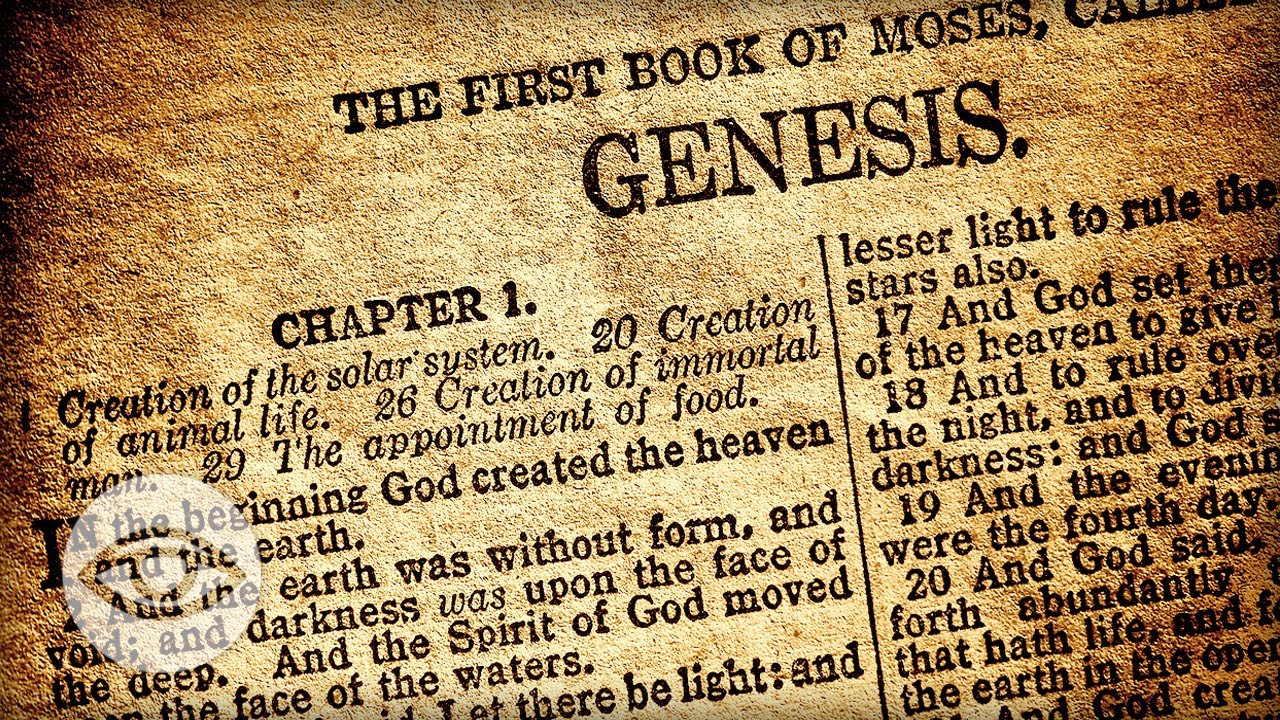
First, you need the original source code: the Hebrew text of the Old Testament. No translations. No King James Version. Only the original letters.
Then, you remove all the spaces between the words, creating one massive, unbroken string of characters. Think of it as a giant strand of linguistic DNA containing 304,805 letters.
Next, the computer program lays this long string out in a grid, like a giant word-search puzzle. But here’s the trick: the computer can adjust the width of the grid, changing how many letters are in each line. It can be 10 letters wide, 27 letters wide, 1,542 letters wide—any width at all.
Finally, the computer scans the grid. It looks for words by skipping a fixed number of letters—the “equidistant sequence.” It might read a letter, skip 4 letters, read the next, skip 4 more, and so on. It can do this forwards, backwards, up, down, and diagonally.
When it gets a “hit”—a meaningful word like “HITLER” or “WATERGATE”—it then scans the surrounding area in the grid for related terms. This is where the truly mind-blowing claims come from.
The Astonishing “Hits” That Baffled Everyone
If the Bible Code had only found a few random words, it would have been dismissed as a curiosity. But the patterns Drosnin and others claimed to find were so specific, so chillingly accurate, they demanded attention. These weren’t vague, Nostradamus-style prophecies. These were names, dates, and places.
The Assassination of Yitzhak Rabin
This is the smoking gun of the Bible Code. The one case that believers always point to. In 1994, a year before the event, Michael Drosnin claims he found an ELS spelling out “Yitzhak Rabin.” That was interesting, but what he found crossing that name sent a chill down his spine: “assassin who will assassinate.”
Drosnin says he flew to Israel and hand-delivered a warning to a close friend of the Prime Minister, but was ignored. On November 4th, 1995, Prime Minister Yitzhak Rabin was shot and killed by a right-wing extremist named Yigal Amir.
After the assassination, code researchers went back to the grid. They claimed to find the killer’s full name, “Yigal Amir,” encoded right there. They found the name of the city, “Tel Aviv.” They even found the phrase “name of the assassin who will assassinate” and the year it would happen in the Hebrew calendar, “5756.”
It was a claim so audacious, so earth-shattering, that it seemed to prove the code was not just real, but a functional tool for predicting the future.
World War II and The Holocaust
Researchers plumbing the depths of the code looked for history’s darkest moments. And they found them. They searched for “Hitler.” It appeared, and nearby they found “evil man.” Close to that, “Nazi and enemy.” Chillingly, they also found the word “slaughter” intersecting with these terms. They searched for “Eichmann,” one of the major architects of the Holocaust, and found “oven” and “extermination.” It seemed the entire horrific saga was etched into the text, a permanent memorial and a warning.
The 9/11 Attacks
In the aftermath of the September 11th attacks, the Bible Code community went into a frenzy. Could the code have predicted it? Of course, they claimed it did. They reported finding phrases like “twin towers,” “airplane,” and the Hebrew word for “it struck” or “it was toppled.” Some even claimed to find the name “Bin Laden.” These findings, discovered after the fact, cemented the belief for many that the code was an authentic record of human history.
Modern Findings from the Digital Underground
The search hasn’t stopped. In recent years, online forums and secretive internet groups have claimed to find codes related to more recent events. Some have pointed to ELS combinations that supposedly predicted the 2008 financial crisis, finding terms like “economic collapse” near “America.”
One popular theory circulating on Reddit claims to have found “Bitcoin” and the mysterious creator “Satoshi” encoded near passages discussing money and gold. Is this proof that the code is keeping up with the times? Or is it something else entirely?
Cracking the Code or Just Seeing Faces in the Clouds?
For every believer, there is a skeptic. And the arguments against the Bible Code are just as compelling—and perhaps even more logical—than the arguments for it. The skeptics don’t just question the findings; they dismantle the entire premise of the code itself.
The “Moby Dick” Counter-Argument
The single most devastating blow to the Bible Code theory came not from a theologian, but from a mathematician named David McKay. He asked a simple question: If there’s a secret code in the Hebrew Bible, why couldn’t there be one in any other large book?
To test this, he and his colleagues wrote their own ELS computer program and pointed it at the English text of Herman Melville’s classic novel, Moby Dick. What they found was a bombshell. Using the exact same methods as the Bible Code researchers, they found “prophecies” for:
- The assassination of Indira Gandhi
- The assassination of Martin Luther King, Jr.
- The death of Princess Diana, along with the name “Dodi”
- The assassination of Abraham Lincoln, including the phrase “he was shot”
They even found a “prophecy” of the Yitzhak Rabin assassination—the very discovery that made the Bible Code famous. The implication was clear and undeniable. You could find these “hidden messages” in almost any sufficiently large text. It wasn’t prophecy; it was a statistical party trick.
The Problem of Probability
The Bible Code believers talk about astronomical odds. But statisticians see it differently. The Hebrew Old Testament contains over 300,000 letters. When you can arrange them in countless grid widths and search for words forwards, backwards, and diagonally, using thousands of different skip sequences, the number of possible letter combinations becomes almost infinite.
It’s like looking at the clouds. If you stare long enough, you’ll eventually see a dragon or a face. Our brains are wired to find patterns. A computer, given a massive dataset and loose rules, will find them too. It’s not magic. It’s math.
Which Bible? The Translation Conundrum
Here is the fatal flaw. The one question that no Bible Code proponent has ever been able to satisfactorily answer. The ELS method depends on every single letter being in its exact, original, divinely-inspired place. If even one letter is added or removed, the entire sequence for the rest of the text is thrown off, and the codes vanish.
So… which version of the Hebrew Bible is the “correct” one?
There is no single, universally accepted original text. We have the Masoretic Text, which is the standard today, but it was compiled by scribes between the 7th and 10th centuries AD. We have fragments from the Dead Sea Scrolls, which are a thousand years older and contain numerous variations—different spellings, extra words, missing phrases.
Scribes made mistakes. They added notes in the margins that were later incorporated into the text. The original Hebrew didn’t even have vowels; those were added much later. To believe in the Bible Code, you have to believe that the specific version used by the researchers—the Masoretic Text—is the 100% perfect, unaltered word of God, and all other ancient versions are wrong. It’s a leap of faith that most historians and textual scholars simply cannot make.
What If It’s Real? The Terrifying Implications
But let’s play devil’s advocate for a moment. Let’s say the skeptics are wrong. McKay’s Moby Dick experiment was a fluke. The textual variations don’t matter. What if the code is real?
The implications are staggering. Truly reality-altering.
A Message from God? Or Something Else?
The most straightforward interpretation is that this is a direct message from God. A divine blueprint for humanity, proving His omniscience and control over history. It’s proof that free will is an illusion and our entire existence is playing out according to a pre-written script. But if that’s true, why is the message so cryptic? Why hide it in a complex mathematical puzzle that could only be solved 3,000 years after it was written, with the invention of the computer?
The Extraterrestrial Databank Theory
This is where things get really weird. Some in the alternative history community have a different theory. The code isn’t divine. It’s technological. What if an advanced alien race visited Earth thousands of years ago? What if they left behind a warning, or perhaps a complete history of the species they were observing—us. Not having silicon chips, they encoded this massive data file into the most durable medium they could find: the central religious text of a fledgling civilization. They knew it would be painstakingly copied and preserved for millennia. The Bible isn’t a holy book. It’s a hard drive.
Are We Living in a Simulation?
There’s one final, modern, and utterly terrifying possibility. What if the Bible Code is neither divine nor alien, but something much more fundamental? Many physicists and philosophers today are seriously entertaining the idea that our universe is a sophisticated computer simulation. If that’s true, then everything in our reality is, at its core, code.
Could it be that the Bible Code isn’t a *prophecy* of events, but simply a snippet of the universe’s *source code* that happens to be embedded within the text? Are researchers not reading the future, but merely peeking at the script that our simulated world is programmed to run? This thought is perhaps the most chilling of all. We aren’t just reading a prediction. We are reading the program.
So, where does that leave us? Standing on the edge of a mystery that touches on mathematics, faith, computer science, and the very nature of our reality. Is the Bible Code the key to everything, a message from God, aliens, or our programmers? Is it a complex statistical illusion, a modern hoax built on our deep-seated need to find meaning in chaos?
The computers are still running. The searchers are still searching, convinced the next big event, the next global catastrophe, is hiding in the grid, waiting to be found.
The code is out there. The only question is, what does it say about tomorrow?