Home Weird World Strange Stories The strange story of the World’s littlest skyscraper!

The strange story of the World’s littlest skyscraper!

0
67

i

The Skyscraper That Wasn’t: A Texas-Sized Lie

You are looking at a crime scene.

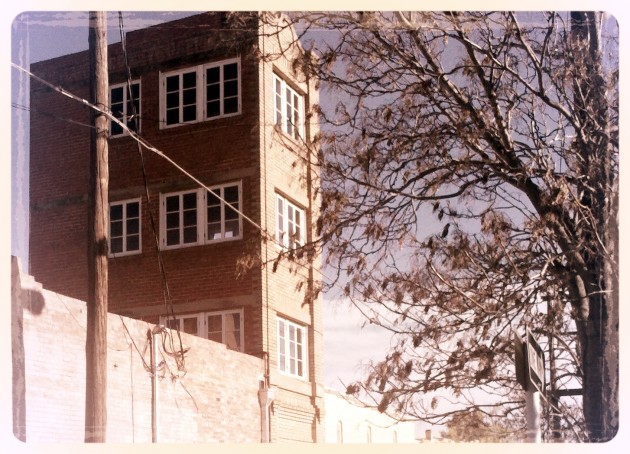
Well, maybe not a crime scene in the technical sense—because according to a court of law, no crime was actually committed here. But make no mistake. This pile of red brick and cast stone, standing awkwardly on a corner in Wichita Falls, Texas, is the smoking gun of one of the most audacious, hilarious, and legendary swindles in American history.

They call it the Newby-McMahon Building.

Locals? They have a different name for it. They call it the “World’s Littlest Skyscraper.”

It’s a landmark born from greed, sweat, and a stunning lack of attention to detail. It stands at 701 La Salle, right downtown. If you blink, you might miss it. But in 1919, this building was the center of a storm that cost investors a fortune and turned a city into a laughingstock. How did it happen? How did a group of wealthy oil tycoons get tricked into building a four-story elevator shaft with no elevator?

Buckle up. We are going back to the chaotic, dusty, money-crazed days of the Texas Oil Boom.

The Black Gold Rush: Chaos in Wichita County

To understand the con, you have to understand the madness.

The year is 1912. Just west of Wichita Falls, in a sleepy little spot called Burkburnett, the ground burst open. Oil. Oceans of it. It was the kind of discovery that changes the rotation of the earth, or at least the economy of a state.

By 1918, the secret was out. The Burkburnett field was a monster. People lost their minds.

Imagine the California Gold Rush, but louder, dirtier, and compressed into a tiny patch of Texas prairie. The population exploded. In a matter of months, 20,000 new souls descended on the area. We aren’t talking about polite society here. We are talking about roughnecks, speculators, gamblers, dreamers, and desperate families looking for a break.

Overnight, farmers became millionaires. Shopkeepers became tycoons. Money wasn’t just flowing; it was spraying out of the ground like a geyser.

But there was a problem.

Wichita Falls wasn’t ready. Not even close. The city was the logistical heart of the county, but it was drowning in its own success. There were no rooms at the inns. People slept in shifts in rented chairs in hotel lobbies. They pitched tents in back alleys.

More importantly, there were no offices.

The oil game requires paperwork. It requires stock trades, mineral rights transfers, and handshake deals. But the newly minted oil barons had nowhere to sign the papers. Multi-million dollar deals were happening on street corners. Stock exchanges were set up in canvas tents baking under the brutal Texas sun.

The city was screaming for space. Any space. If you had a desk and a roof, you could name your price.

Enter J.D. McMahon.

The Wolf in the Newby Building

The Newby Building was already there. Built in 1906 by Augustus Newby near the railroad depot, it was a respectable, solid structure. By 1919, it was bursting at the seams.

One of the tenants squeezing into the original building was a man named J.D. McMahon. He was a petroleum landman. A structural engineer. He hailed from Philadelphia, or so he said. He wore the right suits. He spoke the right language.

McMahon looked around and saw what everyone else saw: desperation.

But while others saw a problem, McMahon saw a loophole.

He started whispering in the ears of the local movers and shakers. He had a plan, he said. A big one. He was going to solve the office shortage once and for all. He proposed a high-rise annex to the Newby Building. A skyscraper.

The word alone was enough to make investors salivate. Skyscraper.

It was a symbol of status. Chicago had them. New York had them. Why not Wichita Falls? This building would be the crown jewel of the city. A monument to their newfound wealth. It would stand directly across from the St. James Hotel, a beacon of progress visible for miles.

The Pitch: A Masterclass in FOMO

McMahon didn’t just ask for money. He created a frenzy.

He drew up blueprints. He waved them around at meetings. He spoke fast. He used big numbers. He promised a massive return on investment. The office space would be rented out before the bricks were even laid.

The investors—naive, hungry, and blinded by the oil fever—didn’t ask too many questions. They just wanted in.

They threw money at him. In total, McMahon collected $200,000.

Pause for a second. Let’s do the math. $200,000 in 1919 isn’t pocket change. Adjusted for inflation, that is roughly $3 million today. He raised three million dollars on a promise and a handshake.

The deal was signed. The construction crews were hired. The materials were bought. The investors sat back, lit their cigars, and waited for their tower to rise into the Texas sky.

The “Glitch” That Shocked a City

Construction began. And then, things got weird.

The foundation was laid. It was… small. Very small. About 10 feet by 19 feet. But hey, skyscrapers are tall and thin, right? The investors trusted the process.

The walls went up. One story. Two stories. Three stories. Four stories.

And then the workers stopped.

The investors were confused. “When does the rest of it go up?” they asked. “Where are the other floors? Where is the height?”

The realization hit them like a bucket of ice water.

The building was finished. It was done. It stood a whopping 40 feet tall. It was 10 feet wide. It looked less like a corporate headquarters and more like a chimney that had broken free from a factory.

Inside, it was a nightmare. There was no elevator. In fact, there weren’t even stairs. To get to the upper floors, tenants had to use a ladder. That’s right—a ladder.

The investors were furious. They had been promised a skyscraper 480 feet tall. They got a brick box that was barely taller than the lamp posts.

They lawyered up. They dragged J.D. McMahon to court, ready to send him to prison for the rest of his natural life. They called it fraud. They called it theft. They called it the swindle of the century.

The Trial: The Devil is in the Details

This is where the story goes from “bad business deal” to “legendary con.”

The courtroom was packed. The tension was thick. The investors presented their case: We paid for a 480-foot building, and this man gave us a 40-foot closet.

McMahon took the stand. He was calm. He was cool. He didn’t deny taking the money. He didn’t deny building the small structure.

Instead, he pulled out the blueprints.

He asked the judge to look closely at the measurements listed on the documents—the very same documents the investors had signed off on.

The judge looked. The lawyers looked. The investors looked.

There it was. Plain as day.

The plans didn’t say 480′ (feet). They said 480″ (inches).

For those of you skipping the math: 480 inches is exactly 40 feet.

McMahon hadn’t lied. He hadn’t verbally stated the height in feet during the contract signing. He let the investors assume he meant feet. He let their own greed and haste fill in the blanks. They saw a big building in their minds, but they signed a contract for a tiny one.

The judge had no choice. Legally, McMahon had fulfilled his contract to the letter. He built exactly what was on the paper.

Case dismissed.

McMahon walked out of the courthouse a free man. Legend says he left Wichita Falls shortly after, pockets stuffed with cash, perhaps laughing all the way to the next boomtown. The investors were left with nothing but a red brick embarrassment and a very expensive lesson in reading the fine print.

Anatomy of a Disaster

So, what was the building actually like? It was a disaster.

It was immediately dubbed the “Newby-McMahon Building,” but everyone knew it as a joke. It was too small to be useful. With dimensions of roughly 10 feet by 19 feet (and narrowing as it went up), you couldn’t fit a standard desk in some of the rooms without blocking the door.

The lack of stairs was the cherry on top. McMahon hadn’t included an internal staircase in the blueprints to save space (and probably because he didn’t care). Tenants who were unlucky enough to rent space in the “skyscraper” had to climb external ladders to get to the second, third, and fourth floors.

Eventually, a narrow staircase was added, taking up roughly 25% of the interior floor space, making the offices even more cramped.

It was hot, stuffy, and humiliated the city. For years, it was a sore spot. A physical reminder that the sophisticated oil men of Wichita Falls had been taken for a ride by a fast-talking yankee.

The Great Depression and Near Destruction

When the Great Depression hit a decade later, the oil boom was a distant memory. The Newby-McMahon building sat boarded up, gathering dust and spiderwebs. It was useless.

In 1929, an oil explosion at a nearby depot caused a fire that ravaged the block. The building survived, but just barely. It stood there like a charred tombstone.

The city hated it. It was an eyesore. A monument to stupidity. Several times, the city of Wichita Falls made plans to demolish it. They wanted to wipe the slate clean. Tear it down and forget it ever happened.

But the building was stubborn. And then, something shifted.

It started with Robert Ripley. The famous creator of Ripley’s Believe It or Not! featured the building in his syndicated column. He dubbed it “The World’s Littlest Skyscraper.”

Suddenly, the shame turned into fame. People from all over the country wanted to see the ridiculous little tower that fooled the oil barons. It became a tourist attraction. It was quirky. It was funny. It was uniquely Texan.

Deep Dive: Was it Actually a Con? (Modern Theories)

History is written by the victors, but folklore is written by the people. In the age of the internet, sleuths and historians have gone back to look at the McMahon story. Is it 100% true?

Some modern researchers have poked holes in the legend. They argue that there is no surviving court record of the specific lawsuit mentioned in the folklore. Was the lawsuit real, or was it a story invented later to explain a bad architectural decision?

Here is another theory: Maybe it wasn’t a scam at all. Maybe it was just incompetence. During the oil boom, people were building things as fast as possible. Materials were scarce. It is possible that the building was intended to be an elevator shaft for a larger building that simply ran out of money and was never finished.

But the “480 inches” story is so specific, so perfect, and so consistent in local oral history that most experts believe the core of the con is true. It fits the psychological profile of the era. The 1920s were the golden age of the confidence man (think Charles Ponzi). McMahon fits the mold perfectly.

The Building Today: A Survivor

So, where is it now?

It’s still there. It survived tornadoes. It survived fires. It survived the wrecking ball. In 1986, the city finally embraced the joke and gave the building to the Wichita County Heritage Society.

It has been renovated (and yes, it has stairs now). Over the years, it has housed antique shops, a barber shop, and various small businesses. It is a beloved part of the downtown historic district.

When you walk up to it today, it feels surreal. It is made of red brick with cast stone detailing, trying so hard to look dignified. It has a neoclassical style, like a bank or a library, but it’s shrunken down like a sweater that went through the dryer on high heat.

It stands as a warning to anyone looking for a “get rich quick” scheme.

What can we learn from the World’s Littlest Skyscraper?

  • Read the fine print. If someone promises you the moon, make sure they don’t mean a picture of the moon.
  • Check the units. The difference between a tick mark (‘) and a quote mark (“) is the difference between a tower and a tool shed.
  • Slow down. The oil boom frenzy made people reckless. Greed makes you blind.

J.D. McMahon may have been a crook, but he left Wichita Falls with something more valuable than a high-rise. He gave them a story. And 100 years later, we are still talking about it.

If you are ever in North Texas, drive down La Salle Street. Look for the little brick building on the corner. Stand next to it. Look up. And try not to laugh too hard.

Originally posted 2015-12-03 16:53:33. Republished by Blog Post Promoter