The Galilee Anomaly: A 60,000-Ton Mystery at the Bottom of the Bible’s Most Famous Sea
It started with a ghost. A flicker on a screen.
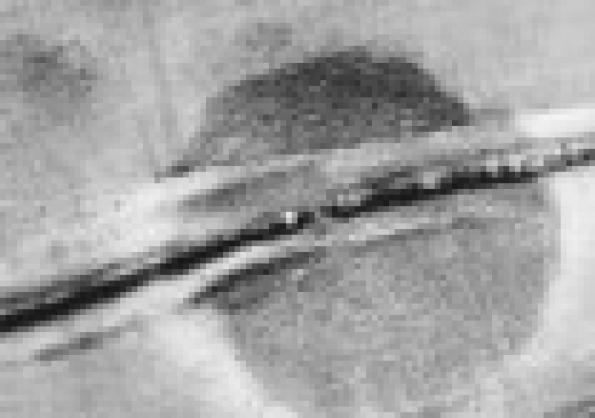
In 2003, geophysicists were doing what geophysicists do—running a routine sonar survey of the Sea of Galilee. They were mapping the bottom of this ancient, storied body of water, a place walked upon by prophets and fished by apostles. They expected mud. Silt. Maybe a few scattered rocks.
They did not expect to find a monster.
But there it was. A shape so perfect, so massive, so utterly out of place, it had to be a glitch. A phantom in the machine. A circular shadow looming in the digital depths. Except it wasn’t a glitch. Every subsequent pass confirmed its existence. Down there, sitting in the quiet dark beneath the waves, was something enormous. Something built. Something that has no business being there.
A colossal, cone-shaped structure. A silent, stony mountain that, for over a decade, has screamed a single, maddening question at the world of archaeology.
What on earth *is* it?
The Anatomy of an Impossible Object
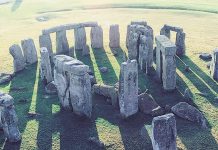
Let’s get the raw numbers out of the way, because they’re staggering. This isn’t just a pile of rocks. This is an engineering feat that would be a challenge even today. The structure is a near-perfect cone, roughly 230 feet (70 meters) in diameter at its base. It stands nearly 33 feet (10 meters) tall. To put that in perspective, it’s about twice the diameter of Stonehenge and as tall as a three-story building.
And the weight? The estimates are almost comical. Scientists believe it’s composed of somewhere around 60,000 tons of unsorted basalt boulders.
Sixty. Thousand. Tons.
That’s the weight of a modern naval destroyer. It’s the weight of almost six Eiffel Towers. It’s an absolutely mind-bending amount of stone to be quarried, moved, and meticulously placed by an ancient society.

Initial dives, conducted shortly after the sonar discovery, only deepened the mystery. Divers found a teeming ecosystem of fish swarming around the giant cairn, a vibrant city of life built upon a city of the dead. The boulders themselves are jagged, unhewn, ranging from small rocks to stones over three feet across. They were stacked with purpose. This was no natural formation, no volcanic plug. This was the work of human hands.
“It’s very enigmatic, it’s very interesting, but the bottom line is we don’t know when it’s from, we don’t know what it’s connected to, we don’t know its function,” admitted Dani Nadel, an archaeologist from the University of Haifa who has studied the anomaly. “We only know it is there, it is huge and it is unusual.”
It sits there today, about half a kilometer from the southwestern shore, under 9 to 40 feet of water, its base slowly being consumed by the sediment of millennia. A stone question mark hiding in plain sight.
Deep Dive: The 10,000-Year Problem
So, who built it? And when? This is where the story goes from a simple mystery to a full-blown historical paradox. The official, very wide, estimate for the structure’s age is somewhere between 2,000 and 12,000 years old. That’s not a typo.
Let’s break that down, because that range covers almost the entirety of known human civilization.
If it’s on the “young” end, say 4,000 years old (2000 BC), that places it firmly in the Early Bronze Age. This is the era of the first great cities in the Levant. It’s a time of organized societies, powerful kings, and the kind of complex social structures needed to organize a labor force for such a monumental project. Researchers like Yitzhak Paz of the Israel Antiquities Authority lean this way, suggesting a connection to the nearby city of Bet Yerah (also known as Khirbet Kerak), one of the largest and most fortified cities in the region at the time. A 60,000-ton monument would certainly fit the profile of a powerful, organized kingdom.
But what if it’s older?
What if it’s closer to the 12,000-year-old mark? We’re not in the Bronze Age anymore. We’re not even in the Neolithic. We are at the very dawn of the Agricultural Revolution, a time when humanity was supposedly just emerging from a hunter-gatherer existence at the end of the last Ice Age. This is a time period contemporary with sites like Göbekli Tepe in Turkey—another “impossible” megalithic site that shattered our understanding of what prehistoric people were capable of.
Could the Galilee structure be another one? A relic from a lost chapter of human history, built by a sophisticated society we know nothing about? A society that existed and vanished thousands of years before the first pyramids were ever conceived?
The sediment buildup around the base is the main clue, but it’s an imprecise one. Without artifacts, without carbon-datable material pulled directly from between the stones, the age is just a well-educated guess. A guess that spans ten millennia.
The Million-Dollar Question: What Was It FOR?
A monument this big isn’t built by accident. It serves a purpose. It means something. But what? Archaeologists are cautious, but the whispers and theories have been flying for years.
Theory #1: A Tomb for a Forgotten King
The most straightforward explanation is that it’s a giant burial cairn. Throughout Europe and Asia, ancient cultures built massive stone mounds, or barrows, to entomb their most important leaders. It was a way to honor the dead, protect their remains, and create a permanent marker on the landscape—a symbol of power that would last for eternity. The conical shape of the Galilee structure is very similar to these ancient burial mounds. If this theory is correct, then who is buried inside? A king? A high priest? An entire royal family? And what treasures might be buried with them?
Theory #2: A Place of Forgotten Worship
The Sea of Galilee has been a spiritual center for thousands of years. But what was there *before* the stories recorded in the Bible? Could this structure have been a ceremonial site? A place for rituals we can’t even imagine, dedicated to gods whose names are long lost to the wind? Imagine ancient peoples, standing on the shore or perhaps in boats, watching priests perform rites on top of this massive man-made island, a focal point for their entire community. The sheer scale of it suggests an incredible level of social and religious devotion.
Theory #3: The World’s Most Ambitious Fish Nursery
This sounds almost mundane, but it’s a serious contender. Artificial reefs and fish nurseries were common in the ancient world. The gaps between the boulders would provide a perfect, protected habitat for fish to lay their eggs and for young fish to grow, safe from larger predators. Given the immense importance of fishing to the local economy for millennia, constructing a massive, permanent fish magnet isn’t as crazy as it sounds. It would have been an investment in the community’s survival. Still, 60,000 tons? It seems like incredible overkill for a fish farm.
Theory #4: The ‘Out-There’ Zone: An Antediluvian Marker?
And now we enter the zone of high speculation. The internet, naturally, has its own ideas. Could this be a remnant from a pre-flood civilization, the kind mentioned in mythologies all over the world? Is it an “Out-of-Place Artifact” (OOPArt), a piece of a puzzle that simply doesn’t fit the official historical timeline? Some online sleuths point to its geometric precision, its massive scale, and its baffling age range as evidence that it was built by a lost, highly advanced culture. Perhaps it was a landmark, a power source, or something far stranger. It’s a compelling thought, especially when you consider it alongside other underwater anomalies like the Yonaguni Monument in Japan.
Land or Sea? The “When” is as Baffling as the “What”
Here’s another brain-twisting wrinkle. Was this thing built on dry land, only to be swallowed by the rising waters of the lake? Or did some ancient society figure out how to build a 60,000-ton monument *underwater*?
The prevailing theory among researchers is that it was built on land. This would mean that at some point in the distant past, the water level of the Sea of Galilee was significantly lower than it is today. We know that lake levels have fluctuated dramatically over the millennia due to climate shifts. If this is the case, the structure would have been a towering monument on a vast plain, a landmark visible for miles around. The rising waters would have then slowly, silently claimed it, preserving it in a watery tomb for thousands of years.
But the alternative… the alternative is far more radical. The idea of an ancient people undertaking a massive underwater construction project sounds like science fiction. It would require logistical and engineering skills that we simply don’t attribute to any known Bronze Age or Stone Age culture. Yet, we can’t completely rule it out. History is full of surprises.
The Modern Conspiracy: Why the Deafening Silence?
The structure was discovered in 2003. It was first written about in a scientific journal in 2013. Since then? Mostly silence.
The official reason is a familiar one: lack of funding. Underwater archaeology is ridiculously expensive. It’s a slow, painstaking process that can cost hundreds of thousands, if not millions, of dollars. The researchers have been trying to raise the money for a proper excavation, but with little success.
But is that the *real* reason? The internet has other thoughts.
Forums and message boards are buzzing with speculation. Why wouldn’t a discovery of this magnitude attract immediate, massive funding? A potentially 12,000-year-old monument in one of the most historically significant places on Earth seems like a project that institutions would be fighting over. Some whisper of a cover-up. Is someone afraid of what a full excavation might find? Could it be a tomb containing something that would radically rewrite history? Or perhaps something that would challenge the established religious narratives of the region?
The silence itself has become part of the mystery. An object of this size and significance should be the subject of documentaries, ongoing research, and global attention. Instead, it remains a footnote, a half-forgotten ghost on a sonar scan.
So it waits. A sleeping giant at the bottom of the Sea of Galilee. It could be a tomb. It could be a temple. It could be something far, far stranger. It is a 60,000-ton message in a bottle, a challenge to our understanding of the ancient world. The answers are down there, buried under a few dozen feet of water and millennia of silt.
The truth is waiting. And it’s only a matter of time before the waves give up their dead.