The 2013 Memo: The NASA Secret That Kicked Off a Decade of Alien Disclosure
They told us it was just a routine press release. A minor scientific update. A little bit of water vapor on some distant, worthless planets.
That was the lie.
Back in 2013, a small story flickered across the wires, barely making a dent in the 24-hour news cycle. NASA’s Hubble Space Telescope, they said, had found faint traces of water in the skies of five alien worlds. The official reports were dry, academic. They emphasized that these planets were “Hot Jupiters,” fiery gas giants completely hostile to life. Nothing to see here, folks. Just some interesting atmospheric chemistry.
Move along.
But they were hiding the real story. That wasn’t a minor update. It was a message. It was the first, carefully chosen domino pushed over in a long, slow cascade of revelation. It was the moment the official gatekeepers of cosmic knowledge began a decade-long campaign of “soft disclosure.” They weren’t just telling us they found water. They were preparing us for what they’d already found.
Life.
And the trail that started with that quiet little memo in 2013 has now led us to a place so profound, so paradigm-shattering, that the truth can no longer be contained.
The Announcement That Slipped Under the Radar
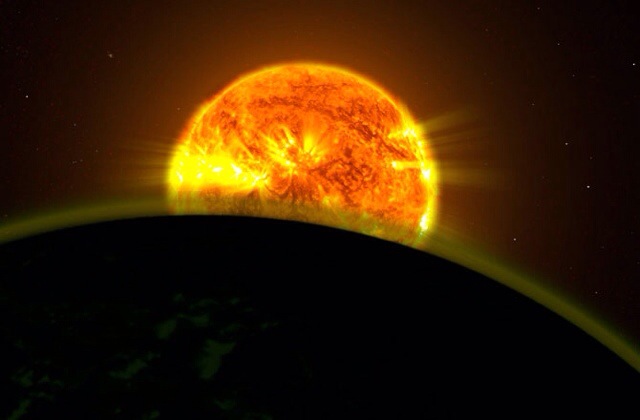
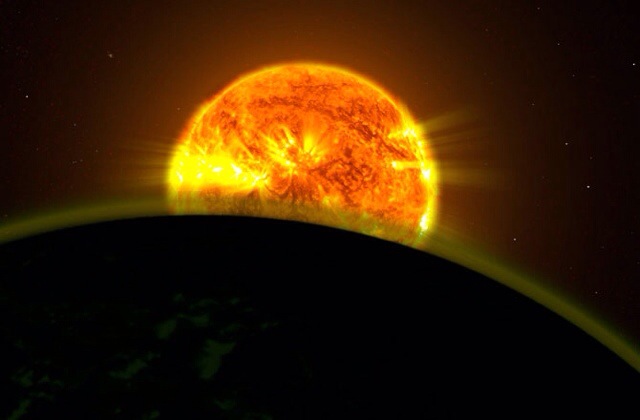
Let’s rewind the clock. December 2013. The world was distracted. But in the hushed halls of NASA and the European Space Agency, a coordinated report went public. Using the legendary Hubble Space Telescope, astronomers had confirmed water vapor on five specific exoplanets: WASP-17b, HD209458b, WASP-12b, WASP-19b, and XO-1b.
Sounds like a random string of letters and numbers, right? That was the point. They made it sound boring. Technical. They buried the lede under a mountain of jargon.
The official story was that this was a triumph for a new technique allowing scientists to analyze the light that passes through a planet’s atmosphere. By seeing which colors of light were absorbed, they could identify the chemical signatures of molecules. In this case, water. Hooray for science.
But think about the implication. They didn’t just find water. They found that their *method for finding water worked*. And it worked brilliantly. This wasn’t the discovery. This was the successful test of the weapon. A tool that could be pointed at any planet, near or far, to sniff out its atmospheric secrets.
The five planets they chose to announce were a masterclass in misdirection. They weren’t just uninhabitable. They were cartoonishly, ridiculously uninhabitable.
Deep Dive: Meet the ‘Hot Jupiters’ They Told You About
So what exactly are these “Hot Jupiters” they chose for their grand reveal? Imagine taking the biggest planet in our solar system, Jupiter, and shoving it right next to the sun. That’s what we’re talking about.
These are monstrous gas giants, hundreds of times more massive than Earth, orbiting their stars in a screaming-fast death spiral. Their years last just a few Earth days. Their surfaces, if you can even call them that, are scorched to thousands of degrees. Winds whip through their clouds at supersonic speeds. It rains molten iron and vaporized rock.
These are not nice places.
And that was precisely the point. By announcing water on these hell-worlds, NASA could deliver two messages at once:
- Message for the public: “Hey, look, we found water! But don’t worry, there are no little green men. These planets are fiery pits of doom. You can go back to your lattes and reality TV. Nothing to see here.”
- Message for those paying attention: “Water is not rare. Water is not precious. Water is so common, so unbelievably widespread, that we can find it even in the most violent and unlikely places in the cosmos. If it’s *here*, it’s *everywhere*.”
That second message is the one that matters. That’s the coded transmission. The universe is seeded with the fundamental ingredient for life as we know it.
The Soft Disclosure Playbook: A Calculated Leak?
Why wouldn’t they just come out and say it? If they suspected life was common, why the games? Why the slow, agonizing drip-feed of information over a decade?
Panic.
The powers that be, the shadowy figures who pull the strings behind the public-facing science organizations, have a mortal fear of societal collapse. The so-called “Brookings Report,” a 1960 study commissioned by NASA itself, explored the potential implications of discovering extraterrestrial life. Their conclusion? Society might completely unravel. Religions could collapse. Global markets might crash. The very fabric of our civilization, built on the premise of our own specialness, could be torn apart.
So, they created the Soft Disclosure Playbook.
The strategy is simple: Introduce paradigm-shifting concepts slowly, piece by piece, over generations. Frame them as boring science so they don’t spook the herd.
- Step 1 (1990s-2000s): Announce the discovery of exoplanets. Get people used to the idea that other stars have planets. At first, they are just “dots of data.” Not real places.
- Step 2 (The 2013 Memo): Announce water on the most inhospitable planets imaginable. Introduce the key ingredient for life, but do it in a “safe” context, far from anything that could host it.
- Step 3 (Late 2010s): Start finding “Earth-like” planets in habitable zones. TRAPPIST-1 system, for example. Now the public is used to planets, and they’re used to water being out there. The concepts can be combined.
- Step 4 (Now): Deploy a new, hyper-powerful tool to look for the “smoking gun” evidence of life itself.
And that’s where the story takes a radical, high-tech turn.
From Hubble’s Hazy Glimpse to Webb’s All-Seeing Eye
The 2013 discovery was made with Hubble. An incredible machine, a legend. But Hubble is a peashooter compared to the cannon they just brought to the fight.
The James Webb Space Telescope (JWST).
Launched on Christmas Day 2021, the JWST is an instrument of such power and sensitivity that it almost defies belief. It’s a truth machine. While Hubble could give us a hazy, tantalizing hint of water, Webb can dissect the atmosphere of an alien world molecule by molecule. It can see the things they can no longer hide.
The soft, gentle disclosure is over. The Webb era is hard disclosure. The evidence is now coming in so fast and so clear, the old playbook is being thrown out the window.
And they started with a bombshell.
The K2-18b Bombshell: A Direct Sign of Life?
In late 2023, the announcement came. The JWST had been pointed at a planet called K2-18b. It’s a “sub-Neptune” world, bigger than Earth, potentially covered in a deep ocean. A “Hycean” world.
And Webb found something incredible in its atmosphere. Something that made the 2013 water vapor discovery look like a children’s party trick.
It found Dimethyl Sulfide (DMS).
Why does that matter? Why should you care about this one obscure chemical? Because on Earth, DMS is only produced by one thing: Life. Specifically, marine phytoplankton. It’s the molecule responsible for that “smell of the sea.”
There is no known, large-scale geological or chemical process that can create DMS in an atmosphere. It is, for all intents and purposes, a biosignature. A direct chemical fingerprint of a living, breathing biosphere.
The official NASA statements were, of course, cautious. “More research is needed,” they mumbled. “We need to rule out unknown geological sources.” But the message was clear. They had pointed the truth machine at a watery world, and it came back with a scream of biological activity.
The little domino they pushed in 2013 had just knocked over a skyscraper.
Are We Thinking About ‘Life’ All Wrong?
But here’s a thought that the gatekeepers want to keep locked away. We’re all still obsessed with finding “Earth 2.0.” A planet just like ours, with liquid water, a comfy temperature, and a nitrogen-oxygen atmosphere. We’re looking for our reflection in the cosmic mirror.
What if that’s the wrong way to look?
What if life is far more bizarre, far more adaptable than our tiny, fragile biology can comprehend? The 2013 discovery of water on Hot Jupiters should have been our first clue. The building blocks are everywhere, even in hell.
Could life exist in the upper atmosphere of a gas giant, just as the great Carl Sagan once theorized? Imagine continent-sized floating creatures, “floaters,” that drift on the thermal currents, feeding on complex chemicals. Imagine sleek, jet-propelled “hunters” that prey on them. All in the clouds of a planet with no surface to stand on.
What about life that isn’t based on carbon at all? What about silicon-based life on a scorching hot world, with a metabolism that breathes sulfur and excretes rock? We are looking for things that look like us, while the universe might be teeming with things so alien they would defy our very definition of biology.
The true conspiracy might not be that they’re hiding aliens. It’s that they’re hiding a reality so much stranger than we can handle: that the universe is not just alive, it’s alive in ways we can’t even begin to imagine.
The Kepler Conspiracy: Mapping the Targets
Let’s not forget the other instrument mentioned in that original, dusty 2013 blog post. The Kepler Space Telescope.
Kepler’s job was different from Hubble’s or Webb’s. Kepler wasn’t an analyst. It was a scout. A surveyor.
For nine years, it stared relentlessly at one single patch of the sky, watching over 150,000 stars. It waited for the tiny, almost imperceptible dip in a star’s light that happens when a planet passes in front of it. Kepler’s mission was to answer one question: How common are planets?
The answer it sent back was staggering: They are everywhere. There are more planets than there are stars. Billions upon billions of them in our galaxy alone.
But was that its only mission? Or was Kepler creating a map? A catalog of potential targets for future investigation? It wasn’t just finding planets; it was finding the *interesting* planets. The ones in the right place, of the right size. It was building a hit list.
Think of it as a coordinated, multi-decade plan.
Kepler draws the treasure map.
Hubble confirms the general landscape (like finding water in 2013).
Webb goes in with a microscope to dig for the gold.
This isn’t random science. This is a systematic search. A search with a clear, but unspoken, objective.
Voices from the Digital Void: What the Internet Knows
While the mainstream media prints the sanitized NASA press releases, the digital underground is buzzing. On obscure forums, encrypted message boards, and the far corners of Reddit, a different story is being told.
Anonymous posters claiming to be disgruntled agency insiders or data analysts with a conscience share whispers and cryptic clues. They talk about “embargoed data” from Webb that is too shocking to release. They speak of signals that aren’t just chemical, but… structured. Artificial.
Of course, it’s impossible to verify. It’s the wild west of information. But the pattern is undeniable. The online consensus is that the public is being shown maybe 1% of what these new telescopes are finding. We get the filtered, safe-for-consumption version of reality.
They will tell us about methane. They will tell us about carbon dioxide. They might even admit to finding more biosignatures. But they will not, the whispers say, show us the evidence of technology. The industrial pollutants in an alien atmosphere. The light signatures of a city on the night side of a planet. The heat signature of a megastructure orbiting a distant star.
Not yet, anyway.
The Final Question That Changes Everything
That quiet little announcement in 2013 wasn’t the end of a story about finding water. It was the first sentence in a new book about our place in the universe. And the chapters are now being written at lightning speed by the James Webb Space Telescope.
The evidence is piling up. The hints are becoming undeniable. Water is common. The building blocks of life are common. Habitable worlds are common. And now, the chemical fingerprints of biology itself are being found.
It forces us to stop asking the old, tired question: “Are we alone?”
That question is obsolete. It’s been answered. The data is in. We are not.
The real question, the one they have been preparing us for since 2013, is far more unsettling.
What happens next?