The King is Dead. Long Eat the King.
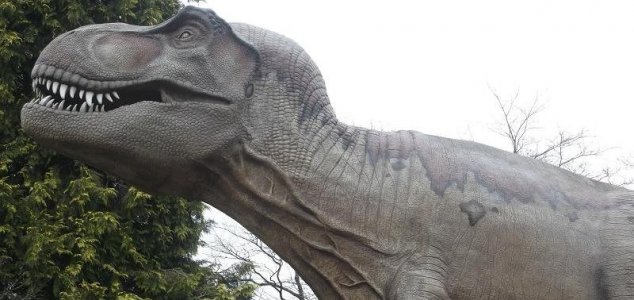
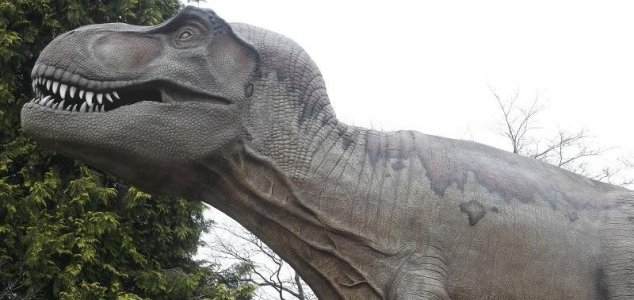
You know the image. We all do. The Tyrannosaurus rex throws back its massive, blocky head and roars, shaking the rain off its scales while a helpless jeep sits stuck in the mud. It is the ultimate predator. The King of the Tyrant Lizards. For decades, pop culture, textbooks, and Spielberg movies have sold us a very specific version of this monster.
They told us it was a hunter. A solitary killer. The apex of the food chain.
But they left out the darkest part of the story.
The T. rex wasn’t just hunting Triceratops or chasing down Duckbills. When the lights went out in the Cretaceous period, and hunger set in, the King didn’t care about nobility. New evidence suggests the T. rex was doing something far more sinister. Something that turns the “noble hunter” narrative completely on its head.
It was eating its friends. It was eating its family.
Tyrannosaurus rex was a cannibal.
This isn’t just a theory anymore. We aren’t looking at fuzzy guesses. We are looking at cold, hard, fossilized proof that the most fearsome predator to ever walk the earth looked at its own kind and saw dinner. Buckle up. We are going back 66 million years to the scene of the crime.
The Wyoming Crime Scene
The revelation comes from the dusty, windswept badlands of Wyoming. Specifically, the Lance Formation. If you are a fossil hunter, this place is legendary. It’s a graveyard of giants. It is here that the ground decided to spit out a secret that had been buried for eons.
Paleontologists discovered a bone. But not just any bone.
It was a long bone from the leg of a tyrannosaur. Finding a T. rex bone is rare enough, but it was the condition of the bone that made the blood run cold in the researchers’ veins. The bone wasn’t smooth. It wasn’t broken by the shifting earth or snapped by a fall.
It was chewed.
Deep, jagged grooves ran the length of the bone. These weren’t the small, polite nibbles of a scavenger or the gnawing of a prehistoric crocodile. These were massive, violent gouges. The bone had been sheared. Crushed. Someone wanted the marrow inside, and they had the jaws to get it.
The Forensics Don’t Lie
Matthew McLain, a paleontologist from Loma Linda University, took a look at the evidence. In the world of forensics, teeth marks are like fingerprints. Every dinosaur has a specific dental signature. A serration pattern. A width. A bite force.
McLain realized something terrifying.
The grooves on this victim’s bone were unique. One groove stood out specifically because of the “striations”—the little scratches left by the serrated edges of the attacker’s tooth. McLain measured the distance between the serrations. He looked at the size of the valley the tooth left behind.
He ran the numbers. He checked the list of suspects known to prowl the Lance Formation during the late Cretaceous.
The list was empty. Except for one name.
“The fact that the only large theropods found in the Lance Formation are two tyrannosaurs—Tyrannosaurus rex or Nanotyrannus lancensis—eliminates all interpretations but cannibalism,” McLain stated.
Let that sink in.
“This has to be a tyrannosaur,” he added. “There’s just nothing else that has such big teeth.”

CSI: Cretaceous
Imagine the scene. It’s hot. The air is thick with humidity and the smell of rotting vegetation. A T. rex lies dead in the mud. Maybe it died of old age. Maybe it was killed in a territory dispute. It doesn’t matter.
Another T. rex approaches. It smells the blood. It sees the carcass. It doesn’t mourn. It doesn’t walk away out of respect for its own species. It opens jaws capable of exerting 12,800 pounds of pressure—enough to crush a pickup truck—and clamps down on the leg of its fallen kin.
Crunch.
The sound would have been like a gunshot. Bone snapping. Wet tearing. This is the reality of the prehistoric world. It wasn’t a movie. It was a calorie game. And a dead T. rex is a massive pile of calories.
The “Just a Scavenger” Theory?
This discovery reignites one of the fiercest debates in the dinosaur community. For years, the famous (and controversial) paleontologist Jack Horner argued that T. rex wasn’t a hunter at all. He claimed it was just a giant vulture. A scavenger. He argued that the T. rex was too big and slow to chase down prey, so it just bullied other predators off their kills or ate things that were already dead.
Most scientists hate that theory. They want the T. rex to be a hunter.
But this cannibalism evidence? It actually supports the scavenger idea—at least partially. If a T. rex is willing to eat a dead T. rex, it shows they were opportunistic. They weren’t picky eaters. Meat is meat.
However, there is a darker possibility.
What if the victim wasn’t already dead?
The Nanotyrannus Conspiracy
Here is where things get really messy. You noticed McLain mentioned two names: Tyrannosaurus rex and Nanotyrannus lancensis.
If you want to start a fistfight at a paleontology conference (and who doesn’t?), walk into the room and scream, “Nanotyrannus is a valid species!”
For decades, scientists have argued about Nanotyrannus. Some say it is a completely different dinosaur—a smaller, faster, nastier cousin of the T. rex. A pygmy tyrant.
Others say Nanotyrannus doesn’t exist at all. They claim these fossils are just teenage T. rexes. They argue that as the T. rex grew, it changed shape so drastically that the teenagers looked like a different species.
Why does this matter for our cannibalism story?
Because it changes the nature of the crime.
Scenario A: If Nanotyrannus is real, then perhaps the T. rex was hunting a smaller, rival predator. It was a turf war. The King killing the Prince. That’s inter-species warfare. Brutal, but common in nature. Lions kill hyenas. Wolves kill coyotes.
Scenario B: If Nanotyrannus is NOT real, and it’s just a baby T. rex… then the story gets much, much darker.
It means full-grown adult T. rexes were hunting and eating their own children. Or, the teenagers were turning on each other in a Lord of the Flies nightmare. If the bone found in Wyoming belonged to a younger animal, and the teeth marks belonged to an adult, we are looking at infanticide. We are looking at a world where growing up was a game of hide-and-seek where the prize was not getting eaten by your uncle.
Nature is Metal (And Gross)
Should we be surprised? Probably not. We like to humanize these animals. We give them names like “Sue” or “Stan.” We buy plush toys of them for our kids.
But nature is not a Disney movie. It is a slaughterhouse.
Look at modern apex predators. Does the Komodo Dragon hesitate to eat a smaller dragon? Absolutely not. In fact, baby Komodo dragons spend the first part of their lives living in trees specifically to avoid being eaten by the adults. If they touch the ground, they are snacks.
Crocodiles? They are notorious cannibals. If you toss a piece of meat into a pit of crocs, and one of them grabs it, the others might just rip the arm off their buddy to get the steak. They don’t care.
The T. rex was basically a 40-foot, hot-blooded crocodile running on two legs. It had a brain geared for smell and bite calculation. It required hundreds of pounds of meat a day just to fuel its metabolic fire.
If you are a T. rex, and you stumble across a carcass, you don’t check its ID. You eat. And if you are starving, and a smaller, weaker T. rex is limping nearby… well, survival of the fittest isn’t just a catchy slogan. It’s the law.
The Evidence is Piling Up
The Wyoming bone isn’t the first time we’ve seen this, but it is the most definitive. In 2010, another study led by Nicholas Longrich searched through museum collections. They were looking for tooth marks on dinosaur bones. They found them.
They found deep gouges on humerus bones (arm bones) and toe bones of T. rexes. And guess what? The marks were made by T. rexes.
This tells us something fascinating about how they ate. The arm bones and the feet don’t have a lot of meat on them. If you are hunting a fresh kill, you go for the belly. You go for the heavy muscle on the thighs. You don’t gnaw on the toes.
Eating the feet suggests desperation. It suggests the carcass had already been picked clean of the good stuff. It paints a picture of a T. rex arriving late to the party, or perhaps returning to an old kill days later, scraping the last bits of gristle off the skeleton of its own kind.
It’s a gritty, desperate image. A giant, starving god scraping the bottom of the barrel.
What Does This Mean for History?
This changes the landscape of the Cretaceous in our minds. We need to stop picturing an orderly world where T. rex chased Triceratops, and everyone stayed in their lanes.
The Late Cretaceous was a chaotic, violent free-for-all. The T. rex populations were likely regulated by this cannibalism. Why was there only one big predator in North America at the time? In other eras, you had several big carnivores co-existing. In the Jurassic, you had Allosaurus, Ceratosaurus, and Torvosaurus all living in the same neighborhood.
But in the Hell Creek formation? It was just T. rex.
Maybe they ate the competition. Maybe they ate any competition, even if it looked exactly like them.
The Psychological Horror
Think about the instincts involved here. Modern science suggests birds are the closest living relatives to dinosaurs. Some birds engage in cannibalism, but usually only under extreme stress. Crocodiles, their other cousins, do it for fun.
T. rex sits somewhere in the middle. Intelligent, with excellent vision and smell, but ruled by a reptilian drive for dominance. The discovery in the Lance Formation is a window into a behavior that makes the T. rex infinitely more terrifying.
It wasn’t just a monster to the herbivores. It was a monster to itself.
The Mystery Remains
We still have questions. Was this active predation? Did T. rexes hunt each other in packs? Did they have territory wars that ended in feasts?
The bone from Wyoming is just one puzzle piece. But it fits a growing picture that is dark, bloody, and fascinating. Matthew McLain and his team are still analyzing the fossils. They are looking for more striations. More proof.
But for now, next time you watch a dinosaur movie and see the T. rex roar, remember what it really used those teeth for. It wasn’t just fighting off raptors. It was turning its neighbors, its rivals, and maybe even its siblings, into lunch.
The King is a cannibal. And that makes him scarier than ever.
Originally posted 2015-10-30 05:42:59. Republished by Blog Post Promoter