Home Conspiracies The Vatican Secret Archives Conspiracy

The Vatican Secret Archives Conspiracy

0
70
Vatican Secret Archives
What secrets are in the Vatican Archives?

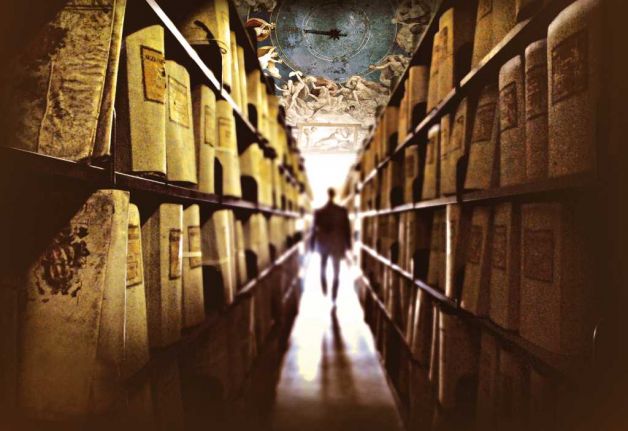
Stop scrolling. Look at that image above. Really look at it.

It looks like a library, right? A dusty, quiet place where old men in robes shuffle around reading boring tax returns from the 16th century. That is exactly what they want you to think. That is the camouflage.

Virtually every single major Roman Catholic conspiracy theory—from the bloodlines of messiahs to the existence of extraterrestrial intelligence—leads straight back to one specific location: the Vatican Secret Archives. We are talking about the nerve center of history. The hard drive of Western civilization.

Housed in a fortress-like section of the Vatican Library, right next to the Vatican Museum at the northern edge of Vatican City, this isn’t just a collection of books. It is a vault. A concrete and steel bunker for the truth.

The Official Story (And Why It Smells Fishy)

If you go to the official website operated by the Holy See, they will feed you a very sanitized narrative. They’ll tell you the word “Secret” in “Secret Archives” (Archivum Secretum in Latin) doesn’t actually mean “hidden.” They claim it simply translates to “private” or “personal,” indicating that these are the Pope’s personal files.

Sure. Nice try.

They insist the documents inside pertain to painfully dull administrative matters. Papal expenditure accounts. Receipts for candles. State correspondence. Letters from Michelangelo to Pope Julius II complaining about not getting paid for the Sistine Chapel. Historic? Yes. Earth-shattering? No.

But here is the million-dollar question: If it’s just receipts and old letters, why the military-grade security?

Why is there a Swiss Guard standing there with a halberd (and likely a concealed Glock) 24/7? Why are the walls reinforced? Why is access restricted to a tiny handful of hand-picked elites?

We are talking about 53 miles of shelving. Let that sink in. Fifty. Three. Miles. That is a line of paper that stretches further than the distance from Washington D.C. to Baltimore. Millions upon millions of documents. Are we really supposed to believe that 53 miles of storage is dedicated entirely to receipts for incense and communion wafers?

The conspiracy theorists don’t buy it. I don’t buy it. And you shouldn’t either. An institution as powerful, ancient, and politically savvy as the Roman Catholic Church doesn’t hoard that much paper unless they are protecting something dangerous. They are afraid. Petrified, actually. But of what?

Theory #1: The Jesus Timeline & The Bloodline

Let’s start with the heavy hitter. The one that keeps theologians up at night.

Some of the most aggressive theories suggest the Archives hold the “smoking gun” regarding the historical Jesus. We aren’t talking about faith here. We are talking about cold, hard evidence. There are whispers—persistent, annoying whispers—that somewhere on those 53 miles of shelves sits correspondence between Saint Paul and Emperor Nero.

Think about the implications. If such letters exist, they could confirm Jesus’s divinity… or completely dismantle it. What if there is secular, historical proof that Jesus was just a man? Or worse, what if there is documentation proving he was a composite character created by early church fathers to control the masses?

Then you have the “Bloodline” theory. Made famous by books like Holy Blood, Holy Grail and later the Da Vinci Code, this idea suggests Jesus didn’t die on the cross but survived, married Mary Magdalene, and fathered children. A bloodline that continues to this day.

Why hide it? Because if Jesus had kids, the entire structure of the Church collapses. The Pope loses his authority. The divinity of Christ becomes a metaphor rather than a fact. If a genealogy chart exists in those vaults, it is the most explosive piece of paper on the planet.

The Real Face of God?

Here is a creepier thought. Contemporary depictions.

The earliest images we have of Jesus show up in the late 2nd Century AD. That’s nearly 200 years after he died. It’s a guess. An artist’s interpretation.

But what if there is a portrait from 30 AD? A sketch made by a Roman official? A drawing by a disciple? What if he doesn’t look like the handsome European man in the stained glass? What if he looks completely different? The Archives might hold the true face of the Messiah, hidden away because it doesn’t fit the marketing image the Church has perfected over two millennia.

Theory #2: The Chronovisor (The Vatican Time Machine)

Hold onto your hats, because this is where things get wild. This isn’t just about old paper. It’s about technology.

Have you heard of Father Pellegrino Ernetti? He was a Benedictine monk, a respected musicologist, and a quantum physicist (yes, really). In the 1950s, claims surfaced that Ernetti, working with a team including Nobel laureate Enrico Fermi and Wernher von Braun (the Nazi rocket scientist who took America to the moon), developed a device called the Chronovisor.

This wasn’t a DeLorean. You couldn’t drive it. It was a viewer. A television screen that could tune into the electromagnetic frequencies left behind by past events. According to the legend, Ernetti tuned this machine to look back in time.

What did they see?

  • A performance of a lost tragedy, Thyestes, by the father of Latin poetry, Quintus Ennius, in Rome in 169 BC.
  • Napolean Bonaparte giving speeches.
  • The Crucifixion of Christ.

Ernetti allegedly claimed they photographed Jesus on the cross. But where is the machine now? The theory goes that the Pope (Pius XII) and the Vatican hierarchy were terrified. A machine that sees the truth? No more secrets. No more political lies. It was too dangerous for humanity.

The device was reportedly dismantled, and the blueprints—along with the photographic evidence—were buried deep, deep in the Secret Archives. If you dig through the 53 miles of shelves, you might not just find paper. You might find the schematics for a window into the past.

Theory #3: Extraterrestrials and The “Lucifer” Device

Let’s pivot to the stars. Why does the Vatican own some of the most expensive astronomical observatories on Earth?

The Vatican Observatory Research Group (VORG) operates a telescope on Mount Graham in Arizona. Curiously, they share the mountain with a project named the Large Binocular Telescope Near-Infrared Utility with Camera and Integral Field Unit for Extragalactic Research. The acronym? L.U.C.I.F.E.R.

You literally cannot make this stuff up.

Why is the Church looking at the sky? Modern internet sleuths speculate that the Archives contain centuries of reports on “aerial phenomena.” We are talking about UFO sightings recorded by monks in the Middle Ages, long before the term “flying saucer” existed. Paintings from the Renaissance often depict strange, disc-like objects hovering over religious scenes. Coincidence?

The theory suggests the Vatican knows we are not alone. They have known for centuries. They are hoarding the “Disclosure” files. Maybe they are preparing us for a “Space Savior,” or maybe they are hiding the fact that the “angels” in the Bible were actually extraterrestrial visitors.

Theory #4: The Occult and The Grand Grimoire

If you think the Vatican is purely holy, think again. To fight the devil, you have to know the devil.

Rumors persist that the Archives house the largest collection of occult spellbooks (grimoires) in existence. The most infamous of these is the Grand Grimoire, also known as the “Dragon Rouge” or the “Gospel of Satan.”

This book, supposedly discovered in Jerusalem in 1750, is said to contain the specific rituals required to summon Lucifer and make a pact with him. It is indestructible, fire-resistant, and incredibly dangerous.

Why keep it? Why not burn it? Unless… they use it. The darker side of this conspiracy theory alleges that high-ranking members of the clergy use these occult texts to maintain power. They aren’t guarding the books from the public; they are hoarding the magic for themselves.

The Napoleon Heist: When the Secrets Got Out

Here is a piece of history that is actually true, and it adds fuel to the fire. In 1810, Napoleon Bonaparte didn’t just conquer Italy; he stole the Vatican Archives. He packed up thousands of crates and hauled the whole collection to Paris.

For a few years, the secrets of the Popes were in France. After Napoleon fell, the Church desperately tried to get everything back. But here is the catch: Not everything returned.

Crates went missing. Documents were “lost” in transit. Some papers were sold to local butchers to wrap fish (yes, really). This gap in the chain of custody means that we don’t even know what is missing. Did Napoleon find something he kept? Did a French bureaucrat pocket a map to the Ark of the Covenant?

The Impossible Access: Who Holds the Keys?

Let’s talk about getting in. It is easier to break into Fort Knox than it is to browse these shelves.

Absolutely no one is allowed into the Archives just to “look around.” Not journalists, not historians, not even most Cardinals. The Archives’ own website is frustratingly vague about whether the Pope himself can just waltz in, though one assumes he has the master key.

The rules are a bureaucratic nightmare designed to keep you out:

  1. You must be a qualified scholar from a recognized institute of higher learning.
  2. You must have a letter of introduction.
  3. You must know exactly what you are looking for.

That is the catch-22. You cannot browse. You have to request a specific document by its catalog number. But if the document is secret and not in the public catalog, you don’t know it exists. If you don’t know it exists, you can’t ask for it. If you can’t ask for it, you can’t see it. The system is rigged.

Only a tiny circle of people have unrestricted access. We are talking about four people on the planet. Cardinal Raffaele Farina (the Archivist), a couple of Archivists Emeriti, and the Prefect Sergio Pagano. That’s it. A tighter circle than the nuclear launch codes.

The entrance is singular. You go from the main library, through the Porta Angelica, and through the Porta di Santa Anna. Every step of the way, the Swiss Guard is watching. These guys in colorful pajamas? Don’t let the outfits fool you. They are elite military trained in hand-to-hand combat and marksmanship.

The 75-Year Rule: A Convenient loophole

The Vatican loves to point out that they do release documents. They opened the files on Pope Pius XI in 2006. They recently opened files on Pius XII (the WWII Pope).

But there is a rule: Documents are generally only released 75 years after a Pope’s death. They claim this is to protect the privacy of the individuals involved.

Convenient, isn’t it? This means that any scandal, any financial crime, or any cover-up happening right now won’t be seen by anyone until everyone currently alive is dead. It kicks the can down the road. It ensures that no living Pope ever has to answer for the written records of his reign.

What About the Relics?

We can’t end this without talking about the physical objects. The Archives aren’t just for paper. There are vaults for things.

Does the Vatican possess the Ark of the Covenant? The Ethiopian Orthodox Church claims to have it, but rumors persist that the Knights Templar brought the true Ark to Rome centuries ago. If you possess the Ark, you possess the weapon of God.

What about the True Cross? Or the Holy Grail? Or the missing pieces of the Shroud of Turin? The Vatican is the ultimate collector. If these items exist, they aren’t in a museum in London or New York. They are underground, behind those steel doors.

The Conclusion? Keep Digging.

This theory is likely to explode again. Every time a new movie comes out, or a new Dan Brown novel hits the shelves, the world turns its eyes to Rome. But the truth is stranger than fiction.

We are looking at an institution that has outlasted empires, kings, and dictators. They play the long game. They think in centuries, not fiscal quarters. The 53 miles of shelves in the Vatican Secret Archives represent the collective memory of the Western world, curated by a single religious organization.

Is it just receipts? Maybe. But usually, when people build fortresses, they are guarding treasure. Or they are hiding bodies.

What do you think is really in there?

Originally posted 2016-04-15 04:27:52. Republished by Blog Post Promoter