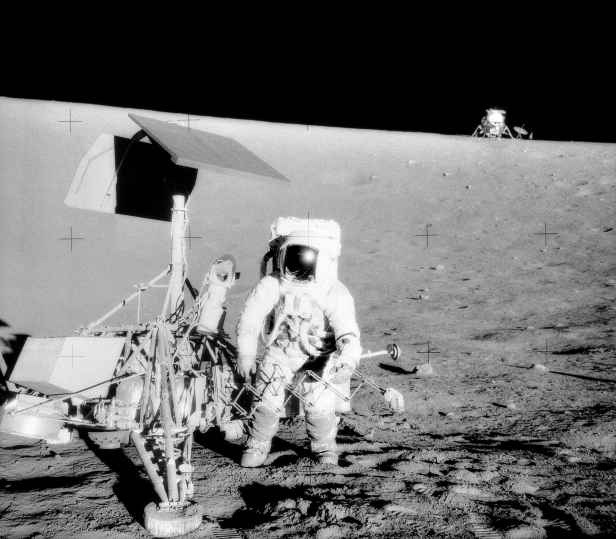
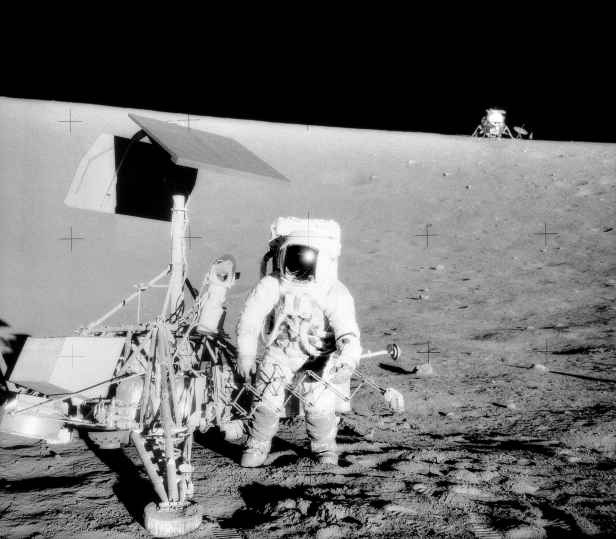
July 20, 1969. The date is burned into the collective consciousness of humanity. It was the day the impossible became reality.
Neil Armstrong. Buzz Aldrin. The Eagle. One small step.
You know the story. We all know the story. It’s the ultimate triumph of American engineering and grit. But what if I told you that while the world was staring at the grainy black-and-white footage of American heroes, something else was happening in the dark void just above their heads? Something secret. Something desperate. And possibly, something tragic.
While NASA was popping champagne, the Soviet Union was engaged in a frantic, high-stakes gamble to steal the spotlight at the very last second. This is the story of Luna 15.
History books will tell you it was a robot. A hunk of metal. A simple probe sent to scoop up some dirt and run home. But there is a darker, stranger theory that has circulated in the underground whispers of space historians and conspiracy theorists for decades. A theory so wild, so audacious, that it sounds like fiction.
The theory? That Luna 15 wasn’t empty. That there was a man inside. And his mission was the most bizarre hail-mary pass in the history of exploration.
The Shadow Mission: A Race Within a Race
Let’s rewind. The Cold War wasn’t just about nukes; it was a war of perception. Space was the battlefield. By 1969, the Soviets—who had arguably won every single lap of the space race up to that point—were suddenly staring at defeat. They put the first satellite up. First animal. First man. First woman. First spacewalk.
But the big one? The Moon? They were losing. And they knew it.
Their massive N1 moon rocket kept exploding on the launchpad. It was a disaster. The American Apollo program was ready to go. The Kremlin was panic-stricken. They couldn’t let the Americans win without a fight.
Enter Luna 15.
Launched on July 13, 1969—just three days before Apollo 11—this mission was a sprint. A dead sprint. The official plan was risky but logical: land a robotic probe, drill into the surface, grab a sample, and blast off back to Earth before Armstrong and Aldrin could return. If they pulled it off, the headlines wouldn’t be “Americans Land on Moon.” They would be “Soviets Return First Moon Soil.” It would dim the American victory.
That is what the history books accept. But here is where the story gets strange.
The “Space Hitchhiker” Theory
There is a persistent, gnawing belief among alternative history researchers that the Soviet desperation went much further than a robotic grab-and-go.
The theory suggests that the Soviet space agency, caught in a political vice grip, launched a stripped-down Soyuz spacecraft. It wasn’t a robot. It carried a single, brave, and perhaps doomed cosmonaut. The objective? Beat the Americans to the surface.
But there was a catch. A massive, terrifying catch.
Physics is a cruel mistress. To get to the Moon, land, and take off again requires an immense amount of fuel. The Soviets didn’t have their big moon rocket. They were using the smaller Proton rocket. It didn’t have the muscle to carry a lander and a return vehicle capable of carrying a human.
So, what was the plan? This is where your jaw hits the floor.
According to this wild underground narrative, the plan was to land the cosmonaut near the Sea of Tranquility—right in the American landing zone. The cosmonaut would touch down. He would survive the landing. But he had no way home. His ship was a one-way ticket.
His orders? Wait for Neil and Buzz.
We are not joking. The theory posits that the Soviet Union intended for their cosmonaut to walk (or hop) over to the Apollo 11 Lunar Module, knock on the door, and effectively ask for a ride home.
Imagine the Scene
Just visualize this for a second. Put yourself in Armstrong’s boots.
You’ve just landed on an alien world. The silence is absolute. You open the hatch. You climb down the ladder. You say your famous line. You look out across the gray, desolate wasteland. And then, over the horizon, you see a figure.
Another man. In a different suit.
He waves. He walks over. “Privyet.”
The diplomatic complexity of this moment would have been earth-shattering. Could NASA leave him there to die? Absolutely not. The entire world was watching on live TV. It would be a PR nightmare to leave a stranded explorer behind, regardless of the flag on his shoulder. Armstrong and Aldrin would be forced, by the laws of the sea (or space) and basic humanity, to rescue him.
The Soviets would effectively hijack the American victory. The headline shifts from “US Conquers Moon” to “US Rescues Soviet Hero.” It turns a defeat into a story of cooperation, or at least, shared survival. It saves face. It proves the Soviets got a man there, too.
Is It Even Physically Possible?
Let’s look at the nuts and bolts. Could this have actually happened?
The Apollo Lunar Module (the Eagle) was tiny. It was famously described as being made of “tissue paper and foil.” Inside, it was the size of a phone booth. Two men stood up to fly it. There were no seats. To add a third person? A full-grown man in a bulky Soviet Orlan space suit?
It would be a nightmare. Weight is everything in spaceflight. Every ounce of fuel was calculated down to the drop. Adding 200 pounds of unanticipated “Soviet Cosmonaut” to the ascent stage could have doomed them all. The engine might not have had the thrust to reach orbit. The rendezvous with Michael Collins in the Command Module would have been thrown off balance.
If this theory holds any water, it implies the Soviets were banking on NASA having a safety margin large enough to carry an extra passenger. It was a gamble with three lives, not just one.
The Jodrell Bank Tapes: Listening to the Ghost
This isn’t just pure fantasy. There is hard evidence that something strange was happening up there. We have the tapes.
In 1969, the Jodrell Bank Observatory in the UK was the giant ear of the Western world. They were tracking everything. They weren’t part of NASA; they were independent. And they were listening to Luna 15.
For decades, the recordings from Jodrell Bank were kept in the dark. But recently, researchers have revisited these moments. The tension in the control room at Jodrell Bank was palpable. You can hear the British astronomers narrating the race in real-time.
“It’s going down,” one voice says. “It’s landing.”
They watched as Luna 15 altered its orbit. It wasn’t just passively floating. It was maneuvering. It was changing shape and trajectory. This happens on July 21st, while Armstrong and Aldrin were actually on the surface sleeping or preparing to leave.
The proximity was terrifying. At one point, NASA actually called the Soviets—a direct line between Moscow and Houston—to ask for the orbital data of Luna 15 to make sure the two ships wouldn’t crash into each other. This was unprecedented cooperation during the height of the Cold War. Why were the Americans so worried? Because Luna 15 was getting close. Too close.
The Crash: A Tragic End?
So, why didn’t Neil Armstrong meet a Russian hitchhiker?
Gravity won. That’s the short answer.
The official telemetry shows that Luna 15 attempted to land. But something went wrong. The altimeter data was off. The angle was too steep. At 15:50 UT on July 21, just a few hours before the Americans lifted off, the signal from Luna 15 abruptly cut out.
Silence.
It had smashed into the side of a mountain in the Mare Crisium (Sea of Crises). It hit the surface at roughly 300 miles per hour. If there was a machine there, it was vaporized. If there was a man there… well, it was instant.
The timing is what fuels the conspiracy. It crashed just two hours before Apollo 11 left the surface. It was the final, desperate lunge to steal the thunder, and it ended in a cloud of dust and silence.
The “Lost Cosmonaut” Connection
To understand why people believe the “Hitchhiker” theory, you have to look at the wider context of Soviet secrets. The USSR was notorious for erasing mistakes. If a mission failed, it didn’t happen.
Have you heard of the Judica-Cordiglia brothers? They were Italian amateur radio operators who claimed to have recorded horrific audio from secret Soviet space missions that went wrong. Heartbeats stopping. Gasps for air. Screams as capsules drifted away from Earth forever.
The “Lost Cosmonaut” theories suggest that Yuri Gagarin wasn’t the first man in space—he was just the first one to survive and come back. The Soviets treated their pilots like ammunition. Expendable.
In this light, sending a man on a one-way trip to the Moon isn’t out of character. It fits the ruthless, win-at-all-costs mentality of the Soviet space program in the late 60s. They would rather kill a hero in secret than lose publicly.
Modern Internet Sleuthing
Fast forward to today. The internet has breathed new life into the Luna 15 mystery. Forums and subreddits dedicated to “high strangeness” are obsessed with the orbital mechanics of that day.
Sleuths point to the unexplained delays in the Soviet release of Luna 15 data. Why did they hide the exact trajectory for years? Why was the mission profile so erratic?
Some modern theorists propose an even darker twist: The cosmonaut didn’t crash. He landed safely. But he landed too far away. He couldn’t walk to the Apollo site. His oxygen ran out while he watched the American Eagle blast off into the black sky, leaving him behind as the only living thing on a dead world.
It’s a horrific thought. A man dying alone, looking at the Earth, knowing he was erased from history before his heart even stopped beating.
The Evidence Against (The Reality Check)
We have to be fair. Most mainstream historians say this is bunk. They point to the weight limits of the Proton rocket. They say a Soyuz capsule, even stripped bare, was too heavy to get to the Moon with that launcher.
They also point out that the Luna 15 lander design—which we have blueprints for—was robotic. It had a drill arm. It didn’t have a life support system. It didn’t have a seat.
But conspiracy theorists counter this simply: Blueprints can be faked. Mission designations can be swapped. The Soviets were masters of deception. They routinely paraded fake rockets in Red Square just to confuse Western spies. Who is to say what really sat on top of that rocket in July 1969?
Why We Want to Believe
Why does this story stick? Why, over 50 years later, do we obsess over a “what if”?
Because the Apollo 11 story is almost too perfect. It’s clean. It’s heroic. It has a happy ending. But reality is rarely that tidy. We are drawn to the shadows. The idea of a secret, desperate struggle happening just out of frame adds a layer of human grit and tragedy to the sterile history of spaceflight.
It reminds us that the Space Race wasn’t a friendly sports match. It was a terrifying, dangerous conflict where nations were willing to risk everything to claim the high ground.
So, next time you look up at the Moon, remember Apollo 11. Remember Neil and Buzz. But spare a thought for Luna 15. Whether it was a metal robot or a metal coffin, it lies there still, smashed against the Sea of Crises, a monument to the ultimate gamble that failed.
Did a Soviet cosmonaut try to hitch a ride? We will likely never know for sure. The files in Moscow are deep, and the dust on the Moon settles slowly. But as long as we look up, we will wonder what other secrets are buried in the lunar regolith.
The Final Verdict
Was it a robotic failure? Probably. Was it the boldest, craziest mission ever conceived by human minds? Maybe.
And that “maybe” is enough to keep us awake at night.