Home Unexplained Mysteries Crime Mysteries The Strange Ice Box Murders

The Strange Ice Box Murders

0
77

The Ice Box Murders: A Grisly Crime, A Vanished Suspect… and a CIA Conspiracy?

Some stories are just stories. Others are wounds in history that refuse to heal. They fester. They whisper. They keep you up at night, turning over the impossible details, trying to make sense of the senseless. This is one of those stories.

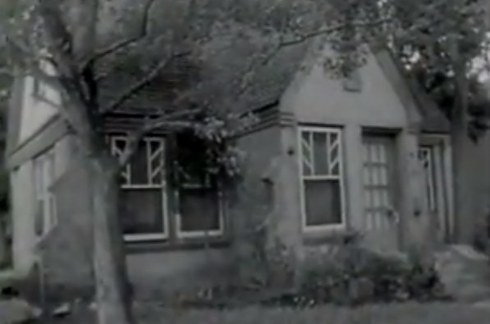
Picture it. Houston. June 1965. The air is thick, a soupy mix of heat and humidity that clings to your skin. The Beatles are on the radio, the Vietnam War is escalating on the evening news, and in a quiet, respectable neighborhood on Driscoll Street, a horror is waiting to be found. A horror that will become one of America’s most bizarre and coldest cases.

The mail was piling up. The phone rang and rang, unanswered. Relatives were getting worried. Fred and Edwina Rodgers, a quiet elderly couple, hadn’t been seen in days. It wasn’t like them. So, on June 23rd, the police were called to do a welfare check. Just a routine visit. Or so they thought.

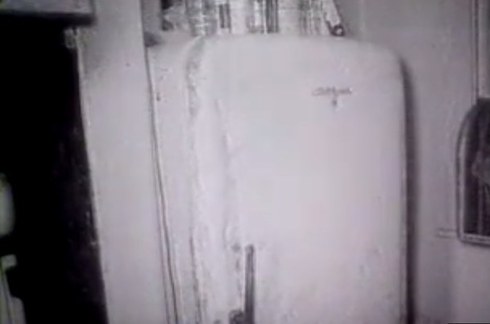
The house was locked tight. Silent. After forcing their way in, officers were met with an unnerving stillness. Nothing seemed overtly out of place. No signs of a struggle. Just an empty home baking in the Texas sun. But there was a smell. Faint, but wrong. And the kitchen… the kitchen felt different. An Admiral refrigerator hummed away, oblivious. One of the officers, perhaps on a hunch, perhaps just to be thorough, pulled open the heavy door.

And the nightmare began.

Ice Box

A Refrigerator Full of Secrets

It wasn’t food. It was a macabre jigsaw puzzle of human remains. The patrolmen stood frozen, the mundane kitchen scene dissolving into a vision from hell. Officer Charles Bullock, one of the first on the scene, later described the moment with chilling clarity. “Opened up a refrigerator and seen nothing but meat stacked in it,” he said. “My partner standing next to me made the comment that it looked like somebody had butchered a hog.”

But it wasn’t a hog.

“We didn’t know it was a body until we got ready to close the refrigerator and we could see the head down in the bottom of the vegetable bin.”

Two bodies. Hacked apart. Neatly arranged and packed into their own refrigerator. The victims were identified as the homeowners: 81-year-old Fred Rogers and his 79-year-old wife, Edwina. The investigation that followed would uncover details so grotesque they seemed borrowed from a cheap horror novel. Edwina had been brutally beaten and then shot in the head. Fred had his skull crushed with a hammer. In a final, stomach-turning act, the killer had dismembered both of them in the upstairs bathroom. Fred’s organs had been painstakingly removed and flushed down the toilet.

The killer hadn’t just murdered them. He had systematically erased them. And he had done it all over a week before the police ever broke down the door. The murders, police determined, likely happened on or around Father’s Day, June 20th.

But the house had a third resident. Someone was missing. Their 43-year-old son, Charles. And he was nowhere to be found.

The Man Who Walked Through Walls

Charles Rogers immediately became the one and only suspect. And what a suspect he was. He wasn’t some low-life drifter. He was a puzzle. A ghost. A man of immense intelligence and profound secrecy.

On the surface, Charles was a brilliant underachiever. He held a degree in nuclear physics. He was a trained pilot. He was a gifted geologist and seismologist who had worked for Shell Oil for nearly a decade. He spoke multiple languages. This was not your typical killer. This was a man with a mind like a steel trap.

But his life was a fortress of solitude. He lived with his elderly parents, despite being in his 40s. He had no friends, no girlfriend, no social life to speak of. Neighbors described him as a recluse, a shadow who came and went. He was known to be in severe financial debt, a fact that pointed towards a possible motive. Did he finally snap over money? Was he tired of living under his parents’ roof and their control?

The abuse angle is a dark and murky corner of this case. Relatives and acquaintances later came forward with stories suggesting Fred and Edwina were not the sweet, doddering old couple they appeared to be. They were allegedly controlling, emotionally abusive, and had tormented Charles his entire life. Some say they mocked him, belittled his intelligence, and treated him like a child. Did decades of simmering rage finally boil over on that hot Father’s Day weekend?

It’s a plausible theory. A man pushed to the absolute brink. A moment of explosive violence. But it doesn’t quite explain the cold, calculated, clinical cleanup. Or the vanishing act that followed.

Ice Box

Deep Dive: Was Charles Rogers a Spy?

Here’s where the story veers from a simple, albeit gruesome, family tragedy into the shadowy world of international espionage. As investigators dug into Charles’s past, a far more complex picture emerged. His work as a seismologist wasn’t just about finding oil. During the Cold War, seismology was a vital tool for detecting underground nuclear tests. His knowledge would have been incredibly valuable to intelligence agencies.

Friends from his past, people he’d worked with at Shell and served with in the Civil Air Patrol, started talking. They spun tales of a man who lived a double life. They claimed Charles often disappeared for weeks at a time on mysterious “business trips.” They said he was involved with the CIA. One associate even claimed that Charles was a contract agent for the agency, a “plausible deniability” operative used for wetwork and secret missions.

Think about it. A man with his skill set—pilot, geologist, multilingual—is the perfect candidate for an intelligence asset. The theory goes that Charles wasn’t just a disgruntled son; he was a trained operative. The murder of his parents, in this scenario, wasn’t a crime of passion. It was a cover. A smokescreen for his own disappearance. Perhaps he knew too much. Perhaps a mission had gone wrong. Perhaps his handlers decided he was a liability and offered him a way out: a new identity, a new life, in exchange for his complete and total disappearance.

Did the CIA extract one of their own from a messy domestic situation? It sounds like a Hollywood movie. But in the paranoid landscape of the Cold War, was it really that far-fetched? This theory would explain the clinical nature of the crime—a trained operative would know how to dismember a body. It would explain his impossible vanishing act—an intelligence agency has the resources to make someone disappear forever.

The Impossible Vanishing Act

Charles Rogers didn’t just run away. He evaporated. He stepped out of his life and into thin air. No one ever saw him again. Not a single credible sighting. His car was never found. His bank accounts were never touched. In the decades that followed, he became a phantom, a boogeyman in Houston lore.

How do you do that? In 1965, without the internet or vast digital footprints, it was easier to disappear. But not this easy. Not this completely. The manhunt for Charles was massive. His face was plastered everywhere. Yet, nothing. Not a whisper.

This perfect disappearance has fueled the three main theories that still get debated on internet forums and in true crime podcasts today.

  • Theory 1: The Mundane Suicide. Overwhelmed by the horror of what he’d done, Charles fled and took his own life. He could have driven into a remote part of Texas, or even into Mexico, and ended it all where no one would ever find him. It’s the simplest explanation. But for a man of his intelligence, it feels almost too simple. Would he have left such a mystery behind?
  • Theory 2: The Expat Reinvention. Armed with his skills and languages, Charles fled south of the border. He could have easily found work in the oil or mining industries in Mexico or Central America under a new name. For years, rumors persisted of an American geologist fitting his description working in remote jungles, a man who kept to himself and had a dark past. These sightings were never confirmed, but they paint a compelling picture of a man successfully starting over.
  • Theory 3: The Spook’s Extraction. This is the big one. The conspiracy theory that just won’t die. His CIA handlers, seeing their asset was compromised, pulled him out. They staged the crime scene or simply used the opportunity to get him off the grid. He was given a new face, a new name, a new life, and continued his work in the shadows. To many, this is the only theory that explains the sheer perfection of his disappearance.

“I’ve never been able to understand how someone could commit an act like this and then disappear off the face of the earth,” Houston investigator Hugh Gardenier said years later. The sentiment still hangs over the case like a shroud. You don’t just vanish. People don’t just melt away.

Unless you have help.

A Cold Case Frozen in Time

Decades passed. The house on Driscoll Street was sold. The world moved on. In 1975, ten years after the murders, Charles Rogers was declared legally dead in absentia. But the case file in the Houston Police Department remains open. A technicality, perhaps. Or maybe a sliver of hope that one day, an answer will surface.

The rise of the internet gave the Ice Box Murders a second life. A new generation of sleuths picked apart the case files, debated the CIA connection on Reddit, and proposed new ideas. Could there have been an accomplice? Was Charles framed? What if the motive was something no one has ever considered? Some have even connected Charles Rogers to the assassination of JFK, pointing out his geographical proximity and shadowy connections as circumstantial “evidence.” It’s a wild leap, but with a case this strange, no theory is ever completely off the table.

The story remains a chilling monument to the darkness that can hide behind the curtains of a normal-looking house in a normal-looking neighborhood. It’s a story about family secrets, hidden rage, and the terrifying possibility that a man of great intelligence could commit an unthinkable act of butchery and then simply… cease to exist.

What really happened inside that house on Father’s Day? Did a lifetime of quiet desperation finally explode into violence? Or was it the bloody final chapter of a spy’s career? Did Charles Rogers die in a lonely ditch somewhere, or did he live out a long life on a beach in Honduras, haunted by the memory of the ice box?

We will likely never know. The trail is not just cold; it’s frozen solid. All that’s left is the horrifying image that greeted those officers in 1965. A refrigerator, humming in the Texas heat, filled not with food, but with the brutal, butchered end of a family. And a ghost who was never seen again.

Originally posted 2016-01-27 13:15:30. Republished by Blog Post Promoter