Friday, July 10, 2026
HomeUnexplained MysteriesCrime MysteriesThe mystery of the Aleppo Codex

The mystery of the Aleppo Codex

The Aleppo Codex: A Perfect Crime, A Missing Bible, and a Mossad Spy Hunt

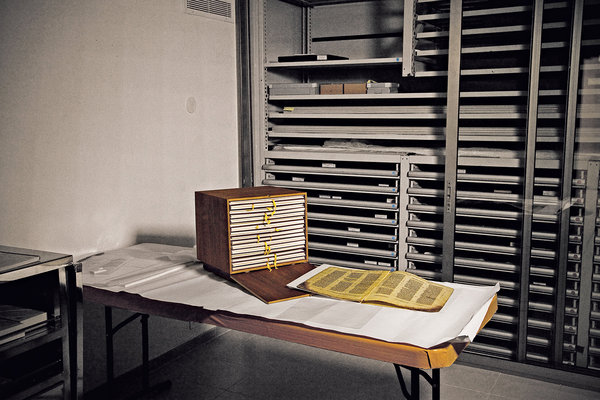
Deep beneath Jerusalem, in a vault built to withstand armageddon, lies a book. Not just any book. This is the Keter Aram Tsova. The Crown of Aleppo. The Aleppo Codex. It is the oldest, most complete, most authoritative manuscript of the Hebrew Bible on Earth. A priceless artifact that serves as the foundation for nearly every modern printing of the Old Testament. The security is absolute. The climate control, perfect. The eyes privileged enough to see it are few and far between.

There’s just one problem.

It’s not complete.

A gaping wound cuts through its heart. Where there should be over 480 priceless, hand-scribed pages of vellum, there are now only 295. Nearly two hundred pages—including almost the entire Torah, the five books of Moses—are gone. Vanished. Swallowed by history.

The official story is simple. A fire. A riot. A tragic loss in the chaos of a violent world. But the whispers tell a different tale. A story of theft, of betrayal, of a conspiracy so deep it pulled in spies, scholars, and presidents. A story that suggests the pages weren’t lost to a fire at all. They were stolen. And even Israel’s legendary intelligence agency, the Mossad, has been sent chasing shadows, emerging with nothing but more questions.

Forget what you think you know. The theft of the Aleppo Codex is a cold case over 70 years old, and the trail is getting hotter than ever.

What Exactly *Is* the Aleppo Codex? The Crown Jewel of Scripture

Before we tumble down the rabbit hole, you have to understand what we’re talking about. This isn’t just an old Bible. The Aleppo Codex, created around 930 A.D. in Tiberias, is the Everest of biblical manuscripts. It’s the master copy.

For centuries, scribes struggled to perfectly preserve the text of the Hebrew Bible. It was a monumental task. The text itself was sacred, but so was the way it was read, chanted, and sung. This is where a group of legendary scholars known as the Masoretes came in. They created a breathtakingly complex system of dots and dashes, little marks called “nikkud” (vowels) and “cantillation marks” (notes for chanting), to ensure the text would be read and pronounced perfectly for all time. The final and most famous of these master scribes was a man named Aaron ben Asher.

The Aleppo Codex is his masterpiece. His life’s work. It was so perfect, so exact, that the great 12th-century philosopher Maimonides declared it the definitive text against which all other copies of the Torah must be checked. It became the gold standard. The final word. For a thousand years, it was guarded with religious reverence by the Jewish community of Aleppo, Syria, earning its name: The Crown of Aleppo.

To lose a page of this book is not like losing a page from an old novel. It’s like snapping a piece off the original Rosetta Stone. It’s like tearing a strip from the Declaration of Independence. It’s an act of cultural vandalism against a foundational document of Western civilization.

The Night of Fire: An Official Story Full of Holes

The official narrative begins on a dark day in 1947. The United Nations had just voted to partition Palestine, and the Arab world erupted in fury. In Aleppo, Syria, a vibrant Jewish community that had existed for millennia found itself in the crosshairs. Mobs descended on the Jewish quarter, whipped into a frenzy. They burned homes, looted shops, and attacked the Great Synagogue of Aleppo, a place of worship that had stood for centuries.

This is where the Codex was kept, locked away in an iron chest. The story goes that the synagogue was torched, and in the inferno, the sacred book was horribly damaged. Some say it was completely destroyed, its ashes scattered in the wind. Others claimed that in the chaos, pages were torn out by the rioters, used as kindling or simply trampled into the dirt. For a decade, the world believed the Crown of Aleppo was gone forever. A casualty of hate.

But what if the fire was a cover story?

What if it was the perfect opportunity for a crime of unimaginable proportions? A chaotic, violent distraction hiding a calculated theft?

A Miraculous Escape… Or a Cunning Smuggling Operation?

Ten years later, the story takes a shocking turn. The Aleppo Codex resurfaced. It wasn’t destroyed after all. A Syrian-Jewish cheese merchant named Murad Faham smuggled the damaged book, page by precious page, out of Syria and into the newly formed state of Israel in 1958. It was an act of incredible bravery. A triumph. The Crown had come home.

But when the scholars at the Ben-Zvi Institute in Jerusalem finally examined the manuscript, their joy turned to horror. It was a shadow of its former self. The first five books, the Pentateuch, were almost entirely gone. So were key sections from the Prophets and other writings. The official story seemed to hold up: the fire had claimed its prize.

The book was hailed as a survivor. A brand plucked from the burning. But the whispers had already begun. Whispers among the Aleppo community. Whispers that the Codex didn’t look that bad when it was hidden away after the riots. Whispers that the real damage happened *after* it left Syria.

Arrival in the Promised Land: A Tainted Triumph

The moment the Codex arrived in Israel should have been one of pure celebration. It was handed over to the country’s then-president, Yitzhak Ben-Zvi, a renowned scholar himself. It was a symbol of return, of preservation, of a nation reclaiming its most sacred heritage. But from the very beginning, something was wrong. The handover was quiet. The accounting of the pages was murky. The people who saw it last in Aleppo and the people who received it in Jerusalem seemed to have very different memories of its condition.

And that discrepancy would eventually trigger an investigation by Israel’s most feared and respected organization: The Mossad.

Enter the Spy: A Mossad Legend on the Case

Decades passed. The mystery of the missing pages became a painful, accepted fact. But the questions never went away. In 1989, Israeli Television decided to blow the case wide open, appointing a man named Rafi Sutton to lead a new investigation.

Sutton was no ordinary journalist. He was a former intelligence officer. A Mossad operative with a legendary reputation. Originally from Aleppo himself, he understood the community, the culture, and the secrets. He was the perfect man for the job. And he had a knack for finding lost treasures.

Years earlier, during the chaos of the Six-Day War in 1967, Sutton received an urgent cable. Intelligence suggested an antiquities dealer was hiding one of the recently discovered Dead Sea Scrolls. Sutton’s team swooped in, arresting the man and his son. They denied everything. Vehemently. But Sutton wasn’t just a tough guy; he was clever. He had their jail cell bugged. When he played back a recording of them discussing the scroll’s hiding place, the game was up.

“He took us to his home and began counting floor tiles,” Sutton later recalled. “Five this way, four that way.” Using a simple drain plunger, the dealer lifted two tiles. Beneath a layer of straw was a shoebox. Inside that box, wrapped in cellophane and tied with a red ribbon, was the Temple Scroll, the longest and one of the most important of all the Dead Sea Scrolls.

If anyone could find missing pages of scripture, it was Rafi Sutton.

“It Was Almost Whole!” – The Bombshell Testimonies

Sutton began his investigation, and what he uncovered was dynamite. He went back to the primary sources, the people who were there. And their stories didn’t match the official narrative at all.

He found witnesses from Aleppo who swore the Codex survived the 1947 fire almost completely intact. They said it was hidden, protected, and venerated for ten years *after* the riot. The real damage, they insisted, happened somewhere on the journey to, or within, Israel.

The most explosive testimony came from a man with an impeccable source: the son of Shlomo Zalman Shragai. Shragai was the high-ranking official whose colleague personally took the Codex from the cheese merchant Murad Faham upon its arrival in Israel. Shragai’s son told investigators that he was a young boy at the time, but he was there. He was in the room when the legendary book was brought to his family’s home. And he was certain about what he saw.

His memory? “Only a few pages were missing, three or four, all the rest were intact.”

Intact.

The word hung in the air like a guilty verdict. If the Codex arrived in Israel almost whole, what happened to the nearly 200 pages that disappeared *after* it was in the custody of Israeli officials and scholars? The suspicion suddenly shifted from a chaotic Arab mob to the very guardians entrusted with the sacred text.

The Great Codex Conspiracy: Theories from the Digital Age

Sutton’s investigation opened a Pandora’s box of conspiracy theories that still rage on internet forums and in academic circles today. The official story of a fire now seems like the least likely explanation. The truth must be something far more complex, and far more sinister.

Theory #1: The Scholarly Carve-Up

This is perhaps the most scandalous—and plausible—theory. Imagine you are a biblical scholar or an institution in the late 1950s. Funds are tight. You have in your possession the most valuable biblical manuscript in the world. What if someone—or a group of people—decided that the book could serve a “greater good”?

The theory suggests that certain individuals with access to the Codex systematically removed pages and sold them on the black market to ultra-wealthy private collectors. A single page from the Book of Genesis, penned by the hand of ben Asher, would be worth a fortune. The proceeds could have been used to fund the Ben-Zvi Institute, support other research, or simply line a few pockets. The story of the “fire damage” provided the perfect cover. Who would question missing pages from a book rescued from a fire? It was the perfect intellectual crime.

Theory #2: The Ransom That Never Was

This theory dives into the murky world of geopolitics. Could the pages have been held as a bargaining chip? Perhaps a faction within the Aleppo community, or an intermediary in the smuggling operation, held the most valuable sections back. They may have intended to ransom them back to the state of Israel for an enormous sum, or in exchange for political favors or the release of prisoners.

But something went wrong. The deal fell through. The holder died without revealing their location, or the political climate shifted, making a sale impossible. If this is true, it means that somewhere out there, possibly in a Swiss bank vault or hidden in a dusty attic in Turkey, a huge chunk of the Aleppo Codex sits waiting. A silent, priceless hostage.

Theory #3: The Ultimate Deception

This is the most mind-bending theory of all, a favorite of online sleuths. What if the damage is the point? What if the book currently sitting in the vault in Jerusalem is an exceptionally brilliant forgery? In this scenario, the real Codex was stolen in its entirety sometime after the 1947 riots. The thieves, wanting to sell the real artifact to a secretive billionaire collector (think a real-life Bond villain), created a masterful copy.

But how do you make a forgery believable? You make it imperfect. You create a backstory of trauma and damage. By removing 200 pages from your forgery and blaming it on a well-documented fire, you create a perfect cover story that deflects serious scrutiny. The world is so relieved to have *anything* back that they don’t look too closely. And while the world treasures the damaged “survivor,” the perfect, complete Aleppo Codex sits in a private library, its existence a secret known only to a handful of people.

The Paper Trail Goes Cold: Where Do We Look Now?

Today, the hunt for the missing pages is a global cold case. Scholars and art crime investigators keep a constant watch on the world’s antiquities markets. Every auction at Sotheby’s or Christie’s is scrutinized. Every newly “discovered” biblical fragment is cross-referenced. The hope is that a collector will die and their heir, not knowing what they have, will try to sell a page, setting off alarms all over the world.

Technology offers another faint hope. The Ben-Zvi Institute has created a stunningly high-resolution digital version of the surviving Codex, allowing scholars worldwide to study its every fiber. Some hope that advanced imaging or textual analysis might reveal clues hidden within the remaining pages—a chemical trace, a unique scribe’s mark—that could point to where the missing sections went.

But for now, the trail is cold. The secrets remain locked away with the men and women who handled the Codex in those crucial years between 1947 and 1958, most of whom are now long gone.

The Crown of Aleppo sits in its vault, a masterpiece scarred by a deep and mysterious wound. It is a holy book, a historical document, and the scene of a perfect crime. The missing pages are ghosts, haunting the spaces between the verses. They are out there, somewhere. Hidden in plain sight, or buried in a vault of secrets. And they ask a terrifying question: what if the people you trust to protect your greatest treasure are the ones who steal it?

Amit Ghosh
Amit Ghoshhttps://coolinterestingnews.com
Aloha, I'm Amit Ghosh, a web entrepreneur and avid blogger. Bitten by entrepreneurial bug, I got kicked out from college and ended up being millionaire and running a digital media company named Aeron7 headquartered at Lithuania.
RELATED ARTICLES
- Advertisment -

Most Popular

Recent Comments

Warren Pan Abbott on The legend of the Devil Monkey !
chris davies on The McPherson Tape Mystery
Reed Reedly on ET has Internet!
Bea Houseoffashion on Proof Of Time Travellers – Gallery
Marcus2012 on ET has Internet!
Reed Reedly on ET has Internet!
LaughsAtConspiracyNuts on The 9/11 Conspiracy – Myths and Facts
Alex Sliverman on Did the ancients fly?
Doctor Wholigan on Time Traveler in 1938 film
chris davies on The McPherson Tape Mystery
Archie1954 on 10 secret UFO hideouts
chris davies on Ghosts of flight 401
Marcus2012 on ET has Internet!
jason Macdonald on Proof of Time Travel? – China
chris davies on Long-Lost Pyramids Found?
Reed Reedly on ET has Internet!
Milkman on Connected Universe
Tenmiles on Baigong Pipes Mystery
Simon Foster on Sirius – The Documentary
From the 1st April on 2013 – Alien Contact date ?
SkyWatcher on Is ET ignoring us?
I Come From The Future on Obama to make UFO Alien disclouser soon ?
Just another person on 2013 – Alien Contact date ?
Malcolm Windowcleaner on The strange case of Rudolph Fentz
Mason Servio on Strange Things on Mars
Marke Wisdom Seeker on What will we find as arctic melts?
Andrea A Elisabeth Levyne on Aliens Captured in Varginha, Brazil
Mitch Grouyeki on Amazing Space Shuttle pictures