Home Unexplained Mysteries Crime Mysteries The Baker Street Burglary

The Baker Street Burglary

0
71

The Heist That Vanished: What Really Happened at Baker Street?

London. 1971. The air is thick with smog and secrets. On a street made legendary by a fictional detective, a real-life mystery was about to unfold—a crime so audacious, so strange, that the British government would allegedly try to wipe it from history itself.

This wasn’t just any bank job. This was the Lloyds Bank robbery on Baker Street.

The official story is simple enough. A gang of clever thieves tunneled their way into a vault and made off with a fortune. But the official story is a lie. Or, at the very least, it’s a beautifully crafted curtain designed to hide a much darker stage. What if the money was just a distraction? What if the real target was a single safe deposit box, containing a secret that could have brought the British monarchy to its knees?

Forget what you think you know. We’re going underground, following the tunnel back to a conspiracy of royal scandals, spooks, and a government-ordered silence that lasted for decades. This is the story of the walkie-talkie robbery—the heist that was officially erased.

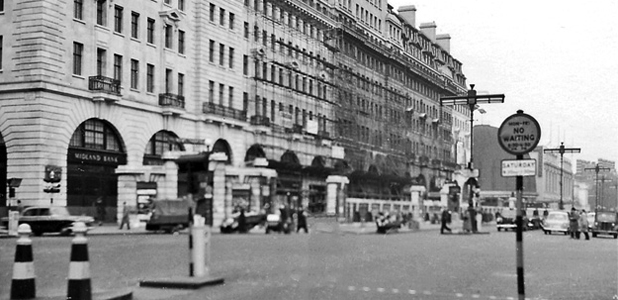
BakerStreetRobbery-ben-brooksbank

Operation Le Sac: Tunneling Beneath the Streets of Sherlock

Every great heist needs a plan. This one was a work of art.

It began, as many things do, with a lease. In 1971, a group of men rented a leather goods shop called Le Sac, at 189 Baker Street. It was a perfectly unremarkable storefront, just two doors down from their real target: the fortress-like vault of Lloyds Bank. Between them stood a Chicken Inn restaurant. The delicious smell of fried chicken would soon provide the perfect cover for the smell of dirt and burning metal.

The crew was a mix of seasoned criminals, not your average smash-and-grab thugs. They were planners. Engineers of crime. Led by a man whose identity remains a point of furious debate, they knew that a frontal assault was impossible. The vault door was a beast. So, they went under.

They only worked on weekends. The city noise would swallow the sounds of their labor. Starting from the basement of Le Sac, they began to dig. Imagine it. The back-breaking work, the suffocating darkness, the constant, paranoid fear of being discovered. They carved a tunnel, 40 feet long, straight under the Chicken Inn. A mountain of dirt and clay—eight tons of it—was hauled out bag by bag and dumped elsewhere. They even put up a sign on the shop door: “Temporarily closed due to illness.”

The Night of the Breach

On the night of Saturday, September 11th, 1971, they arrived. The tunnel was complete. It surfaced right beneath the vault floor. But their work wasn’t over. The floor was three feet of reinforced concrete. They tried a thermal lance, a tool that burns at thousands of degrees, to slice through it. It failed. They tried a 100-ton jack to push their way up. It also failed.

Frustration mounted. So, they switched to a more primal method. Explosives.

They used a chemical compound to blast a small, jagged hole in the floor. One by one, they squirmed up into the belly of the beast. They were in. The air was thick with the scent of money, dust, and victory. Hundreds of safe deposit boxes lined the walls, each one a tiny treasure chest. They had the entire weekend.

But they were making one fatal mistake. They were talking. And someone was listening.

“We’re Sitting on 3 Million…” The Eerie Radio Broadcast

Miles away, in a flat in Wimpole Street, a man named Robert Rowlands was tinkering with his ham radio. It was his hobby, a way to connect with the world from his armchair. That night, just after 11 PM, he stumbled upon a frequency he shouldn’t have.

It was a conversation. Crackly. Urgent. A walkie-talkie channel.

“We’re sitting on 3 million…” one voice said. Another, a lookout perched on a nearby roof, warned about police patrols. They were cocky, chatting away as they ransacked the vault. Rowlands sat there, frozen. He was listening, live, to one of the biggest bank robberies in British history.

He did what any law-abiding citizen would do. He called Scotland Yard.

The initial reaction? A shrug. The police officer on the other end was dismissive, almost bored. He told Rowlands to record the conversation if he could and to call back if anything “interesting” happened. Anything interesting? A multi-million-pound heist was in progress!

Undeterred, Rowlands grabbed a small cassette recorder and did just as he was told. The voices coming through his speaker were a blueprint of the crime. They talked about taking a break, about needing more light, about the police cars driving right past them. They were so close, yet completely invisible.

A Baffling Police Response

Rowlands called the police again. This time, they took him a little more seriously. But their response was a masterclass in bureaucratic paralysis. They knew a robbery was happening *somewhere* within a 10-mile radius of Rowlands’s antenna. That meant checking every single bank. All 750 of them.

Think about the absurdity. While a handful of cops drove from bank to bank, peering into dark windows, the gang was still inside Lloyds, cracking open deposit boxes. Police even checked the Baker Street branch. They rattled the vault door. It was locked tight. Secure. Nothing to see here. They moved on.

The thieves were still inside. Listening. Laughing.

By the time the sun rose on Monday morning and a bank employee opened the vault, it was too late. The gang was gone. The vault was a scene of utter devastation. And scrawled on the wall was a chilling, taunting message: “Let Sherlock Holmes try to solve this one.”

The Heist of the Century Hits the Papers… Then Vanishes

For a few days, the story was a media sensation. A real-life locked-room mystery on Sherlock Holmes’s street? It was perfect. Newspapers splashed it across their front pages. The “Walkie-Talkie Robbery” was the talk of the town. The police looked like fools, and the public was captivated.

And then, suddenly, it stopped. The story just… disappeared.

Journalists who tried to follow up on the case hit a brick wall. Editors who had been hungry for details were now mysteriously silent. According to legend, the government had issued a “D-Notice.”

The D-Notice: Official Cover-up or Urban Legend?

A D-Notice (now known as a DSMA-Notice) is a peculiar British institution. It’s an official request, not a legally binding order, for the press to refrain from publishing stories on specific subjects for reasons of national security. It’s a gentleman’s agreement between the state and the media.

Why on earth would a simple bank robbery warrant a D-Notice? The official line for years was that one was never issued. A complete myth. But the story vanished anyway. The silence was deafening, and it’s that silence that forms the heart of the conspiracy.

If the government did step in to kill the story, they weren’t trying to protect the money. They were trying to protect a secret. The question is, what was in those boxes?

The Royal Connection: The Princess Margaret Photos

This is where the story pivots from a clever heist to a high-stakes political thriller. The answer, many researchers believe, lies not with the thieves, but with one of the box owners: a man named Michael X.

Michael X, born Michael de Freitas, was one of the most controversial figures in London at the time. A self-styled Black Power revolutionary, a con man, a pimp, and a powerful community leader. He moved in circles that ranged from the criminal underworld to the celebrity elite, counting people like John Lennon and Yoko Ono among his supporters.

He was also a blackmailer.

According to sources that have emerged over the decades, Michael X was in possession of a collection of highly compromising photographs. Photos of Princess Margaret, the Queen’s younger sister, in a very intimate setting with the gangster and actor John Bindon on the Caribbean island of Mustique.

What if the Heist was a Black Op?

The theory goes like this: Michael X was being prosecuted for extortion and other crimes. He knew he was going down. So, he stashed the photos in his safe deposit box at Lloyds Bank as insurance. Leverage. A get-out-of-jail-free card. If the authorities came after him, he would release the photos and trigger a scandal that would rock the Royal Family to its core.

Someone in the British establishment, perhaps from the intelligence agency MI5, decided they couldn’t let that happen. They couldn’t raid the bank officially—that would be too obvious. So, what did they do?

They sanctioned a robbery.

They found a crew of professional thieves and gave them a simple mission: break into the vault, steal everything to make it look like a normal robbery, but make absolutely sure you get the contents of Michael X’s box. The millions in cash and jewels were just payment and plausible deniability. The real prize was a small packet of photographs.

This theory explains everything. It explains the D-Notice—you can’t have the press sniffing around a secret state-sponsored operation. It explains the strangely incompetent police response—were they told to stand down? To go slow? It even explains why the mastermind was never caught. Perhaps he was on the government’s payroll.

“Let Sherlock Holmes Try to Solve This”

And what about that taunting message left on the wall? It seems like a simple joke, a nod to the bank’s famous address. But in the context of a conspiracy, it takes on a different meaning.

Was it a deliberate misdirection? A way to make the whole thing look like the work of arrogant criminals, rather than a precision-strike black op? It’s the kind of theatrical detail that spooks love. A little bit of flair to sell the lie.

The Men Who Took the Fall

Eventually, the police did make arrests. Four men were convicted: Anthony Gavin, Thomas Stephens, Reginald Tucker, and Benjamin Wolfe. They were career criminals, perfect patsies for the job. They received hefty sentences, but much of the money was never recovered.

But investigators at the time and researchers since have always believed that the real brains of the operation got away clean. The official records of the trial remain sealed, far beyond the normal period of secrecy for government documents. Why? What are they still hiding after all these years?

Decades of Silence: What Do We Know Now?

For decades, the Baker Street Robbery was little more than a whisper, a piece of forgotten London lore. Then, in 2008, the movie *The Bank Job* brought the conspiracy theory crashing into the mainstream. While the film took creative liberties, its central premise—that the heist was an MI5 job to retrieve the Princess Margaret photos—was based on information from sources allegedly close to the original event.

The story re-ignited public interest. Journalists and historians started digging again. But the walls of silence remain stubbornly high. The key files are locked away in the UK National Archives, classified until at least 2071. What kind of bank robbery requires a 100-year seal of secrecy?

The money is long gone. The convicted men have served their time or passed away. Princess Margaret and Michael X are both dead. But the questions remain, hanging in the air like old London fog.

Was it just a brilliantly executed robbery by a gang of thieves who got lucky? A story of greed and police blunders, plain and simple? Or was it something far deeper? A moment when the hidden machinery of the state decided to protect the Crown, no matter the cost, by staging a crime on the world’s most famous street?

We may never know for sure. The official story is written in ink, but the truth is scrawled on a vault wall, a puzzle left for a detective who never existed. The files are sealed. The secrets are kept. But in the shadows of Baker Street, you can almost hear the crackle of a walkie-talkie, broadcasting a mystery that was never meant to be solved.

Originally posted 2016-04-20 12:28:06. Republished by Blog Post Promoter