The Devil’s Triangle: More Than a Myth, It’s a Memory Hole
Forget your maps. Forget your compass. There’s a tear in the fabric of our world, a wound in the ocean’s skin stretching between Bermuda, Florida, and Puerto Rico. You know its name. You feel it in your bones. The Bermuda Triangle.
For decades, it’s been a black hole on the map, swallowing ships, snatching planes from the sky, and leaving behind nothing but questions. And silence.
A chilling, absolute silence.
The government tells you it’s bad weather. Freak waves. Pilot error. They hand you neat, tidy explanations designed to let you sleep at night. But you and I know better, don’t we? The whispers persist. The stories won’t die. What if the official story is just that… a story? What if the truth is far stranger, far more terrifying than we can imagine?
They want you to think it’s just a nostalgic joke now, a cheesy 70s reference. A punchline. But every time a modern plane vanishes from radar, like Malaysian Airlines Flight 370 did, that old, cold feeling creeps back in. The feeling that some places on this Earth are just… wrong. That they operate by a different set of rules. Or maybe, no rules at all.
This isn’t just about stories. It’s about a pattern. A terrifying, repeating pattern of disappearances that defy all logic.
Deep Dive: The Ghosts of the Triangle
Before it was a meme, before it was a board game, the Triangle was a graveyard. The legend wasn’t born in Hollywood. It was born from real-world terror and inexplicable loss. It started with whispers among sailors, then grew into a roar that the world couldn’t ignore.
The USS Cyclops: A Steel Behemoth Erased
Picture it. March, 1918. The world is at war. A massive American naval ship, the USS Cyclops, over 540 feet long and carrying more than 300 souls, is steaming up the East Coast. It’s loaded with ten thousand tons of manganese ore, vital for munitions production. This isn’t some tiny fishing boat. This is a monster of steel. One of the biggest ships in the Navy.
It makes a stop in Barbados and then sails north. And then… nothing. It vanishes. Poof. Gone. No SOS. No wreckage. No oil slicks. No lifeboats. The most extensive sea search in naval history at the time found not a single trace. President Woodrow Wilson himself said, “Only God and the sea know what happened to the great ship.”
Theories flew. Was it a German U-boat? Unlikely, as no German sub commanders ever claimed the kill, and they would have screamed it from the rooftops. Did the heavy cargo shift and cause it to capsize? Maybe. But wouldn’t there be *something* left behind? A single piece of debris? A life preserver? The silence was, and remains, deafening.
Flight 19: The Vanishing That Started It All
This is the big one. The case that ripped the Bermuda Triangle out of sailors’ folklore and slapped it onto the front page of every newspaper in America.
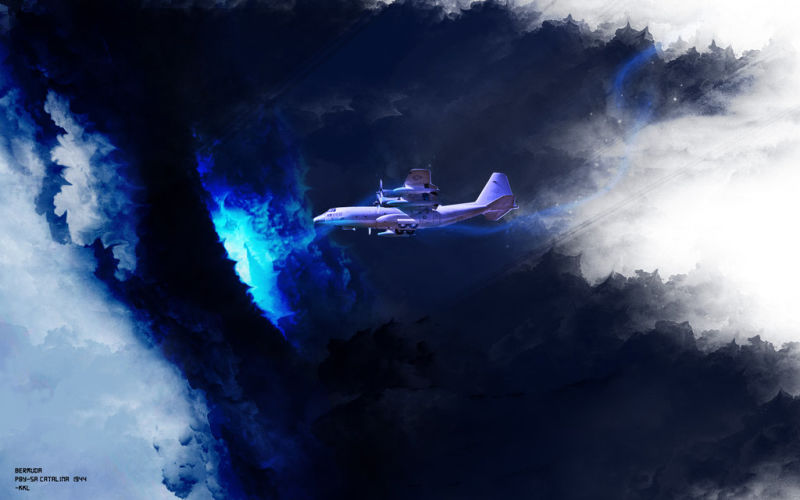
December 5, 1945. Five US Navy Avenger torpedo bombers lift off from Fort Lauderdale, Florida. A routine training mission. Fourteen men, all experienced airmen. The weather is clear. The mission is simple: fly east, drop practice bombs, turn north, then head back to base. A simple triangle pattern. The irony is thick enough to choke on.
A few hours into the flight, the control tower gets a chilling radio call from the flight leader, Lieutenant Charles Taylor. His voice is strained. Confused. He says his compasses are spinning. He doesn’t know which way is west. “Everything is wrong… strange… we can’t be sure of any direction. Even the ocean doesn’t look as it should.”
Think about that. An experienced pilot, a man who knows these skies like the back of his hand, suddenly lost in his own backyard. The tower tries to guide them home, but the transmissions become more garbled, more panicked. Other pilots in the flight are heard arguing, their own instruments failing. The last words anyone ever heard from Flight 19 were, “We are entering white water, nothing seems right.”
Then, static.
But the horror wasn’t over. A massive PBM Mariner flying boat, a rescue plane with a 13-man crew, was immediately dispatched to search for them. It followed Flight 19’s last known path. And then it, too, vanished from radar. Gone. A ship offshore reported seeing a massive explosion in the sky, but no wreckage of the Mariner was ever definitively found.
In a single afternoon, six aircraft and twenty-seven men were wiped off the face of the Earth. A Navy board of inquiry was left utterly baffled, concluding it was “as if they had flown to Mars.”
Charles Berlitz and the 1970s Triangle-Mania
For years, these stories were just disconnected tragedies. That all changed in 1974. A linguist and author named Charles Berlitz bundled all the chilling tales together in his blockbuster book, *The Bermuda Triangle*. The book was a sensation. It sold millions of copies and sat on bestseller lists for months. It was the spark that lit the pop culture fire.

Berlitz didn’t just report the facts; he connected the dots. He suggested these weren’t accidents. They were events. He wove in theories about UFOs, time portals, and strange magnetic forces emanating from the ocean floor. Skeptics later picked his research apart, claiming he exaggerated details and included incidents that never happened or happened far outside the Triangle. But it didn’t matter. The fuse was lit. The public was hooked. The Bermuda Triangle was no longer a mystery; it was a phenomenon.
Hollywood’s Obsession: When the Triangle Became a Star
With Berlitz’s book as a blueprint, Hollywood and the entertainment industry went wild. The 1970s and early 80s were the golden age of Triangle terror. It was everywhere. On your TV, in your stereo, even on your kitchen table.
1) Fleetwood Mac’s “Bermuda Triangle” (1974)
Just as the craze was exploding, Fleetwood Mac, on the cusp of their mega-stardom, dropped this funky, paranoid track. It’s a perfect time capsule of the era’s mood. Christine McVie’s lyrics capture the public’s confusion and fascination perfectly. It wasn’t a scientific debate; it was a cultural conversation happening in real time. The song asks all the right questions: Is it a hole in the ocean? A strange fog? Or a government cover-up? The band wasn’t offering answers, just a killer bassline to ponder the mystery to.
2) Barry Manilow’s “Bermuda Triangle” (1980)
If Fleetwood Mac captured the mystery, Barry Manilow turned it into a punchline. This cheesy calypso number is basically “Copacabana” at sea. A guy loses his girl (Lucy) not to a mobster named Rico, but to the mysterious forces of the Triangle… or maybe just to a handsome stranger while he was distracted. It showed just how deeply the concept had seeped into the public mind—deep enough to become the setup for a pop song joke. Damn you indeed, Bermuda Triangle!
3) Satan’s Triangle (1975)
This ABC TV movie-of-the-week is a certified cult classic. It took the supernatural elements of the legend and ran with them. Doug McClure plays a Coast Guard rescuer who finds a lone survivor, the stunning Kim Novak, on a derelict schooner. What follows isn’t a story of bad weather, but of pure demonic horror. The twist ending is legendary and genuinely shocking for 70s television. It’s a must-watch for anyone who wants to feel the authentic, spooky vibe of the era’s Triangle obsession.
4) Airport ’77 (1977)
The 70s loved two things: disaster movies and the Bermuda Triangle. So why not combine them? This star-studded sequel in the *Airport* franchise sees a luxury 747, loaded with priceless art and Hollywood legends like Jack Lemmon and Jimmy Stewart, get hijacked. The plan goes wrong, the plane crashes… right in the middle of the Bermuda Triangle. It sinks to the bottom of the ocean, intact, trapping everyone inside. It’s gloriously over-the-top, mixing high-stakes survival with the ever-present paranormal dread of their location. The Triangle isn’t just a setting; it’s an active, malevolent character.

5) Bermuda Triangle Game (Milton Bradley, 1976)
You know a phenomenon has reached peak saturation when it becomes a board game for kids. Milton Bradley’s game was a masterpiece of design. The objective was to move your ships and pick up cargo, all while a bizarre “mystery cloud” on a mechanical arm spun around the board, magnetically snatching your boats and making them “disappear.” The box art alone is a work of art, promising cosmic dread for the whole family. It was a tangible piece of the mystery you could own.

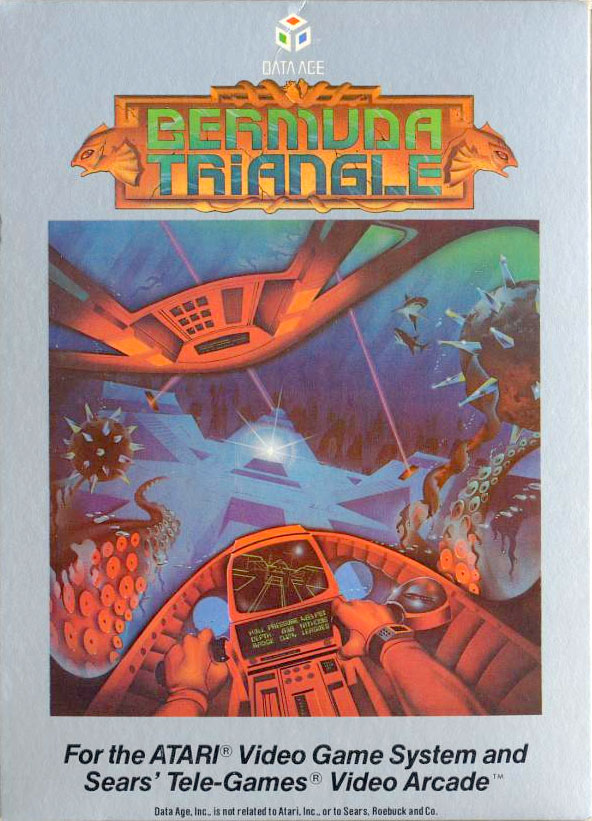
6) Bermuda Triangle game for Atari 2600 (Data Age, 1982)
The mystery entered the digital age. In this Atari classic, you pilot a submarine through the depths of the Triangle, dodging giant squid and sharks to collect treasure from a lost city. It solidified the idea that the Triangle wasn’t just an empty patch of water, but a place filled with secrets, monsters, and forgotten civilizations just waiting to be discovered below the waves.
7) Scooby-Doo in “A Creepy Tangle in the Bermuda Triangle” (1978)
The ultimate seal of pop culture approval. When Mystery Inc. gets involved, you know it’s a big deal. This episode of *The Scooby-Doo Show* has everything: a plane getting sucked into a UFO, a hurricane, an island populated by spooky skeleton-men in scuba gear, and a secret lair. Of course, the UFO turns out to be a fake, part of a convoluted scheme. But for a generation of kids, this was their first introduction to the legend, forever linking the Triangle with aliens and otherworldly weirdness.
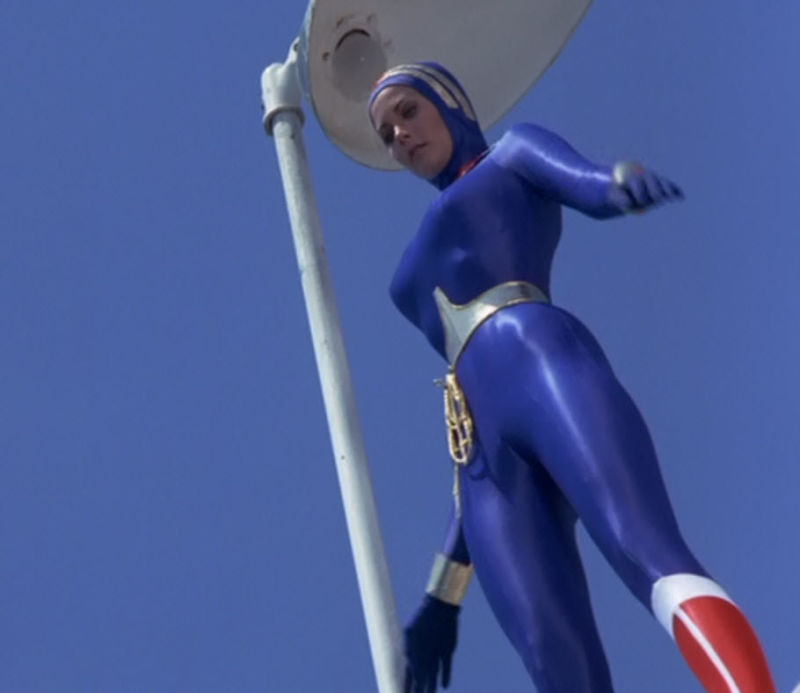
8) Wonder Woman in “The Bermuda Triangle Crisis” (1977)
Even the DC universe wasn’t safe. This two-part episode of the classic Lynda Carter series located Wonder Woman’s hidden home, Paradise Island, smack in the middle of the Triangle. This was a brilliant move, providing a built-in explanation for why the island remained secret and why so many planes and ships that got too close… never came back. It wasn’t aliens or demons; it was the advanced Amazonian defenses protecting their homeland. The episode is pure 70s gold, with Wonder Woman even sporting a fabulous custom wetsuit.

9) In Search Of… The Bermuda Triangle (1977)
No exploration of 70s mysteries is complete without Leonard Nimoy and his iconic turtleneck. This episode of the legendary documentary series treated the Triangle with deadpan seriousness. Nimoy’s calm, authoritative narration guided viewers through re-enactments of famous disappearances and interviews with supposed eyewitnesses and “experts.” The show heavily leans into the idea that the Triangle could be a communications hub for extraterrestrials, giving the theory a layer of pseudo-scientific credibility that captivated audiences.
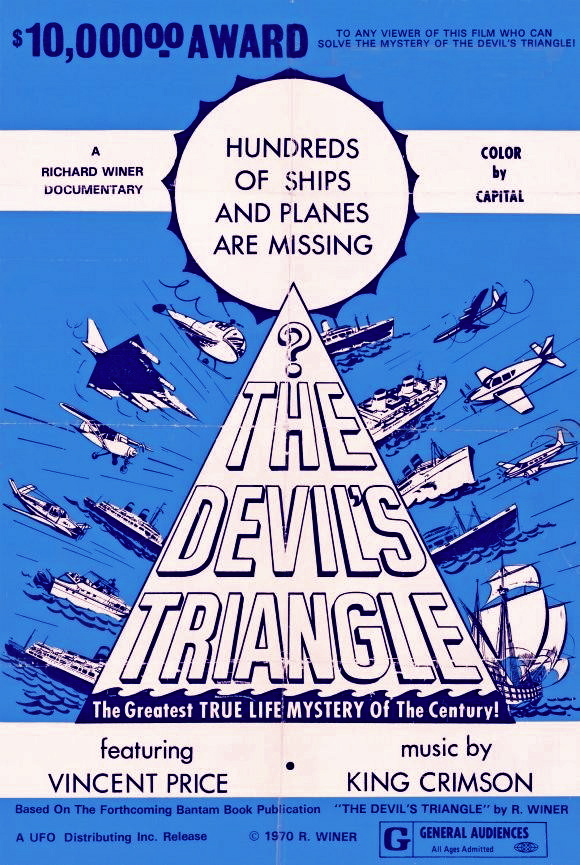
10) The Devil’s Triangle (1974) and Mystery in the Bermuda Triangle (1979)
These two films show the sheer range of the Triangle’s influence. The first is a documentary narrated by the one and only Vincent Price. His chilling voice alone could make a weather report sound like a horror story. The second is a bizarre masterpiece of Mexican cinema, where wrestling superstars El Santo, Blue Demon, and Mil Máscaras take on the mystery. That’s right. Luchadores fighting the forces of the Bermuda Triangle. The fact that both a serious documentary and a luchador action film could use the same subject shows just how completely the Triangle had conquered every corner of our collective imagination.

The Science… Or the Cover-Up?
So what’s really going on in that patch of ocean? The killjoys and debunkers have their theories. And to be fair, some of them sound plausible. At first.
They talk about **Methane Hydrates**. The theory goes that the seabed in this region is rich with frozen methane. A geological shift could cause a massive release of this gas, creating a huge bubble that erupts on the surface. If a ship were sailing over that spot, the water density would plummet, and the vessel would sink like a stone in seconds. Could this gas also rise into the air, causing engine failure or an explosion for a low-flying plane? Some scientists say yes.
Then there are **Rogue Waves**. For centuries, sailors told stories of waves the size of buildings that could appear out of nowhere, even in calm seas. Scientists used to dismiss them. Now they know they’re real. A 100-foot wall of water could easily swallow a ship like the USS Cyclops whole, sending it to the bottom before anyone could even send a distress call.
But these explanations feel… incomplete. They don’t account for the weirdness. The spinning compasses. The strange fog. The pilots who report that the sky itself has turned a sickly yellow-green. They don’t explain the feeling of being utterly, inexplicably lost in a place you should know.
This is where the real theories begin. Whispers of **”Electronic Fog”** or **Time Warps**, anomalies that mess with instruments and even time itself. Some pilots who have flown through it and survived describe losing chunks of time, their clocks and their fuel gauges showing a journey that should have taken hours was completed in minutes.
And you can’t talk about the Triangle without talking about **Atlantis**. Famed psychic Edgar Cayce prophesied that the lost city of Atlantis would be discovered near Bimini, right in the heart of the Triangle. He claimed the Atlanteans used powerful energy crystals to power their civilization and that these crystals are still active on the ocean floor, creating the very electromagnetic disturbances that bring down our modern ships and planes.
The Legend Will Never Die
Today, the U.S. Coast Guard and other official bodies will tell you there is no Bermuda Triangle. They’ll say the number of incidents in the area is no different than any other heavily trafficked part of the ocean. They’ll point to the Gulf Stream’s violent weather and the deep ocean trenches that make finding wreckage nearly impossible.
Maybe they’re right.
Or maybe, that’s just the easiest answer. The one that stops people from asking too many uncomfortable questions. The pop culture of the 70s might seem cheesy now, but it was tapping into a genuine, primal fear. The fear of the unknown. The fear that we are not fully in control of our world.
The Bermuda Triangle is more than a location. It’s an idea. It’s a cosmic question mark hovering over the deep blue sea. And as long as there are still dark, unexplored corners of our planet, the story of this strange, hungry patch of ocean will be told. The planes and ships may be gone, but the legend? The legend is here to stay.