Home Unexplained Mysteries Strange Mystery – unexplained object in weird orbit

Strange Mystery – unexplained object in weird orbit

1
62

The Cosmic Rebel: A Discovery That Breaks All The Rules of Our Solar System

Everything we thought we knew about our solar system is built on one simple, elegant rule. A cosmic dance, choreographed by gravity billions of years ago. From a swirling disk of gas and dust, our sun ignited, and the planets formed, all spinning, all orbiting, all following the same direction. Like water swirling down a drain. It’s neat. It’s orderly. It’s physics.

But what if something out there didn’t get the memo?

What if, in the freezing, silent darkness beyond Neptune, something is moving the wrong way? A lone rebel, defying the fundamental laws of our celestial neighborhood.

Astronomers are baffled. Stunned. Because they’ve found it. An object, small and unassuming, hurtling through space on a trajectory that simply shouldn’t exist. They call it “Niku,” and it’s forcing us to question everything.

A Glitch in the Matrix: Finding the Impossible

Our eyes on the outer solar system have never been sharper. Telescopes like the Panoramic Survey Telescope and Rapid Response System—Pan-STARRS for short—are our tireless sentinels. Perched atop a dormant volcano in Hawaii, Pan-STARRS scans the heavens relentlessly, night after night, charting asteroids, comets, and anything else that glimmers in the void. Its job is to find the things we don’t know are there.

And one day, it found something that defied belief.

Imagine the scene. An astronomer sifting through mountains of data. Points of light moving against a backdrop of fixed stars. They’re looking for patterns. Orbits. The predictable clockwork of the cosmos. But then, one point of light stands out. It’s not moving with the flow. It’s going against the grain. It’s traveling backward.

This is Niku. And its discovery sent a shockwave through the astronomical community. It’s not just an oddball; it’s a puzzle that challenges the very foundation of planetary formation science. As Queen’s University astronomer Michele Bannister put it, the angular momentum of that initial gas cloud should force everything to spin in the same direction.

“It’s the same thing with a spinning top, every particle is spinning the same direction,” she explained. To find something going the other way is, to put it mildly, weird.

So what, exactly, did they find?

Meet “Niku”: Profile of a Celestial Anomaly

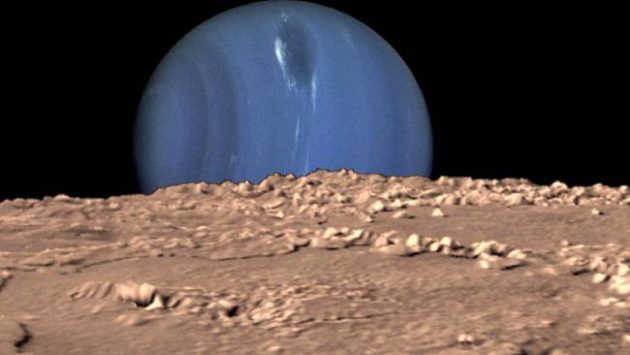
The object was officially catalogued, but it needed a name that fit its bizarre nature. The team chose “Niku,” a Chinese adjective for “rebellious.” A perfect fit. Niku is a Trans-Neptunian Object, or TNO, a class of icy bodies that inhabit the shadowy realm beyond the orbit of Neptune.

Strange Mystery – unexplained object in weird orbit

It’s small, estimated to be less than 200 kilometers in diameter. A mere speck of ice and rock. In a solar system with gas giants like Jupiter, Niku is utterly insignificant in size. But its orbit makes it one of the most fascinating objects ever discovered.

Deep Dive: Not Just Backwards, But Way Off-Kilter

Calling Niku’s orbit “backwards” is an understatement. The technical term is a retrograde orbit. But that’s only half the story. The planets in our solar system all orbit on a relatively flat plane, like marbles rolling on a dinner plate. This is called the ecliptic.

Niku doesn’t care about the dinner plate.

Its orbit is tilted at a shocking 110 degrees. This means it’s not just going backward; it’s shooting dramatically up and over the plane of the solar system, then diving back down underneath it. Matthew Holman, a senior astrophysicist at the Harvard-Smithsonian Center for Astrophysics, noted that every single day, Niku is moving further “upwards,” away from the flat disk where all the other planets live.

This cannot happen on its own. Something had to give it a colossal push. A gravitational shove of unimaginable power must have knocked it into this impossible trajectory.

“It suggests that there’s more going on in the outer solar system than we’re fully aware of,” Holman admitted. The question is… what?

The Hunt for an Explanation: Round Up the Usual Suspects

When you find a cosmic crime scene, you start by investigating the most likely culprits. Astronomers immediately started running simulations, testing theories, and trying to figure out what could be powerful enough to create an object like Niku.

Suspect #1: The Phantom Menace, Planet Nine

The first and most obvious suspect was the talk of the town: Planet Nine. For years, scientists have noticed strange clustering in the orbits of other distant TNOs. The best explanation is the gravitational influence of a huge, undiscovered planet lurking in the far, far reaches of our solar system. A world perhaps ten times the mass of Earth, so far away it’s nearly impossible to see.

Could this hidden giant be the culprit? Did Niku wander too close to this behemoth and get flung into its crazy orbit? Holman and his team looked into it. It was a tantalizing idea. The mysterious Planet Nine would be the perfect villain for this story.

But the math didn’t add up.

After further analysis, the team concluded that Niku was too close to our solar system for Planet Nine to have such a profound effect. Any influence from a planet that far out would be too subtle. It couldn’t provide the violent kick needed to create Niku’s orbit. Planet Nine had an alibi. The search had to continue.

“We don’t know the answer,” Holman confessed, a statement that echoes the deep sense of mystery surrounding this object.

Suspect #2: A Game of Cosmic Billiards?

What if the explanation is simpler? Or at least, more direct. What if Niku was just in the wrong place at the wrong time? Perhaps billions of years ago, it collided with another object. A game of cosmic billiards where a random, chaotic impact sent it careening off in a new, wild direction.

This is a perfectly reasonable explanation. For one object.

It’s messy. It’s chaotic. It works. The universe is a violent place, and collisions happen. Case closed, right?

Wrong. Because the story was about to get a whole lot weirder.

The Jaw-Dropping Twist: Niku Is Not Alone

As astronomers studied Niku, they started looking for other objects in its vicinity. And they found them. This wasn’t just one rebel. It was a gang.

They discovered a whole cluster of Trans-Neptunian Objects, all moving together. All in that same, highly-inclined 110-degree orbital plane. All traveling backward against the flow of the solar system.

Let that sink in.

The odds of one object getting knocked into a bizarre orbit by a random collision are small, but possible. The odds of multiple, separate objects getting knocked by separate, random collisions into the *exact same bizarre orbital plane* are so infinitesimally small as to be effectively zero. It’s like six billiard balls getting struck randomly and all ending up flying off the table at the exact same angle.

It’s impossible. Something organized this. Something herded these objects together and forced them onto this strange, shared path. This discovery completely changed the game. It’s not a random accident. It’s a pattern. And patterns demand an explanation.

The Fringe Files: Exploring the Wildest Theories

With the simple explanations off the table, scientists and theorists had to get creative. The existence of this rebellious cluster opens the door to some mind-bending possibilities, ranging from the plausible to the truly out-there.

Theory A: The Ghost of a Lost Planet

What if Niku and its friends are not individual objects, but are actually the pieces of something that used to be much bigger? Imagine a dwarf planet, similar to Pluto, that formed in the early solar system with a strange, highly-inclined orbit. And then, something catastrophic happened. A massive impact from another large body shattered it into countless pieces.

In this scenario, Niku and its companions are the shrapnel from that ancient cosmic collision. They would all naturally share the same basic orbital plane as their long-dead parent body. This is currently one of the most compelling scientific explanations. It accounts for the shared orbit and the strange trajectory. It suggests we are looking at the ghostly remains of a lost member of our solar system.

Theory B: A Hidden Gravitational Bully

Maybe Planet Nine has an alibi, but that doesn’t mean there isn’t another unseen force at play. The gravitational calculations that ruled out Planet Nine were based on its predicted size and distance. What if there’s something else? Something closer? Perhaps a planet the size of Mars, lurking in the Kuiper Belt, that we’ve simply never spotted.

Or, to dive deeper down the rabbit hole, what if the influence isn’t a planet at all? Some have speculated about the effects of a primordial black hole, a tiny but incredibly massive object left over from the Big Bang, that might be silently passing through the outer solar system. Its intense gravity could easily capture and drag a group of TNOs into a strange, common orbit before it moves on, leaving behind a mysterious gravitational scar.

Theory C: The Alien Artifact Hypothesis

And now we come to the theory whispered about on internet forums and late-night podcasts. The one that makes mainstream scientists uncomfortable but sets our imaginations on fire. What if Niku isn’t natural at all?

Think about it. A cluster of objects on a highly unusual, mathematically precise plane, moving against the flow of the entire system. Could it be deliberate? Could we be looking at debris from an ancient alien megastructure? Or perhaps a series of celestial markers, like cosmic buoys, placed in a specific orbit by an intelligence we cannot comprehend?

Are we looking at rocks, or relics? Probably rocks. But the fact that the data forces us to even consider such wild ideas shows just how profound this mystery is. As Konstantin Batygin, a planetary science professor at Caltech, said, “Whenever you have some feature that you can’t explain in the outer solar system, it’s immensely exciting because it’s in some sense foreshadowing a new development.”

The Hunt Continues: What Happens Now?

The discovery of Niku and its rebellious family wasn’t an end. It was a beginning. It has ignited a new fire in the hunt for what lies in the dark frontier of our own backyard. The mystery is far from solved, and the investigation is very much active.

New tools are coming online that will blow the search wide open. The Vera C. Rubin Observatory, for example, is poised to conduct an unprecedented survey of the sky. It will map the outer solar system with such detail that it’s expected to discover tens of thousands of new TNOs. How many more rebellious clusters will it find? Will their orbits help us triangulate the position of the unseen force that is shepherding them?

Every new discovery is a breadcrumb. Each oddly-tilted object is another piece of a puzzle that, when solved, could reveal a hidden planet, a history of cosmic violence, or something stranger than we can possibly imagine.

Niku is a beautiful, confusing, and wonderful problem. It’s a tiny object that asks a huge question. It’s a reminder that just when we think we have the universe figured out, it throws us a curveball—or in this case, a celestial body moving the wrong way at 110 degrees.

The solar system just got a whole lot bigger, and a whole lot weirder. The only question is… how weird will it get?

Originally posted 2016-08-22 05:32:33. Republished by Blog Post Promoter