Vanished into the Void: The Chilling, Unsolved Riddle of Don Kemp
The engine was still humming. A low, persistent drone against the vast, screaming silence of the Wyoming prairie. November 16, 1982. A lonely stretch of highway. An abandoned SUV sat there, a metal ghost in the morning light, its doors hanging open as if the occupants had fled in a sudden, desperate panic.
Clothes were strewn across the asphalt. A shirt here, a pair of pants there. It wasn’t just messy. It was wrong.
The owner, a 35-year-old advertising executive named Don Kemp, was gone. Not just gone. He had evaporated. He walked out of his car and into the teeth of an oncoming winter, leaving behind a life, a career, and a mystery that still echoes across the empty plains four decades later. What happened to Don Kemp? The official story is simple. The truth? The truth is anything but.
A Man on a Mission, or a Man on the Run?
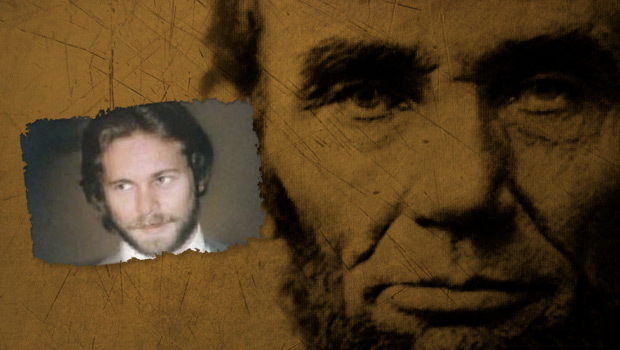
To understand the vanishing, you have to understand the man. Don Kemp wasn’t your average guy. He was a successful New York ad man, living a life many would envy. But something was churning beneath the surface. A powerful obsession had taken hold of him, a historical puzzle that demanded to be solved.
The assassination of Abraham Lincoln.
In September 1982, just two months before he disappeared, Don did the unthinkable. He quit his job. He sold nearly everything he owned. He packed his remaining belongings into his SUV and pointed it west. His destination was Jackson Hole, Wyoming. His stated purpose: to write a groundbreaking book that would rewrite the history of Lincoln’s death.
This wasn’t just a mid-life crisis. It was a complete and total life reset. He was shedding his old skin. But why? What had he found? Friends and family were baffled. He was diving headfirst into a rabbit hole, but no one knew how deep it went.
Deep Dive: The Lincoln Conspiracy Connection
Let’s be clear. Don Kemp wasn’t just planning to rehash old facts. The whispers around his project suggested he was onto something new. Something dangerous. Modern internet sleuths and cold case forums buzz with the idea that Don didn’t just believe in a conspiracy—he believed he had found new evidence, a missing link that the history books had conveniently ignored for over a century.
Was it about the Knights of the Golden Circle, a secret Confederate society rumored to have orchestrated the plot? Had he uncovered evidence that John Wilkes Booth didn’t act alone, but was part of a much larger, government-level conspiracy? Or was it something even stranger? Some theories suggest he was tracing a lost Confederate treasure, with clues hidden in the details of the assassination itself. A treasure that powerful people might still be protecting.
Whatever it was, he believed it was big enough to abandon his entire life for. That’s not a hobby. That’s a quest. And sometimes, quests attract unwanted attention.
The Final 48 Hours: A Timeline of the Bizarre
The day before he vanished, Kemp’s behavior went from eccentric to deeply strange. He was seen at a museum in Cheyenne, Wyoming. He spent two hours there, drifting through the galleries like a phantom. He spoke to no one. He just looked.
When he finally left, he did something utterly inexplicable. He left his attaché case behind. Inside were his traveler’s checks—his money for the road. His personal diaries—the very notes for his explosive book. And his driving glasses.
Think about that. You’re on a cross-country drive to start a new life. You abandon your money, your life’s work, and the one thing you need to see the road clearly. This wasn’t an accident. You don’t “forget” your entire life in a briefcase. Was this a deliberate shedding of his identity? Or a sign of a mind coming unglued under immense pressure?
It was a massive red flag. A signal flare fired into the void, but no one was there to see it.
The Ghost Car on Highway 287
The next morning, November 16th, at 10 AM, Highway Patrolman Randy Teeters was on a routine patrol when he saw it. The SUV, sitting oddly on the shoulder. The open doors flapping in the wind. It was an eerie sight, a disturbance in the vast, empty landscape.
The closer he got, the stranger it became. The engine was running, the heat blasting. The keys were in the ignition. And then he saw the footprints. A single set. Leading away from the vehicle, straight out into the desolate, frozen prairie.
Patrolman Teeters was baffled. As he later said:
“I have no idea what would inspire anybody to walk out through that prairie in the middle of winter. We considered possibly someone under medication that didn’t know what they were doing due to the medication, or being out of the medication, possibly that would affect him to the point of where they would just walk out into the middle of nowhere.”
It was the logical, procedural explanation. But it didn’t feel right. It was too clean, and too crazy, all at once.
The Frantic Search and the Impossible Clues
The search began almost immediately. The emptiness of the prairie should have made it easy. You can see for miles. A man walking should be an easy target from the air.
Deputy Rod Johnson took to the sky in a search plane, flying low over the terrain for two solid hours. He saw nothing. No man. No movement. No color out of place. It was as if the prairie had swallowed Don Kemp whole. Johnson’s assessment was chilling:
“I felt the guy was disorientated, and I felt that he didn’t want to be found. If he would’ve wanted to be found, he would have heard the aircraft, could have waved his arms, got our attention, gone up to a ridge, anywhere, and been sighted.”
He didn’t want to be found. Why? Was he hiding from his rescuers? Or was he hiding from something else?
The Riddle of the Duffle Bag
Later that day, searchers on the ground made another strange discovery. Following the lone set of footprints, they found a duffle bag. It was Don’s. But the contents made zero sense. Inside were some clothes, a teapot, and a box of laundry soap. Laundry soap? Who takes laundry soap on a winter survival trek? It felt staged. A prop left on a set.
Don’s own mother, when told about the bag, didn’t hesitate. Her words cut right to the heart of the conspiracy:
“I believe it was put there to make it look like my son had walked out there. And I don’t believe my son did.”
Was she right? Was this a piece of a carefully constructed false trail, designed to send searchers looking in the wrong direction while something else entirely was happening?
The Barn, The Fire, and The Three Socks
The tracks continued. For six miles. An impossibly long walk through the punishing landscape. They led the search party to a dilapidated, abandoned barn. Inside, they found the most baffling clues of all.
A small pile of sticks and kindling had been carefully arranged, ready to be lit. A perfect little campfire, all set to go. But it was cold. Unlit. Don had the means to create warmth, to create a signal, but he never struck the match. Why? Was he interrupted? Did he get scared off?
And then there were the socks. Three of them. Just three of Don’s socks, lying near the unlit fire. Not a pair. Three. It’s a detail so bizarre, so specific, that it screams for an explanation. Was it a code? A signal to someone he was supposed to meet? Or simply the random act of a mind in its final, chaotic moments? No one knows.
Three days after Don Kemp walked away from his car, a massive blizzard swept through Wyoming, burying the landscape, the barn, and any remaining clues under a thick blanket of snow. The search was over.
The Theories: What Really Happened in the Wasteland?
For three years, there was only silence. The case went cold, becoming another ghost story told by locals. But the questions never went away. In the vacuum of evidence, theories grew like weeds.
Theory 1: The Tragic Mental Collapse
This is the official explanation, the one that neatly ties up the loose ends. Don Kemp, stressed from his life change and possibly suffering from an undiagnosed mental illness, had a complete psychotic break. He abandoned his car, and in a state of confusion, walked into the wilderness. The scattered clothes could be explained by “paradoxical undressing,” a strange phenomenon where victims of severe hypothermia feel incredibly hot and strip off their clothes just before death. In this scenario, he prepared a fire in the barn, but was too disoriented or weak to light it before succumbing to the elements.
It makes a certain kind of sense. But it doesn’t explain everything. It doesn’t explain leaving his glasses and money behind. It doesn’t explain the odd contents of the duffle bag. And it certainly doesn’t feel right to his family.
Theory 2: Foul Play. He Was Silenced.
This is the theory that keeps the case alive in the dark corners of the internet. What if Don Kemp’s Lincoln research wasn’t just a hobby? What if he really *had* stumbled upon a dangerous secret? A secret that a powerful group, even after more than a century, would kill to protect. In this version of events, Don was being followed. He was abducted on that lonely highway. The scene was staged—the running car, the scattered clothes, the planted duffle bag, the tracks leading to the barn—all an elaborate misdirection to make it look like he wandered off and died.
Who would do it? Descendants of the original conspirators? A shadowy secret society? It sounds like a movie plot, but look at the facts. A man obsessed with a conspiracy suddenly liquidates his life, acts erratically, and then vanishes off the face of the earth, leaving behind a trail of bizarre, illogical clues. It’s a story begging for a villain.
Theory 3: The Meticulous New Identity
Perhaps we’re looking at this all wrong. What if Don Kemp wasn’t a victim at all? What if he was the master of his own destiny? Maybe the pressure of his New York life was too much. Maybe he just wanted out. Out of everything. In this theory, every strange action was a deliberate step in a meticulously planned disappearance. He leaves the briefcase to shed his identity. He stages the scene at his car to throw everyone off. The footprints leading into the prairie? A brilliant fake. While search parties were combing the empty plains and focusing on the barn, Don was long gone. Picked up by a waiting accomplice on the highway, heading towards a new life under a new name.
It’s a romantic notion, but it fits some of the pieces. A man smart enough to be a top ad exec would be smart enough to orchestrate his own vanishing act.
The Grim Discovery and the Final Question
Three years after the blizzard, in 1985, the story took its final, grim turn. A group of hunters, trekking through the wilderness, stumbled upon human remains. They were just a few miles from where Don Kemp’s SUV had been found. Dental records confirmed the impossible: it was him.
The discovery only deepened the mystery. His body was found incredibly close to the initial search area. How could a massive, two-day search, including an aerial survey, have missed him? Was he hidden so well? Or was his body not there to be found in 1982? Was it moved there later, after the trail had gone cold?
The official cause of death was undetermined due to the condition of the remains. The sheriff announced that the autopsy showed no signs of foul play. Case closed.
But how could they possibly know? After three years of exposure to the brutal Wyoming seasons, what evidence would even be left? “No signs of foul play” is not the same as “proof of no foul play.” It’s a convenient conclusion. A way to file the paperwork and close the book on a baffling case.
The book may be closed for law enforcement, but for the rest of us, the story is far from over. The image of that humming, empty car on the edge of forever is burned into the history of the unexplained. Don Kemp left behind more than just a few confusing clues. He left behind a perfect, impenetrable mystery. A man chasing a conspiracy who became one himself. The Wyoming wind still howls across that empty prairie, and it sounds like it’s keeping a secret.