Home Unexplained Mysteries Modern Mysteries Lost Treasure Spanish galleon wreck San Jose found off Colombia

Lost Treasure Spanish galleon wreck San Jose found off Colombia

0
68

The Holy Grail of Shipwrecks: More Than Gold Lies in the San José Galleon

They call it the mother of all treasures. The most valuable shipwreck in human history. A ghost story whispered among treasure hunters for three hundred years.

It’s not just a legend anymore.

Deep in the silent, crushing dark off the coast of Colombia, it rests. A time capsule from an age of empires, filled with a fortune so staggering it defies comprehension. Billions of dollars in gold, silver, and emeralds. Enough to change the destiny of a nation.

This is the story of the Spanish galleon San José. The ship they said could never be found. The prize in a war that now spans not just oceans, but centuries.

A King’s Ransom to Fund a War

To understand the San José, you have to go back. Way back.

The year is 1708. Europe is on fire. The War of the Spanish Succession rages—a sprawling, continent-spanning conflict that pitted the might of the Bourbon dynasties of France and Spain against a Grand Alliance led by Great Britain. It was a fight for a throne, for power, for control of the vast colonial wealth pouring out of the New World.

Spain, though a fading power, was desperate. King Philip V needed money to fund his armies. He needed it badly. And the source of that money lay across the Atlantic, in the gold and silver mines of Peru and Bolivia and the legendary emerald mines of Colombia.

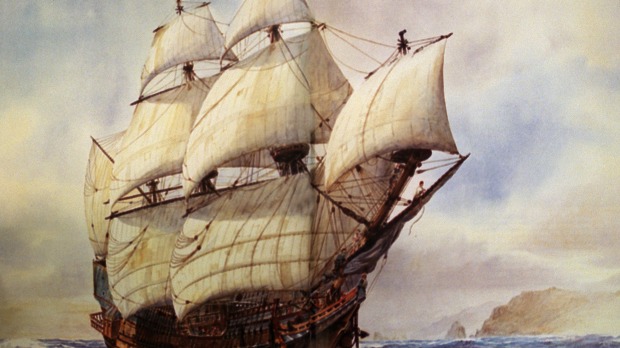
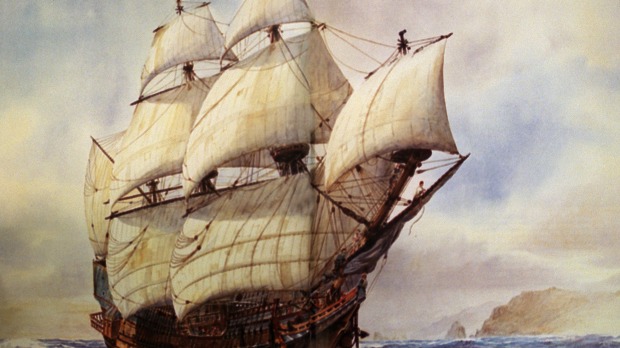
Enter the San José. She was a titan of her time. A 64-gun, three-masted galleon, a floating fortress designed to protect the Spanish treasure fleet on its perilous journey home. For its final voyage, it was loaded with a cargo that was the stuff of fantasy. An entire year’s worth of colonial wealth.

We’re talking about:

  • An estimated 11 million gold and silver coins, fresh from the mints of the New World.
  • Countless chests of gold bullion, plundered and processed.
  • A staggering collection of emeralds from the Muzo mines, considered the finest in the world, their green fire destined for the crown jewels of Europe.

This wasn’t just wealth. It was the fuel for a global war. And the British knew it.

Deep Dive: The Fiery End of the San José

On the evening of June 8, 1708, the San José was not alone. Sailing near the Rosario Islands, just off the port of Cartagena, it was the flagship of a small treasure fleet. The mood was tense. They were close to the safety of the fortified harbor, but they were in dangerous waters.

Then, silhouettes on the horizon. British warships. Commodore Charles Wager, an aggressive English commander, had been waiting. He had them cornered.

What followed was a brutal naval engagement known as Wager’s Action. Cannonballs ripped through wooden hulls. Gunpowder smoke choked the tropical air. For hours, the ships pounded each other in the fading light. The San José, a formidable warship in its own right, fought fiercely.

But Wager’s ship, the Expedition, closed in for the kill. As the two ships maneuvered within grappling distance, something went catastrophically wrong aboard the Spanish galleon. Accounts from survivors are chaotic, but they all agree on one thing.

The explosion.

A blinding flash, a deafening roar that echoed across the water. The San José’s powder magazine ignited. In an instant, the majestic galleon was torn apart, consumed by a ball of fire. The ship, its immense treasure, and nearly 600 souls—sailors, soldiers, and civilians—plunged into the depths. Gone. Vanished in minutes.

Of the 600 people on board, only 11 survived. The treasure, the king’s war chest, was lost to the sea.

And for three centuries, that’s where the story ended.

The Modern Treasure Hunt Begins

A legend was born that night. A story of a ghost ship guarding a king’s ransom. For generations, adventurers and dreamers searched for the San José. They found nothing. The ocean keeps its secrets well.

Then came the 1980s and a group of American investors called Sea Search Armada (SSA). Using cutting-edge technology for the time, they claimed to have located the debris field of the wreck in 1981. They struck a deal with the Colombian government: we found it, we’ll split the prize. It seemed simple enough.

It was anything but.

The Colombian government changed its laws, claiming 100% of any treasure found as national heritage. SSA cried foul. And so began a legal war that would last for decades, fought not with cannons but with lawyers in courtrooms in both Colombia and the United States. It was a messy, bitter dispute. Who has the right to history? The finder? The nation in whose waters it lies?

While the lawyers argued, the San José slept. In 2011, a U.S. court finally ruled that the wreck was the property of the Colombian state. It was a victory for Colombia, but they still had one massive problem.

They didn’t know *exactly* where the ship was.

Found! A Secret Kept for Years

Everything changed on November 27, 2015. But the world wouldn’t know for another week.

In a secret, state-sponsored operation, a team from the Colombian Navy, the Colombian Institute of Anthropology and History (ICANH), and international experts were scouring a new search area. They weren’t using divers. The wreck was far too deep, resting at a depth of nearly 600 meters (about 2,000 feet).

They were using an autonomous underwater vehicle. A sophisticated sea-faring drone named REMUS 6000. For days, it patiently mapped the seabed, sending back sonar images.

And then they saw it.

A field of debris. Cannons. Ceramic jars. The unmistakable silhouette of a colonial-era ship. But was it the right one? Dozens of ships have sunk in these waters over the centuries.

They sent REMUS 6000 back down, this time for a closer look, its high-resolution cameras piercing the gloom. The images that came back were breathtaking. Piles of teacups, intact pottery, stacks of cannonballs.

Then came the money shot. The smoking gun.

The cameras focused on a series of bronze cannons. And there, perfectly preserved on the barrels, were ornate, decorative dolphins. These unique cannons were a perfect match for the San José’s original manifest. There was no doubt.

They had found it.

image4

On December 5, 2015, Colombian President Juan Manuel Santos made the historic announcement. “Great news! We have found the San José galleon.” The 307-year-old mystery was solved. But a new, even more complex chapter was just beginning.

The Battle Royale: Who Owns the World’s Richest Wreck?

Finding the San José was the easy part. Deciding what to do with it? That’s a geopolitical firestorm.

Suddenly, everyone wants a piece of the pie. The legal arguments are a tangled web, a multi-headed hydra of claims and counter-claims.

Claimant #1: Colombia

The Argument: It’s in our waters, it’s our cultural heritage, and our courts have already said so. Simple as that. The government has declared the wreck a “good of cultural interest,” meaning it’s protected property of the state. They envision a new museum in Cartagena to display the findings and see the treasure as a way to fund science, culture, and research for the nation. It’s a matter of immense national pride.

Claimant #2: Spain

The Argument: Not so fast. The San José was a Spanish naval vessel—a ship of the state. Under international maritime conventions, sunken state ships remain the property of their flag nation. They also argue it’s a war grave, the final resting place of hundreds of Spanish citizens, and should be respected as such, not “plundered” for treasure. They point to UNESCO’s underwater heritage conventions to back their claim.

Claimant #3: Bolivia’s Indigenous Nations

The Argument: This is where the story takes a powerful, modern turn. The Qhara Qhara nation, an indigenous group from Bolivia, has stepped forward with a shocking and compelling claim. They argue the silver and gold on that ship wasn’t “Spanish”—it was *stolen*. It was mined from their ancestral lands, specifically the infamous Potosí mountain, by their ancestors forced into brutal slave labor by the Spanish crown. They claim they are the rightful owners of the raw materials and are demanding its return as a form of historical restitution. Their claim transforms the debate from a treasure hunt into a profound conversation about colonialism and justice.

Claimant #4: Sea Search Armada (The Americans)

The Argument: They haven’t gone away. SSA still insists they are legally entitled to a huge chunk of the treasure—as much as half—based on their original agreement and the claim that Colombia used the location data they provided in the 1980s to find the wreck. They continue to pursue legal action, arguing that Colombia’s discovery doesn’t erase their original contract. They are the persistent ghost in this international machine.

Four major claimants. Billions of dollars on the line. And no easy answers. The wreck of the San José has become more than just a shipwreck; it’s a symbol of colonial history, national pride, and the unresolved debts of the past.

What If? The Future of a Sunken Fortune

So what happens next? The truth is, nobody knows for sure. The sheer technical challenge of raising artifacts from 2,000 feet of water is immense and incredibly expensive. The political gridlock has stalled any major recovery efforts for years.

But let’s play out the possibilities. What if they actually raise it?

Imagine the moment the first chest is brought to the surface, dripping with seawater after three centuries in the dark. The potential impact on Colombia could be monumental. The most optimistic estimates place the value of the cargo at over $20 billion. That’s a figure that could transform a country’s economy, fund education, build infrastructure, and lift millions out of poverty.

But there’s a darker possibility. A “curse” of the treasure, where the immense wealth sparks corruption and political infighting, ultimately benefiting only a select few while the nation that owns it sees little change.

Then there’s the other path. What if they never raise it? Some historians and archaeologists argue for just that. Leave the San José where it is. Treat it as an underwater museum, a protected archaeological site, and a memorial to those who perished. Send robotic cameras to explore and document it, sharing the discovery with the world digitally, but leaving the site itself untouched. A gesture of respect for history and for the dead.

The story of the San José is far from over. It is a mystery that continues to unfold, a drama playing out on the world stage. It’s a tale of empires, explosions, and modern-day explorers. But most of all, it’s a reminder that the past is never truly buried. Sometimes, it’s just waiting in the dark, silent deep, ready to be discovered all over again.

Originally posted 2015-12-16 15:01:34. Republished by Blog Post Promoter