The Snowtown Barrels: A Descent into Australia’s Darkest Hour
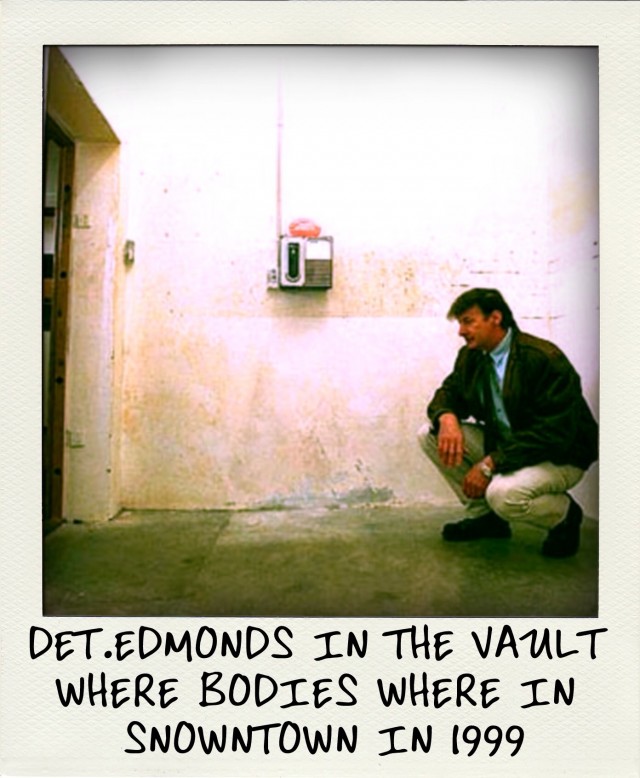
Imagine a forgotten bank. Dust motes dancing in the slivers of light piercing a grimy window. The air is thick, stale, and carries a sweet, chemical stench that claws at the back of your throat. In the corner of the disused vault, they sit. Six blue plastic barrels. Sealed tight. Unassuming. But inside? A horror beyond comprehension. A story that would stain the soul of a nation and give a quiet country town a name synonymous with pure evil.
This isn’t a movie script. This was real.
This is the story of the Snowtown murders, better known as the Bodies in the Barrels case. Between 1992 and 1999, a group of killers, led by a charismatic monster, waged a secret war against their own community in the down-and-out northern suburbs of Adelaide, South Australia. They tortured. They killed. And they did it all under a twisted banner of vigilante justice that was really just a mask for greed and bloodlust.
Forget what you think you know. The truth is far, far stranger. And infinitely more terrifying.

The Puppet Master: Who Was John Bunting?
Every dark story has its villain. This one has John Justin Bunting. To understand the Snowtown murders, you have to understand the man who pulled the strings. Bunting wasn’t some shadowy figure lurking in the alleys. He was a neighbor. A friend. To some, a protector.
Born in 1966, Bunting had a rough-and-tumble upbringing. He developed a powerful, magnetic personality. He could talk his way into or out of anything. He had an opinion on everything, and he delivered those opinions with the certainty of a prophet. In the economically depressed suburbs north of Adelaide, a place where people felt forgotten and powerless, Bunting’s confidence was a fire in the dark. People were drawn to it.
But beneath the surface, something was deeply broken. Bunting harbored a volcanic, all-consuming hatred. His primary targets? Pedophiles and homosexuals. He saw them as vermin, a blight on society that the system was too weak to handle. He appointed himself judge, jury, and, ultimately, executioner. He sold this vision of a righteous crusade to a small, loyal group of followers who saw him not as a killer, but as a hero cleaning up the streets.
Deep Dive: Forging a Killer’s Cult
Bunting didn’t act alone. He couldn’t have. He needed an audience, accomplices, and disciples. He found them in the disillusioned and vulnerable men around him.
- Robert Wagner: Often described as Bunting’s most enthusiastic partner, Wagner had a long-term relationship with one of the victims, Barry Lane. Bunting’s venomous homophobia seemed to infect Wagner, turning him against his own partner in a brutal act of betrayal. Wagner became a key player, a terrifying enforcer of Bunting’s will.
- James Vlassakis: The young, impressionable stepson of Bunting. Vlassakis was drawn into the web slowly, groomed by a man who was supposed to be a father figure. He was eventually forced to participate in the horrors, his own half-brother becoming one of the victims. His eventual confession would be the key that blew the entire case wide open.
- Mark Haydon: The quiet one. Haydon’s wife, Elizabeth, was another victim. While he was convicted for assisting in the disposal of the bodies, his exact level of involvement in the murders themselves remains a subject of debate in online forums to this day. Was he a coerced helper or a willing participant? The lines are terrifyingly blurry.
This wasn’t just a gang. It was a cult of personality, with Bunting at its center. He would hold court in living rooms, ranting about the perverts and the weaklings who were dragging society down. He made his followers feel important. Powerful. Part of a secret mission.
The Twisted Logic: Vigilantism, Greed, and Control
So, was this really about cleaning up the streets? Not a chance. The “pedophile hunter” narrative was a cover story. A brilliant piece of psychological manipulation. While some of the victims were accused of terrible things by Bunting, many were simply people he deemed “weak” or inconvenient.
The real motive was far uglier. It was about power. And money.
Before they killed their victims, they would torture them. For days. Sometimes weeks. They would force them to record messages for their families, explaining their “disappearance.” More chillingly, they forced them to reveal their bank PINs and sign social security forms. Once the victim was dead, Bunting and his crew would drain their bank accounts and start collecting their welfare checks. It was a gruesome, state-funded murder spree.
The victims were chosen because they were on the fringes of society. People who wouldn’t be missed right away. People whose disappearance could be easily explained. A disabled young man. A gay man. A single mother. They were seen as disposable assets. Their lives were cashed in for a few hundred dollars a fortnight.
A Chronology of Terror
The killing spree didn’t happen overnight. It was a slow, terrifying escalation that spanned seven years.
The Early Murders: Testing the Waters
The first known victim, Clinton Trezise, was found in 1995 near Lower Light, just north of Adelaide. At the time, police had no idea it was connected to a larger plot. Then came Thomas Trevilyan in 1997, whose death was tragically dismissed as a suicide. These early events allowed the killers to operate with a sense of invincibility. They were getting away with it.
The Escalation: Torture Tapes and Backyards
As their confidence grew, so did their depravity. The murders became more elaborate, the torture more severe. In a sickening twist, they began recording the final moments of their victims. These audio tapes captured forced “confessions” and the sounds of unimaginable suffering. They were Bunting’s trophies, proof of his power, which he would sometimes play for new recruits to test their loyalty.
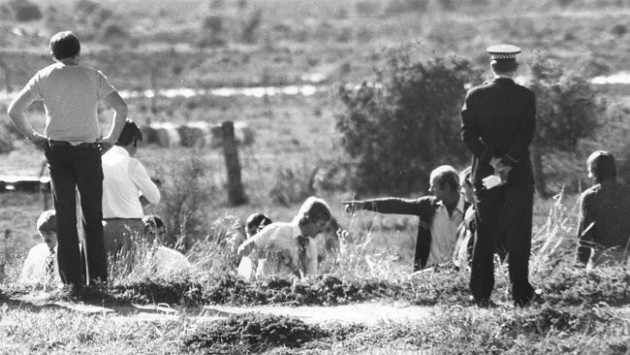
They disposed of the early bodies in whatever way they could. Two victims were found buried in the backyard of Bunting’s house in Salisbury North. A shallow grave. A dirty secret just feet from where his family slept.
Why a Bank Vault in Snowtown?
The name “Snowtown” is now infamous, but why there? None of the killers or victims were from the town. Only one victim, David Johnson, was actually killed there. The town, about 90 miles north of Adelaide, was simply the final, desperate hiding place.
By early 1999, the police were starting to connect the dots. Multiple missing persons reports from the same social circle had raised red flags. Specifically, the disappearance of Mark Haydon’s wife, Elizabeth, was drawing heat. Bunting and his crew knew the net was closing in. They were paranoid. They had to get the evidence out of Adelaide.
They needed somewhere remote. Somewhere nobody would look. They rented a small property in the sleepy town of Snowtown, which happened to contain a disused State Bank building. The vault was perfect. Strong. Secure. Forgotten. They packed the dismembered remains of eight human beings into six plastic barrels, filled them with acid, and hauled them north, hoping their secrets would stay sealed in the dark forever.
The Unraveling: A House of Cards Collapses
It was that final move that did them in. Moving six heavy barrels attracts attention, even in a quiet town. Locals started talking. Police, already hot on their trail from the missing persons cases, received tips that led them to the bank building.
On May 20, 1999, South Australian Police officers pushed open the heavy vault door. The smell hit them first. An overpowering, unforgettable odor of decomposition and chemicals. They found the barrels. The horror of what lay inside would soon shock Australia and the world.
The discovery was a bombshell. Police quickly arrested Bunting, Wagner, and Haydon. James Vlassakis, seeing the walls closing in, was the first to crack. He confessed everything, laying out the entire gruesome seven-year history in horrifying detail. His testimony became the foundation of the prosecution’s case.
The Trial That Stopped a Nation
The subsequent trial was one of the longest and most sensational in Australian legal history. The prosecution’s case was built on Vlassakis’s testimony and, most damningly, the torture tapes. Jurors were forced to listen to the recorded screams of the victims, evidence so disturbing that it left the courtroom in stunned silence.
In the end, the sentences were severe.
- John Bunting: Convicted of 11 murders. Sentenced to 11 consecutive life sentences without the possibility of parole. He is considered Australia’s most prolific serial killer.
- Robert Wagner: Convicted of 10 murders. Sentenced to 10 consecutive life sentences without parole.
- James Vlassakis: As the key witness, he pleaded guilty to four murders and received a lighter sentence of four life sentences with a non-parole period of 26 years.
- Mark Haydon: Convicted of assisting in seven murders (helping to dispose of the bodies). Sentenced to 25 years with a non-parole period of 18 years.
Modern Questions and Lingering Shadows
Decades later, the Snowtown case continues to haunt the public imagination. Online true crime communities still buzz with theories and unanswered questions. Could something like this happen today? In an age of digital footprints and constant connectivity, it seems less likely, but Bunting’s method of preying on the socially isolated is timeless.
Some internet sleuths speculate about a “lost victim.” Police have long suspected Bunting and his crew were responsible for the death of Suzanne Allen, who disappeared in 1991, a year before the official timeline of the murders began. Her body has never been found, and no one has ever been charged, leaving a frustrating and tragic question mark at the very beginning of this dark saga.
The town of Snowtown itself has struggled to escape the shadow of the crimes. For years, the “Bodies-in-Barrels-Bank” was a morbid tourist attraction. The building was eventually demolished in an attempt to help the community heal and move on, but the name remains a chilling piece of Australian history.
The Snowtown murders were not just a series of killings. They were a profound betrayal of community, a story of how a charismatic monster can twist the vulnerable into instruments of his own evil. It’s a reminder that the most terrifying threats often don’t come from strangers in the dark, but from the smiling faces we see every day. The neighbor. The friend. The man with the easy laugh and the dark secret hidden in his heart. And in the barrels.