The Cambridge Bombshell: Is Digital Immortality Within Our Grasp?
Let’s ask a question. A big one.
What if death isn’t the end? Not in a spiritual sense. Not in a religious one. But in a cold, hard, technological sense. What if your consciousness—everything that makes you, *you*—could be copied, pasted, and run on a different piece of hardware? What if you could live forever?
Sounds like something ripped from the pages of a Philip K. Dick novel, right? Science fiction. A fantasy for a rainy Tuesday afternoon.
But what if it isn’t?
What if one of the most brilliant minds at one of the world’s most prestigious universities is telling us it’s not just possible, but practically inevitable? This isn’t some fringe theory whispered in the dark corners of the internet. This is a gauntlet thrown down by a Cambridge neuroscientist, and it changes everything.
100 Trillion Connections: Cracking the Code of Consciousness
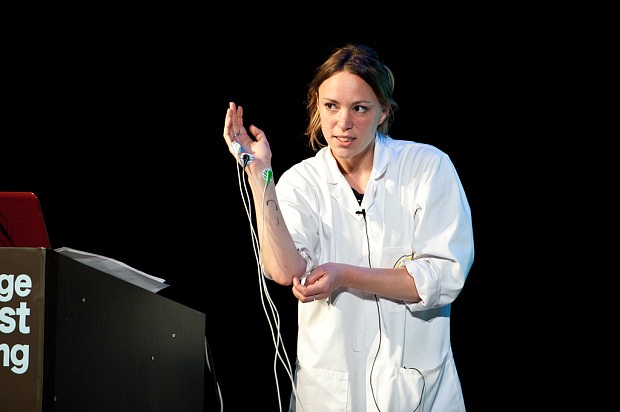
Dr. Hannah Critchlow, a respected researcher from the University of Cambridge, dropped a bombshell that sent ripples through the scientific and philosophical communities. Her proposition is as simple as it is staggering: The human brain, for all its perceived mystery and wonder, is essentially a biological computer. A ridiculously complex one, but a computer nonetheless.
And if it’s a computer, it can be reverse-engineered. Its software can be copied.
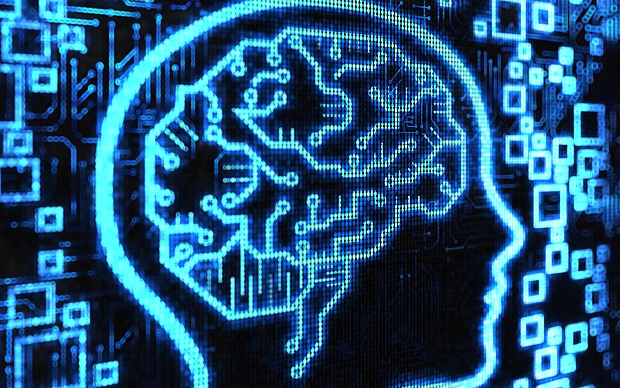
Think about the three pounds of wet, grey matter inside your skull. It’s not powered by magic. It’s a network. A sprawling, electric city of neurons and synapses firing in a symphony of thought and feeling. Dr. Critchlow points to the magic number: 100 trillion. That’s the estimated number of connections, or circuits, in your brain. One hundred. Trillion.
That number is almost too big to comprehend. There are more connections in your single brain than there are stars in our Milky Way galaxy. It’s an astronomical figure. For decades, that complexity has been the shield that protects the idea of the “soul” or some unknowable, ethereal essence of humanity.
But Dr. Critchlow argues that this complexity isn’t a shield. It’s just a blueprint.
Your Brain Isn’t Magic, It’s a Machine
Speaking at the Hay Festival, a gathering of great minds, she was asked the ultimate question: Could we download a human consciousness onto a machine?
Her answer was direct. Unflinching.
“If you had a computer that could make those 100 trillion circuit connections then that circuit is what makes us us, and so, yes, it would be possible,” she stated. “People could probably live inside a machine. Potentially, I think it is definitely a possibility.”
Let that sink in.
She’s not talking about artificial intelligence that *mimics* a human. She’s talking about *transplanting* a human. Taking the entire pattern, the whole beautiful, messy, contradictory pattern of you—your memories of childhood, the way you feel about the smell of rain, your stupid inside jokes, your deepest fears—and lifting it, bit by bit, from its biological prison.

The concept is called “whole brain emulation” or “mind uploading.” The theory is that if you could map every single neuron and every single synaptic connection and then simulate that exact structure in a powerful enough computer, the consciousness that arose from the original brain would arise from the simulation, too. It would wake up, look around its new digital world, and still feel like itself.
It’s a breathtaking idea. But it immediately crashes into a wall of terrifying questions.
The Ghost in the Machine: Would the Digital You Still Be… You?
So, we’ve cracked the code. We’ve built a computer powerful enough to handle the 100-trillion-connection matrix of your mind. The procedure is a success. A perfect, 1:1 digital copy of your brain is now running on a server. It thinks your thoughts. It remembers your first kiss. It feels your anxieties.
But what about *you*? The original you. The one made of flesh and blood, still lying on the scanner table.
Are there now two of you?
This is where the science ends and a philosophical firestorm begins. This is the stuff that keeps people up at night.
The Ship of Theseus Paradox in Your Skull
It’s an ancient thought experiment. If you have a famous ship, and over the years you replace every single plank of wood, every nail, every sail… is it still the same ship at the end? Our bodies do this naturally. Most of your cells are replaced every seven to ten years. Yet you still feel like you. You have a continuity of consciousness.
Mind uploading shatters that continuity.
It’s not a gradual replacement; it’s a duplication. The copy in the machine would believe it’s you. It would have all your memories and feel it had lived your life. But the original you would still exist, now faced with a digital doppelgänger. Or, in a more horrifying scenario, does the process of scanning and uploading require the destruction of the original brain tissue? Do you have to die to be reborn?
Suddenly, this utopian vision of digital immortality starts to look like a high-tech suicide note. You’re not saving yourself. You’re creating a perfect replica that gets to live on while you rot in the ground. It’s a copy, not a continuation. A digital ghost that inherits your life while yours ends.
This is the central, terrifying question that no one has an answer to. And it’s a debate that forces us to confront the very nature of what we are. Are we our patterns? Or are we our physical substance?
Deep Dive: The Shocking True Story of Phineas Gage
To understand the brain-as-a-machine model, we have to clear away some old, stubborn myths. Dr. Critchlow made a point to dismantle the most famous one of all: the idea that we only use 10% of our brains. She says this fallacy was even fueled by legends like Albert Einstein, who supposedly claimed his genius came from using more of his brain than the average person.
But the myth’s most famous poster child is a 19th-century railroad foreman named Phineas Gage. And his story is far more bizarre and revealing than the myth lets on.
It was 1848 in Vermont. Gage was the head of a crew blasting rock to make way for a new railway line. The process involved drilling a hole, filling it with blasting powder, and tamping it down with a long metal rod—a tamping iron. On one fateful September afternoon, a spark ignited the powder prematurely.
The explosion launched the tamping iron—over three feet long and more than an inch in diameter—like a spear. It entered Gage’s left cheek, tore through the front of his brain, and exited out the top of his skull, landing some eighty feet away.
Miraculously, he survived. He was conscious and talking within minutes. He walked to the ox cart that took him to town. The initial reports were astonishing. He seemed fine! His memory was intact. His speech was clear. He could reason. This case became Exhibit A for the theory that the brain had huge, unused reserves. If a man could have a metal pole shot clean through his head and carry on as normal, then surely most of the brain was just useless filler.
But that’s not the whole story. That’s not even the real story.
The Myth of the Unused Brain Shatters
Phineas Gage *wasn’t* fine. Not at all. While his core cognitive functions seemed okay, his personality was obliterated. The old Gage—described as responsible, well-liked, and a shrewd businessman—was gone forever. In his place was a new man. A man who was profane, impulsive, unreliable, and unable to hold a job. His friends said he was “no longer Gage.”
The tamping iron had destroyed a large part of his frontal lobes. And in doing so, it taught us one of the most profound lessons in neuroscience: specific parts of the brain do specific things. The frontal lobes weren’t “unused.” They were the seat of his personality, his ability to plan, his social filter. His case was the first real proof that our character isn’t some mystical property, but a function of a physical, mechanical structure.
The 10% myth is a comfortable lie. The truth is, you use virtually all of your brain all the time, just for different functions. When you listen to music, see a color, or recall a memory, different circuits light up. The brain is an incredibly efficient organ. There is no useless junk floating around. Every part has a purpose. And this very fact—that function is tied to physical structure—is what makes the idea of mapping and uploading it so compelling. And so frightening.
Welcome to the Matrix: What Would Life as Code Actually Be Like?
Let’s play this out. Let’s say we solve the consciousness transfer problem. Let’s say it really *is* you, and you wake up inside the machine. What then? The possibilities split into a dizzying array of utopias and dystopias.
You could live in any world you can imagine. A simulated paradise. You could walk on Mars. You could fly through the rings of Saturn. Time itself could become meaningless. You could experience a thousand years in the span of a minute of real-world time, or slow a single perfect moment down to last for an eternity. You could talk to digital versions of the greatest minds in history. You could learn anything, be anything, do anything. Disease, aging, pain—all relics of a primitive biological past.
It sounds perfect. Too perfect.
Digital Heaven… or Digital Hell?
Now, let’s look at the dark side. Who owns the server you live on? A corporation? A government? What if they decide you’re taking up too much processing power and just… delete you? Or worse, what if they decide to torture you? A simulated hell could be created just for you, running for a billion subjective years. There would be no escape. No death to save you.
What about viruses? A computer virus wouldn’t just crash your computer; it could rewrite your memories, alter your personality, or drive you into a state of digital insanity. What if your consciousness is hacked and held for ransom?
And what about society? If only the ultra-wealthy can afford to upload, we would create an immortal ruling class. A pantheon of digital gods looking down on the “mortals” left behind to suffer and die in the real world. The gap between the haves and the have-nots would become an eternal, unbridgeable chasm.
Modern internet theories and sci-fi have been warning us about this for years. Shows like *Black Mirror* paint horrifying pictures of digital consciousness gone wrong. The core idea of *The Matrix* is that we could be trapped in a simulation without even knowing it. Some fringe thinkers, like those in the “Simulation Hypothesis” communities on Reddit, argue we might already be there. Is mind uploading just a way to move from one layer of the simulation to another?
Billionaires like Elon Musk are already pouring fortunes into brain-computer interfaces with companies like Neuralink. They are building the primitive bridges that will one day connect our minds to machines. This isn’t a distant future. The first bricks of this road are being laid right now.
The Final Question That Changes Everything
We stand at a precipice. On one side is the familiar world, with all its biological limitations. The world of aging, sickness, and the final, unavoidable curtain of death. On the other side is a promise. A terrifying, seductive promise of forever.
Dr. Hannah Critchlow and her colleagues are not just exploring the brain; they are mapping the very blueprint of humanity. They are turning the key on a door we may not be ready to open. The idea that we are just a complex circuit board—just 100 trillion connections in a fragile biological machine—is either the most liberating or the most terrifying idea ever conceived.
It means our essence is transferrable. It means we are code.
So, the final question isn’t for the scientists or the philosophers. It’s for you.
When the technology is perfected, when the machine is ready and waiting, when they offer you a choice between the certainty of oblivion and a chance at digital eternity… would you press upload?