The Jungle Has Eyes: A Secret Nazi Fortress Exposed
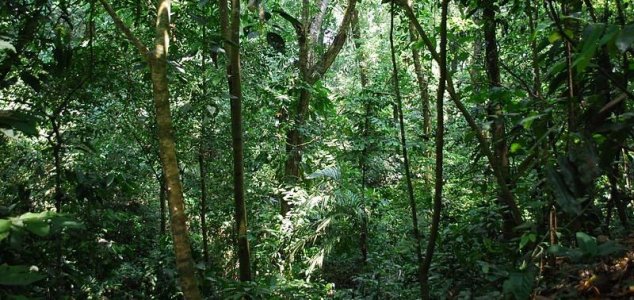
Imagine this. You are hacking through the dense, unforgiving vegetation of the Argentine jungle near the Paraguayan border. The air is thick. It’s hot. Mosquitoes are everywhere. You are in Teyu Cuare provincial park. It’s a place that feels forgotten by time. Nature rules here.
Then, your machete hits something hard.
Stone.
You push back the vines. You scrape away the moss. And you realize you aren’t looking at some ancient Jesuit ruin. You aren’t looking at a colonial outpost. You are staring directly into the dark heart of the 20th century. You are standing in a secret hideout built for the most evil men in history.
This isn’t a movie script. This isn’t fiction.
This is the Teyu Cuare bunker. A secret lair intended to house the escaping elite of the Third Reich.
A Discovery That Shook History
Back in 2015, a team of archaeologists stumbled upon something that shouldn’t have been there. Located in the northern region of Argentina, specifically Misiones, this site was a ghost town of heavy stone structures. Three buildings. Thick walls. Strategic views.
At first, local legends said it was a home for Martin Bormann, Hitler’s right-hand man. But legends are just stories, right? Scientists needed proof. They needed hard evidence.
So, Daniel Schavelzon and his team from the University of Buenos Aires got to work. They started digging. They started sifting through the dirt. And what they found sent chills down their spines.
They found coins.
German coins. Minted between 1938 and 1941. Stamped with the Swastika.
They found porcelain fragments. One piece of a plate stood out. It had an inscription that is impossible to misinterpret: “Made in Germany.”
Why would German currency and high-end porcelain from the 1940s be buried in the middle of a South American jungle? There is only one answer. This was a safe house. A bolt-hole. A panic room the size of a compound, built for when the walls finally came crashing down on Berlin.
The Master Plan: Why Argentina?
To understand this bunker, we have to look at the bigger picture. We have to look at the chaos of 1945. The Soviet Union was crushing in from the East. The Allies were sweeping in from the West. The “Thousand Year Reich” was burning to the ground.
Top-ranking officers knew it was over. But they didn’t plan on dying. They planned on disappearing.
Enter the “Ratlines.”
This was the escape network. A pipeline of forged passports, Red Cross papers, and sympathetic priests that funneled war criminals out of Europe and across the Atlantic. And where was the destination? Where was the promised land for these fugitives?
Argentina.
This isn’t just an internet theory. It is a historical fact that President Juan Perón had a fascination with the Axis powers. He admired their discipline. He admired their order. He created an environment where German officers weren’t just tolerated; they were welcomed.
The Psychology of the Hideout
Here is where things get weird. Here is the twist.
The bunker in Teyu Cuare? It was never used.
Think about the effort involved here. The architects had to transport materials deep into a hostile jungle. They had to clear the land. They had to build three massive stone structures with walls three meters thick. They built living quarters. They built a warehouse. They built an observation post to watch for enemies coming up the river.
They built a fortress because they were terrified. They thought they would be hunted. They thought they would have to live like animals, hiding in the dark, clutching their lugers, waiting for the knock on the door.
But when they arrived in Argentina? The reality was shocking.
They didn’t need to hide.
The Argentine government rolled out the red carpet. They gave them new identities, sure. But often, they let them use their real names. They lived in mansions in Buenos Aires. They drank coffee in the ski resort town of Bariloche. They worked in factories and universities.
The Teyu Cuare bunker is a monument to paranoia. It represents the fear they felt in 1944. But by 1946, they realized they had gotten away with murder. Literally.
Deep Dive: Inside the Ruins
Let’s walk through the site. Imagine you are there right now.
The location is strategic. It sits on a high point. From the observation post, you can see the Paraná River. This is the tri-border area—where Argentina, Paraguay, and Brazil squeeze together. If the authorities came from Argentina, you could hop a boat to Paraguay in ten minutes. If the Paraguayans came, you could run to Brazil. It was the perfect escape hatch.
The buildings were designed for sustainability. They weren’t just shacks. They had sophisticated masonry. The walls were thick stone, designed to stop bullets and keep the interior cool in the blistering jungle heat.
“It’s a complicated area to work in,” Daniel Schavelzon told reporters. “Lots of vegetation, impenetrable.”

He wasn’t joking. The jungle tries to eat everything. Roots tear apart stone. Vines strangle pillars. The fact that these buildings are still standing 70 years later shows you the quality of the engineering. This wasn’t a rush job. This was German precision, applied to a getaway plan.
The Artifacts Speak
The discovery of the “Made in Germany” porcelain is the smoking gun. You don’t bring your grandmother’s fine china on a camping trip. You bring it when you are moving. You bring it when you are trying to recreate a sense of “home” in a foreign land.
It speaks to the arrogance of the people who built this. They didn’t just want to survive; they wanted to maintain their standard of living. They wanted to sip tea from fine porcelain while looking out over a jungle river, thousands of miles away from the death camps they managed.
The Speculation: Who Was It For?
This is the question that keeps researchers awake at night. Who was supposed to live here?
Local lore in Misiones has whispered the name Martin Bormann for decades. Bormann was Hitler’s private secretary. He controlled the flow of information. He was powerful. And he vanished.
While DNA evidence later suggested Bormann died in Berlin, the rumors in Argentina never stopped. Why? because people saw things. They saw wealthy Germans moving through the towns. They saw trucks heading into the jungle.
Could it have been Josef Mengele? The “Angel of Death” lived in Buenos Aires for years. He eventually fled to Paraguay and then Brazil. The Teyu Cuare site is right on that escape route. It is perfectly positioned for a man on the run between those specific countries.
Or was it for someone even higher up?
The “Hitler in Argentina” Theory
We have to address the elephant in the room. The FBI declassified files. The History Channel documentaries. The endless books claiming Adolf Hitler didn’t die in the bunker in Berlin.
The theory goes like this: a submarine, a U-Boat, lands on the Argentine coast. Two figures emerge. They are whisked away to a secluded estate. Some say Bariloche. Some say Cordoba. And some point to places exactly like Teyu Cuare.
While mainstream historians stick to the suicide narrative, the existence of this jungle fortress throws fuel on the fire. If they built this secret compound in the middle of nowhere… what else did they build? Who else made it out?
The Teyu Cuare ruins prove one thing definitively: The Nazis prepared for a total escape. They poured money and resources into it. This wasn’t a fantasy. It was a construction project.
The Irony of Impunity
The most disturbing part of this story isn’t the ruins. It’s why the ruins are empty.
The hideout, comprised of three stone buildings, was never actually used because the Nazis who fled to Argentina lived with total impunity. They didn’t need to hide in the bushes. They were out at dinner parties.
Eichmann worked at a Mercedes-Benz factory. Priebke was a respected member of his local school board. They integrated. They became part of the fabric of South American society.
The Teyu Cuare bunker stands as a strange symbol. It is a symbol of a fear that turned out to be unnecessary. They feared justice. But in the late 1940s, justice was blind. The world wanted to move on. The Cold War was starting, and suddenly, yesterday’s enemies were today’s intelligence assets.
Modern Mysteries
Today, the site is a haunting place. The jungle is slowly reclaiming the stones. Lizards sun themselves on walls built by war criminals. Tourists hike through, snapping photos, maybe not fully grasping the darkness of the ground they stand on.
“Analyzing the material could take many months,” Schavelzon said at the time of the discovery. “It’s even possible there are other buildings we still haven’t found.”
That is the thought that lingers. The jungle is vast. Teyu Cuare is just one spot. How many other stone bunkers are out there, hidden under seventy years of vines and dirt? How many other “Made in Germany” plates are buried in the mud, waiting for a machete to hit them?
We think we know the history of World War II. We think we know how it ended. But when the earth coughs up a secret fortress in the Southern Hemisphere, we are reminded that history is full of shadows.
The Final Word
The Teyu Cuare hideout is a physical proof of a conspiracy that turned out to be true. The Ratlines were real. The escape plans were real. The intent to rebuild the Reich in the jungle was real.
They built the walls. They minted the coins. They brought the plates.
They just never had to use them. And that is perhaps the scariest fact of all.
Originally posted 2015-09-14 13:55:58. Republished by Blog Post Promoter