Imagine this. You’re sitting in a small tin boat. The sun is setting, casting long, bruised purple shadows across the water. It’s quiet. Too quiet. Just the lap of water against aluminum. Then, without a sound, without a splash, the entire river underneath you erupts.
You aren’t just tipped over. You are launched.
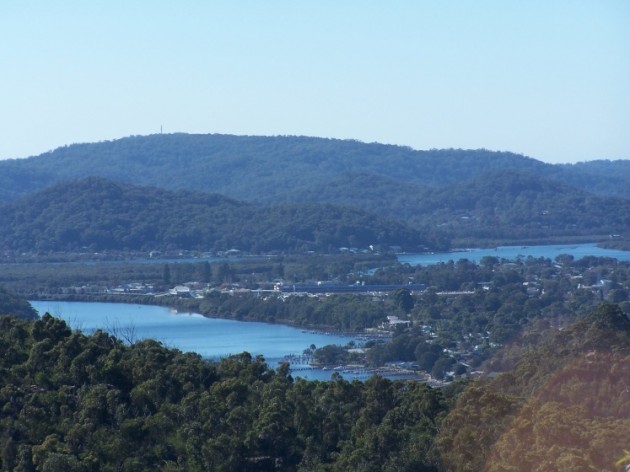
This isn’t a scene from a Hollywood creature feature. This is the reality whispered about in the small fishing communities just north of Sydney, Australia. We are talking about the Hawkesbury River. To the uninitiated, it’s a scenic waterway. A place for weekend houseboats and jet skis. But for those who know the history—the real history—it is the hunting ground of something ancient.

The Shadow Beneath the Surface
Welcome to the mystery of the Hawkesbury River Monster. If you think the Loch Ness Monster is the only aquatic celebrity worth your time, think again. Nessie is a tourist attraction. The thing in the Hawkesbury? It’s a phantom. A violent one.
For decades, locals have refused to swim in certain bends of the river. Fishermen talk about spots where the fish just stop biting, where the birds go silent, and where the sonar depth finders go completely haywire before spotting something massive moving directly under the hull. We aren’t talking about a big fish. We are talking about a biological anomaly that shouldn’t exist.
Ancient Warnings: The Mirreeulla
Before we get into the modern terrifying encounters, we have to look back. Way back. We tend to think of history as something written in books by guys in wigs, but the true history of Australia is painted on rock walls.
The Dharug people have lived in this region for tens of thousands of years. They didn’t just survive the land; they understood it. They mapped it. And they feared specific parts of the river.
Their oral history speaks of the “Mirreeulla.”
This isn’t a fairy tale used to scare kids away from deep water. The Mirreeulla is described as a giant water serpent. A spirit creature, yes, but one with a physical form. The Aboriginal rock art found in the area—some of it dating back 3,000 to 4,000 years—shows a creature that looks impossibly similar to the modern descriptions we hear today. Long neck. Massive body. Flippers.
Think about that for a second.
Four thousand years ago, an artist painted a creature on a rock wall. Today, a guy with an iPhone sees the same thing. Coincidence? I don’t buy it.
The 1980s: When the Legend Became Real
Let’s fast forward. The 1980s. Big hair, neon clothes, and apparently, giant sea monsters attacking boats. This is the era when the Hawkesbury legend went from a campfire story to a police matter.
The most famous account involves a couple of fishermen in a small aluminum boat. Now, Aussie fishermen are a tough breed. They don’t scare easily. They know what a shark looks like. They know what a crocodile looks like (though you shouldn’t see crocs this far south, which is a whole other mystery).
These guys were drifting. Relaxing. Suddenly, the water didn’t just ripple. It bulged.
According to the report, a massive creature surfaced directly beneath their keel. This wasn’t a nudge. The force was catastrophic. The boat was reportedly catapulted out of the water. We are talking about a vessel weighing hundreds of pounds, plus two grown men and gear, thrown over 3 meters (almost 10 feet) into the air.
Try to imagine the physics required to do that. A whale breaching? Maybe. But in the river? The boat smashed back down, terrified the occupants, and left them with a story that the local papers couldn’t get enough of.
The Pattern of Disappearances
It gets darker. Much darker.
That 1980s incident was lucky. The men survived. But the Hawkesbury has a grim reputation for swallowing people whole. There are files—reports of boats found adrift. Engines idling. Fishing gear set up. Beers half-drunk in the stubby holder.
But the occupants? Gone.
Usually, authorities write these off. “Accidental drowning.” “Fell overboard.” “Currents.” But the locals whisper something else. They talk about boats found smashed. Not just capsized, but broken. Crushed. Like something grabbed the gunwale and snapped it.
In the 19th century, settlers were warned by the Aboriginal locals about the “Moolyewonk” or the Mirreeulla. They were told explicitly: do not go to the river bank alone. Women and children were reportedly snatched from the shore. One moment they were washing clothes or playing; the next, a swirl of water, a scream, and silence.
Anatomy of a Nightmare: What Is It?
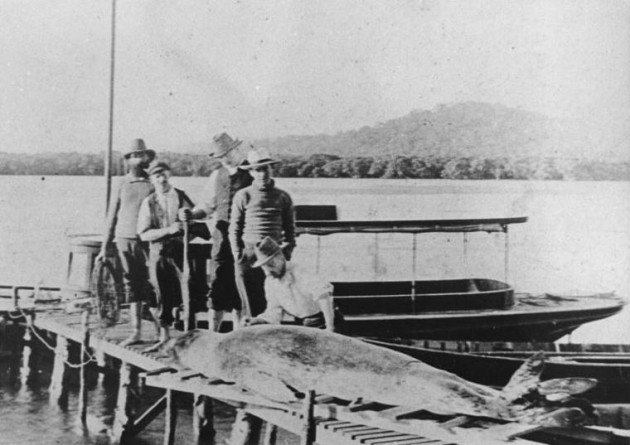
So, what are we looking at here? If we piece together the sightings from the 1800s all the way to the YouTube era, a consistent picture starts to form. And frankly, it looks prehistoric.
The Head: Snake-like. Sleek. Often described as having eyes that reflect light like a cat or a crocodile.
The Neck: Long and tapered. This is the classic “periscope” feature reported in almost every lake monster sighting globally.
The Body: Bulky. Massive. Dark skin, sometimes described as mottled or leathery like an eel.
The Limbs: This is where it gets interesting. Two sets of flippers. Not fins. Flippers.
Does this sound familiar? It should. It matches the description of a Plesiosaur almost perfectly. The Plesiosaur was a marine reptile that supposedly went extinct about 66 million years ago. Supposedly.
But here is the thing about the ocean (and deep river systems connected to it): we know less about what’s down there than we do about the surface of Mars. The Coelacanth was a fish thought to be extinct for millions of years until someone caught one in 1938. Why is it so impossible that a population of plesiosaurs—or something related to them—survived in the deep, cavernous waterways of Australia?
The Slide Marks: Physical Evidence?
Ghosts don’t leave tracks. Monsters do.
One of the most chilling aspects of the Hawkesbury mystery isn’t what people see in the water; it’s what they find on the land. There have been repeated reports of strange “slide marks” on the muddy banks of the river.
These aren’t crocodile slides. They are too wide. Too heavy. They suggest a creature of immense weight dragging itself out of the murky depths and onto the shore. Why? To sun itself? To hunt? To breed?
The idea of an aquatic monster is scary enough. The idea that it can come out of the water and chase you on the mudflats is the stuff of nightmares.

The Geography of Fear
Why the Hawkesbury? What is it about this specific river that attracts a cryptid? If you look at the topography, it makes sense. The Hawkesbury isn’t a shallow creek. It is a drowned river valley. It is ancient, twisting, and in some places, incredibly deep.
The river connects to the ocean, but it winds deep inland, creating a brackish environment where salt and fresh water mix. This is a buffet for predators. Bull sharks are known to swim miles up the river. It’s a nutrient-rich highway.
But more importantly, the riverbed is complex. There are holes. Drop-offs. Underwater caves that divers are too terrified to map. If a creature wanted to hide, to sleep during the day and hunt at night, the Hawkesbury is the perfect hotel.
Some researchers have suggested that the creature might be migratory. Maybe it spends time in the open ocean and comes into the river to breed. This would explain why sightings happen in bursts—years of silence, followed by a sudden wave of terror.
Alternative Theories: If Not a Dinosaur, Then What?
Okay, let’s play devil’s advocate. Let’s say it’s not a dinosaur. What else could be launching boats into the air?
The Super-Eel Theory: Australia is home to massive long-finned eels. They grow big. But could they grow monster big? Some cryptozoologists think that under the right conditions (deep water, abundant food, genetic quirks), an eel could grow to 20 or 30 feet. An eel that size would be aggressive. It would have the power to capsize a boat. And in the dark water, a thick eel body looks a lot like a serpent.
The Lost Seal Theory: Sometimes seals wander far from home. A large leopard seal—which is a vicious predator—could technically make it into the river. They have long necks and flippers. But a seal doesn’t fit the “snake head” description, and a seal isn’t likely to toss a boat three meters into the sky unless it’s on steroids.
The Military Connection? Here is a modern conspiracy for you. There are naval bases not far from the region. Submarines. Experimental tech. Could the “monster” be a misidentified military drone or a black-ops submersible? It would explain the metallic “hump” some people claim to see. But it doesn’t explain the Aboriginal rock art from 4,000 years ago. Unless the military has time machines, that theory hits a wall.
The Cryptozoology Community Weighs In
Australia is a hotspot for high-strangeness. You have the Yowie (Bigfoot’s cousin) in the mountains, and the Bunyip in the billabongs. The Hawkesbury Monster fits perfectly into this ecosystem of the unexplained.
Rex Gilroy, perhaps Australia’s most famous cryptozoologist, spent years gathering evidence on this creature. He collected hundreds of reports. He believed that we are dealing with a living fossil. A remnant population.
Gilroy’s files are filled with sketches from eyewitnesses who had never met each other, yet drew the exact same thing. That is the smoking gun. When a fisherman in 1965 draws the same creature as a tourist in 2010, you have to pay attention.
Modern Tech vs. Ancient Beast
You would think that in the age of Google Earth and 4K drone footage, we would have caught this thing by now. But water is the ultimate hider of secrets. The Hawkesbury is murky. Visibility is often less than a foot.
However, recent internet sleuths have started scouring satellite imagery. Every now and then, a thread pops up on Reddit or 4chan. Someone finds a wake in the water that looks too big for a boat. A dark shape submerged near a jetty. Are these digital glitches? Or are we catching glimpses of the Mirreeulla surfacing for air?
Fishermen today use high-tech sonar. I’ve chatted with guys who swear they’ve marked “biologicals” (living things) on their screens that were bigger than their own vessels. They watch the blip move, dive, and vanish. They don’t stick around to drop a line. They start the engine and get the hell out of there.
Conclusion: The Water is Deep and Dark
So, is the Hawkesbury River Monster real? Or is it just a mix of logs, shadows, and overactive imaginations fueled by too many beers?
The skeptics will say it’s impossible. They will cite biology and population density. But the skeptics weren’t in that aluminum boat in the 1980s. They didn’t feel the hull buckle. They didn’t feel the G-force as they were tossed into the air by something powerful enough to treat a boat like a bath toy.
The Aboriginal elders knew the truth thousands of years ago. They painted it on the walls to warn us. They named it Mirreeulla. They told us to respect the river, to fear the deep holes, and to watch the banks.
We ignored them. We built holiday homes and jetties. We bought speedboats. But the river remembers.
Next time you are in Sydney, drive north. Stand on the banks of the Hawkesbury at dusk. Watch the water. Wait for the silence to fall. And if you see a ripple that goes against the current, or a shape that looks a little too much like a snake rising from the depths… run.
Originally posted 2015-07-22 14:51:12. Republished by Blog Post Promoter