Home Unexplained Mysteries Modern Mysteries Russian Mystery – The Blazing Orb Of Chelyabinsk

Russian Mystery – The Blazing Orb Of Chelyabinsk

0
56

The Chelyabinsk Event: The Day the Sky Fell and Something Else Watched

February 15, 2013. A day like any other in the industrial Russian city of Chelyabinsk. People were driving to work. Kids were heading to school. The sun was rising over the frozen landscape. And then, without a single warning, the sky was torn open by a second sun.

It was brighter than anything imaginable. A blinding, impossible light that burned with the intensity of 30 suns, painting the snow-covered ground in eerie, apocalyptic shadows. It came from nowhere. A silent killer. Traveling at over forty thousand miles per hour, the cosmic bullet screamed through the upper atmosphere, a harbinger of chaos unseen by any telescope on Earth. For a few terrifying seconds, it was the brightest object in the sky.

Then came the sound.

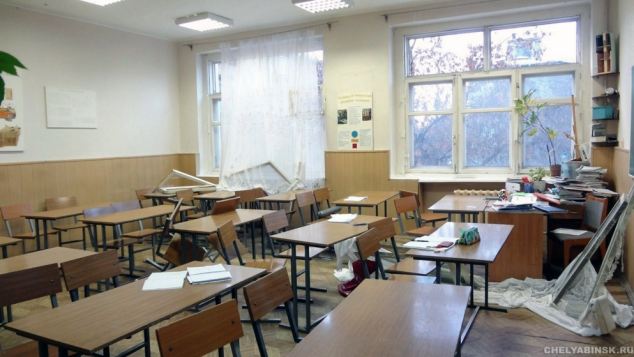
A delayed, cataclysmic explosion that felt like the end of the world. The airburst, the largest recorded since the mysterious 1908 Tunguska Event, detonated with the force of nearly 500 kilotons of TNT. A cosmic shotgun blast. The shockwave ripped through the city, shattering windows in thousands of buildings, peeling doors from their hinges, and collapsing the roof of a zinc factory. Panic erupted. Car alarms blared in a chaotic symphony. Over 1,200 people were injured, not by the impact itself, but by the flying shards of glass from windows they had rushed to, wondering what that impossible light was.

This wasn’t a movie. It was real. And terrifyingly, no one—not NASA, not the Russian space agency, no one—saw it coming. It proved a chilling point: our planet is a target in a cosmic shooting gallery, and our defenses are terrifyingly blind. A slightly different angle, a slightly larger rock, and Chelyabinsk could have been a crater.

Russian Mystery – The Blazing Orb Of Chelyabinsk

But the official story, of a random asteroid slipping past our defenses, is where the simple explanation ends and the deep mystery begins. Because what happened in the weeks *after* the fire fell from the sky is arguably far stranger. The people of Chelyabinsk were less concerned with the next rock from space and more concerned with what the first one might have attracted.

More Than a Meteor? The First Wave of Questions

Thanks to the prevalence of dashcams in Russian vehicles (a cultural quirk born from insurance fraud concerns), the Chelyabinsk event became the most well-documented meteor impact in human history. The internet was flooded with hundreds of angles, all showing the same terrifying spectacle. But as people poured over the footage, frame by frame, anomalies began to emerge.

Whispers turned into theories. Some clips appeared to show a small, fast-moving object catching up to the meteor and striking it from behind. A collision. An interception. The meteor then seems to violently fracture and explode. Coincidence? Or was the Chelyabinsk meteor shot down?

The idea sounds like science fiction, but the footage is tantalizing. Skeptics quickly dismissed it as a digital artifact, a lens flare, or another piece of debris breaking off the main body. Yet, to many online sleuths, it looked deliberate. Purposeful. As if some unseen force intervened to shatter the main bolide, preventing a direct, city-destroying impact and instead causing an airburst that, while damaging, was infinitely less catastrophic.

Was it a secret Russian air defense system? A technology far beyond what the public knows? Or was it something else entirely? Something not of this world?

The Tunguska Connection: History’s Eerie Echo

You can’t talk about a massive explosion over Russia without mentioning Tunguska. In 1908, a similarly titanic blast flattened over 800 square miles of Siberian forest. No crater was ever found. No significant meteor fragments were recovered. The event remains one of the 20th century’s greatest unsolved mysteries.

Explanations have ranged from a comet exploding to a mini-black hole passing through the Earth. But more exotic theories have always lingered. Nikola Tesla’s “death ray”? An exploding alien spaceship? The parallels to Chelyabinsk are uncanny. Both were massive explosions over Russia, both came without warning, and both left a wake of high strangeness and unanswered questions. It’s as if this part of the world is a magnet for bizarre celestial encounters. Did the same phenomenon, or the same *intelligence*, play a role in both events over a century apart?

After the Fire, An Unearthly Calm

In the weeks that followed the February explosion, Chelyabinsk tried to return to normal. The broken glass was swept up, windows were replaced, and the world’s media packed up and went home, satisfied with the story of a random cosmic encounter. But a palpable sense of unease remained. The citizens of this industrial city now had a new habit: looking up. They were jumpy. A sudden noise, a bright light—it all brought back the memory of that terrifying morning.

The city was on edge. And that’s when the sky started doing strange things again.

It began with a fog. Not a normal fog, but an eerie, glowing mist that descended on parts of the city one night. It didn’t seem to roll in; it simply… appeared. It clung to the ground, reflecting the city lights in a weird, pulsating luminescence. It was unsettling. Unnatural. Meteorologists offered a mundane explanation: “ice crystals.” They proposed that under the right atmospheric conditions, streetlights could reflect off tiny frozen particles in the air, creating a “light pillar” effect or a glowing haze. A plausible, if boring, answer. It explained the glowing fog, perhaps. But it did nothing to explain what came the very next night.

The Silent Orb: A Celestial Sentinel

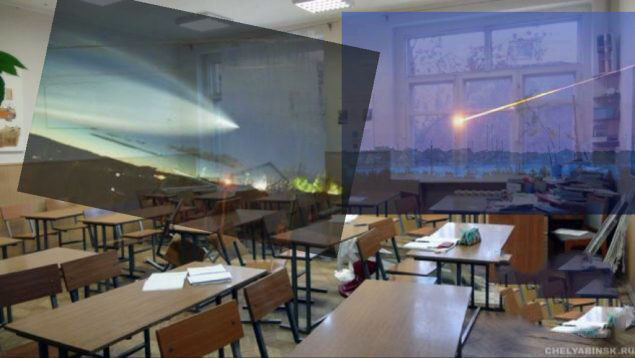
The night after the glowing fog, it appeared. A giant, luminous orb. It hung silently in the night sky over the city, a perfect, brilliant sphere of light. It wasn’t a plane. It wasn’t a helicopter. It made no sound. It didn’t move, it just… hovered. A silent, celestial sentinel watching over the wounded city.

Dozens, then hundreds, of people saw it. Photos and videos quickly appeared online. Unlike the frantic, shaky footage of the meteor, these were images of something calm, deliberate, and utterly baffling. It was there for a significant period, a beacon of impossible light, before vanishing as mysteriously as it arrived.

Russian Mystery – The Blazing Orb Of Chelyabinsk

Now the official explanations felt thin. Could this giant, stationary orb also be a trick of light on ice crystals? That seemed like a stretch. A very big stretch. The object appeared solid, self-luminous, and completely out of place. To have two completely separate, bizarre atmospheric phenomena in the exact same location just weeks after a historic meteor strike? The odds against coincidence were astronomical. The whispers started again, louder this time. The meteor wasn’t the end of the story. It was the beginning.

Connecting the Dots: Was Someone Watching?

The appearance of the orb changed everything. It reframed the entire event from a random act of nature into a possible sequence of intelligent actions. The puzzle pieces were on the table: a surprise meteor, a potential mid-air interception, a weird glowing fog, and a silent, hovering observer. How do they fit together? The theories that emerged from the digital shadows are as mind-bending as the events themselves.

Theory 1: The Extraterrestrial Cleanup Crew

This theory proposes that the meteor wasn’t just a rock. Perhaps it was an alien probe that malfunctioned. Or maybe it carried some form of extraterrestrial microorganism or technology. The initial explosion was its violent, unplanned arrival. The orb that appeared weeks later? That was the cleanup crew. A second, intelligently controlled craft sent to survey the damage, analyze the fallout, and perhaps even retrieve any technology or biological material that survived the crash. The glowing fog could have been a byproduct of its energy field or propulsion system as it scanned the area at low altitude. In this scenario, humanity wasn’t the intended audience; we were just ants witnessing the gardeners tending to a mess in our backyard.

Theory 2: The “Guardian” That Struck First

This is perhaps the most popular and hope-filled theory. It builds on the “interception” footage. The idea is that some form of advanced intelligence—alien, interdimensional, or maybe even a time-traveling human faction—is actively monitoring our planet. They are cosmic guardians. When the Chelyabinsk meteor posed a direct threat, they acted, using an unknown weapon to shatter it at a safe altitude. The orb was a follow-up. A drone sent to confirm the threat was neutralized and to observe our reaction. Are we being protected? If so, by whom? And why reveal themselves, even fleetingly, after the event? Was it a warning? A calling card?

Theory 3: A Secret Russian Weapon in the Sky

Not every theory needs to involve aliens. The region around Chelyabinsk is home to numerous military installations and sensitive sites, including the Mayak nuclear facility. What if the meteor was on a collision course with one of these locations? The Russian government, using a top-secret, next-generation defense system (perhaps a directed energy weapon), might have destroyed the object. The orb and the fog could be the visual artifacts of this new technology being tested or deployed. The orb itself might have been an advanced surveillance drone monitoring atmospheric conditions after the weapon was fired. The official story of a “meteor” would be the perfect cover to hide a technology that would change the global balance of power overnight.

What Do We Really Believe?

Of course, for every extraordinary theory, there is a mundane explanation. The “interception” is a video artifact. The glowing fog and the orb are both complex and misunderstood light pillar phenomena caused by ice crystals and the city’s industrial lights. The timing is all just a wild, improbable coincidence. Many UFO researchers themselves concede that the presence of ice fog at the time makes visual phenomena difficult to trust.

But can we really dismiss it all so easily? Multiple eyewitnesses. Photographic evidence. A sequence of events so strange it feels scripted. To believe the skeptical view, you have to accept that a once-in-a-century meteor strike was followed, by pure chance, by a series of exceptionally rare and visually baffling weather events in the exact same location.

Which requires more faith? Believing in coincidence, or believing that something happened over Chelyabinsk that we do not understand?

The sky over Russia is quiet now. The fragments of the meteor have been collected, studied, and placed in museums. The broken windows are long repaired. But the questions remain, hanging in the air like that silent, luminous orb. We saw the fire. We heard the explosion. But what was it that watched from the darkness afterward? Was it a trick of the light? Or was the Chelyabinsk event a brief, terrifying glimpse behind a curtain we never even knew was there?

Originally posted 2016-09-22 16:28:15. Republished by Blog Post Promoter