Home Weird World Photo Galleries Modern Ghost Town – Beichuan

Modern Ghost Town – Beichuan

0
69

The City That Died: Uncovering the Frozen-in-Time Secrets of Beichuan

Picture a city. Not a bustling metropolis. Not a quiet suburb. Picture a city where every clock is wrong, but also perfectly right. A city where the clocks are all stopped at the exact same moment: 2:28 PM.

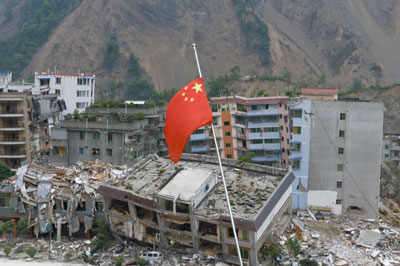
Apartment buildings lean against each other, locked in a permanent, silent embrace. Cars lie crushed under tons of concrete, their metal skins peeled back like fruit. School notebooks lie open on dusty desks, the final lessons never finished. It’s a place where time itself was violently, brutally murdered.

This isn’t the set of a post-apocalyptic movie. This isn’t a thousand-year-old ruin from a lost civilization.

This is Beichuan. A modern ghost city. A scar on the face of the Earth, deliberately preserved.

Most disasters are cleaned up. The rubble is cleared, memorials are built, and life, eventually, moves on. But not here. Here, the authorities made a different choice. A stranger choice. They decided to leave the city exactly as it was on the day it died. They sealed it off, turning an entire urban center into a massive, open-air tomb.

Why? The official story is one of remembrance. But as you dig deeper, the questions start to pile up. What really happened in Beichuan? And what secrets are still buried beneath the rubble of this city that was frozen in time?

The Day the Mountains Roared

May 12, 2008. It was a Monday. An ordinary afternoon in Sichuan province, a region in China known for its spicy food and giant pandas. Kids were in school, just an hour or so from the final bell. People were at work, thinking about what to make for dinner. The world was turning as it always did.

Then, at 2:28 PM local time, it stopped.

Without warning, the ground began to shake. This wasn’t a minor tremor. This was a monster. A magnitude 7.9 earthquake, its epicenter ripping through the mountainous terrain. The Longmenshan Fault, a colossal fracture in the Earth’s crust where the Tibetan Plateau crashes into the Sichuan Basin, had ruptured with unimaginable force. The energy released was equal to thousands of atomic bombs.

For nearly two minutes, the world became a violent, liquid nightmare. The ground didn’t just shake; it rolled in waves. It bucked. It tore itself apart.

Beichuan: Trapped in the Jaws of the Valley

While the quake devastated a massive area, the fate of Beichuan was uniquely horrific. The city was built, as many are, in what seemed like a picturesque location: a narrow river valley, nestled between towering, steep mountains. It was a deathtrap.

When the shaking started, Beichuan was caught in a deadly geological vise. The mountains didn’t just tremble. They collapsed.

Entire mountainsides liquefied, unleashing landslides of rock and earth that moved at terrifying speeds. They didn’t just slide; they roared down into the valley, swallowing whole sections of the city in an instant. Imagine looking out your window and seeing not a street, but a tidal wave of solid ground coming straight for you. There was no time to run. No place to hide. One of the main landslides was estimated to be over 120 million cubic meters of rock and debris. It buried a huge portion of the old city center under dozens of feet of earth.

Beichuan

The buildings that weren’t buried were torn to shreds by the seismic waves. Over 80% of the structures in Beichuan either collapsed immediately or were damaged so severely they were on the verge of falling. The city was erased in less than 120 seconds.

The official death toll for the entire earthquake is staggering, approaching 70,000 people, with tens of thousands more missing and millions left homeless. In Beichuan alone, a city of around 20,000, it’s estimated that nearly half its population perished that afternoon.

A Ghost City by Decree

In the chaotic aftermath, a decision was made. It was an unprecedented choice in modern history. The surviving buildings were too unstable. The risk of more landslides from the fractured mountains was too high. The ground itself was fundamentally unsafe.

Beichuan would not be rebuilt. It would be abandoned.

But they didn’t just walk away. And they didn’t tear it down. The Chinese government announced that the ruins of Old Beichuan would be preserved. The entire dead city would be turned into the “Beichuan Earthquake Ruins Memorial.” A state-protected relic.

Think about that. An entire city, filled with the personal belongings and final moments of thousands of souls, cordoned off and turned into a museum. A walk-in mausoleum. Visitors can now walk along designated paths and gaze into the skeletal remains of apartment blocks, see the mangled steel of a destroyed school, and feel the chilling silence that hangs over the valley.

The official reason is powerful and understandable: to serve as a memorial to the victims and a stark, unforgettable reminder of nature’s power. A place for geological study. An educational tool for future generations on disaster preparedness.

But is that the whole story? Or was it also the easiest way to handle a situation spiraling out of control?

The Whispers from the Rubble: What Aren’t They Telling Us?

This is where the official narrative starts to fray at the edges. When you have a tragedy of this scale, combined with an information-controlled state, you get questions. Lots of them. And the internet has been buzzing with theories and hushed conversations for years.

Deep Dive: The “Tofu-Dreg” Schoolhouse Scandal

Perhaps the most heartbreaking and infuriating part of the Sichuan earthquake story is what happened to the children. Thousands upon thousands of students were killed when their schools collapsed on top of them. An entire generation, wiped out.

But here’s the disturbing pattern that emerged: in many towns, while the flimsily built schools crumbled into dust, the government buildings and offices nearby often remained standing, largely intact.

This led to the horrifying and widespread accusation of “tofu-dreg schoolhouses” (豆腐渣工程). It’s a Chinese phrase for shoddy, poorly-engineered construction, implying the buildings were as weak as tofu. Grieving parents and activists began demanding answers. They claimed that corrupt local officials had siphoned off money meant for proper building materials, using cheap concrete, insufficient rebar, and cutting every corner imaginable to line their own pockets.

The schools were death traps waiting for a disaster.

In Beichuan, the collapse of Beichuan Middle School was a focal point of this rage. Hundreds of students were buried alive. By preserving the entire city, were officials also preserving, and perhaps controlling, the evidence of this scandal? It’s easy to dismiss as a conspiracy, but the images don’t lie. You can see the pancaked floors of the school, a stark contrast to other, more solidly built structures nearby. By turning the site into a state-controlled memorial, the authorities control the narrative. You see what they want you to see. Independent investigation becomes nearly impossible.

The Forbidden Zones

While the memorial allows visitors, vast swaths of the Beichuan ruins are completely off-limits, patrolled and guarded. The official reason is safety. The ground is unstable, buildings could still collapse, and the landslide zones are dangerous. Logical. Plausible.

But online forums and alternative news circles tell a different story. Some theories suggest the cleanup crews found things they weren’t supposed to find. Was there a secret military or research facility in the valley that was exposed by the landslides? Did the earth’s rupture uncover something ancient and strange? It sounds like science fiction, but in a place of such immense tragedy and secrecy, the imagination runs wild.

A more grounded theory points back to the corruption angle. Are the off-limits zones simply the areas with the most damning evidence of shoddy construction, kept away from the prying eyes of journalists and citizen investigators? By restricting access, you control the story. It’s a classic playbook.

A Tale of Two Cities: The New Beichuan

While Old Beichuan lies in state, its ghost haunting the valley, a new city has risen from the ashes. About 15 miles away, on a safer, flatter plain, the new Beichuan County seat was built. Its name is Yongchang, which means “Eternal Prosperity.”

The contrast is jarring. Yongchang is modern, meticulously planned, and built to the highest seismic standards. It’s a city born of grief but designed for the future. The survivors of the quake were relocated here, given new homes, new schools, and new lives.

But can you ever truly escape a shadow that large? Many residents of Yongchang bear the invisible scars of 2:28 PM. They live their modern lives, but a part of them is forever buried back in that silent valley. Many make pilgrimages back to the ruins, to burn incense and leave offerings for the family members and friends they lost. They stand at the barricades and look upon their former homes, now just monuments of twisted metal and broken concrete.

The existence of the new city makes the old one even more profound. One is a symbol of resilience and the future. The other is a permanent, physical manifestation of a nightmare. A wound that will never be allowed to heal over.

A Warning Etched in Stone

So what is Beichuan, really?

Is it simply the world’s largest and most tragic memorial? A heartbreaking tribute to tens of thousands of lives cut short?

Or is it something more? A cover-up, frozen in place? A massive piece of evidence in a crime of corruption and negligence, cleverly disguised as a national monument?

Maybe it’s all of these things at once.

It stands as a chilling monument to the raw, untamable power of our planet. A reminder that the ground beneath our feet is not as solid as we like to believe. It’s a testament to the strength of the survivors who had to build a new world next to the ruins of their old one.

But it also remains a place of deep, unsettling questions. The silence of the valley feels heavy, weighted by the stories that were never told and the secrets that were buried, perhaps forever, on that terrifying afternoon. The clocks in Beichuan are stopped at 2:28 PM. But for those who seek the truth, the questions have never stopped ticking.

Originally posted 2016-03-07 16:28:05. Republished by Blog Post Promoter