The Ghost Fortune: Is Pablo Escobar’s $30 Billion Treasure Still Buried?
Let’s get one thing straight. We’re not talking about a drug lord. We’re talking about a financial supernova. A man who became a narco-nation unto himself.
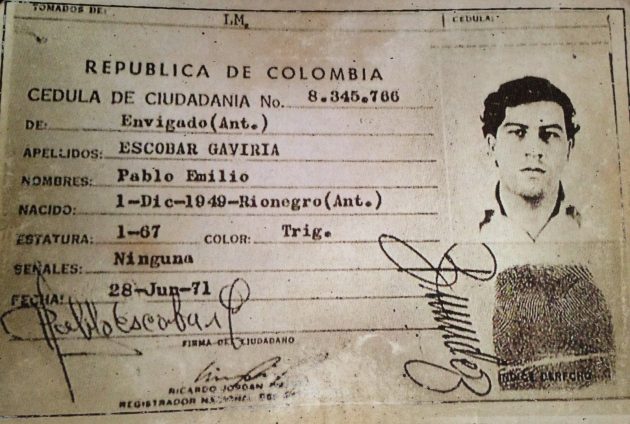
Pablo Escobar.
The name itself feels heavy. It echoes with stories of unimaginable violence and even more unimaginable wealth. At his peak in the 1980s, the head of the Medellín Cartel wasn’t just a criminal; he was one of the richest men on the planet. Period. Forbes listed him as the world’s seventh-richest man, but everyone knew that was a wild guess. A lowball estimate. The real numbers were simply too insane to track.
His operation was dropping 15 tons of cocaine into the United States. Every. Single. Day. He controlled 80% of the global cocaine market. The money flowing back to Colombia wasn’t a river. It was a biblical flood. An unstoppable tsunami of cash.
We’re talking about an estimated personal fortune of $30 billion. That’s over $70 billion in today’s money. Think about that. He was making so much cash that his biggest problem wasn’t the DEA or the Colombian government. It was storage.
What do you do when you have too much money?
A Problem Most People Can’t Fathom
This wasn’t clean, digital money sitting in a bank. This was a physical mountain of US hundred-dollar bills. Dirty, used, and impossible to launder fast enough. So, they did what any rational person with a literal ton of cash would do. They hid it.
They stuffed it into warehouses. They bricked it up inside the walls of safe houses. They bought entire farms just to bury plastic barrels and waterproof bags filled to the brim with millions upon millions of dollars. His brother and chief accountant, Roberto Escobar, famously claimed the cartel spent $2,500 a month on rubber bands alone, just to bundle the stacks of bills.
Think of the absurdity. They had so much cash lying around that they had to write off 10% of it every year due to “spoilage.” Rats would chew through the bills in the warehouses. Water would seep into the buried containers, turning fortunes into worthless, moldy pulp. They lost billions to vermin and mildew. Billions.

When Escobar was gunned down on a Medellín rooftop in December 1993, the world breathed a sigh of relief. The king was dead. But a question started to bubble up from the underground, a question that still haunts treasure hunters, conspiracy theorists, and the Colombian government to this day.
Where did all the money go?
The Official Story: Seized and Gone
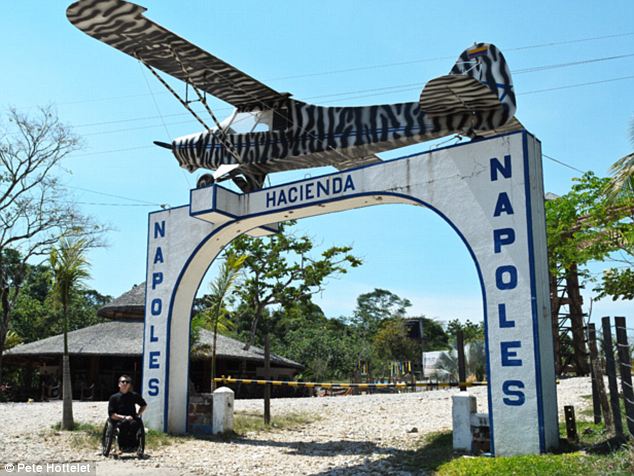
The official line is neat and tidy. After his death, the Colombian government, armed with a new “unjust enrichment” law, went on a shopping spree. They seized everything they could find. His sprawling, decadent estate, Hacienda Nápoles, was taken. This wasn’t just a house; it was a private kingdom with a zoo filled with hippos, giraffes, and elephants, a private airport, a bullring, and a collection of classic cars.
Today, it’s a theme park, the hippos now an invasive species roaming the Colombian countryside. A weird, living legacy of Escobar’s excess.
They seized his penthouses, his fleets of cars, his airplanes. His rivals in the Cali Cartel, who took over the cocaine trade, allegedly forced his surviving family to sign over properties and assets in a “peace deal” that was more of an extortion racket. What was left in international bank accounts—the small fraction he actually managed to launder—was supposedly frozen and divided between the US and Colombian governments.

Case closed, right? Wrong. So, so wrong.
All those seized assets? They were just the tip of a colossal iceberg. A rounding error. The real fortune, the liquid cash, wasn’t in any bank or deed. It was in the ground.
Theory 1: The Lost Treasure of the “Caletas”
This is where the story gets really interesting. In cartel speak, a hidden stash of cash is called a “caleta.” And Pablo Escobar was the king of caletas. His brother Roberto, in his book “The Accountant’s Story,” blew the lid off the entire operation. He confirmed what many had long suspected: that Pablo had buried the vast majority of his cash fortune all across Colombia and other countries.
Why? Simple. He trusted no one. Not banks, not politicians, not even his own sicarios (hitmen). The only person you can truly trust is the dirt beneath your feet. So he buried it. Everywhere.
The locations were a closely guarded secret, known only to Escobar himself and a tiny inner circle of his most trusted men. Men who are now almost all dead. The maps were in Pablo’s head, and that head was destroyed on a rooftop in 1993.
The Modern-Day Gold Rush
This revelation has sparked a decades-long, unofficial treasure hunt. Stories pop up constantly. A farmer in rural Colombia plowing his field and striking a blue plastic barrel. Inside? A reported $600 million. The story went viral, but the farmer and the money vanished, either a myth or a man who knew how to disappear fast.
In 2015, another man digging foundations for a new home in Medellín found pots filled with millions. Documentaries like “Finding Escobar’s Millions” feature ex-DEA agents and former CIA operatives using ground-penetrating radar and sophisticated tech to scan Escobar’s old properties, searching for these legendary stashes.
They’ve found some things. A safe hidden in a wall. A small cache of cash and weapons. So far, only about $8 million has been officially recovered from a jungle complex. It’s a tantalizing taste, but it’s nothing. A single drop from an ocean of missing money.
The hunt is on. But the ghost of Pablo guards his secrets well.
Theory 2: The Vultures at the Feast
Money like that doesn’t just sit in the ground forever. It creates its own gravity. It pulls people in. While treasure hunters search for forgotten barrels, it’s far more likely that a huge chunk of the fortune was actively stolen by those who brought Escobar down.
Deep Dive: Who Were “Los Pepes”?
To understand where the money went, you have to understand who wanted Escobar dead. And it wasn’t just the government. A shadowy paramilitary group emerged called “Los Pepes” (an acronym for “People Persecuted by Pablo Escobar”).
On the surface, they were a vigilante group of victims seeking revenge. The truth? It was a horrifying alliance of convenience. It was funded by the rival Cali Cartel and allegedly aided by factions within the Colombian National Police and even, some whisper, American intelligence agencies.
Los Pepes didn’t play by the rules. They waged a war as brutal as Pablo’s own, targeting his lawyers, his accountants, his family members, and his properties. They firebombed his assets and systematically dismantled his empire from the inside out. Every time they hit a safe house, do you think they called the police to report the millions of dollars they found stuffed in the mattresses? Of course not.
They took it. Los Pepes and the Cali Cartel didn’t just kill the king; they looted his kingdom. It’s entirely possible that they located and emptied dozens, if not hundreds, of major caletas long before any official investigators ever got there.
Theory 3: The Untouchable Ghost Money
While Pablo distrusted banks, he wasn’t a complete fool. He knew he needed some money cleaned and stored in legitimate institutions for long-term power. Roberto Escobar has also claimed that his brother held numerous anonymous, numbered accounts in Swiss banks.
This is the money that might truly be lost forever.
Unlike a buried barrel of cash, you can’t stumble upon a Swiss bank account with a metal detector. The account numbers were likely known only to Pablo. With his death, the keys to these digital vaults were effectively thrown away. Swiss banking privacy laws are legendary. Without the account numbers and the proper credentials, that money will sit in a vault in Zurich or Geneva until the end of time, a ghost fortune in a digital graveyard.
How much? No one knows. Hundreds of millions? Billions? It’s a fortune that exists only on paper, completely untouchable by his family, the government, or anyone else.
What About the Family?
This brings us to his son, Juan Pablo Escobar, who now goes by the name Sebastián Marroquín. He fled Colombia with his mother and sister after his father’s death, eventually settling in Argentina after a harrowing journey seeking asylum.
His story is fascinating. He has spent his adult life publicly atoning for the sins of his father, writing books, and even meeting with the children of the politicians and police officers his father had ordered killed.
In an interview, he made a startling claim:
“My dad wasn’t very good at accounts, at numbers, I don’t think he knew how many millions he had. When we left the country after his death, the government kept everything. It’s all in the hands of the authorities and not of the victims as it should be.”
He says the only thing he inherited was a single watch, kept for sentimental value. A watch. From a man who once burned $2 million in a bonfire to keep his daughter warm while on the run.
Is it true? It’s hard to say. On one hand, it’s completely plausible that the family was bled dry by the Cali Cartel and had all their known assets seized by the government. They were running for their lives, not stopping to dig up buried treasure. On the other hand, claiming poverty is the smartest possible move. Admitting you have access to even a fraction of that blood money would put a target on your back for the rest of your life.
His story adds another layer of mist to the whole affair. The heir to the world’s biggest criminal empire claims he got nothing. It’s either the greatest tragedy or the greatest lie in the history of crime.
The Legend That Won’t Die
So, the $70 billion question remains. Where is it?
The most likely answer is that it’s not in any one place. It was scattered to the four winds.
- A significant portion was stolen by the Cali Cartel and Los Pepes.
- A smaller, “official” portion was seized by the governments.
- An unknown amount is locked away in untraceable bank accounts.
- Another chunk was simply lost to nature, rotting away in the Colombian soil.
But that still leaves billions. Billions and billions of dollars, potentially still out there. Hidden. Waiting. A cursed treasure buried in the land that both made and destroyed Pablo Escobar.
The man is a ghost. The empire has crumbled. But the money… the money is real. And somewhere out there, under a farmer’s field, inside the walls of a forgotten building, or at the bottom of a jungle river, a fortune beyond comprehension is waiting. The only question is… who will find it next?