The $300 Million Gold Bar Cipher: A Lost Fortune or the Hoax of the Century?
It starts with a whisper. A story that feels ripped from a forgotten pulp novel, passed from a museum curator to a researcher, and now, to you. It’s a tale of war, unimaginable wealth, and a puzzle literally forged in gold.
The artifacts? Seven gold bars. Not just any bars. These are small, dense, and heavy with secrets. Allegedly issued in Shanghai, 1933, to a figure known only as “General Wang.”
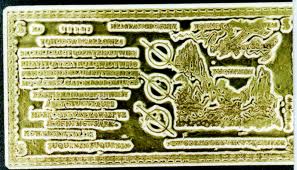
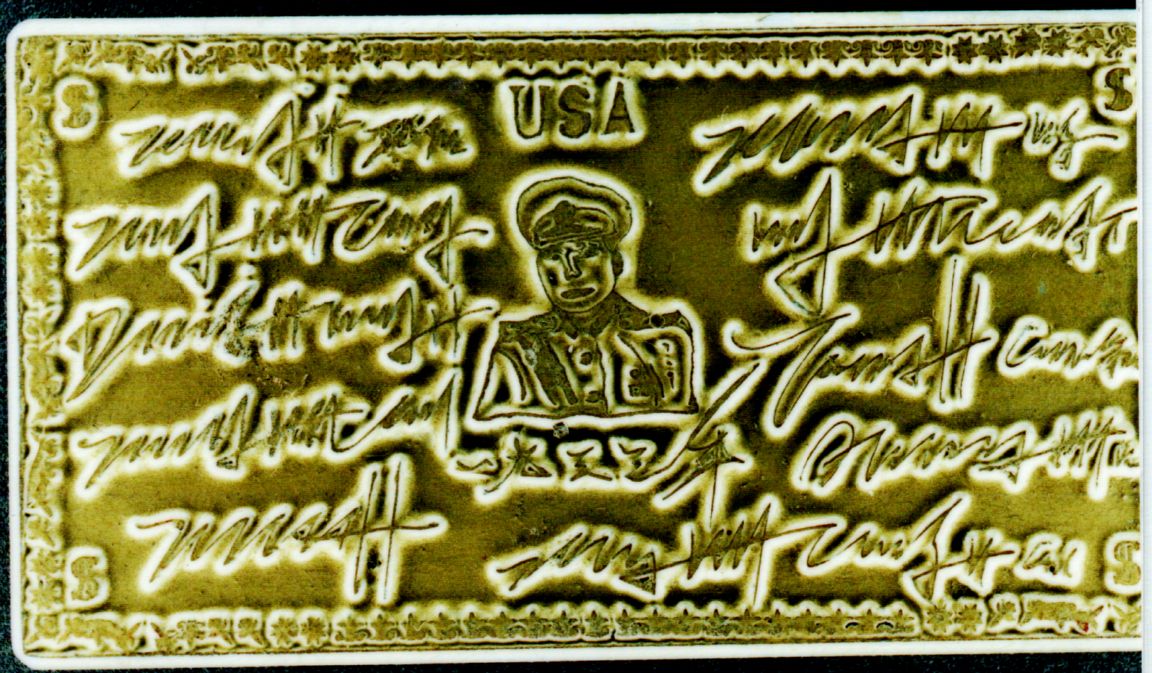
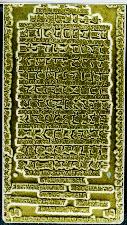
But these aren’t just bullion. Oh no. They are something far stranger. They’re keys. They are contracts. They are cryptographic nightmares that have stumped experts for years. Engraved on their surfaces is a bizarre mixture of intricate drawings, Chinese characters, an unidentifiable flowing script, and—most maddeningly—a cipher written in Latin letters.
The story goes that these bars are not the treasure itself. They are the claim check. They represent a colossal deposit made in a United States bank, a fortune valued at over $300,000,000. That’s in 1933 dollars, by the way. Today, that sum would be astronomical, easily clearing several billion dollars.
Naturally, there’s a problem. A big one. The bank, and the powers that be, dispute the claim. They say it’s a fantasy. A fraud. And the only thing that might prove them wrong is locked in the code. A code no one has ever been able to break.
First Glance: The Artifacts of an Enigma
Let’s get our hands dirty. What are we actually looking at? The seven bars together weigh a total of 1.8 kilograms. They are not the clunky, massive bricks you see in heist movies. They are smaller, more personal. Almost like metallic documents, designed to be portable, concealable.

Each bar is a chaotic masterpiece of information. Here’s the breakdown:
- The Chinese Characters: This is the part we *do* understand. Translations confirm the core of the story. They describe a financial transaction exceeding $300 million and explicitly name these gold bars as the proof of deposit.
- The Illustrations: The pictures etched onto the gold are as strange as the story itself. They aren’t just decorative flourishes; they seem to be part of the message, perhaps holding symbolic meaning or clues for the intended recipient.
- The Unidentified Script: This is where things get really weird. Alongside the familiar Chinese and Latin letters is a third writing system. A flowing, almost organic script that nobody—not linguists, not historians, not cryptographers—has been able to identify. Is it a forgotten dialect? A personal shorthand? The secret language of a clandestine society? Nobody knows.
- The Latin Cryptograms: The final piece of the puzzle. A series of letters from the alphabet we all know, arranged in a sequence that is anything but familiar. This is the cipher. The lock. And the key has been lost to time.
Deep Dive: Who Was the Mysterious “General Wang?”
You can’t have a legendary treasure without a legendary owner. But the name “General Wang” is frustratingly common. It’s like searching for “General Smith” in American history. Without a first name or more details, he’s a ghost.
But this is where we, as investigators of the strange, can speculate. We must put ourselves in the world of 1933 Shanghai.
Was he a Kuomintang (KMT) general? The KMT was the ruling nationalist party of China at the time, led by Chiang Kai-shek. High-ranking generals in the KMT were immensely powerful and often fantastically wealthy, their fortunes built on a combination of military power, political influence, and rampant corruption. A KMT general would have had every reason to move his fortune overseas. The political situation was a powder keg. The Japanese had invaded Manchuria in 1931, and everyone with a brain knew a larger war was not a matter of *if*, but *when*. On top of that, the KMT was in a brutal civil war with the rising Communist party. A general looking for an exit strategy, a golden parachute, makes perfect sense.
Or was he a Warlord? Before the KMT consolidated power, China was fractured into regions controlled by powerful military leaders—warlords. By 1933, many had been absorbed into the national army, but they still held immense regional power and personal fortunes, often from the opium trade or ruthless taxation. Shanghai was a hotbed of these clashing personalities. A warlord would have trusted no one—not the government, not other warlords, and certainly not the banks in his own country. A secret, coded deposit in a foreign bank sounds exactly like a paranoid warlord’s retirement plan.
There’s a third, darker possibility. What if “General Wang” wasn’t a person at all, but a codename? A designation for a secret fund? Perhaps this was KMT national treasure, being spirited out of the country before it could fall into enemy hands. Or maybe it was a black budget fund for intelligence operations. In the shadowy world of 1930s Shanghai, nothing can be taken at face value.
Shanghai, 1933: A City of Neon and Knives
To understand the gold bars, you have to understand the city of their birth. Shanghai in 1933 wasn’t just a city. It was a phenomenon. The “Paris of the Orient,” the “Whore of the East.” A place of dizzying opportunity and sudden death.
The city was carved up into zones. The International Settlement, governed by a council of Westerners, and the French Concession. These were pockets of foreign power on Chinese soil, with their own laws, police, and courts. Here, life was a blur of jazz clubs, skyscrapers, and Art Deco mansions. Fortunes were made and lost overnight on the stock exchange.
But outside these bubbles of excess was the Chinese city, a world of crushing poverty, political unrest, and secret societies like the infamous Green Gang, which controlled everything from opium dens to child trafficking. The air was thick with tension. Japanese aggression loomed to the north. Communist agents plotted in the shadows. Nationalist secret police hunted them down. It was a city living on borrowed time.
This is the world that created these gold bars. A world where a secret deal worth billions could be made. A world where you couldn’t trust paper, so you forged your contract in gold. A world where you couldn’t trust names, so you used a cipher.
The Cipher: Can We Crack the Uncrackable?
This is the heart of the matter. The strings of Latin letters that hold the key to everything. For decades, amateur and professional codebreakers have stared at these inscriptions, and for decades, they have failed.

What kind of cipher are we looking at? It’s unlikely to be a simple substitution cipher (where A=T, B=G, etc.). Those are too easy to break with frequency analysis, even by hand. The architects of a $300 million deal would have used something stronger.
Modern Internet Theories Emerge
In the age of online forums and Reddit threads, the mystery has found new life. Here are some of the prevailing theories bubbling up from the digital detective community:
The Vigenère Cipher Theory: A popular candidate is a polyalphabetic cipher like the Vigenère. This method uses a keyword to shift the letters of the message, making it resistant to simple frequency analysis. It was considered “unbreakable” for centuries. If this is the case, then without the keyword, the message is gibberish. What could the keyword be? “Wang”? “Shanghai”? The name of the US bank? A favorite poem? It’s a needle in a haystack the size of Asia.
The One-Time Pad Hypothesis: This is the holy grail of cryptography. A one-time pad uses a key that is completely random and at least as long as the message itself. If used correctly, it is mathematically impossible to break. Could General Wang have used a page from a specific book, a list of random numbers, or some other pre-arranged key that his counterpart in the US also possessed? If so, the gold bars are useless without that corresponding document, which is almost certainly lost to history.
It’s Not a Message, It’s Data: What if we’re thinking about this all wrong? Some have suggested the letters aren’t a message to be *read*, but data to be *used*. Could they be account numbers, routing information, or a complex password? The sequence might not spell out a sentence, but instead be the literal digital key to a vault, albeit an analog one.
The $300,000,000 Question: Real Treasure or Epic Fraud?
Let’s step back and look at the whole picture. We have two roads to go down. And they lead to drastically different conclusions.
Path 1: The Bars are Genuine
If they’re real, this is one of the greatest lost treasure stories of the modern era. A Chinese general, seeing the storm clouds of war and revolution gathering, executed a brilliant plan. He converted his massive fortune into gold-backed certificates with a secure American bank, creating a set of indestructible, coded claim-checks.
He used multiple layers of security. Chinese for the basic details. An unknown script for an extra layer of obscurity. And a military-grade cipher for the critical information. He was protecting his family’s future, or perhaps his nation’s. But something went wrong. The war came faster than he thought. Perhaps he was killed in battle. Perhaps he was purged by the Communists after 1949. Whatever happened, he never made it to America to claim his fortune. The secret of the key died with him. The gold bars became dormant, silent witnesses to a fortune frozen in time, waiting for a master cryptographer to awaken them.
Path 2: The Bars are a Masterful Hoax
The other path is darker and more cynical. The bars are fake. But if they’re a forgery, they are the work of a genius. Why would someone create such an elaborate counterfeit?
One possibility is a classic long con. The bars were created not to fool a bank, but to be “discovered” and sold to a wealthy, gullible collector obsessed with lost treasures. The mysterious script, the unbreakable cipher… it’s all part of the sales pitch. It adds to the mystique and jacks up the price.
Another theory is that they were created to defraud a bank, but not in the way we think. Perhaps they were part of a larger scheme to create false provenance for a different claim, or to be used as collateral. The immense detail was designed to overwhelm bureaucrats with a story so complex, so layered, that they might just approve something to make it go away.
The biggest argument for the hoax theory is the sheer audacity of it. The amount of money, the cloak-and-dagger details. It feels almost *too* perfect, like a story written to be exciting. Reality is often messier. But in a place like 1933 Shanghai, the line between reality and fiction was razor-thin.
An Unfinished Story
And so, the mystery remains. The seven gold bars sit in quiet repose, their secrets locked tight. They are a junction point where history, cryptography, and conspiracy collide.
Are they the keys to a multi-billion dollar fortune, a legacy of a desperate general from a world on fire? Are they the props from an elaborate scam, crafted by a con artist with a deep understanding of history and human greed? Or is the truth something stranger still, a possibility we haven’t even considered?
The cipher is still out there. The unidentified script still begs for a name. The ghost of General Wang waits in the wings of history. The fortune, whether real or imagined, remains unclaimed.
What do you think? Is this a puzzle waiting for its final piece, or a wild goose chase forged in gold?