The Year the Sky Broke: The Cursed Flight of QZ8501
2014. It was the year travelers stopped looking out the window and started gripping their armrests until their knuckles turned white. It was the year the aviation industry faced a nightmare so dark, so improbable, that it felt less like bad luck and more like a curse.
We need to talk about December 28, 2014.
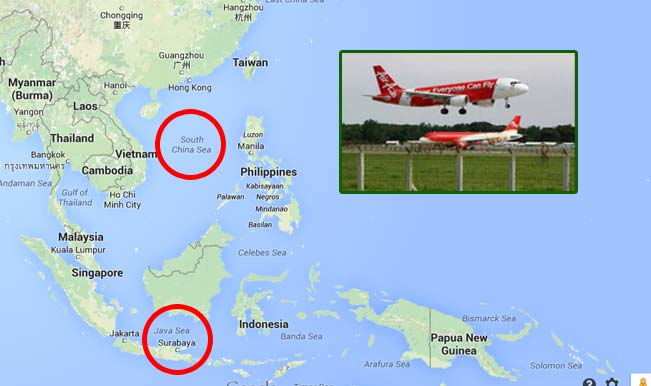
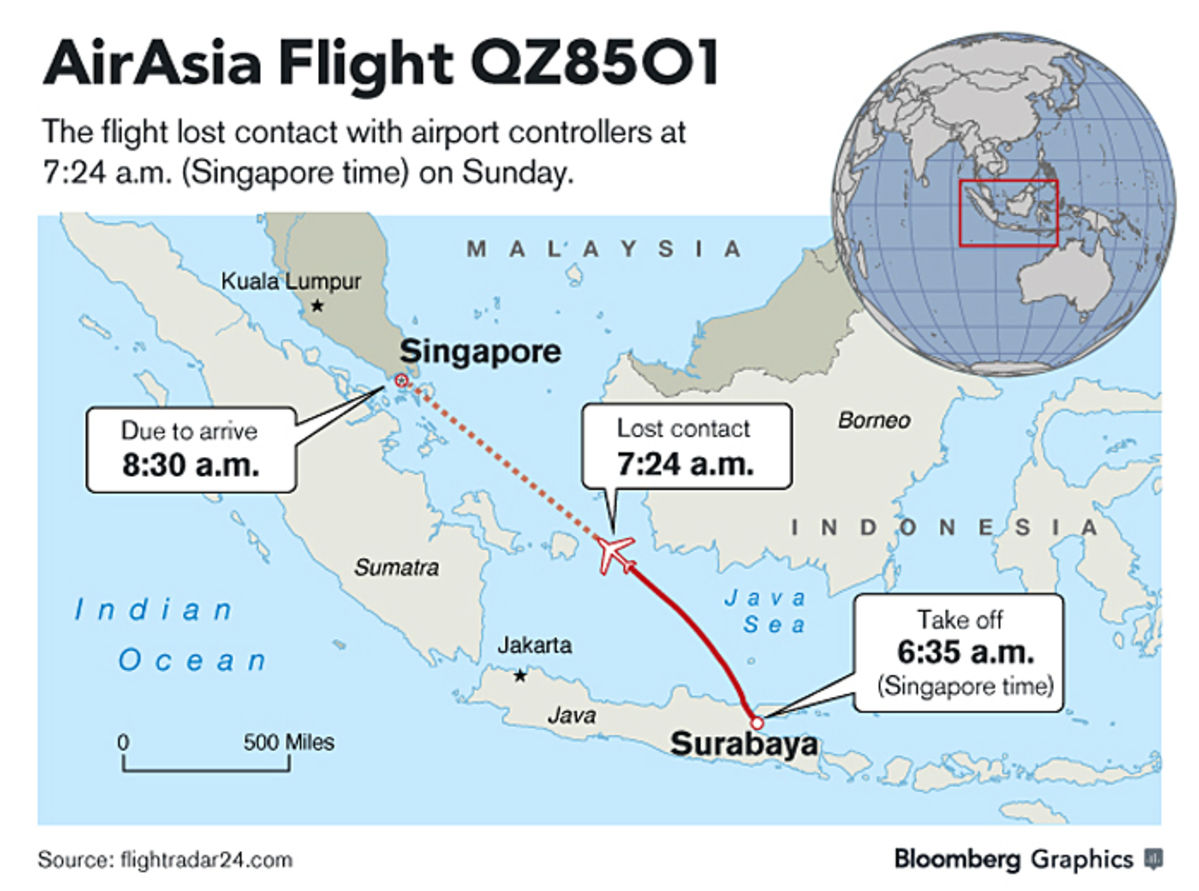
On a Sunday morning that should have been routine, AirAsia Flight QZ8501 pushed back from the gate in Surabaya, Indonesia. Destination: Singapore. It was a short hop. A commuter flight. The kind of trip thousands of people make every day without a second thought. But QZ8501 never arrived.
It vanished.
Just like that. One minute, a blip on the radar. The next? Ghost stories.
This wasn’t an isolated incident. This tragedy was the final nail in the coffin of a horrific year for Southeast Asian aviation. It forced the world to ask a terrifying question: Is there something wrong with the sky over Indonesia? Are we looking at a new, deadlier version of the Bermuda Triangle?
Let’s look at the path they were supposed to take.

The 2014 Curse: A Statistical Impossibility
To understand the horror of QZ8501, you have to rewind the clock. You have to look at the blood-soaked calendar of 2014.
If you wrote this year as a movie script, Hollywood executives would reject it. They’d say it was too unrealistic. “Planes don’t just keep falling,” they’d say.
But they did.
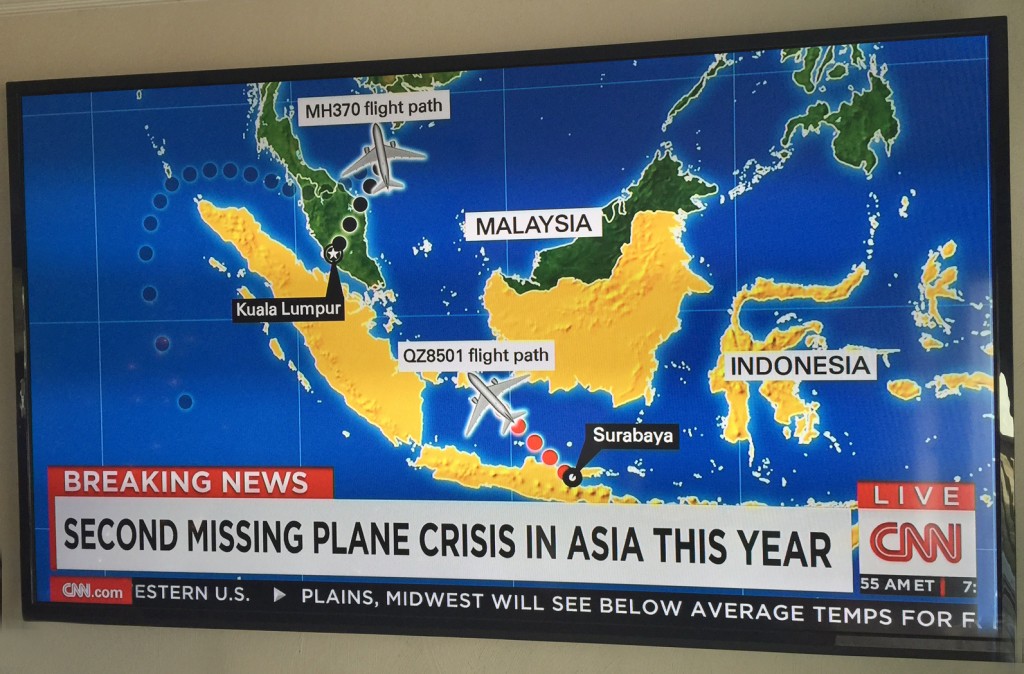
March 8, 2014: The world freezes. Malaysia Airlines Flight MH370 takes off from Kuala Lumpur and simply… ceases to exist. 239 souls on board. No distress call. No wreckage found for years. It remains the greatest aviation mystery of the modern era. We still argue about it in Reddit threads and dark corners of the internet today.
July 17, 2014: The wound is reopened. Malaysia Airlines Flight MH17, a Boeing 777, is cruising over Eastern Ukraine. A surface-to-air missile tears it out of the sky. 298 people dead. Bodies raining down on sunflower fields. It was an act of war, a brutal reminder of human cruelty.
Two massive disasters involving the same national carrier within four months. The odds? Astronomical. You have a better chance of winning the lottery twice while getting struck by lightning.
And then came December.
Just as the world was preparing to ring in the New Year, hoping to leave the tragedies behind, AirAsia QZ8501 declared an emergency. Or rather, it tried to.
The 42-Minute Nightmare
Let’s break down exactly what happened on that Sunday morning. The Airbus A320-200 was carrying 162 people. Families going on vacation. Businessmen. Crew members looking forward to going home.
The plane took off at 5:35 AM local time. The sun was barely up.
For the first few minutes, everything was perfect. The bird was heavy with fuel, climbing steadily. But nature had other plans. The radar showed a monster sitting in their path. A massive storm system. Towering cumulonimbus clouds reaching up like jagged teeth, waiting to chew up anything foolish enough to fly through them.
At 6:12 AM, the pilots made a request. They wanted to turn left. They wanted to climb from 32,000 feet to 38,000 feet to jump over the storm.
Air Traffic Control said: “Stand by.”
Why? Traffic. There was another plane nearby. A few minutes later, ATC came back. “Clear to turn left. Climb not approved.”
Silence.
No acknowledgement.
At 6:17 AM—just five minutes after that request—the radar blip disappeared. No “Mayday.” No screaming into the radio. Just silence. The ocean swallowed them whole.

The “Super Stall”: What Went Wrong?
Official reports eventually came out. They talked about a “rudder travel limiter” failure. They talked about a cracked solder joint on a circuit board. A tiny piece of metal worth pennies brought down a multimillion-dollar jet.
The pilots tried to reset the computer. In doing so, they disengaged the autopilot.
The plane pitched up. Sharply. It climbed faster than a fighter jet for a few seconds. Then, it stopped flying and started falling.
It entered a stall. But not just any stall. The plane fell flat, belly-first, from 38,000 feet down to the Java Sea. It took three minutes to hit the water. Three minutes of alarms screaming. Three minutes of gravity winning.
But here is where the conspiracy theorists, the alternative historians, and the mystery hunters start to get itchy. Because the “mechanical failure” story feels… incomplete.
Three massive disasters in one region in one year? Is it really just bad maintenance and bad luck?
The New Bermuda Triangle: The Dragon’s Triangle Connection
Let’s step away from the circuit boards and look at the map again. Look at where these planes are going down.
For decades, we’ve been obsessed with the Bermuda Triangle in the Atlantic. The Devil’s Triangle. Ships vanishing. Christopher Columbus seeing strange lights. It’s pop culture royalty.
But geologists and paranormal researchers have long whispered about its twin. A sister vortex on the other side of the world.
The Dragon’s Triangle.
Also known as the Devil’s Sea (Ma-no Umi), this region is traditionally located south of Japan. But in recent years, some theorists believe the magnetic anomalies associated with this zone are shifting. Or perhaps, extending.
Look at the Java Sea. Look at the Straits of Malacca (where MH370 turned back). Look at the South China Sea. This entire corridor is a graveyard of ships and planes. WWII wrecks. Modern jets. Cargo ships.
The Vile Vortices Theory
Ivan T. Sanderson, a naturalist and paranormal researcher, proposed the idea of “Vile Vortices.” These are twelve geometric points around the globe where magnetic and electric energies behave erratically. The Bermuda Triangle is one. The Devil’s Sea is another.
Some researchers suggest that these vortices aren’t fixed. They breathe. They move. Could the tectonic instability of the “Ring of Fire”—which runs directly through Indonesia—be triggering electromagnetic storms that mess with aircraft computers?
Think about it.
In the case of QZ8501, the official story blames a computer glitch. A cracked solder joint. But what caused the computer to act up in the first place? Why did the pilots become so spatially disoriented that they couldn’t recover a stall?
In the case of MH370, the transponders just… turned off. Electronics went dark.
Is there an “Electronic Fog” in Southeast Asia? A natural (or unnatural) phenomenon that fries digital brains and confuses human ones?
The Dark Water Theory: Weather Modification?
We have to talk about the weather. The storm that QZ8501 hit wasn’t normal. Meteorologists called it a “Black Storm.”
Clouds in this region can reach heights of 50,000 feet or more. They are violent engines of ice and wind. But in 2014, the weather patterns were erratic. Unpredictable.
This leads us to the darker corners of internet theory: HAARP and Weather Warfare.
For years, people have speculated about the High-frequency Active Auroral Research Program (HAARP). The official line is that it’s for studying the ionosphere. The conspiracy line? It’s a weapon. A way to heat the upper atmosphere and steer weather systems like you steer a car.
Could the bizarre concentration of storms and aviation disasters in 2014 be the result of testing?
It sounds crazy. But look at the geopolitical tension in the region. The South China Sea is one of the most contested patches of water on Earth. China, the US, and Southeast Asian nations are all vying for control. If you wanted to test a weapon that could deny airspace without firing a missile, wouldn’t this be the perfect testing ground?
Create a storm so violent no plane can fly. Create an electronic dead zone where radar fails.
QZ8501 didn’t just crash. It was swatted out of the sky by the atmosphere itself.
The Eerie Coincidences of 12/28
Numbers make people nervous. Patterns make people paranoid.
The flight number was QZ8501. The date was December 28. (12/28).
If you dig into the numerology, you find people claiming all sorts of connections to MH370 (3+7+0… you get the idea). While much of this is grasping at straws, the psychological impact is real. The human brain hates randomness. We refuse to believe that 162 people can die because of a cracked piece of metal.
We need a reason. We need a villain.
Was the villain a shifting magnetic pole? Was it a secret military experiment? Or was it something even older?
The Curse of the Archipelago
Indonesia sits on a violent earth. Volcanoes. Earthquakes. Tsunamis. The local folklore is filled with stories of spirits that claim the sea and sky. In the wake of QZ8501, local shamans spoke of the spirits being angered. They claimed the sea required a sacrifice.
It’s easy to dismiss this as superstition. But when you are floating in the Java Sea, waiting for a rescue that isn’t coming, the line between science and the supernatural gets very thin.
The Radar Gap: Why Do We Still Lose Planes?
This is the question that keeps me up at night.
We live in an age of surveillance. Your phone knows where you are. Your car knows where you are. Satellites can read a license plate from space.
So how—HOW—do we lose a 40-ton metal tube full of people?
QZ8501 wasn’t in the middle of the Pacific like MH370. It was in the Java Sea. It was near land. And yet, for a terrifying window of time, it was just… gone.
This exposes a terrifying truth about our world: The coverage isn’t as total as you think. There are holes in the net. There are blind spots. And the scariest part? These blind spots seem to be growing in the waters around Indonesia.
When QZ8501 went down, it didn’t send a continuous stream of data. The “Black Box” is a recording device, not a live streaming service. We only found out what happened *after* we fished the boxes out of the mud.
Why hasn’t the industry changed this? Why don’t planes stream their data in real-time? Is it cost? Or is there a resistance to total transparency?
The Legacy of the Lost Year
The wreckage of QZ8501 was eventually found. Divers braved murky, dark waters to recover bodies strapped into their seats. It was a grim, heartbreaking recovery effort.
But the questions remain.
The “official” report closed the book. Pilot error. Component failure. Weather.
But for those of us who watch the skies, the book isn’t closed. It’s barely half-written.
The cluster of disasters in 2014 defies statistical probability. The proximity of these events suggests a variable we aren’t seeing. Maybe it’s environmental changes affecting aerodynamics. Maybe it’s a shift in the magnetic field messing with fly-by-wire systems.
Or maybe, just maybe, the pilot of QZ8501 looked out his window and saw something in that storm cloud that wasn’t ice and wind.
Something that made him pull back on the stick until the plane stalled.
Something that the radar didn’t catch.
We will likely never know the full emotional truth of those final minutes. We only have the data. And the data tells a story of a plane fighting a losing battle against an invisible enemy.
The Sky isn’t as Empty as You Think
Next time you board a flight, look at the map on the screen in front of you. Watch the little plane icon move across the blue expanse of the ocean.
Remember QZ8501. Remember MH370.
We build machines to conquer the air. We build radars to see the unseen. But sometimes, the planet reminds us that we are just guests here.
And sometimes, the host is hostile.
The “New Bermuda Triangle” might not be a vortex of aliens or magic. It might be something simpler and far more dangerous: A region where the rules of flying are being rewritten by forces we haven’t bothered to understand yet.
Fly safe.