Thursday, May 14, 2026
HomeUnexplained MysteriesCrime MysteriesThe people v OJ Simpson – The evidence

The people v OJ Simpson – The evidence

The O.J. Simpson Case: What They NEVER Told You About the Trial of the Century

It was more than a trial. It was a cultural earthquake. A media supernova. A national obsession that ripped the scabs off America’s deepest wounds and left them exposed for the world to see.

Forget what you think you know. The O.J. Simpson murder case wasn’t just about a football hero in a courtroom. It was the story of race, class, fame, and a justice system on trial itself. It was the moment 24-hour news was truly born, a spectacle that glued 150 million people to their screens for the final verdict. It launched empires. Think the Kardashians just appeared out of thin air? Their story starts here, with their father Robert sitting next to his best friend, O.J., a man accused of the most heinous crime imaginable.

But the official story? The one told on the nightly news? That’s just the surface. We’re going to pull back the curtain on the “Trial of the Century,” exploring the bizarre evidence, the shocking police misconduct, and the explosive alternative theories that still bubble up from the dark corners of the internet. Theories the mainstream media wouldn’t touch.

So buckle up. This is the story of how a double murder in a quiet Los Angeles neighborhood spiraled into a national drama that changed everything.

oj-lawyers-tvgm-1024x666[1]

A Brutal Night on Bundy Drive

June 12th, 1994. It began like any other Sunday in the upscale Brentwood neighborhood of Los Angeles. But as darkness fell, a scene of unimaginable horror was unfolding at 875 South Bundy Drive. The air, usually filled with the scent of night-blooming jasmine, would soon carry the metallic tang of blood.

Nicole Brown Simpson, the vibrant 35-year-old ex-wife of a sports legend, was found just past her front gate. She was brutally murdered. Nearby lay the body of Ron Goldman, a 25-year-old waiter and aspiring model. He wasn’t a target. He was just a good guy, a friend, returning a pair of glasses Nicole’s mother had left at the restaurant where he worked. Wrong place. Wrong time. The sheer violence of the attack was shocking, a frenzy of rage left etched in blood.

The first sign something was terribly wrong was a dog. Nicole’s Akita, its paws stained red, was found barking restlessly by a neighbor. This lone, howling witness led police to a crime scene that would become one of the most famous addresses in America. A bloody trail of footprints led away from the bodies. A single leather glove was left behind. A dark, knit cap lay on the ground. A small mountain of evidence. Or so it seemed.

The Chase That Stopped a Nation

Five days later, the case took a turn into the surreal. O.J. Simpson, “The Juice,” a Heisman trophy winner, a movie star, an American icon, was supposed to surrender to the LAPD. He didn’t.

Instead, the nation watched, live and in disbelief, as a white Ford Bronco led a bizarrely slow-speed chase down the empty freeways of Southern California. Inside was O.J., reportedly holding a gun to his own head. At the wheel was his loyal friend and former teammate, Al “A.C.” Cowlings. This wasn’t a police chase. It was a funeral procession on wheels.

News channels broke into the NBA finals. Pizza delivery places saw record sales. People lined the freeway overpasses with signs, some saying “Run, O.J., Run!” and others “Go Juice!” It was a spectacle. America couldn’t look away. The police weren’t chasing a suspect; they were escorting a fallen king on his final, desperate journey home to his mansion in Rockingham. The chase ended peacefully, but the war was just beginning.

Clash of the Titans: The Lawyers Who Became Legends

The trial itself, officially The People of the State of California v. Orenthal James Simpson, became a legal battlefield where careers were made and reputations were shattered.

The Prosecution’s Uphill Battle

On one side stood the Los Angeles County District Attorney’s office, led by Marcia Clark and Christopher Darden. They believed they had a slam-dunk case. A mountain of physical evidence. A history of domestic violence. A suspect who fled. What could go wrong?

Everything. Clark, a sharp and tenacious prosecutor, was unprepared for the personal attacks. The media scrutinized her hair, her clothes, her custody battle. She became a character in the soap opera, not just a lawyer seeking justice. Darden, a thoughtful and dedicated Black prosecutor, was placed in the impossible position of trying to convict a Black cultural hero in a city still raw from the Rodney King riots and the deep-seated mistrust of the LAPD. The pressure was immense, and it showed.

Enter: The Dream Team

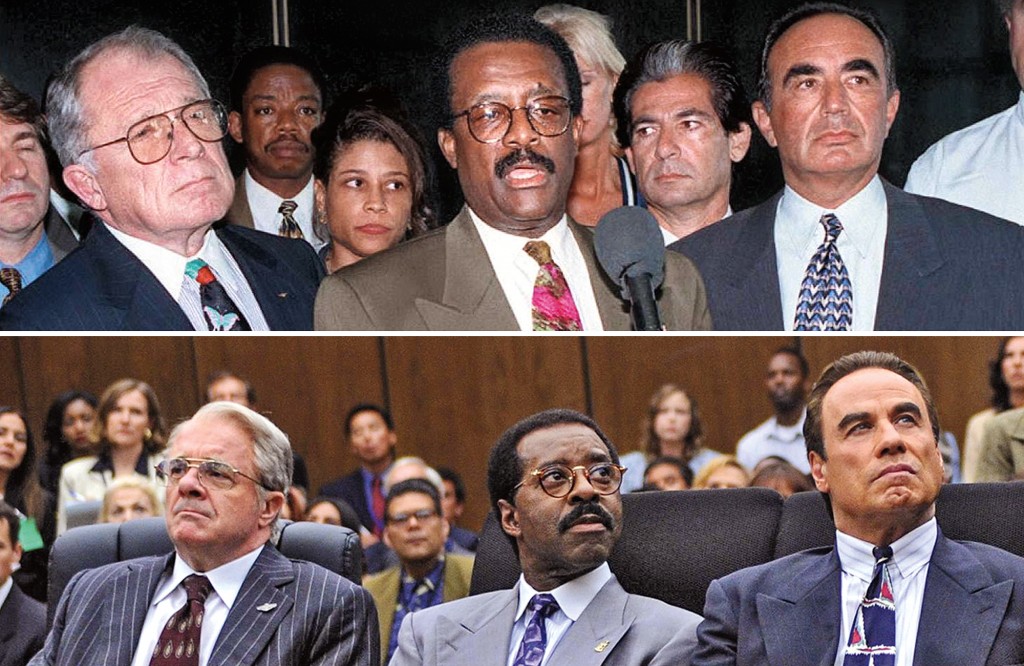
O.J. didn’t just hire lawyers; he assembled a legal supergroup. “The Dream Team,” they were called, a collection of the best and most flamboyant legal minds money could buy. Their strategy wasn’t just to prove O.J. innocent; it was to put the entire system on trial.

  • Johnnie Cochran: The charismatic ringleader. A master of courtroom theater, he understood that this case would be tried in the court of public opinion as much as in a court of law. His closing argument was pure genius, a rhyming couplet that would echo through history.
  • Robert Shapiro: The initial architect of the defense, a smooth operator who brought the big names together.
  • F. Lee Bailey: A legendary, pugnacious defense attorney known for his brutal cross-examinations. He was the bulldog they unleashed on the police.
  • Barry Scheck and Peter Neufeld: The “DNA wizards.” At a time when DNA evidence was new and mystifying to the average person, they were experts at making it seem confusing, contaminated, and completely unreliable.
  • Robert Kardashian: O.J.’s loyal friend, the quiet conscience of the team. His presence humanized Simpson, but the look of shock on his face when the verdict was read spoke volumes.

The Glove That Didn’t Fit: A Weapon of Mass Distraction?

The prosecution’s case was built on a trail of blood leading directly to O.J. Simpson. But the Dream Team was masterful at turning every piece of evidence into a question mark.

The Mark Fuhrman Problem

The prosecution’s star witness, Detective Mark Fuhrman, found the second bloody glove at O.J.’s Rockingham estate. This was the critical piece linking O.J. directly to the crime scene. But Fuhrman had a dark past. The defense uncovered tapes of him using racial slurs and bragging about planting evidence on suspects. On the stand, Fuhrman claimed he hadn’t used the n-word in ten years. The tapes proved he was lying.

Suddenly, the case wasn’t about the glove anymore. It was about the man who found it. Was he a racist cop capable of framing a Black celebrity? Cochran hammered this point home. The seed of doubt was planted, and it grew into a forest.

DNA Under the Microscope

This was one of the first major trials to heavily feature DNA evidence. The prosecution had blood that was almost certainly O.J.’s at the crime scene. They had Nicole’s and Ron’s blood in the Bronco. They had Ron Goldman’s blood on a sock found in O.J.’s bedroom. A sealed-and-shut case, right?

Wrong. Scheck and Neufeld were brilliant. They didn’t have to prove the DNA was fake. They just had to make the jury doubt it. They talked about contamination. About sloppy lab procedures. They questioned the “chain of custody,” suggesting evidence was tampered with. They presented a wild theory about a vial of O.J.’s blood, drawn for a police sample, and suggested a police officer might have sprinkled it around the crime scene. It sounded crazy. But in a trial this bizarre, was anything impossible?

The Final Act: “If It Doesn’t Fit, You Must Acquit”

It was the moment of pure courtroom drama that everyone remembers. Chris Darden, against the advice of his colleagues, asked O.J. to try on the infamous bloody gloves. It was a gamble. A huge one. And it backfired spectacularly.

In front of the jury and millions watching at home, O.J. struggled to pull the leather gloves over the latex ones he was required to wear. He grimaced. He strained. They wouldn’t go on. “They’re too tight,” he said. It was a visual that was worth a thousand expert testimonies. Johnnie Cochran seized the moment, and in his closing argument, delivered the most famous line of the trial: “If it doesn’t fit, you must acquit.”

Forbidden Theories: What If the Official Story Is a Lie?

For decades, the case has been settled in the eyes of the law. But on the internet, and in the minds of many, the questions never stopped. Over the years, alternative theories have gained traction, suggesting a far darker and more complex reality.

The Son Theory: Did Jason Simpson Do It?

This is the big one. The theory that has persisted for years, detailed in books and exhaustive online forums. It posits that the real killer was not O.J., but his son from his first marriage, Jason Simpson. What’s the supposed evidence?

  • A History of Rage: Proponents of the theory point to Jason’s documented history of mental health struggles, including “intermittent rage disorder.” He had a prior arrest record involving a knife.
  • The Knife Collection: Jason was a chef and reportedly owned a collection of high-end knives, the kind that could have been used in the murders. The murder weapon was never found.
  • A Shaky Alibi: Jason’s alibi for the night of the murders has been called into question by some investigators. He claimed he was working at his restaurant job, but some accounts are fuzzy.
  • The Motive: The theory suggests that Nicole was supposed to attend a family dinner at the restaurant where Jason worked that night but canceled at the last minute. The story goes that Jason, in a rage, went to confront her, and Ron Goldman simply walked into the situation.

So why wasn’t he ever a suspect? The theory claims O.J., arriving at the scene after the murders, saw what his son had done and his immediate instinct was to protect him. The bloody trail, the strange behavior—it was all part of a panicked, clumsy cover-up by a father for his son. It’s a shocking idea. But is it any more shocking than the official story?

The Drug Deal Gone Wrong

Another popular theory from the time centered around Nicole’s circle of friends, particularly the infamous Faye Resnick. Resnick admitted to having a serious cocaine problem and was living with Nicole just before the murders. This theory suggests the killers were not after O.J. or Nicole, but were drug dealers coming to collect a debt from Resnick. Nicole and Ron were just tragic collateral damage. The killers, professional and ruthless, left a scene of carnage designed to send a message. Is it plausible? It would explain the extreme violence. But the evidence trail still pointed stubbornly back toward O.J.’s house on Rockingham.

The Verdict and the Aftermath

On October 3, 1995, the verdict came in. Not guilty. On all counts.

The reaction was a perfect snapshot of a divided America. News cameras showed Black Americans cheering in the streets, celebrating what they saw as a victory over a corrupt and racist police department. In the same split-screen, white Americans stared at their TVs in stunned, silent disbelief. The trial had exposed a chasm in the American experience, two entirely different perceptions of justice, policing, and reality itself.

But the story wasn’t over. The Brown and Goldman families filed a civil lawsuit. Here, the rules were different. The burden of proof wasn’t “beyond a reasonable doubt,” but a much lower bar: a “preponderance of the evidence.” In 1997, a new jury found O.J. Simpson “responsible” for the deaths and ordered him to pay $33.5 million in damages. He was acquitted in one court but condemned in another.

O.J.’s life spiraled downward. He wrote a bizarre, hypothetical confession book titled “If I Did It.” Then, in a strange twist of fate, he was convicted in 2008 for a completely unrelated armed robbery and kidnapping in Las Vegas. He spent nine years in prison, a strange and pathetic final chapter for a man who once had it all.

The trial of the century never really ended. It echoes today in our celebrity-obsessed culture, our true-crime podcast addictions, and our endless debates about justice. It was a messy, ugly, and captivating spectacle that held up a mirror to America. And many of us did not like what we saw.

Arindam Mukherjee
Arindam Mukherjee
Arindam loves aliens, mysteries and pursing his interest in the area of hacking as a technical writer at 'Planet wank'. You can catch him at his social profiles anytime.
RELATED ARTICLES
- Advertisment -

Most Popular

Recent Comments

Warren Pan Abbott on The legend of the Devil Monkey !
chris davies on The McPherson Tape Mystery
Reed Reedly on ET has Internet!
Bea Houseoffashion on Proof Of Time Travellers – Gallery
Marcus2012 on ET has Internet!
Reed Reedly on ET has Internet!
LaughsAtConspiracyNuts on The 9/11 Conspiracy – Myths and Facts
Alex Sliverman on Did the ancients fly?
Doctor Wholigan on Time Traveler in 1938 film
chris davies on The McPherson Tape Mystery
Archie1954 on 10 secret UFO hideouts
chris davies on Ghosts of flight 401
Marcus2012 on ET has Internet!
jason Macdonald on Proof of Time Travel? – China
chris davies on Long-Lost Pyramids Found?
Reed Reedly on ET has Internet!
Milkman on Connected Universe
Tenmiles on Baigong Pipes Mystery
Simon Foster on Sirius – The Documentary
From the 1st April on 2013 – Alien Contact date ?
SkyWatcher on Is ET ignoring us?
I Come From The Future on Obama to make UFO Alien disclouser soon ?
Just another person on 2013 – Alien Contact date ?
Malcolm Windowcleaner on The strange case of Rudolph Fentz
Mason Servio on Strange Things on Mars
Marke Wisdom Seeker on What will we find as arctic melts?
Andrea A Elisabeth Levyne on Aliens Captured in Varginha, Brazil
Mitch Grouyeki on Amazing Space Shuttle pictures