
Home Weird World Mayan 2012 Mayan 2012 Doomsday proof?

Mayan 2012 Doomsday proof?

0
60

The 2012 Apocalypse That Wasn’t: What the Mayans *Really* Knew (And Why They Might Still Be Right)

Remember the buzz? The fear? The secret, thrilling little part of you that wondered… *what if?*

The year was 2012. The internet was a different beast then, crackling with prophecies and whispered warnings. Hollywood blockbusters showed us cities crumbling into the sea. Documentaries with dramatic music laid out the timeline for our extinction. And it all pointed to one, single, terrifying date: December 21, 2012.

The day the Mayan calendar ended.

We were told it was the end of the world. An apocalypse foretold by an ancient civilization with a stunning, almost supernatural, understanding of the cosmos. They built pyramids that mirrored the heavens and created a calendar so precise it still puts ours to shame.

Then the day came. And went. The sun rose on December 22nd. We all had a nervous laugh, made some jokes, and filed the whole thing away under “silly internet crazes.”

But what if we missed the point entirely? What if the “end” wasn’t about fire and brimstone, but something far stranger? A shift. A reset. What if the Mayans weren’t predicting the end of the world, but the end of the world *as we knew it*? And what if we’re living in the strange, chaotic aftermath right now and haven’t even realized it?

Forget everything you think you know. We’re going back to 2012 to uncover what really happened. Or what didn’t.

Deep Dive: The Cosmic Odometer of the Maya

First, let’s get one thing straight. The Mayans were not primitive. Not even close. Forget the stereotypes. These were master astronomers, mathematicians, and architects. Their understanding of time was so profound, they didn’t just have one calendar; they had several, all interlocking like the gears of a celestial clock.

The one that caused all the panic was the Long Count calendar. Think of it not as a book with a final page, but as a car’s odometer. It counts up the days, meticulously, from a mythical starting point. It’s broken down into cycles:

  • A K’in is 1 day.
  • A Winal is 20 k’ins (20 days).
  • A Tun is 18 winals (360 days).
  • A K’atun is 20 tuns (about 20 years).
  • A B’ak’tun is 20 k’atuns (about 394 years).

The grand cycle, the so-called “Great Cycle,” was composed of 13 B’ak’tuns, which totals 5,125 years. The date December 21, 2012, simply marked the end of the 13th B’ak’tun. It was the moment the cosmic odometer was set to click over from 12.19.19.17.19 to 13.0.0.0.0. A new beginning. A major celebration.

Not an ending. A reset.

But this begs the question: how could they possibly have been so accurate? To this day, the Mayan calendar can predict lunar eclipses with a margin of error of about 30 seconds. They did this without telescopes, without computers, without anything we consider “modern” technology. They just… watched the sky. And they saw things. Things we are only just beginning to understand.

The Main Event: A Galactic Alignment 26,000 Years in the Making

This is where things get truly strange. The 2012 date wasn’t just the end of a B’ak’tun. It was a convergence. A moment of impossible cosmic synchronicity that the Mayans seemed to have pinpointed thousands of years in advance.

On that winter solstice, the Earth and the Sun were aligning with the very center of our Milky Way Galaxy.

Let that sink in.

How did they know there was a Milky Way Galaxy? How did they know it had a center? Mainstream science didn’t confirm the galactic center’s location until the 20th century. For the Mayans, this alignment was profoundly significant. They saw the Milky Way as a sacred river, the *Wakah Chan*, or World Tree. At its center was a dark band of dust and stars they called the “Dark Rift” or *Xibalba be*—the road to the underworld.

On December 21, 2012, the sun was set to rise directly in the mouth of this cosmic serpent. A celestial rebirth. A moment when the veil between worlds might be at its thinnest. An event that only happens once every 26,000 years.

The Great Wobble: The Precession of the Equinoxes

That 26,000-year number is key. It’s not random. It’s the length of a massive celestial cycle known as the Precession of the Equinoxes. Imagine the Earth spinning like a top. As it spins, it also has a very slow, subtle wobble. This wobble causes the position of the constellations on the horizon to shift over vast periods.

It takes about 2,160 years for the sun to rise in a new constellation of the zodiac on the spring equinox. This is where we get the concept of “Ages”—the Age of Pisces (which we are leaving) and the Age of Aquarius (which we are entering). It takes a full 25,920 years—roughly 26,000—to complete one full wobble and cycle through all 12 zodiacal ages.

The Mayans knew this. Their entire cosmology was built around this Great Cycle. They didn’t just see 2012 as the end of a 5,125-year calendar cycle; they saw it as the end of the *entire 26,000-year precessional cycle*. We were at the end of a cycle so vast, so immense, that modern humans have no record of what happened the last time it ticked over. We simply weren’t here to write it down.

How could a civilization in the Mesoamerican jungle have calculated this? How did they acquire this impossible knowledge?

The Cross-Cultural Conspiracy: Were the Mayans The Only Ones Who Knew?

Here’s where the rabbit hole gets deeper. The Mayans weren’t alone. It seems whispers of this 2012 end-date, or at least a major transitional period, echoed across completely separate cultures, continents, and millennia. Coincidence? Or were they all tapping into the same ancient source of forgotten knowledge?

The Hopi and the Blue Star Kachina

On a different continent, the Hopi people of Arizona have their own powerful prophecy. It speaks of the end of the “Fourth World” and the coming of the “Fifth World.” The sign of this transition would be the appearance of the Blue Star Kachina, a celestial spirit, who would remove his mask before the uninitiated in the plaza. Many have interpreted this as a sign of revealing hidden truths, a moment when humanity would be forced to face a new reality.

The Hindu Yugas

The ancient Hindu scriptures describe a great cycle of ages called the Yugas. We are currently in the final and most corrupt age, the Kali Yuga—an age of darkness, conflict, and spiritual ignorance. While the exact timing is debated, many interpretations of the scriptures pointed to the period around 2012 as a major turning point, the “darkest hour before the dawn” that would precede a new golden age.

The I-Ching “Timewave Zero”

This one is a modern twist on an ancient text. The philosopher Terence McKenna developed a complex theory called “Timewave Zero,” which used the mathematical patterns of the Chinese I-Ching to map the flow of “novelty” throughout history. His graph showed a pattern of escalating complexity and interconnectedness, all spiraling towards a single point of infinite novelty—a singularity. The date his formula spat out? December 21, 2012.

What About the Egyptians and Aztecs?

The Aztec calendar stone, often confused with the Mayan calendar, also speaks of world-ending cataclysms. It depicts the four previous worlds, or “Suns,” each destroyed by a different element. We are living under the Fifth Sun, which they believed would be destroyed by earthquakes. And while the Egyptian calendar doesn’t explicitly end in 2012, researchers of “pyramidology” have long argued that the Giza pyramids are a celestial clock, with alignments and measurements that point to our current era as a time of massive upheaval and transformation.

One culture is a coincidence. Two is interesting. But five or more, all pointing to the same narrow window in time? That starts to look like a pattern.

What if the Shift Already Happened?

Maybe we were all looking for the wrong thing. We expected a disaster movie. We got something else entirely.

Think about the world *before* 2012 and the world *after*. Could you have imagined our current reality back in 2011? The explosion of social media into the absolute center of our lives, the political polarization, the speed at which information (and disinformation) spreads, the feeling that reality itself is becoming fractured and subjective.

Some modern theorists propose that 2012 wasn’t a physical event but a “consciousness shift.” A moment when the frequency of the planet changed. It wasn’t about the world ending, but about our *perception* of the world ending, replaced by something new and radically different.

Did we cross a timeline? Did we enter a parallel reality? It sounds like science fiction, but look around. Does this world feel like a logical continuation of the one that came before, or does it feel… different? A little weirder? A little less stable?

Maybe the apocalypse happened, and it was so strange we didn’t even notice.

The Final Mystery: How Did They Know?

This brings us back to the most important question. A question that haunts the ruins of Chichen Itza and echoes in the silent chambers of the pyramids.

How did they know?

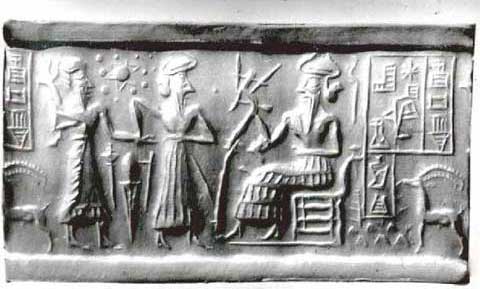
The Mayans and their contemporaries, the Sumerians, knew of planets in our solar system that “modern” society wouldn’t discover until the 1900s. They mapped cosmic cycles that require thousands of years of continuous, uninterrupted observation. They built structures with a precision that, in some cases, we still struggle to replicate today.

Did they have help? Was this knowledge a legacy from a much older, lost civilization—an “Atlantis” of the ancient world whose wisdom was passed down in fragments to cultures like the Maya and the Egyptians?

Or was the source not of this Earth at all?

The questions are far more compelling than any easy answers. The legacy of 2012 isn’t one of a failed doomsday prediction. It’s a glaring, monumental reminder that ancient people knew things we have forgotten. They saw the universe not as a collection of dead rocks, but as a living, breathing entity, a giant clockwork mechanism whose gears are still turning.

The 13th B’ak’tun has ended. The new one has begun. We are the first people to walk in this new 5,125-year cycle. The Mayans gave us the date for the reset, but they never told us what would happen *after*. We are writing that chapter now. And looking around at the world today, one thing is certain: the story is getting very, very strange.

Originally posted 2016-03-26 16:28:03. Republished by Blog Post Promoter









