
The Jungle Screams: Unearthing the Blood-Red Temple of the Night Sun
Imagine this. You are deep in the Guatemalan rainforest. The heat is suffocating. It wraps around you like a wet blanket. The air is thick with the sound of insects, the roar of howler monkeys, and the crunch of boots on centuries of decay. You are looking for something lost. Something swallowed by time.
For over a thousand years, the jungle kept a secret.
It hid a massive, blood-red beacon that once glowed in the tropical sun like a warning. Or a promise. This wasn’t just a pile of rocks. It was a machine. A spiritual engine designed to connect a human king to the terrifying power of the sun itself.
They call it the Temple of the Night Sun.
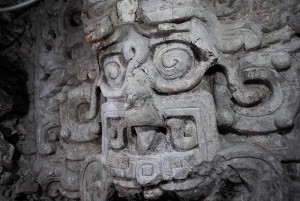
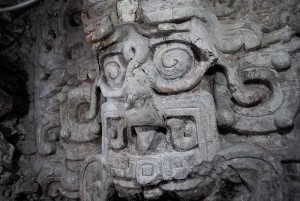
And when archaeologists finally hacked away the vines and dirt, what they found staring back at them wasn’t just a ruin. It was a face. A monstrous, jagged, terrifying face.

The “Gold Mine” that Changed History
Let’s rewind. We are talking about a discovery that shattered our understanding of the classic Maya period. We aren’t looking at some pottery shards or a broken spear tip. This is what Stephen Houston, an archaeologist from Brown University, called a “gold mine” of information.
But gold doesn’t bleed. This temple does.
Located in the site known as El Zotz, hidden in the dense biosphere of Guatemala, this structure dates back 1,600 years. That’s around 350 to 400 A.D. To put that in perspective, while Rome was crumbling and Europe was heading into the Dark Ages, the Maya were building neon-bright monuments to the cosmos.
The Temple of the Night Sun sits atop the Diablo Pyramid. The Devil’s Pyramid. A fitting name. It stands 45 feet tall, dominating the skyline. But here is the kicker: back then, you couldn’t miss it. It was painted a vibrant, saturated red. It would have been visible for miles across the canopy, a shining crimson lighthouse signaling the power of the El Zotz dynasty.
The Three Faces of Terror: Shark, Drinker, Jaguar
This is where it gets strange. Really strange.
The temple is adorned with massive stucco masks. These aren’t just decorative. They tell a story. A story that repeats every single day in the sky, yet somehow, the Maya made it terrifying.
The masks depict the Sun God in three distinct phases. But forget the happy, smiling sun you drew in kindergarten. The Maya sun was a warrior. A beast. A hungry entity that needed to be fed.
1. The Rising Sun: The Shark in the Jungle
The first phase represents the sun rising in the east. The Maya depicted this as a shark. Yes, a shark. In the middle of the jungle.
Why? Alternative history theorists and mainstream archaeologists have battled over this. The standard explanation is the “Cosmic Sea.” The sun rises from the ocean. But think about it. How often did the Maya of the deep inland jungle see a shark? This implies a deep, ancient connection to the sea, or perhaps a trade network that brought back tales of monsters from the deep water. The sun breaking the horizon was the shark fin cutting the water. It was predatory. The day begins with a hunt.
2. The Noon Sun: The Cross-Eyed Blood Drinker
As the sun climbs to its peak, it transforms. The noon sun was often depicted as an ancient, cross-eyed being. To the classic Maya, being cross-eyed was a mark of supreme beauty and royalty. Elite parents would even dangle objects in front of their babies’ eyes to induce the condition.
But beauty had a dark side. The noon sun was a “blood drinker.” It scorched the earth. It demanded hydration. And in the Maya ritual context, the most potent liquid wasn’t water. It was blood. The King, acting as the conduit, would often perform bloodletting rituals—piercing his tongue or genitals—to feed this noon-time demand.
3. The Setting Sun: The Jaguar of the Night
Then comes the darkness. The third phase. The sun sets in the west and dies. It descends into Xibalba, the Underworld. Here, the sun becomes a Jaguar. Stealthy. Powerful. Walking through the land of the dead.
The Temple of the Night Sun was dedicated to this cycle. It was a stone guarantee that the sun would survive its nightly battle in the underworld and rise again as the shark the next morning.
David vs. Goliath: The Geopolitics of El Zotz
Why build this massive red billboard? Why put so much effort into a “loud” monument?
Because El Zotz was the underdog.
For decades, we thought the Maya civilization was a giant, unified empire like the Aztecs or the Incas. We were wrong. It was a mess. A chaotic, violent collection of rival city-states, all fighting for dominance. It was like Game of Thrones, but with more obsidian blades and jaguar pelts.
“This has been a growing awareness to us since the 1990s, when it became clear that a few kingdoms were more important than others,” said Houston. Tikal was the giant. The superpower. Tikal was the New York City of the Maya world.
El Zotz was much smaller. But it was scrappy. It was “bent on making a big impression.”
The ruling dynasty at El Zotz built the Temple of the Night Sun to shout at their neighbors. It was psychological warfare. By constructing such a visible, blood-red monument to the Sun God, they were saying: “We own the sun. The solar cycle answers to our King. Don’t mess with us.”
The Tomb of the Founder
Beneath the masks and the red paint lies the heart of the mystery. By 2010, archaeologists discovered a royal tomb inside the Diablo Pyramid. It wasn’t empty.
It is believed to hold the city’s first ruler, the founder of the Pa’Chan dynasty. He lived and died around 350 to 400 A.D.
The placement is critical. The temple sits on top of him. The sun cycle—Shark, Blood Drinker, Jaguar—revolves around his bones. The message is clear: The King is the Sun. Even in death, he controls the cycle. He *is* the cycle.
When they opened the tomb, they found jade. Ceramics. Evidence of a lavish burial. But the real treasure was the location itself. By burying the founder here, later kings could link themselves to him. It was a power play. “I am the descendant of the Sun King. Obey me.”
The “Deep Dive”: What Are We Missing?
Here is where we need to look closer. The narrative tells us the temple was abandoned. The Maya “collapsed.” But the Temple of the Night Sun wasn’t just destroyed. It was preserved.
The Maya had a practice of building new temples on top of old ones like Russian nesting dolls. This temple was packed with earth and rubble *carefully*. They didn’t smash the faces of the sun god. They protected them. Why?
Was it out of fear? Respect? Or did they believe the energy of the masks was still active?
Some researchers suggest that “de-animating” a temple was a serious ritual. You couldn’t just walk away. You had to put the gods to sleep. If you didn’t, that shark might come for you. That jaguar might stalk your village.
The Technology of Color
Let’s talk about that red paint. We see grey ruins today and assume the past was drab. It wasn’t. It was psychedelic.
To create that vibrant, blood-red hue, they likely used specular hematite or cinnabar. Cinnabar is toxic. It contains mercury. Painting a massive temple in this substance would have been dangerous and expensive. It shimmered in the light. Imagine the effect on a peasant farmer standing at the base of the pyramid. The building isn’t just red; it’s glowing. It’s sparkling. It looks alive.
This is ancient special effects technology. It’s designed to induce awe and terror.
The Modern Revelation: LiDAR and the Hidden City
You might think, “They found this in 2010, surely we know everything now.” No. We are just scratching the surface.
Recent LiDAR surveys (Light Detection and Ranging) have stripped away the digital jungle. They have revealed that El Zotz and Tikal were part of a megalopolis that was far denser than we ever imagined. Millions of people. Highways. Fortresses. Watchtowers.
The Temple of the Night Sun was likely part of a defense network. Not just spiritual defense, but a literal lookout point. From that height, with the trees cleared, you could see the armies of Tikal marching days before they arrived.
The masks were watching the horizon. And so were the guards.
Why This Matters Now
Why should you care about a 1,600-year-old shark mask?
Because it proves that history is not linear. Civilizations don’t just get smarter and better. They rise, they build incredible things, they engage in complex psychological operations, and then… they fall.
The people of El Zotz thought their world would last forever. They thought their Red Temple would always scream into the night. They thought the King would always keep the sun rising.
They were wrong.
The jungle swallowed them. Roots cracked the stones. The paint faded. The monkeys took over the palace.
Today, we are the ones uncovering their secrets. But it begs the question: What monuments are we building today that will be buried in 1,000 years? And when future archaeologists dig them up, what masks will they find staring back at them?
The Temple of the Night Sun is a time capsule. It’s a message from the past, written in stone and blood. And the message is simple: The sun always rises, but kingdoms always fall.
Dig Deeper
The mystery of the Maya is far from solved. Every year, lasers from the sky find new pyramids. Every year, a new inscription changes the timeline.
This wasn’t just a temple. It was a declaration of existence. A shout into the void. And finally, after sixteen centuries of silence, we are hearing the echo.
Source: National Geographic News

Originally posted 2016-03-17 20:28:32. Republished by Blog Post Promoter
![new-mayan-temple-shows-sun-god-shark_[1]](https://coolinterestingnews.com/wp-content/uploads/2012/07/new-mayan-temple-shows-sun-god-shark_1.webp)










