
Home Weird World Mayan 2012 New Mayan Monument With ‘End Date’ of Dec. 21, 2012

New Mayan Monument With ‘End Date’ of Dec. 21, 2012

0
49

December 21, 2012. Remember that date? Of course you do. We all do. It was supposed to be the day the lights went out. The end of the line. The moment humanity hit a brick wall constructed by ancient cosmic math. People bought bunkers. They stockpiled canned beans. They looked at the sky, waiting for a rogue planet or a solar flare to cook the atmosphere.

Then? Nothing. Or so it seemed.

But while the world was busy mocking the “failed” apocalypse, a team of archaeologists deep in the steaming, mosquito-choked jungles of Guatemala was unearthing something that actually matters. Something real. They weren’t looking for aliens. They were looking for the truth buried under centuries of vines and dirt.

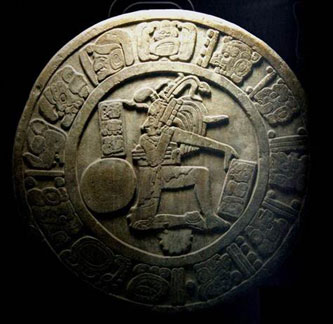
mayan calander

What they found at the site of La Corona wasn’t just a rock. It was a message. A time capsule. And it contained the second known reference in human history to that specific, infamous date: the so-called “end date” of the Maya calendar.

But here is the twist. The mainstream narrative tells you it was just a calendar resetting. Like flipping a page. But when you look closer—when you really stare into the abyss of history—you start to see something else. A desperate political play? A magical ritual to freeze time? Or evidence that the ancients knew something about the cycles of reality that we have completely forgotten?

Let’s crack this open.

The Crime Scene: La Corona

Picture the scene. It’s hot. Unbearably hot. You are in the Petén region of Guatemala. This isn’t a walk in the park; it’s a battle against nature. This is where La Corona sits. For years, nobody even knew this place existed. In the art world, it was a ghost. A phantom.

Why? Because of the looters.

For decades, exquisite, mysterious artifacts were showing up on the black market. Private collections in Switzerland. Auctions in New York. They all had a specific style, a specific “Site Q” origin that baffled scholars. “Site Q” was the Atlantis of Maya archaeology. It was real, but it was missing.

It wasn’t until significantly later that researchers realized “Site Q” was La Corona. But by the time legitimate scientists got there, the place had been ravaged. Trenches dug. Walls smashed. The history of a civilization, sold off piece by piece to the highest bidder. It’s a tragedy. But in their greed, the looters made a mistake. A massive one.

Marcello A. Canuto, the director of Tulane’s Middle American Research Institute, and his co-director Tomás Barrientos, have been digging there since 2008. They are the detectives in this cold case.

“Last year, we realized that looters of a particular building had discarded some carved stones because they were too eroded to sell on the antiquities black market,” Barrientos explained. Think about that. The looters looked at these stones, saw they were worn down, and tossed them aside like trash. “So we knew they found something important, but we also thought they might have missed something.”

They missed the stairs.

The Stairway to Eternity

What looked like rubble to a thief was gold to a historian. Canuto and Barrientos uncovered a staircase. But not just any staircase. Every step was a chapter in a book carved from stone. It turned out to be the longest hieroglyphic text ever discovered in Guatemala. A massive find.

David Stuart, a heavy hitter in the world of Maya studies from The University of Texas at Austin, was brought in to read the code. He started translating the glyphs. Block by block. Step by step. The story that emerged wasn’t about farming or the weather. It was a political thriller.

It was a record of 200 years of history at La Corona. But one block—one specific stairway block bearing 56 delicately carved hieroglyphs—stopped them in their tracks.

It mentioned the date. 13 Bak’tun. December 21, 2012.

Why? Why would a king in the humid jungle of 696 AD care about a date 1,300 years in his future? Was he warning us? Was he seeing a vision of the end times?

To understand the answer, you have to understand the man who commissioned the stone. You have to meet the Snake King.

Enter the Snake King: Yuknoom Yich’aak K’ahk’

History is written by the victors, they say. But sometimes, it’s written by the losers who just refuse to quit. This stone wasn’t a prophecy. It was propaganda. It was a desperate scream for relevance by a man who had lost everything.

The text commemorates a royal visit to La Corona in AD 696. The visitor? The most powerful, terrifying figure of his age: Yuknoom Yich’aak K’ahk’ of Calakmul. His name translates roughly to “Jaguar Paw Smoke.” He was the leader of the Kaan kingdom—the Snake Dynasty. These guys were the superpowers of the Maya world. For centuries, they were locked in a brutal, bloody cold war with their rivals, Tikal.

Imagine the US and the Soviet Union, but with obsidian blades and jungle warfare. That was Calakmul vs. Tikal.

But in AD 695, one year before this stone was carved, disaster struck. Tikal defeated Calakmul. It was a crushing blow. The Snake King was beaten. In fact, most historians thought he died in that battle. The record went silent. The glory of the Snake Kings was shattered.

But the stones at La Corona tell a different story. A ghost story.

Yuknoom didn’t die. He survived. Injured? Maybe. Humiliated? Definitely. But he was alive. And he was on a tour. He traveled to La Corona, one of his loyal vassal states, to show his face. To prove he was still breathing. To shake hands and kiss babies. He was trying to hold his crumbling empire together through sheer force of personality.

The Spin Doctor of 696 AD

“This was a time of great political turmoil in the Maya region,” says Stuart. “This king felt compelled to allude to a larger cycle of time that happens to end in 2012.”

Here is the brilliance of the move. The King had just lost a war. His people were scared. His allies were nervous. If you are a King who just got beat up by your neighbor, how do you convince people you are still a god?

You connect yourself to time itself.

You don’t talk about the battle you lost last Tuesday. You talk about the calendar cycle that ends in 1,300 years. You link your reign, your life, and your presence to the “deep time” of the universe. By referencing the end of the 13th Bak’tun (the 2012 date), Yuknoom was saying, “My defeat is a blip. My power is cosmic. I am aligned with the cycles of eternity.”

“In times of crisis, the ancient Maya used their calendar to promote continuity and stability rather than predict apocalypse,” says Canuto.

It’s a political trick. It’s a distraction. Look at the big clock, don’t look at the burning city behind me.

The Deep Mystery: Did They Know Something Else?

So, the experts say it’s politics. Case closed? Not so fast.

While the academic explanation makes sense—kings love propaganda—it leaves a lingering, itch in the back of the brain. The Maya were obsessed with time. They tracked Venus with an accuracy that rivals modern telescopes. They knew the wobble of the Earth. Their Long Count calendar wasn’t just a way to count days; it was a map of consciousness.

Why did the cycle end *there*? Why 2012?

The Long Count calendar lasts roughly 5,125 years. It began in 3114 BC. It ended in 2012. That is a massive chunk of human history. It covers the rise of civilization, the pyramids, Rome, the Industrial Revolution, the internet, and us.

Some modern theorists believe the Maya didn’t predict the “end” of the world in the sense of an explosion. They predicted a “phase shift.” A reset of the software.

The Simulation Theory Connection

Let’s get weird for a second. Look at the world since 2012. Does it feel… normal to you? Or does it feel like the timeline fractured? Since that date, we’ve seen high strangeness accelerate. Political absurdity. The Mandela Effect (where massive groups of people remember history differently). The rise of AI.

There is a growing community online that speculates 2012 wasn’t a dud. They argue the Maya were right. The “old world”—the old vibration, the old logical operating system—ended. We are now living in the new cycle, the 14th Bak’tun, and the rules have changed.

When King Yuknoom Yich’aak K’ahk’ carved that date into the stone at La Corona, was he just bragging? Or did the Snake Kings possess an esoteric knowledge of these great cosmic seasons? Did they know that 2012 marked the moment when humanity would have to choose between digital enslavement and spiritual awakening?

The text at La Corona is “political history,” yes. But in the Maya world, politics and prophecy were the same thing. The King was the conduit between the sky and the earth. If he said, “I am connected to the 2012 date,” he was claiming to be the master of the transition.

The Evidence in the Dirt

Let’s go back to the physical evidence. The staircase. It’s amazing that we have it at all. The jungle eats everything. Limestone dissolves. Roots tear through rock.

Canuto and Barrientos found these panels in secondary locations. They had been moved. Reused. The ancients didn’t treat these stones as museum pieces; they were active parts of their city. The fact that this specific reference survived the collapse of the Maya civilization, the Spanish conquest, the centuries of neglect, and the modern looters is a miracle.

David Stuart’s decipherment reveals the complexity of Maya writing. It’s not just pictures. It’s a fully functional phonetic language. They could write poetry. They could write legal contracts. They could write propaganda.

The glyphs describing Yuknoom are delicate. They show a man trying to project strength. He was visiting his allies to “allay their fears.” Imagine the tension in that room. The great King arrives. Everyone knows he lost the war. But he stands on the platform and points to the calendar. “Do not worry,” he implies. “The cycle continues. I continue.”

What We Can Learn From the Snake King

We often look at ancient people as primitive. We think they were scared of eclipses and sacrificed people because they didn’t understand science. But the finding at La Corona shows a level of sophistication that matches our own.

They used media (stone carvings) to control the narrative. They used abstract concepts (deep time) to stabilize political unrest. They understood that human beings need a sense of “forever” to feel safe.

Marcello Canuto put it best: “This text talks about ancient political history rather than prophecy.”

But maybe that’s the scary part. We wanted a prophecy. We wanted aliens. We wanted a magic switch. Instead, we found a mirror. We found a politician spinning a disaster into a victory. We found a leader trying to convince his people that everything was fine, even as the walls were closing in.

Sound familiar?

The Maya civilization eventually collapsed. The cities were abandoned. The jungle took over. The Snake Kings vanished. The calendar cycle they worshipped eventually ran out in 2012. But the stones remained.

The Final Question

So, did the world end in 2012? No. The sun came up. But the finding at La Corona reminds us that dates on a calendar are just tools. They are tools used by the powerful to organize the masses. King Yuknoom used 2012 to save his own skin in 696 AD. We used 2012 to sell movie tickets and survival kits.

But the mystery remains. Why that specific cycle? Why that specific count? As we move further away from that date, looking back at the artifacts like the one found in Guatemala, we have to wonder if we missed the message entirely.

Maybe the “end” wasn’t about destruction. Maybe it was about the end of the illusion. The King is naked. The empire is crumbling. And all we have is the stone.

Keep your eyes open. The jungle still has secrets to tell.


Source: Science Daily read More



Originally posted 2016-03-22 16:29:00. Republished by Blog Post Promoter








