The Nightmare Beneath the Soil: Unearthing the “Undead” in Sozopol
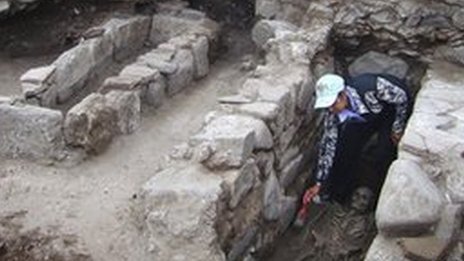
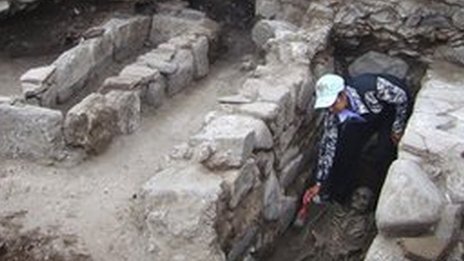
Imagine the scene. It’s the Black Sea coast. The ancient town of Sozopol, Bulgaria. Archaeologists are scraping away centuries of dirt, expecting the usual pottery shards or maybe a rusty coin. Routine stuff. But then, the brush hits bone. A ribcage emerges.
Then, the silence breaks.
Sticking right out of the chest, exactly where the heart used to beat, is a heavy, rusted iron rod. Not an accident. Not a battle wound. A deliberate, calculated strike made after death.
This isn’t a movie set. This is history. And it’s terrifying.
Archaeologists in Bulgaria uncovered two of these medieval skeletons, pierced straight through the chest with heavy iron ploughshares. Why? To make sure they stayed dead. To stop them from clawing their way out of the grave. To prevent them from turning into vampires.
This discovery sent shockwaves through the historical community. It ripped the lid off a dark, forgotten chapter of human fear. We aren’t talking about sparkly teenagers or counts in capes. We are talking about primal, village-level panic. The kind of fear that makes a neighbor hammer a spike into his friend’s corpse just to get a good night’s sleep.
Not an Isolated Incident: The “Vampire Graveyard” of the Balkans
You might think this is a one-off freak event. A couple of crazy villagers acting out. You’d be wrong.
According to Bozhidar Dimitrov, the former head of the National History Museum in Sofia, Bulgaria is absolutely littered with these things. We aren’t talking about one or two bodies.
Bulgaria is home to around 100 known “vampire skeleton” burials.
One hundred. Let that sink in. That is a lot of iron. That is a lot of fear.
This wasn’t a secret cult. This was standard operating procedure. Across the Balkans, specifically during the Middle Ages and right up until the early 20th century, people didn’t view death as the final curtain. They viewed it as a waiting room. And for some, the door to the living world was left slightly ajar.
The “Bad Blood” Theory
Who got the spike? Did they just grab anyone?
No. It was specific. Historians suggest that this treatment was reserved for the outcasts. The “bad” people. Intellectuals who knew too much. People who died by suicide. The lonely. The strange. If you were deemed “wicked” in life, the villagers were convinced your soul wouldn’t leave your body. Instead, it would fester.
They believed that after burial, these “bad seeds” would undergo a dark transformation. They wouldn’t rot. They would swell. Their skin would turn red. And at midnight, they would push up through six feet of earth to feast on the blood of the living.
So, the villagers took out an insurance policy.
Iron.
The Mechanics of the Ritual: Pinning the Ghost
“These skeletons stabbed with rods illustrate a practice which was common in some Bulgarian villages up until the first decade of the 20th Century,” explained Dimitrov.
Think about that timeline. The 20th Century. We had cars. We had electricity. But in some dark corners of the Balkans, people were still staking corpses. It’s mind-blowing.
The ritual was brutally simple. When a suspected vampire died, the family or the village priest wouldn’t just say a prayer. They would take a heavy iron rod—often a piece of a plough, symbolizing the earth and agriculture—and drive it through the corpse’s chest.
Sometimes they aimed for the heart. Sometimes the solar plexus. Sometimes the shoulder.
The goal wasn’t to “kill” the vampire (since they were already dead). The goal was to pin them to the ground.
They believed the rod literally stapled the body to the grave. If the corpse tried to rise at midnight to terrorize the living, it would be stuck. Trapped. Pinned like a butterfly in a display case.
Dimitrov added that people genuinely believed this would “prevent them from leaving at midnight and terrorising the living.” It was crowd control for the dead.
The Archaeology of Fear: Digging Deeper
The two specimens found in Sozopol date back to the Middle Ages, a time when superstition ruled the world. But they aren’t the only ones.
Archaeologist Petar Balabanov has seen this movie before. In 2004, he discovered six nailed-down skeletons at a site near the eastern Bulgarian town of Debelt.
Six of them.
This tells us something profound about the psychology of the time. This wasn’t a joke. Iron was expensive. Metal was valuable. Wasting a perfectly good iron tool by burying it with a dead guy wasn’t done lightly. It was an act of desperation. The fear of the undead was stronger than the value of the tool.
Balabanov confirmed that this pagan rite wasn’t just a Bulgarian quirk. It was practiced in neighboring Serbia and other Balkan countries. The fear was contagious. It crossed borders.
The Reality Behind the Myth: Why Did They Think Vampires Were Real?
Let’s take a step back. We are modern people. We have Wikipedia and antibiotics. We know the dead don’t walk. So why were our ancestors so convinced they did?
Was it mass hysteria? Yes. But it was also bad science.
During the Middle Ages (and later), people didn’t understand decomposition. When a body rots, weird things happen. Things that look an awful lot like life.
1. The “Growing” Hair and Nails
You’ve heard the myth that hair and nails keep growing after death. They don’t. But the skin shrinks and retracts as it dries out. This makes the nails look longer. It makes the stubble look like a fresh beard. To a terrified peasant digging up a grave, it looks like the corpse is still growing.
2. The “Vampire” Bloat
Bacteria in the gut produce gas. Lots of it. This gas bloats the body. A corpse that was thin in life can look well-fed and “fat” in death. If you believe vampires feast on blood to get strong, a bloated corpse looks guilty.
3. The “Blood” at the Mouth
As the internal organs break down, a dark, reddish purge fluid can be forced up the throat and out of the mouth and nose. It looks like blood. Fresh blood.
Imagine you are a medieval villager. Your cattle are dying. Your children are sick. You suspect your weird neighbor who died last week is cursing you. You dig him up.
He looks fat. He has “new” hair. And there is “blood” on his mouth.
Panic.
You grab the nearest sharp object. You stake him. You bury him again. Problem solved.
Beyond Bulgaria: The Global Panic
While the Bulgarian discovery is spectacular, this vampire hunter behavior was happening all over Europe. It wasn’t just iron rods. The methods of “stopping” the undead were creative and gruesome.
- The Brick in the Mouth: In Venice, archaeologists found a female skull from a plague pit with a brick jammed forcefully between her jaws. The theory? She was a “Shroud Eater”—a type of vampire that chewed on its burial shroud to spread the plague. The brick was the gag.
- The Sickle Across the Neck: In Poland, bodies have been found with iron sickles placed across their throats. If the corpse tried to sit up? Decapitation. Instant.
- The Face-Down Burial: Some suspected vampires were simply buried face down. If they tried to dig their way out, they would only dig themselves deeper towards Hell. Simple. Effective.
Dracula: The Hollywood Gloss vs. The Dirty Truth
It is impossible to talk about this without mentioning the Count. Vampire legends form the absolute backbone of the region’s folklore.
These myths directly inspired Bram Stoker’s legendary gothic horror novel, Dracula. First published in 1897, it changed everything.
But here is the catch: Stoker glamorized it. He made the vampire a sophisticated aristocrat with a castle and a tuxedo. He gave us the romance of the night.
The Sozopol skeletons tell a different story. The real “vampires” weren’t counts. They were peasants. They were the unwanted. They were the scapegoats for disease and bad luck. The reality of the vampire legend isn’t romantic. It’s dirt, rust, and iron.
What If? The Modern Mystery
We like to think we are smarter now. We laugh at the iron rods. But look at the internet today. Look at the theories spreading on forums. Are we really that different?
The discovery of these skeletons forces us to ask a difficult question: What actually happened in these villages?
Some modern theorists suggest that maybe, just maybe, some of these people were buried alive. Catalepsy (a condition where you appear dead but aren’t) was real. Could the scratching on the coffin lids have been real attempts to escape? Could the “shroud eating” be a starving, comatose person waking up in a grave?
If that’s true, the iron rod wasn’t preventing a monster from rising. It was the final, tragic end to a misunderstood life.
The Bones Speak
The skeletons in Sozopol are now museum exhibits. Tourists snap photos. We stare at the iron rod and shiver.
But strip away the glass case, and you are left with a human being. A person who lived, breathed, and was so feared by their own community that they were pinned to the earth for eternity.
So, the next time you watch a vampire movie, remember the Sozopol dig. Remember the rust. Remember the ribcage. The true story of the vampire isn’t about immortality.
It’s about the terror of the living.
What do you think?
Was this just superstition gone wild? Or was there a disease we still don’t understand that caused these “vampire” symptoms? The dirt in Bulgaria holds more secrets. And we are just starting to brush them off.